Blog

  • Marginalisation of the majority world

    Writing for SustainableSsecurity.org, Elizabeth Wilke argues that a new conceptualization of insecurity and instability is needed in a world with greater and freer movement of goods, services and people – both legal and illicit – greater demands on weakening governments and the internationalization of local conflicts. The new insecurity is fundamentally derived from the responses of people and groups to greater uncertainty in an increasingly volatile world. Governments, and increasingly other actors need to recognize this in order to promote sustained stability in the long-term, locally and internationally.

    Image source: bass_nroll

    Read more »

  • A world in need: The case for sustainable security


    A hurricane of crises across the world – financial meltdown, economic recession, social inequality, military power, food insecurity, climate change – presents governments, citizens and thinkers with a defining challenge: to rethink what “security” means in order to steer the world to a sustainable course.  The gap between perilous reality and this urgent aspiration remains formidable.

    After years of steep rises in defence spending in the United States, a plateau is now being reached under Barack Obama. This still means that spending will continue at a level close to the peak years of the cold war. In Europe there is a marked contrast between west and east. The Stockholm International Peace Research Institute (SIPRI) estimates that military spending in eastern Europe rose by 143% from 1999-2008, whereas in western Europe the increase was just 5% (see Andrew Chuter & Pierre Tran, “Financial Crisis Creates Bleak Spending Outlook”, Defense News, 9 September 2009).

    A part of the explanation for the contrast is the relatively higher priority given to public spending on health and education across western Europe; but it also implies that defence budgets were already under some pressure in the run-up to the current financial crunch, a situation reinforced by the very heavy levels of government borrowing that the crisis entailed.

    As a result, many analysts see a tough period ahead for the military, especially in Britain and France. Indeed, the Defense News analysts cited above liken “France’s defense budget” to “the cartoon character who runs off a cliff and stays up as long as he does not see the gaping void below. The moment the character realizes there is nothing underfoot, he plummets into the abyss”.

    Some of the smaller countries, becoming aware of what is – or is not – “underfoot”, have already begun to retrench. Belgium, for example, is expected to close up to a dozen of its thirty military bases; its armed forces, which numbered 44,000 in 1994, are likely to drop to 34,000 by 2013 and possibly to 30,000 by 2015 (see “Further Cuts Expected for Belgian Military: Report”, AFP/Defense News, 9 September 2009).

    Britain faces a defence review, whoever wins the general election due by early June 2010. The review will be substantially finance-driven and the defence industries are already lobbying hard to protect major programmes. The CEOs of Britain’s largest companies, including BAE Systems, QinetiQ and Rolls Royce, held a press conference in August 2009 to call for increased defence spending if Britain was to hold its own as one of the world’s leading states and not “lose its position at the top table” (see Tim Webb, “Defence firms make plea for more spending”, Guardian, 1 September 2009).

    The British have a particular problem in that the next government will be looking for tens of billions of pounds of savings in public spending, at the very time that spending commitments on large military projects will reach a peak. These include the replacement for the Trident nuclear-missile system, thousands of new armoured vehicles for the army and, above all, the two massive new aircraft-carriers and the prohibitively expensive American F-35 multi-role aircraft that will be deployed on them (see “Gordon Brown‘s white elephants”, 26 July 2007).

    A timely search

    In such circumstances, and especially in the light of the conduct of the highly controversial  “war on terror” in Iraq and Afghanistan, it might seem sensible to conduct a much more general security analysis rather than a traditionally narrow defence review. In some respects Britain’s national-security strategy (updated in June 2009) has started to do this, since it does pay serious attention to issues such as climate change, socio-economic divisions, marginalisation and mass migration. The trouble is that the framework and conclusions remain constrained by a narrow attitude of protecting the state from the impacts of such trends rather than addressing the underlying issues – “old thinking” always rules (see “The politics of security: beyond militarism”, 2 July 2009).

    For some of the military think-tanks this is perhaps to be expected. These may well be quite innovative in analysing new threats; but their standpoint, reflecting the professional military perspectives that inform them, is to safeguard the homeland using familiar strategies and tactics honed over many years. They are rarely in a position to say to government that long-term security – which must include avoiding the potentially catastrophic global impacts of climate change – requires preventative action that has little or nothing to do with military strategy and much more to do with the transition to a low-carbon economy (see “A new security paradigm: the military-climate link”, 30 July 2009).

    Similarly, trying to maintain security in a deeply divided world in which marginalised majorities can so easily be radicalised simply cannot be done by what amounts to “liddism”, i.e. keeping the lid on things. This is especially the case in an era of irregular warfare. After all, a few thousand insurgents tied down nearly 200,000 of the world’s best equipped troops in Iraq for six years, and the reinvigorated war in Afghanistan enters its ninth year in October 2009.

    Here and there some attempts at new thinking can be found, but even relatively progressive think-tanks have to depend on support from defence industries. Two of the British centres, the Institute for Public Policy Research (ippr) and Demos, have each produced quite interesting studies on security – though both were part-financed by defence companies. There are hardly any sources of funding for truly innovative work apart from a handful of trusts, often with Quaker connections; but these are desperately trying to fund many different activities from a very small pool of money.

    There are however some welcome signs of fresh thinking, many of which revolve around the idea of “sustainable security”. The Center for American Progress in Washington has published a useful paper entitled In Search of Sustainable Security, which seeks to link “national security, human security and collective security to protect America and our world”. This week, the Geneva Centre for Global Security issues a study of what it terms “national sustainable security” as part of its programme on globalisation and transnational security.

    A prime resource

    The Oxford Research Group (ORG), a small independent think-tank in Britain, started a project in 2006 called “Moving Towards Sustainable Security”. An early result stemmed from work commissioned by Greenpeace International, explicitly underpinned  by a request for some “blue-skies” thinking from the ORG.

    The result was a paper, Global Responses to Global Threats. This sought to link the issues of socio-economic divisions, marginalisation and environmental constraints as the major future determinants of insecurity – and to respond to them not with militarised policies but with a security approach focused on the underlying causes. The paper circulated quite widely and a more popularised version, Beyond Terror: The Truth about the Real Threats to Our World, was subsequently published in German, Dutch, Spanish and Portuguese (see Chris Abbott, “Beyond terrorism: towards sustainable security”, 17 April 2007).

    In order to widen knowledge of this kind of approach, ORG launches a new website on 10 September 2009. This –https://sustainablesecurity.org/ – highlights the interconnected drivers of insecurity and provides many examples of different approaches; in terms both of analysis and policy recommendations, it is an invaluable resource guide to new ways of thinking about and practising “security”.

    This is the kind of initiative that could make a substantial contribution to promoting more effective, sustainable and emancipatory approaches to security. But even to get this far, for a project with very modest funds, is an uphill struggle. To put it in perspective, the cost of a single F-35 strike-aircraft would finance the Oxford Research Group’s entire programme of work, including its sustainable-security project, for more than a hundred and fifty years. It is to help ensure that the world lasts so long – and the current hurricane of crises is reversed – that the group’s work is so important.

  • Climate change

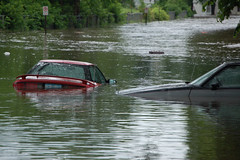
    The Asian Development Bank has recently published a report on the effects of climate change on migration in and from the continent. Although migration need not necessarily be a security concern, people can be propelled to move for reasons of personal safety, such as extreme weather events, or livelihood insecurity caused by long-term land degradation or river salination. This report provides a useful perspective on climate change, representing the conclusions drawn by an organisation based the region most likely to suffer the harshest consequences. To read the full report, click here.

    Image Source: Amirjina

    Read more »

  • Global militarisation

    In a piece for the International Movement for a Just World, William Rees maps out a vision for what he calls ‘Survival 2100.’ The goal of such a strategy would be “to engineer the creation of a dynamic, more equitable steady-state economy that can satisfy at least the basic needs of the entire human family within the means of nature.” The alternative, Rees argues is to “succumb to more primitive emotions and survival instincts abetted by cognitive dissonance, collective denial, and global political inertia.”

    Image source: hundrednorth.

    Read more »

  • Sustainable Security

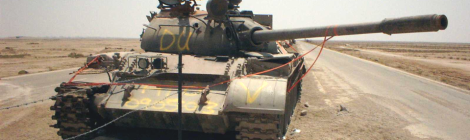
    DU-turn? The changing political environment around toxic munitions

    Is the US backpedalling on its use of depleted uranium (DU) rounds? There are indications that the use of these highly toxic munitions could increasingly be a political liability for the US, with countries affected by DU, like Iraq, other UN Member States, and populations in contaminated areas all expressing concerns over its use and impact. But stigmatisation, although important, is not enough on its own – in order to make sustained progress on accountability and in reducing civilian harm, a broader framework that addresses all toxic remnants of war is needed.

    Read Article →

    Nuclear Weapons: From Comprehensive Test Ban to Disarmament

    Despite not yet entering into force, the 1996 Comprehensive Test Ban Treaty has succeeded in almost eliminating nuclear weapons testing and in establishing a robust international monitoring and verification system. A breakthrough in its ratification by the few hold-out states could have important positive repercussions for the Nuclear Non-Proliferation Treaty or nuclear disarmament in the Middle East.

    Read Article →

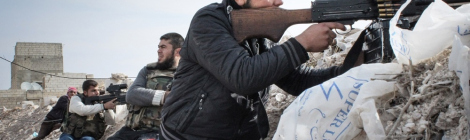
    The War in Syria: Responding to Stalemate

    The Syrian War is now in its fourth year and the indications are that the regime will survive and consolidate its position in 2014. This is radically different from early last year when many analysts thought it was under serious pressure, and it should be recalled that in mid-2011, a few months into the war, the prevailing view was that the regime would not last to the end of that year. The costs have been huge, with around 140,000 killed, twice that number injured and more than a third of the population displace, millions of them refugees in other countries. Here, Paul Rogers seeks to put this appalling conflict in a longer term regional context as an aid to looking at possible policy options in attempting to bring the war to an end.

    Read Article →

    International Dimensions of the Ukraine Crisis: Syria and Iran

    The Russian annexation of Crimea may be in direct contravention of international agreements but is popular in Russia and almost certain to hold. Given tensions within Ukrainian society and its weak transitional government, there remains some risk of further intervention in eastern Ukraine and possibly the Trans-Dniester break-away region of Moldova. Even if there is no further escalation in the crisis, the deterioration in EU/Russian and US/Russian relations is of great concern, not least in relation to two aspects of Middle East security – the Syrian civil war and the Iran nuclear negotiations.

    Read Article →

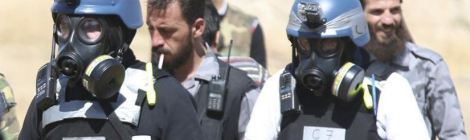
    Chemical Weapons Use in Syria: a Test of the Norm

    Recent events in the Syrian civil war have proved an unparalleled test of the norm against the use of chemical weapons. At its core this was a test of the willingness of countries to uphold the norm, in this case in the face of a flagrant violation, and a response that in the end stumbled upon a satisfactory conclusion—reaffirming the special category of chemical arms—but which in the process said a great deal about current attitudes to the use of military force as a means of humanitarian intervention.

    Read Article →

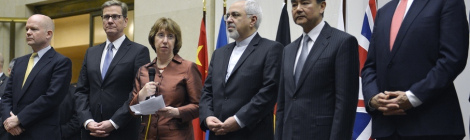
    The Iran Interim Deal: Responses, Potential Impacts, and Moving Forward

    Implementation of the interim deal with Iran, which freezes the country’s nuclear enrichment in exchange for limited sanctions relief, began in January. As a result, we are witnessing a substantial shift in diplomatic relations between Iran and its regional neighbours – some positive, some not. This deal marks a significant step for the international non-proliferation regime, but will it achieve the trust and confidence-building goals intended? As the US and Iran face increasing domestic pushback on the terms of the agreement, questions remain on the interim deal’s impact on relations in the region and abroad, and the effect these relations may have on the prospects of coming to a full comprehensive follow-up agreement between Iran and the P5+1 countries.

    Read Article →

  • Sustainable Security

    Drugs and Drones: The Crime Empire Strikes Back

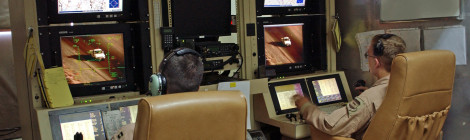
    Ever advancing remote warfare technology is being increasingly used by law enforcement agencies to counter drug trafficking. In response, drug cartels are also adopting new technology to smuggle and distribute drugs. However, the technological superiority of law enforcement-military actors is also causing criminal and militant groups to adapt by employing the very opposite tactic, by resorting to highly primitive technology and methods. In turn, society is doing the same thing, adopting its own back-to-the-past response to drug trafficking and crime.

    Read Article →

    From Surveillance to Smuggling: Drones in the War on Drugs

    In Latin America drones are being used as part of the War on Drugs as both regional governments and the US are using surveillance drones to monitor drug trafficking and find smuggling routes.. However, as drones are increasingly being used by drug cartels themselves to transport drugs between countries, could Latin America find itself at the forefront of emerging drone countermeasures?

    Read Article →

    Privatising the War on Drugs: PMSCs in Colombia and Mexico

    US drug policy has become increasingly privatised in recent years as the US government contracts private military and security companies (PMSCs) to provide intelligence, logistical support and training to state security forces in drug-producing and –transit states. As the cases of Colombia and Mexico illustrate, this privatisation strategy is having a damaging impact on these already fragile environments.

    Read Article →

    Beyond Privacy: The Costs and Consequences of Mass Surveillance

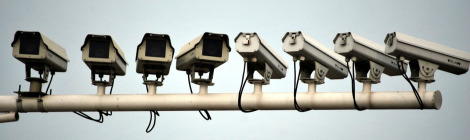
    Last week the new UN privacy chief said UK surveillance was “worse than [George Orwell’s novel] 1984”. In the two years since the Snowden leaks revealed the existence of bulk internet and phone surveillance by US intelligence services and their partners, including the UK, the British government continues to engage in the mass collection of citizens’ communications data.

    Read Article →

  • Sustainable Security

    Following civil war, re-establishing the legitimacy of a state’s army is a crucial part of security sector reform and international actors can aid this process. The capacity-building work of the United Nations Interim Force in Lebanon provides a useful example of this.

    Rebuilding a national army after civil war is an important part of security sector reform (SSR) to help ensure the survival of the institution and its effectiveness in the long-term. Based on a recent article in Contemporary Politics, this blog post discusses the strategies used by an international actor, the United Nations Interim Force in Lebanon (UNIFIL), to contribute to the capacity and legitimacy of a local institution, the Lebanese Armed Forces (LAF). This case study revealed that a sustainable strategy for SSR requires a long-term, flexible, and pragmatic approach; and that successful capacity building can take place when the normative values of the SSR project are accepted by key stakeholders and the local population.

    The United Nations Interim Force in Lebanon

    The UNIFIL mission has been present in South Lebanon since 1978. United Nations Security Council (UNSC) Resolution 1701 (11 August 2006) is the mandate under which UNIFIL has operated since 2006 after the July war between Hezbollah and Israel. It clearly states that a key objective of the mission is assisting with the reintroduction of LAF throughout Lebanon; prevent violations of the line of withdrawal ‒ called the Blue Line ‒ that borders Israel and Lebanon, and clear unauthorised weapons from the area of operations.

    UNIFIL has targeted three main areas in capacity building the LAF: building relationships through regular liaison and communication; lobbying for money and resources from the international community; and conducting a comprehensive strategic review of LAF’s operational capabilities. One of the biggest challenges has also been handling the political situation which UNIFIL has negotiated with a combination of flexibility and pragmatism. But underscoring UNIFIL’s success is the fact that the army is considered legitimate in Lebanon by the local population and at the national political level. Furthermore, the LAF share the normative assumptions of the international community in terms of how they wish to rebuild.

    Whilst LAF was not present in the south until 2006, its popularity has increased since the Syrian withdrawal in 2005. The Lebanese Armed Forces is the only national institution that is genuinely regarded as non-sectarian, and has an approval rating of over 75 per cent amongst the Lebanese population. A survey of civilians in the south of Lebanon found that 91.5 per cent of civilians stated that they thought that LAF should be responsible for national security.

    The Political Challenges

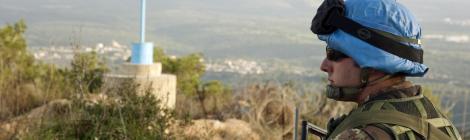
    An Italian peacekeeper of the United Nations Interim Force in Lebanon (UNIFIL) patrols the "Blue Line" that demarcates the border between Lebanon and Israel. 17/Jan/2009. UN Photo/Eskinder Debebe. www.unmultimedia.org/photo/

    An Italian peacekeeper of UNIFIL patrols the “Blue Line” that demarcates the border between Lebanon and Israel. Image credit: UN Photo

    The main challenge to both LAF and UNIFIL authority in South Lebanon is the presence of Hezbollah. LAF and UNIFIL must respect the legacy of Hezbollah’s military success in not losing the 2006 war, and its important role in ejecting Israel from Lebanon in 2000. Whilst Hezbollah agreed in 2006 to withdraw to positions north of the Litani River (outside the area of operations), it is commonly believed by many Lebanese, the Israel Defence Forces (IDF), and the Israeli government, that Hezbollah retains weapons caches within the area of operation.

    For many Lebanese citizens, the continued presence of Hezbollah’s armed faction ‒ who use a combination of traditional and guerrilla warfare techniques ‒ is considered a necessary deterrent to Israeli aggression. LAF, whilst respected is regarded as underfunded and under-equipped and therefore not able to be fully in control of the security situation at the present time. Interviews for this case study, however, revealed that after years of living under foreign occupation, southern Lebanese are happy to see LAF patrolling the area with UNIFIL.

    Whilst UNIFIL’s mandate requires the mission to rid the area of operations of all weapons not belonging to the Lebanese Armed Forces, it is not possible for either UNIFIL or LAF to aggressively hunt for weapons stored in the area without risking the loss of local support. Hence UNIFIL is pragmatic when negotiating the tension between its mandate and local perceptions of its role in relation to local security. When unauthorised weapons are found, UNIFIL interprets the mandate on this issue by asking LAF to retrieve the weapons. They report the findings to LAF and then wait for them to arrive and deal with the recovery. This means that UNIFIL does not have to deal directly with the removal of illegal weapons which may or may not belong to Hezbollah but which can be a contentious issue with the local population.

    Building relationships

    UNIFIL contributes to re-establishing LAF’s presence by conducting joint patrols, helping to build LAF’s CIMIC activities and ensuring LAF takes the lead in local disputes and in highly politicised situations. When patrolling alongside LAF, UNIFIL is careful to play the role of observer as much as possible. LAF is deliberately placed at the forefront of any Blue Line violations involving local civilians in order to empower LAF to deal with any situation in its own way and to help build its credibility. Furthermore, as UNIFIL is not allowed to physically restrain anyone who is violating the Blue Line, LAF plays a key role in deciding what measures (physical or verbal) they wish to take in regard to Lebanese citizens on Lebanese territory.

    Time has played an important role in maintaining good UNIFIL‒LAF relations. Interviews with LAF officers indicate that long-term UNIFIL staff who understand the local political and social culture in the region are valued highly. Constant staff rotations frustrate the LAF as personal relationships are considered highly important to successful liaison and cooperation. Flexibility has also been of benefit in helping UNIFIL build strong relationships with LAF, officers gave very positive reports of their relationship with UNIFIL staff and in particular their commitment to helping to resolve problems when they arose.

    Building capacity

    UNIFIL works to try and build LAF’s operational capabilities in a number of ways as this is regarded as an essential part of UNIFIL’s eventual exit strategy.  First of all it lobbies the international community independently to gain support and donations for LAF and requests donations from current battalions for example UNIFIL vehicles at the end of their lifecycle. UNIFIL also seeks funding from the EU and internationally for LAF battalions based throughout Lebanon, not in the area of operations.  Since the Syrian withdrawal from Lebanon in 2005, the EU has been supportive of UNIFIL’s efforts to capacity build LAF. Furthermore, since the emergence of IS in 2014, Lebanon has been seen as a key buffer state, so interest in providing assistance to LAF has further increased.

    Another example of UNIFIL’s flexible approach to interpreting its mandate is a joint project entitled the Strategic Dialogue. In recent years, UNIFIL Political Affairs Officers and LAF engaged in a full analysis of LAF’s structure and capabilities and produced a joint report that identified gaps in LAF’s structure. UNIFIL Political Affairs Officers have since organised a coordinating mechanism with UNSCOL and now work jointly to seek contributions from the US and European states to specifically fill these gaps. Finally, battalions within UNIFIL conduct joint exercises with the LAF which can include shooting, artillery, administrative tasks and computer exercises.

    Future lessons

    Lebanon’s SSR may carry useful lessons for the international community when looking to help other post-conflict countries transition into peace – namely Iraq, where the security environment remains both complex and challenging. The rise and territorial gains of so-called Islamic State in Iraq reflects a failed security sector reform policy which has seen 100 billion US Dollars invested in it. Implementing a more effective SSR policy in Iraq will be a crucial prerequisite for both long-term stability and peace.

    When rebuilding a national army after internecine warfare, obtaining support from the domestic constituency is as important as capacity building the force in order to present as a credible deterrent. The Lebanese Army has worked very hard to minimalize sectarian differences within the institution both during and after the civil war and this has been very helpful in enabling it to build a largely positive image amongst the people of Lebanon itself. But the sectarian nature of the armed forces in Iraq will make the rebuilding of the army a great deal more challenging in terms of winning broad popular support in Iraq.  A key task therefore will therefore be for the Iraqi national army to become openly inclusive of multiple ethnicities and religious sects as quickly as possible.

    Long term planning in SSR is crucial. One challenge faced in rebuilding the national army in Lebanon is ensuring a regular budget flow to the army and national political cover from politicians. Whilst UNIFIL has been successful in terms of identifying the gaps in LAF expertise and in seeking funding and training to assist in capacity building, the lack of a regular budget for the army still hampers the LAF’s ability to make long term plans for growth and development.

    In addition, politicians in Lebanon are broadly supportive of the LAF, but ongoing political cover remains important especially when the national military is faced with domestic disturbances, particularly outbreaks of sectarian violence. It is imperative the LAF are viewed as impartial by the Lebanese to avoid being drawn into domestic political conflict and thus far the LAF have managed this extremely well. These are considerations that Iraq may face in the future.

    Since the peace deal of 2006, UNIFIL has been successful in re-introducing LAF into the south of Lebanon. But this has required a nuanced approach because there is a delicate balance between the imposition of an agenda and local agency in peacebuilding projects. Ultimately the success of SSR depends on the degree to which the reforms resonate with institutional and local interests and ideas.

    Faced with the aforementioned myriad of sectarian and security challenges, any future attempts to capacity-build the Iraqi army would do well to take a pragmatic approach and be prepared to sacrifice quick wins for the sake of long-term objectives. The first step will involve a careful focus on making the army representative of the Iraqi people and beyond that ensuring national financial and political support is maintained to allow the army the political space to rebuild trust with the all-important domestic constituency of the Iraqi public.

    Vanessa Newby is a Research Fellow at the Australian National University. research focus is peacebuilding and peacekeeping in the Middle East. She has published on the normalisation of peace through everyday security practices, the role of time in successful peacebuilding and the use of technocracy and credibility to negotiate the politics of peacekeeping.  She holds a Masters and PhD in International Relations from Griffith University in Australia. She is an Arabic speaker and has spent over three years conducting research in Lebanon and Syria.  In 2013 she was a visiting researcher at the American University of Beirut.  Her undergraduate degree is in Psychology from the University of Westminster and she is trained in conducting quantitative and qualitative research methods for the social sciences. Dr Newby is currently writing up her book: Mission Impossible? Negotiating the Politics of Peacekeeping in the Middle East.

  • Sustainable Security

    In order to persuade its allies in Israel and Gulf Arab states to support the Iran nuclear deal, the United States is relying on inducements of weaponry sales; this regional militarisation is further destabilising the wider Middle East region.

    The July 2015 international deal on regulating Iran’s nuclear programme, the Joint Comprehensive Plan of Action (JCPOA), looks to be a triumph for international diplomacy in a region that all too often sees diplomacy lose out to military force. However, in order to persuade its allies in Israel, Saudi Arabia and other Gulf Arab states to support the deal, the United States is offering ‘consolation packages’ of ever-higher quantities and qualities of weaponry.  This regional militarisation is further destabilising the wider Middle East region by fuelling an arms race and by increasing the attractiveness of hybrid or proxy warfare.

    16908600218_5cf4667ed9_k

    A Saudi Air Force F-15. Image via Flickr

    Arms Sales to Gulf Arab States

    The six Arab monarchies that comprise the Gulf Cooperation Council (GCC: Bahrain, Kuwait, Oman, Qatar, Saudi Arabia, UAE) are enthusiastic consumers of weaponry, which they overwhelmingly procure from the US, UK and France. Saudi Arabia is by far the largest military spender and arms importer among them. According to the Stockholm International Peace Research Institute (SIPRI), the Kingdom’s record military expenditure of over $80 billion in 2014 made it the fourth highest military spender in the world, overtaking the UK and France. It is now the world’s second largest arms importer. The other GCC states are also major spenders: Oman is probably the world’s highest military spender by percentage of GDP, averaging 12% between 2010 and 2014; last year the United Arab Emirates’ military expenditure reached $23 billion and it has been the world’s fourth largest arms importer for a decade. Together, the GCC states account for about 12% of global arms imports. Only India imports more weapons.

    The Gulf States enjoy a close commercial and strategic relationship with the United States, which is manifested in the huge sums spent on US weaponry, and the fact that the US military overtly uses land, air and naval bases in at least five of the six Gulf Arab states; its ongoing presence in Saudi Arabia is much lower key. Despite this, there are limitations on the quality and quantity of weaponry that the US can sell to GCC states. This is because of the US’ ongoing commitment to maintain Israel’s ‘qualitative military edge’ (QME) over its regional adversaries.

    A term coined by Israel’s founding leader David Ben-Gurion in 1953, QME was formally written into US law by Congress in 2008. Legislation now states that the US President must carry out an ongoing ‘empirical and qualitative assessment’ of Israel’s QME over military threats to Israel, and this must be brought into consideration when assessing applications to provide military hardware or services to other countries in the Middle East. As the GCC states could in the future become adversaries to Israel, whose statehood none currently recognize and which Saudi Arabia and Kuwait opposed in the 1967 and 1973 wars, this has long restricted sales of the highest technology weapons, surveillance and targeting systems to Gulf Arab states.

    QME and anti-Iran Alignments

    Recent regional events, and the JCPOA in particular, have seen Israel and the Gulf States find themselves increasingly aligned against Iran. The Israeli leadership has been consistently critical of the deal while the Gulf States were hesitant to support it because of their fears that an economically, militarily and diplomatically resurgent Iran would dominate the Middle East region and potentially vie with them to become the US’ chief regional ally.

    Relations between Israel and the Gulf have long been shrouded in secrecy, although that does not mean they have not existed. From 1950 until Israel’s invasion of Lebanon in 1982, for instance, there was periodic Israeli involvement in the operation of the ‘Trans-Arabia Pipeline’ (Tapline), and throughout the 1990s Israel and various GCC states began to set up trade offices; various Gulf States have, at different times and to varying extents, had a hand in the Arab-Israeli peace process. In the last few years, Israel and the Gulf States have increasingly found their regional interests aligning; this came to the fore during the 2011 Arab uprisings when they argued that American policy was exacerbating regional instability.

    The coincidence of interests between Israel and the GCC was referenced by Israeli Prime Minister Binyamin Netanyahu in September; in a speech to the UN General Assembly he spent much of his time denigrating the Iran deal, but he also mentioned the ‘common dangers’ faced by Israel and Arab states, and his hope that they could build ‘lasting partnerships’ to counter such dangers. There has predictably been no discussion of any official agreement between Israel and any Gulf State, but rumours of potential partnerships have been germinating: one suggested that Bahrain, an island in the Persian Gulf, was looking to buy Iron Dome anti-missile defence systems from Israel; these reports were hotly denied by Bahraini officials.

    GCC Support for the Iran Deal

    Despite stiff and vocal opposition from the Republican majority in the Senate, Obama has recently signed waivers that would conditionally allow the lifting of US sanctions subject to Iran fulfilling its JCPOA obligations. An altogether different challenge for Obama was placating America’s allies in the Gulf.

    Although Obama was not reliant on the Gulf Arab States to approve the Iran deal, it was sufficiently controversial to dent relations between them and the United States. This was demonstrated in May of this year when Obama invited GCC leaders to Camp David, where he attempted to persuade them personally of the merits of the deal: new Saudi monarch King Salman pulled out of attending at the last minute. Those that remained were hoping for a formal security treaty that would bind the US to support the GCC militarily in the case of an attack, but the Obama administration eventually won their support with promises of ‘support and capacity-building’, which essentially boiled down to bigger, faster arms deals.

    King Salman has played a tough game with the Obama administration. After his no-show in May, the Saudis reminded the US that they do not rely exclusively on the American arms market when in June they conducted extensive talks with France, discussing the potential purchase of French civil nuclear technology and further arms deals, the immediate outcome of which was the French sale of $500 million worth of helicopters. Qatar and Egypt (likely financed by GCC patrons) have also made multi-billion dollar arms deals with France this year; as has Kuwait with Italy. There was also much talk of Saudi interest in Russian equipment during August.

    Salman eventually reconciled with the Obama administration during a lavish state visit to Washington in September. Before talks between the two heads of state, Obama administration officials confirmed that Israel would be the only regional recipient of the forthcoming F-35 stealth fighter; they can thus claim to be considering Israel’s QME. However, officials also said that Obama would discuss ‘a range of other options meant to bolster Saudi defences’. Salman ultimately professed to come away reassured that the Iran deal would ‘contribute to security and stability in the region’. His price for this statement was a reassurance from Obama that US weapons technology and systems would be fast-tracked to Saudi Arabia, and a free hand to use such weapons in the Saudi-led war in Yemen.

    Arms Sales and Geopolitics

    Obama’s solution to winning support for the Iran deal from the Gulf Arab States is inherently flawed. While Gulf Arab leaders, having been promised these deals, professed their conviction that the deal would lead to regional stability, the promise of further military hardware was nevertheless purported to be intended to help states repel potential attacks from Iran. Although the narrative of the Israeli and American right is that Iran wants nuclear weapons to destroy Israel, an alternative explanation is that it is the huge qualitative and quantitative superiority in conventional weapons by US-allied Sunni Arab states that has driven Iran’s desire to develop nuclear weapons capabilities.

    While the Iran nuclear deal may decrease the likelihood of a preemptive attack on Iran by either its Gulf Arab rivals or Israel, the escalating wars in Yemen and Syria indicate that Saudi Arabia and other conservative Arab monarchies (Morocco and Jordan have joined GCC allies in both interventions) are increasingly willing to employ a more interventionist approach in the region, both directly and via proxies, wherever they see the expansion of Iranian interests. This is facilitated by US weaponry, intelligence and diplomatic support.

    The war in Yemen has already had catastrophic humanitarian consequences, with at least 2,615 civilians killed and about 1.5 million people displaced. Reports suggest that larger quantities of US military hardware could be making their way to Syria after a 24 October meeting between US Secretary of State John Kerry and Saudi officials, including King Salman, to discuss greater support for ‘moderate’ Syrian rebels in response to Russian air strikes. The White House has claimed that Russia would not succeed in achieving a military solution to the conflict, but the United States is equally unlikely to enforce a military solution.

    The JCPOA is a diplomatic breakthrough that will likely be far more successful in reducing Iran’s capacity to develop nuclear weapons than air or missile strikes. However, while Iran can no longer look to the nuclear option to give it a military advantage, or parity, it may consider other options. The strategic alignment of Israel and the Gulf States means that Obama has greater leverage to use arms deals to maintain the support of his Gulf allies, but a result of these deals is that a huge amount of conventional weaponry is being poured into the Gulf and from there to regional conflicts.

    Many of these conflicts involve Iranian proxies, and Iran may compensate for its lack of either nuclear or conventional leverage by increasing military support for these proxies, including those in Syria and Yemen. The United States’ method of securing regional support for the JCPOA thus adds fuel to the fire of regional conflicts and humanitarian crises, and makes diplomatic outcomes, whether in Syria or Yemen, ever more distant.

    Finbar Anderson is Communications Intern with Oxford Research Group.  Having lived and studied in Egypt, he has recently completed a Master’s degree in History of International Relations, focusing on the politics of the Middle East, at the London School of Economics. 
  • Sustainable Security

  • Thinking strategically about the future climate

    The publication of the Strategic Defence and Security Review and the Coalition’s first National Security Strategy provided ample opportunity for the government to deliberate on the strategic implications of climate change for the UK.  Yet while claims that we continue to live in a post-Cold War ‘age of uncertainty’ lay at the heart of both documents, on  closer reading there is very little to suggest that uncertainty about climate change was a concern for those who conducted the review. Despite a significant amount of intellectual debate, the wording of these documents remains remarkably close to that of the UK’s first National Security Strategy, published over two years ago.

    Whilst this lack of attention to climate change is unacceptable, it is – to some extent – understandable given the more ‘visible’ threats of terrorism, cyber-attacks and the ongoing war in Afghanistan. Nevertheless, the marginalisation of environmental factors stands in stark contrast to the tone of a speech delivered by William Hague just prior to the publication of the SDSR. The Foreign Secretary stated that ‘climate change is among the biggest foreign policy challenges we face over the next century as it underpins our security and prosperity’.

    Hard Times for Soft Power

    The SDSR was a missed opportunity to review the UK’s place in the world. A key theme to emerge from the fallout surrounding the Review is that much greater emphasis is to be placed on strategic thinking in the UK over the coming years.  This was encapsulated in the Public Administration Committee’s recent warning that ‘a lack of strategic thinking at the heart of government threatens the UK’s national interests’ and raises ‘serious concerns’ about Whitehall’s capacity to provide the strategic analysis and assessment needed to support the Foreign Secretary’s mission of extending the UK’s ‘global reach and influence’.

    We can hence expect to see the government addressing how, as a country, we can improve strategic thinking. This will most likely encourage a rethinking of how we educate our leaders and the wider policy community, and of the types of structures and institutions that will be required to support such efforts. As part of this education, due consideration will need to be given to the many different dimensions of strategy that will be pertinent in the coming century, and the climate change dimension cannot be divorced from this process.

    While there is still a need for highly granulated forms of climate change knowledge, what we do know is that the process will have implications for the way security is managed in many parts of the world where the UK has significant economic and strategic interests. We must therefore reflect on what any detrimental developments in these areas will mean for the way in which the UK secures its interests in the twenty-first century. We have already seen the devastating impact of the global economic meltdown on the UK and its ability to manage its debt, not to mention the repercussions throughout the rest of the EU. The defence sector has been adversely affected, as has the UK’s ability to project ‘soft power’ through diplomatic missions, development programmes and aid. The 2006 Stern Review showed how economic crises on a similar, if not larger, scale are not hard to envisage as the world is forced to come to terms with new environmental conditions.

    Read the full article at RUSI

    Image source: U.S. Geological Survey