Blog

  • Sustainable Security

    Contributing an Article

    We are always on the lookout for new authors with new perspectives to add to the debate on the blog – especially if you think we’ve missed something!

    We aim to address a wide range of evident and emerging security issues and take a broad and integrated approach to the term ‘security’. Generally, we look for insightful pieces which seek to explore, question and suggest solutions for ongoing security situations and the underlying issues which drive them. While we do place an emphasis on our ‘key’ drivers (climate change, marginalisation, competition over resources and militarisation), contributors should not feel limited to these subjects alone.

    Please note that, as a nonprofit blog that serves as a resource for interested readers, sustainablesecurity.org does not have the resources to pay contributors.

    If you are interested in contributing an article, please get in touch with us using the form to the right.

    Guidelines

    • 1,400 words max.
    • Please fact-check your article, especially if the subject is controversial or emerging . Although we check submissions carefully, authors are ultimately responsible for the factual accuracy of their contributions.
    • We do not use footnotes or endnotes. Embedded links for information that is sourced from other websites are a great opportunity to support your argument and opinions, especially for subjects that are not common knowledge. Please be sure to include a hyperlink for specific statistics and quotations.
    • Spelling: UK or US English – we don’t mind which, as long as it is used consistently throughout your article.
    • Please avoid unnecessary jargon and explain any that is used in a clear and concise manner.
    • You are welcome to cross-post your article in other places if we are accredited as the original site of publication.
    • We do not reprint pieces published elsewhere (with the exception of Sustainable Security programme staff articles that have been featured in the media).

    Would you like to contribute a video?

    Our readers would love it if you did! Sustainablesecurity.org deals with an often complex interplay of difficult subjects.  We are therefore very interested in presenting analysis of these issues in a range of media for those who wish to interact in different ways with our content.

    If you are interested and have the means to produce a video, get in touch with us using the form above with ‘VIDEO’ in the subject line. Thanks!

    Legal stuff…

    All content and downloads are licensed under a Creative Commons Attribution-NonCommercial-NoDerivs 3.0 Licence unless stated otherwise.

    We look forward to hearing from you!

    SusSec Team

  • Exploring the security implications of climate change in South Asia – International Alert co-hosts South Asia Climate and Security Expert Roundtable in Dhaka

    International Alert, together with the Bangladesh Institute for Peace and Security Studies (BIPSS) and  the Regional Centre for Security Studies and the Peacebuilding and Development Institute in Sri Lanka, co-hosted an expert roundtable on the Security Implications of Climate Change in South Asia in Dhaka, Bangladesh on 29th-30th March 2010.

    The two-day event brought together experts from Bangladesh, India, the Maldives, Nepal, Pakistan and Sri Lanka for an important regional exchange on issues related to climate change and security. International Alert’s recent work on climate change, fragility and conflict has shown that the security implications of climate change are a very real but relatively unexplored issue worldwide and in this region. This event marked the start of a significant process, creating a space for a critical discussion on the interlinkages between climate change and conflict in South Asia.

    Participants discussed the various and interconnected ways in which climate change is affecting fragile communities in the region. Case studies from the experts offered insights from each country – from the impacts of climate-related changes on rice and wheat yields, and thence on health and livelihoods in Bangladesh, to tensions arising from dam construction diverting water between upstream industry and downstream agricultural users in the Sindh province of Pakistan, to disputes over access to ground water in rural communities in India.  

    In many of these communities, the failure of governance structures to address risks such as food shortages and reduced access to drinking water erodes peoples’ trust in their governments. In certain contexts, this mistrust and diminished support can lead to an increased risk of political instability and violent conflict. The case studies showed how the impacts of climate change increase the risk of armed conflict in the poorest and least well-governed countries. At the same time, the shadow of conflict and the background condition of state fragility make it harder for communities to deal with the impact of climate change.

    The two-day meeting underlined the fact that these inter-related problems demand inter-related solutions. The triangle of climate change, conflict and fragility needs to be addressed by a unified approach – building resilience.

    This approach can be operationalised by taking forward five policy objectives:

    – Adaptation to climate change needs to be conflict-sensitive. In fragile contexts, all interventions must respond to the needs of the people, involve them in consultation, take account of power distribution and social order, and avoid pitting groups against each other.

    – Development needs to be climate-proof.

    – Shifts towards low-carbon economies must be supportive of development and peace.

    – Steps must be taken to strengthen social capacity to understand and manage climate and conflict risks. This means communicating the knowledge available on the issue in an open and honest manner to enable understanding, awareness and response.

    – Greater efforts are needed to support regional responses to these regional challenges.

    Acknowledging the importance of addressing climate and security in the region, the participants of the expert workshop initiated the South Asia Network on Security and Climate Change (SANSaC) – the first network to address this dual problem and its interlinked solutions in South Asia.

    The SANSaC network will share a communiqué from the roundtable with the Heads of Governments at the next meeting of the SAARC in Bhutan. The group intends to meet in the future to advance the dialogue on the key themes emerging from this event, including promoting regional approaches, institutional reform and building stronger relationships between the state and the citizens.


    Source: International Alert

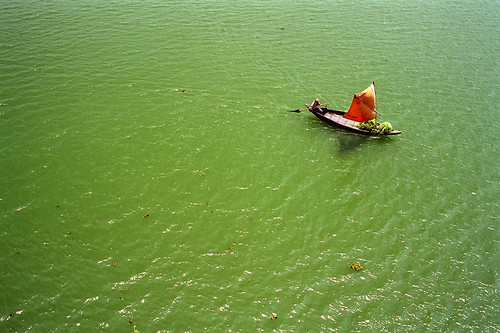
    Image source: Orangeadnan

  • Sustainable Security

  • Sustainable Security

  • The Climate Security Council?

    Last Wednesday, the United Nations Security Council held its second ever debate on climate change, at the request of Germany, who holds the monthly presidency. UN Secretary General Ban Ki-Moon, Director of the UN Environment Program Achim Steiner, President of Nauru Marcus Stephen, and Australia’s Parliamentary Secretary for Pacific Island Affairs Richard Marles all addressed the Council, along with representatives of 62 member states.

    Stephen wrote powerfully in the New York Times last week about the threat rising sea levels pose to his Pacific island country’s existence, and did not hold back in the Council, usually a place of diplomatic stoicism. Speaking on behalf of the Pacific Small Island Developing States, he said they were facing “the single greatest security challenge of all – that is, our survival” and put the question: “Where would we be if the roles were reversed? What if the pollution coming from our island nations was threatening the very existence of the major emitters? What would be the nature of today’s debate under those circumstances?”

    As it happened, the nature of the debate was twofold. On the ostensible subject, “Maintenance of international peace and security: impact of climate change”, most states agreed that it would have – and in some cases already is having – profound implications for international peace and security, and that the UN had a key role to play coordinating efforts on mitigation and adaptation to climate change. But discussion on this remained secondary to complex political wrangling over the role of the Security Council in addressing the topic. Whilst this is the case for any issue before the body – in discussions on whether to mandate armed intervention into a specific country, for example, the debate focuses not just on the rights and wrongs in that instance, but also the wider precedent it may set – there were added complexities with climate change.

    China and Russia displayed their usual reticence about extending the Security Council’s competencies into new areas. They were joined by Brazil, India, and many developing countries in the G77 bloc, who opposed attempts to move the issue away from the General Assembly-mandated UN Framework Convention on Climate Change (UNFCCC), in which all member states have equal footing and decisions are made by consensus, and into the 15 member body where China, Russia, France, the UK and U.S. hold veto power, and are some of the biggest greenhouse gas emitters, on either cumulative or per capita bases. The underlying fear of developing countries was that such a move would circumvent the core principles which make the existing climate change regime palatable – namely, the recognition of states’ “common but differentiated responsibilities” to act on climate change, and the right to sustainable development.

    Indeed, if the Security Council were to take overall control of climate action, this would be a regressive step, potentially allowing developed countries off the hook for their failure to meet existing targets under the Kyoto Protocol, and removing the impetus to agree a further UNFCCC commitment period. States proposing that the Security Council address the issue (primarily the EU, U.S. and small island states) were therefore at pains to stress that it would be complementary to existing UN bodies and processes, and should not encroach upon their remits. They argued that as a major security threat, it was right that the Council afford these dimensions of climate change due consideration. But as the UN body with the most diplomatic bite – only the Security Council has the power to authorise military force – it is easy to see why there are concerns that it could dominate the issue.

    During the debate there was related apprehension about the excessive securitisation of climate change. Many states pointed out that climate change was a cross-cutting issue, as much related to sustainable development and humanitarian relief as security, and that looking at it as a security issue would not address the underlying causes of the problem. Bolivia noted that developed countries gave $10 billion in climate change finance annually, which amounted to just 1% of defence spending, and suggested the Council adopt a resolution to cut defence and security spending by 20%, using the money saved to address the impacts of climate change. Papua New Guinea echoed Nauru’s Marcus Stephen, pointing out that if the Security Council could address issues such as development and HIV/AIDs as security problems (without them becoming militarised), then why not climate change?

    The non-binding Presidential Statement which was finally agreed did not include mention of a Special Representative on Climate Change and Security, which had been one of Germany’s original proposals. Many countries remained open to the idea of a representative, but opposed them being answerable to the Security Council, instead suggesting they be appointed by the General Assembly.

    On one level, the outcome was disappointing. Russia initially vetoed adoption of the statement, later agreeing to a watered down version merely noting the “possible security implications” of climate change. Ambassador Susan Rice of the U.S. lambasted the lack of stronger action as “pathetic”, “short sighted” and “a dereliction of duty”. However, given that the first Council debate on climate change in 2007 was unable to agree any formal outcome, getting a Presidential Statement was something of a success.

    There remains wide disagreement between states over whether climate change merely exacerbates conflict, or is a distinct threat itself. Academic opinion is still divided, and the Security Council’s position often lags a good ten years behind the latest research on peacebuilding and conflict prevention, so this is not hugely surprising. It is also difficult to untangle the opposition to climate-security links on conceptual grounds from opposition for political reasons related to Security Council ‘mission creep’, as discussed above.

    In 2009, the General Assembly requested that the Secretary General produce a report on the possible security implications of climate change. A few states strongly disputed its findings on Wednesday. Nevertheless, the Presidential Statement recommended that in his regular reports to the Council, the Secretary General begin to include information on the possible influence of climate change upon conflict situations around the world. These are important first steps towards mainstreaming climate change in conflict assessments, even if we are a long way from any legally binding resolution.

    Another reason for optimism is the level of participation in the debate. I followed many Security Council meetings whilst working in the UN community last year, and never saw so many member states request to speak. Most countries took the discussion seriously, and even where they disagreed on whether the Council had a mandate to act, they spoke strongly on the devastating impacts of climate change.

    The question now is: how long will it take for states to take this rhetoric seriously; to realise the gravity of the situation, break the cycle of mistrust in international negotiations and commit to unified multilateral action to address this issue – in whatever forum they choose? The answer is unclear.
    There is one thing we can be confident about – this won’t be the last time the Security Council discusses climate change.


    Joe Thwaites is a graduate in politics from the University of York, UK. He has worked on conflict prevention at the Quaker United Nations Office and represented Friends of the Earth at the UNFCCC.

  • Articles EXCLUSIVELY written for sustainablesecurity.org


    National Security and the Paradox of Sustainable Energy Systems  | Phillip Bruner

    Causes of Conflict: A Strategic Perspective on US-Sino Relations in the Caribbean | Serena Joseph-Harris

    The Global Land Rush: Catalyst for Resource-Driven Conflict? | Michael Kugelman

    The Climate Security Council? | Joe Thwaites

    Conflict, Poverty and Marginalisation: The case of Curvaradó and Jiguamiandó (Urabá, Colombia) | Amira Armenta

    Assessing the Security Challenges of Climate Change | Obayedul Hoque Patwary

    Human Security and Marginalisation: A Case of Pastoralists in the Mandera Triangle | Abdul Ebrahim Haro

    How the Competing Security Needs of Caribbean Community Members have Crystallized Through Multilateralism and Consensual Decision-Making | Serena Joseph-Harris

    Mano Dura: Gang Suppression in El Salvador | Sonja Wolf, Univesidad Nacional Autonoma de Mexico

    Hot and Cold Wars | James Lee

    Environment, Energy, Economy: A Threefold Challenge to Sustainable Security | Phillip Bruner

    Arma Virumque Cano: Capital, Poverty and Violence | I R Gibson

    Perpetuating Uncertainty: Trident and the Strategic Defence and Security Review | Tim Street

    Climate Funding: Creating a Climate for Conflict? Insights from Nepal | Janani Vivekananda

    Military Aviation and the Environment: Why the Military should care | Ian Shields

    The Other Resource Wars | Roger Howard

    A Spoon Full of Sugar Makes the Medicine Go Down? An analysis of the Obama administration’s ‘new’ National Space Policy | Jo-Anne Gilbert

    Why START is only a beginning on the long road to nuclear disarmament | Andrew Futter

    The UK and the NPT: Rhetoric, simulations and reality | Tim Street

    A New Approach to Ballistic Missile Defence in Europe? Demystifying the End of the ‘Third Site’ | Andrew Futter

    Climate Change, Conflict and Fragility: Understanding the Linkages, Shaping Balanced Responses | Janani Vivekananda

    Swimming Upstream to Sustainable Security | John Sloboda

  • Sustainable Security

    Momentum towards a nuclear weapons ban treaty: what does it mean for the UK?

    International momentum towards a treaty to ban nuclear weapons reached a milestone in the December 2014 Vienna conference. Even assuming that the UK does not initially sign up to such a treaty, it is subject to the pressures of a changing legal and political environment and could find its present position increasingly untenable – not least on the issue of Trident renewal.

    Read Article →

  • Selling Nature to Save Nature, and Ourselves

    THE HAGUE, Jul 5, 2011 (IPS) – Avoiding the coming catastrophic nexus of climate change, food, water and energy shortages, along with worsening poverty, requires a global technological overhaul involving investments of 1.9 trillion dollars each year for the next 40 years, said experts from the U.N. Department of Economic and Social Affairs (UN-DESA) in Geneva Tuesday.

    “The need for a technological revolution is both a development and existential imperative for civilisation,” said Rob Vos, lead author of a new report, “The Great Green Technological Transformation”. 

    Absent in the U.N. report is a call for the other necessary transformation: what to do with the market-driven economic system that has put humanity on this catastrophic collision course? Attempts to “green” capitalism are failing and will fail, according to many of the more than 200 social science researchers at a groundbreaking international conference in The Hague titled “Nature Inc?” Jun. 30 to Jul. 2. 

    “We must start tackling and questioning some core capitalist dictums, such as consumerism, hyper-competition, the notion that ‘private’ is always better, and especially economic growth,” says Bram Büscher, the conference co-organiser and researcher at the Institute of Social Studies (ISS) at Erasmus University in The Hague, Netherlands. 

    Equally important is to stop looking at nature as a collection of economic objects and services that “must only benefit some specific idea of human economic progress”, Büscher told IPS. 

    Governments, the World Bank, the United Nations and development agencies, international conservation organisations and others have all come to see markets as the only way to mobilise enough money to end deforestation, increase the use of alternative energy, boost food production, alleviate poverty, reduce pollution and solve a host of other serious and longstanding problems. 

    Started as a small gathering of academics, Nature Inc? became a major event as hundreds of experts from around the world wished to participate. Büscher believes the main reason for this is that many are actively doing research on environmental and conservation issues and are increasingly running into new market schemes like carbon credit trading, payments for ecosystem services, biodiversity derivatives and new conservation finance mechanisms, and so on. 

    “Payments for ecosystem services are the newest tropical ‘miracle’ crop,” said Kathleen McAfee of San Francisco State University. 

    The market is putting new values on tropical forests as carbon sinks, reservoirs of biodiversity or ecotourism destinations, McAfee said during the conference. 

    The World Bank, U.N. and others say that the only way to generate large corporate sector and private investment to protect tropical forests is by payments for ecosystem services such as carbon and biodiversity offset markets such as Reduced Deforestation and Degradation for biodiversity known as REDD+. These are also touted as the way out of poverty for communities living in or near forests. 

    “However, markets are preconditioned on inequality and will only make matters worse,” McAfee said. 

    Markets will look for the cheapest land available, which means the poorest will be displaced because they don’t have formal land tenure or they will be persuaded by promises of large payments. In order to secure the investment, carbon traders will place restrictions on the use of the land for decades. 

    Technical assessments and monitoring will also be needed, which results in high costs as was the case for a project in Costa Rica, McAfee said. “The poor got very little…it didn’t even cover their costs,” she noted. 

    When the European Union committed to reduce its carbon emissions by 20 percent by 2020, some European multinational industries with high carbon footprints simply moved to countries like the United States where there were no restrictions, said Yda Schreuder of the University of Delaware. 

    “Europe going it alone on carbon reductions has resulted in higher overall emissions globally,” said Schreuder, author of “The Corporate Greenhouse”, a critical look at the political economy of the climate change debate. 

    Globalisation greatly enables companies to quickly shift their operations to where costs or restrictions are lower. To meet its 2020 target, Europe reduced its use of coal 35 to 50 percent by switching to renewable energy like wind, but mainly through much higher use of natural gas obtained from Russia. 

    Natural gas emits much less carbon than coal. However, over the same time period, Russia increased its use of coal for domestic energy because it could make more money selling natural gas to Europe, Schreuder said. 

    “The World Trade Organization encourages all this to happen. Markets are a driving force behind increasing emissions of carbon,” she added. 

    Digging deeper into these schemes reveals their inherent contradictions and unintended consequences, but they are “often promoted in lyrical win-win language”, said Büscher. 

    Many believe the green technology transformation that the new U.N. report calls for is unlikely to succeed without a move away from the economic growth-at-all-costs paradigm that dominates nearly everyone’s thinking. There is an overwhelming need to find alternatives and stop promoting an economic system that has created the crisis. 

    “These are incredibly complex problems and there are no simple solutions,” Büscher concluded. 

    Article source: Terraviva

    Image source: Paul Keller

  • Sustainable Security

    Geneva II: Prospects for a Negotiated Peace in Syria

    The recent announcement that the so-called Geneva II conference would finally convene on 22 January 2014 is overdue but good news. What are the chances of it bringing peace? With an interim deal signed on Iran’s nuclear programme, Richard Reeve discusses what chance the great powers, Middle Eastern diplomats and the mediators of Geneva have as they turn their attention to ending the war in Syria.

    Read Article →

  • Sustainable Security

    Western states are growing increasingly reliant on private military and security companies. Fully understanding the privatization of security and its effects on sustainable security requires the inclusion of a critical gender lens.

    Introduction

    In 1999, the American private military contractor Dyncorp hired Kathryn Bolkovac as UN International Police Task Force monitor in Bosnia-Herzegovina. In the course of her work Bolkovac raised allegations that private contractors and UN employees were trafficking and sexually exploiting young girls. In 2002, a UK court acknowledged that Bolkovac was wrongfully dismissed for bringing the story to light, but nobody was ever prosecuted for the alleged sex trafficking.

    Bolkovac’s story — dramatized in the movie The Whistleblower  — captures perfectly some of the challenges to accountability when security functions are outsourced to the private sector and performed by transnational security forces. Security privatization reduces transparency and accountability in ways that exacerbate and make less visible the gender inequalities and gender-based violence that pervade militarized security contexts. Moreover, security privatization increases the profitability of insecurities, making it more difficult to tackle the causes, including gendered causes, of insecurity. Understanding the privatization of security and its effects on sustainable security requires the inclusion of a critical gender lens.

    PMSCs and gender: an emerging challenge

    15245844288_2026206f77_o--1-

    Image by chuck holton via Flickr.

    Over the past three decades a new challenge to sustainable security has emerged: the growing reliance on private military and security companies (PMSCs) by Western states, international organizations, non-governmental organizations, and transnational corporations. PMSCs offer a wide range of services from logistical support, intelligence, training, armed and unarmed guarding and protection, to reconstruction and more. The US-led wars in Afghanistan and Iraq have shown that today waging war is contingent on heavy involvement from the private sector. Private contractor numbers have trailed and at times outpaced US troop levels in the wars in Afghanistan and Iraq. In February 2010, the US DoD employed more than 100,000 private contractors each in Afghanistan and Iraq.

    A number of high-profile cases have highlighted the problems associated with the use of private contractors in Iraq and Afghanistan. Private contractors were involved in the abuse of prisoners at Abu Ghraib and the 2007 shooting and killing of Iraqi civilians in Nisour Square. Allegations of war crimes, poor working conditions, sexual harassment and human trafficking, and disregard for local populations have come to shape the public image of the private security industry over the past two decades.

    In this context, gender has become part of the industry’s attempts to improve its reputation. Gender considerations have made it into the voluntary International Code of Conduct for Private Security Providers that came into effect in November 2010. The International Code of Conduct explicitly addresses gender in three paragraphs on gender-based violence, selection of personnel, and harassment-free work environments. Gender has also been declared ‘good for business‘ by the private security industry. Female employees of PMSCs are seen as useful to conduct security checks on women or to foster positive interactions with local populations, and thus seen as instrumental to operational effectiveness. This attention to gender, while positive on the surface, has mostly served the purpose of creating greater legitimacy for the industry. It has not addressed the larger impacts that outsourcing have on women’s claims to greater and equal participation in the military sphere and the gendered impacts of the use of private forces in local contexts.

    A critical gender lens on private security

    Gender is not just a ‘problem to be solved’ for private contractors, but is fundamental to the reorganization of force through privatization, to the functioning of the private security industry, and to how the industry legitimizes itself. The greater use of private force is part of the broader neoliberal transformation of militarized citizenship that has also entailed a shift from conscription to all-volunteer forces in many Western states. This reorganization of public force has meant an end to the male citizen-soldier model and the greater integration of women into all-volunteer forces. The greater reliance on private security has occurred alongside to the greater integration of women into Western public militaries. While some decry the feminization of public militaries, others have shown how PMSCs actively rely on hyper-masculinity in portraying themselves as more effective security forces vis-a-vis the public sector.

    PMSCs that provide security services primarily recruit from the army and special forces. In doing so, they replicate and even reinforce the gendered division of labour present in the public military sphere. However, PMSCs have also made a concerted effort to distance themselves from the hyper-masculine images of trigger-happy burly ‘cowboys’ and shift towards a softer and more legitimate image of masculinity, shedding the hyper-masculine militarized image for one emphasizing humanitarianism, protection, professionalism, and expertise. At the same time, privatization sidelines and depoliticizes questions of gender equality in the military sphere. There is neither publicly available data on women in the private security industry nor public debate on their marginalization within the industry. By its very logic, profitability drives the private security sector and not questions of citizenship and equal participation.

    Gender also intersects with race and citizenship to shape the division of labour in the globally operating private security sector. A large segment of the workers hired or subcontracted by PMSCs comes from the Global South. The globally operating private security industry can be thought of as a hierarchy of masculinities. Western contractors are at the top of this hierarchy, and so-called third-country nationals (TCNs) from the Global South sit at the bottom. Profitability is in part achieved through the exploitation of this vulnerable migrant labour force.

    The outsourcing of military security functions to private companies has allowed a global rescaling of labour recruitment in support of Western military operations. As data from the US wars in Iraq and Afghanistan show, a majority of contractor labour is made up by ‘third-country’ and host-country nationals and not by US citizens. For example, of the more than 200,000 DoD contractors working in Iraq and Afghanistan in February 2010 (mentioned above), less than 40,000 were US citizens. The racialized hierarchy among contractors of different citizenship is evident not only in pay and working conditions, but also in the kind of work performed. While local and migrant workers perform much of the logistical support work, their proportion is particularly high when it comes to the more dangerous armed security work.

    Conclusion

    Simply bringing consideration of gender into the private security industry is not a sufficient enough means of addressing the problems that security privatization poses for sustainable security. Conflict is often justified and waged by appealing to gendered notions of security: masculinized protectors and defenders, and feminized and vulnerable populations in need of protection. Private actors feed into this gendered discourse, portray themselves as masculinized protectors, and benefit from continuing insecurities and global inequalities. As insecurities create new market opportunities for the private security industry, gendered discourses of protection and gendered divisions of labour are being reinforced while sustainable security becomes more elusive. We need to be mindful of security privatization and the fundamental ways in which it is gendered as we work towards remaking security in more sustainable ways.

    Maya Eichler is Canada Research Chair in Social Innovation and Community Engagement and Assistant Professor of Political Studies and Women’s Studies at Mount Saint Vincent University.