Blog

  • Sustainable Security

    Losing control over the use of force: fully autonomous weapons systems and the international movement to ban them

    Later this month, governments will meet in Geneva to discuss lethal autonomous weapons systems. Previous talks – and growing pressure from civil society – have not yet galvanised governments into action. Meanwhile the development of these so-called “killer robots” is already being considered in military roadmaps. Their prohibition is therefore an increasingly urgent task.

    Read Article →

    Nuclear Weapons: From Comprehensive Test Ban to Disarmament

    Despite not yet entering into force, the 1996 Comprehensive Test Ban Treaty has succeeded in almost eliminating nuclear weapons testing and in establishing a robust international monitoring and verification system. A breakthrough in its ratification by the few hold-out states could have important positive repercussions for the Nuclear Non-Proliferation Treaty or nuclear disarmament in the Middle East.

    Read Article →

  • Sustainable Security

    Authors Note: This article summarises key findings of my book Malte Brosig (2015) Cooperative Peacekeeping in Africa: Exploring Regime Complexity. London & New York: Routledge.

    Introduction

    Peacekeeping enjoys an unprecedented popularity amongst policymakers at the moment. At no point in history have there been more peacekeepers deployed worldwide. The United Nations (UN) and regional organisations are currently deploying more than 100,000 troops and police in missions around the globe but most are located in Africa. The challenges individual missions are facing are well-discussed among experts. Much of the relevant literature focusses on dos and don’ts of peacekeeping practices. Regardless of individual cases we can observe the emergence of a larger inter-organisational peacekeeping system which I refer to as African peacekeeping regime complex in which the most relevant organisations such as the UN, the African Union (AU), Regional Economic Communities (RECs) and European Union (EU) are intimately inter-connected. Thus, the challenges actors are facing are not only individual ones and so solutions to these challenges are increasingly based on multi-actor coordination. How the peacekeeping regime complex emerged and how actors are positioned within it will be explored in this contribution.

    Peacekeeping Today

    Modern peacekeeping is confronted with high expectations and an enormous task complexity. Peacekeeping activities reach far beyond ceasefire monitoring, and also involve countering rebel and terror groups, protecting the civilian population, disarming combatants, supporting elections, reforming the security apparatus, state building and engaging in humanitarian relief. In sum, the expectation is that peacekeepers are not simply administering fragile peace, but also working to prevent a relapse into conflict by addressing its root causes. Naturally, these activities are conducted under considerable insecurity in a fragile environment where conflict has not often ceased, but is instead suppressed. Progress is uncertain and backlashes are likely.

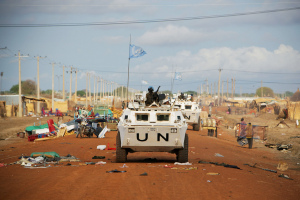
    Zambian peacekeepers from the United Nations Mission in Sudan (UNMIS) patrol streets lined with looted items awaiting collection in Abyei, the main town of the disputed Abyei area on the border of Sudan and newly independent South Sudan. In a statement yesterday, the United Nations strongly condemned the burning and looting currently being perpetrated by armed elements in the area, following the seizure of Abyei town by Sudanese Government troops on 20 March.

    Zambian peacekeepers from the United Nations Mission in Sudan. Image by United Nations Photo via Flickr.

    The demand for peacekeepers and the existing complexity and high expectations peacekeeping is confronted with in practice lead to an overburdening of single actors. For the African continent, we can identify a group of relevant organisations which play a central role within the African peacekeeping regime complex. These are the UN, AU, RECs and EU. None of these actors are capable of dominating the regime complex fully. They all are facing the harsh realities of resource scarcity. Resources can be material goods (financial, military) or social kinds like competences or political (in) capacities or deployment doctrines.

    Examples of this resource scarcity and its effects are easy to find. While the UN remains the most essential actor, it does not have command over the resources which would allow it to outperform regional organisations. This becomes very clear when looking at deployment times and/or the issue of peace enforcement. With its heavy bureaucracy in the background, the UN’s response times are on average around six months which is far from a rapid response. Issues of peace enforcement and counter-terrorism are also politically controversial within the UN and thus the UN’s missions find it difficult to engage in this kind of activity. In practice, there remains a considerable gap in the UN response to severe crises.

    On the part of African actors, much has been achieved within the last decade. An African Peace and Security Architecture (APSA) has been erected which builds on close cooperation between the AU’s headquarters in Ethiopia and RECs. Considerable efforts have been made to establish the African Standby Force (ASF). Indeed, the AU is now actively involved in practically all emerging conflicts on the continent. Still, it falls short of being able to independently respond to crises in a sustainable and comprehensive manner. The design of the ASF which consists of around 25,000 troops only makes up a minority of all deployments to the African continent. While the AU is willing to deploy in situations where the UN is reluctant to do so, the AU’s resource constraints are significant. The lack of funding is a compelling example. Despite efforts of the Commission chair to reduce external dependencies, the peacekeeping budget is predominately being financed by international donors. AU peacekeeping missions are not sustainable to maintain and can only operate with much reduced task complexity. Thus, because of resource constraints, they are neither long-term nor comprehensive in nature.

    In the case of the EU, the situation is different. It is the most well-resourced organisation of all but does not have a global mandate. While the EU has deployed around 17 missions to Africa since 2003, these have been rather small in ambition, scale and duration. Most missions train security forces, but only a few are actively engaging in operational peacekeeping. This does not result from an absence of resources but is wanted politically.

    How the Multi-Actor Approach is Shaping Modern Peace Operations

    Given the very visible limitation of each single actor, it is hardly surprising that peacekeeping today is a multi-actor game forming a regime complex. A regime complex can be characterised as a form of decentralised and non-hierarchically organised governance. Actors are overlapping with regard to their membership and/or operational ambit and are tightly interconnected which makes it difficult to decompose the system into individual units. What a regime complex constitutes is mostly defined in terms of the relationship of its constituent parts which are constantly interacting with one another. In the case of peacekeeping in Africa, we can detect such a system.

    In the overwhelming number of cases, we can observe forms of cooperative peacekeeping in which actors are pooling their resources. The most pervasive forms of cooperation are the sequential and co-deployment of troops. This has also led to a division of labour and institutional specialisation between the involved actors. For example, the AU often functions as a first-deployer, sending out troops in situations which are not consolidated and remain hostile and fragile. These deployments which are rather short-term oriented aim to prepare the ground for a larger more comprehensive and longer-term engagement from the UN. The UN’s response is often slower but more sustainable and also covers complex peace building tasks and stays in countries for an extended period of time. The role of the EU is less ambitious, but not less important. In the operational peacekeeping theatre, the EU contributed a high number of missions which are targeted and confined in terms of deployment times (short-term) and tasks (usually training missions). They aim from the beginning not to take over comprehensive tasks but are designed to fill in functional niches other actors leave. Financially, the EU is one of the main donors for AU peacekeeping missions. Since 2004, the EU’s African Peace Facility has provided €1.9bn for institutional capacity building and peacekeeping missions. Recent peacekeeping missions deployed to the Central African Republic (CAR) and Mali broadly follow this track of interaction.

    However, the exchange of resources between the AU-EU-UN which forms the backbone of the peacekeeping regime complex is not a simple functional mechanism. The exchange of resources is, for example, also influenced by peacekeeping doctrines. These are not automatically complementary. In the case of the AU and UN, the AU’s exit strategy is not necessarily compatible with the UN’s entry strategy. While the AU deploys in situations of continuing hostilities and aims at stabilising the situation, the UN takes a more conservative approach aiming to deploy only in situations where at least a ceasefire is in place. What happens if the AU stabilisation efforts do not lead to tangible progress can be seen in Somalia. Although the AU has called for UN take over since the deployment of AMISOM in 2007, no UN takeover occurred.

    Doctrinal divisions also exist with regards to robust peacekeeping in already deployed missions. While the AU and African states often accept that within peacekeeping missions the use of force is sometimes needed to actively deter and encounter rebels or terrorists, this view is mostly not shared by the UN and EU. As a consequence, active peace enforcement in cases of deployed UN missions (CAR, Mali, DRC) tend to be outsourced. In case of the DRC, a Force Intervention Brigade (FIB) was set up and staffed by African countries or France continued its military operations hunting down terrorists in Mali.

    Apart from questions of doctrinal complementarity, the supply and demand for resources varies significantly between actors. An organisation which is stronger on the supply side can chose how to design its involvement in peacekeeping while an organisation which is experiencing a strong demand but little supply is in an inferior position. This can be seen when comparing the EU and AU. The EU is in the position to provide what it deems adequate (many small scale targeted missions), the AU is in the complete opposite situation. It cannot maintain longer-term missions on its own and relies both on external funding and operational handover to the UN.

    Conclusion

    Modern peacekeeping operates in a multi-actor environment which displays decentred governance structures to which we can refer as a regime complex. Apart from the fact that the UN Security Council bears a general responsibility for peace, there is no overarching or strict hierarchy between the UN-AU-EU. Despite the absence of externally delegated roles within the regime complex, assumed roles emerged as a consequence of individual institutional resource scarcity, doctrinal compatibility and the size of demand vs supply of resources. Certainly politics is not missing in this system. There is no formally agreed script according to which organisations can be expected to act and thus the exact mode of interaction varies between cases. Domestic conflict dynamics leave their imprint too.

    In the end, taking an inter-organisational perspective to peacekeeping is not a trivial under-taking because it constitutes a form of global governance which transcends the individual organisation. While we have long accepted that the classical nation state has lost parts of its domestic sovereignty to the forces of globalisation we also have to recognise that the same is true for international organisations. In this regard actorness and governance qualities do not exclusively rest in actors themselves but also in how they organise interaction with one another. The peacekeeping regime complex is one example and one that is shaping the lives of millions who live in some of the most vulnerable situations.

    Malte Brosig is Associate Professor in International Relations at the Department of International Relations at the University of the Witwatersrand in Johannesburg. He joined the Department in 2009 after he received his PhD from the University of Portsmouth. His main research interests focus on issues of international organization interplay and peacekeeping in Africa. He is the author of Cooperative Peacekeeping in Africa: Exploring Regime Complexity which was published at Routledge. Prof Brosig is a rostered consultant for the United Nations University’s Centre for Policy Research in Tokyo and holds fellowships at the Canadian Centre for R2P at the University of Toronto, the European Centre for Minority Issues in Flensburg and the German Institute for Global and Area Studies in Hamburg.

  • Competition over resources

    The Human Security Report Project has published a new book exploring the links between climate change and conflicts over natural resources across Africa.

    From the book’s synopsis:

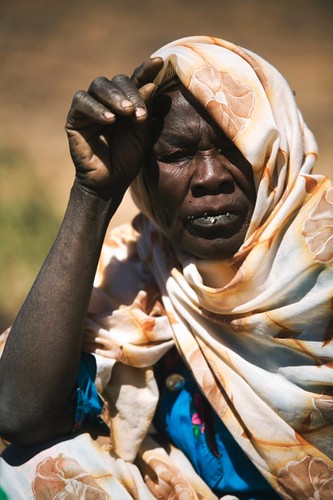
    The climate change phenomenon is a global concern, which typically threatens the sustainability of the livelihoods of the majority of the population living in the developing countries. Africa, particularly the sub-Saharan region, is likely to be negatively impacted by climate variability and change. Extreme natural occurrences such as floods and droughts are becoming increasingly frequent and severe.  Climate variability and change have further exacerbated the scarcity of natural resources on the African continent, leading to conflicts with regard to access to, and ownership and use of these resources. The scarcity of natural resources is known to trigger competition for the meagre resources available among both individuals and communities, and even institutions, thus affecting human security on the continent.

    Image source: Albert Gonzalez Farran

    Read more »

  • Sustainable Security

    RC_long_logo_small_4webThis article is part of the Remote Control Warfare series, a collaboration with Remote Control, a project of the Network for Social Change hosted by Oxford Research Group.


    Editor’s note: Remote Warfare and the War on Drugs mini-series: This series of articles explores how remote warfare is being used in the war on drugs. To date, much of the debate on remote warfare has focused on its use in the war on terror. However, the use of drones, private military and security companies (PMSCs), special forces and mass surveillance are all emerging trends found in the US’s other long standing war, the War on Drugs. The articles in this series seek to explore these methods in more depth, looking at what impact and long term consequences they may have on the theatre in which they’re being used. Read other articles in the series.

    In Latin America drones are being used as part of the War on Drugs as both regional governments and the US are using surveillance drones to monitor drug trafficking and find smuggling routes.. However, as drones are increasingly being used by drug cartels themselves to transport drugs between countries, could Latin America find itself at the forefront of emerging drone countermeasures?

    In many Latin American countries, militaries operate as internal security forces because they combat drug traffickers and insurgencies. As a result, regional security agencies are constantly looking for new technologies to support security operations. Indeed, Peruvian Admiral José Cueto Aservi described purchasing drones in 2013 as necessary due to the “asymmetric war” being launched by narco-movement Shining Path that “takes advantage of the complex geography to attack” and thus “all methods” – including “technology” – are needed to defeat them.

    Today, drones are regarded as potential “game changers” by regional security forces, believed to be invaluable “eyes in the sky” that will aid surveillance operations. Hence, it is no surprise that several Latin American countries have acquired them, whilst many others are producing them. At the same time, US drones are carrying out their own operations in Latin America as part of the global War on Drugs and drug cartels themselves have started using drones to smuggle drugs across international borders. As the use of drones looks set to increase, what is the likelihood of armed drones being used in this theatre and what implications could the non-state use of drones have on the region?

    Drones in Latin America

    Crahed Drone

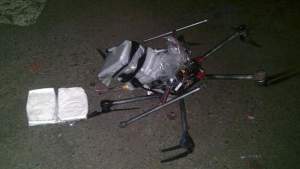
    Crashed drone on Mexican border. Image by Secretaría de Seguridad Pública Tijuana.

    There are currently at least 14 Latin American and Caribbean countries which have used or purchased drones. No Latin American state possesses large numbers of drones in the manner of the US military, rather, regional governments mostly operate just two or three drones of any type. Israel is the largest provider of drone technology to Latin America, having sold some $500 million worth to the region between 2005 and 2012.  Latin American states have also started developing their own drones with Colombia being the first South American nation to have home-built a drone, the Iris, in 2015.

    Unarmed drones carry out Intelligence, Surveillance and Reconnaissance (ISR) roles for a range of different operations in Latin America. Due to the region’s complex topography (a case in point is the Amazon, where drug traffickers from Brazil, Colombia, Bolivia and Peru operate) drones require special features like infrared cameras and have been useful for monitoring vast uninhabited spaces in the region. In Brazil, for example, drones have been used for agricultural reasons, including monitoring the Amazon rainforest. In Belize and Costa Rica too, drones have been used for conservation purposes. In Peru, a municipality police force in Lima,deployed three drones to patrol the Peruvian capital during the last Christmas season to help security officers locate emergency areas if necessary and in Mexico, drones have been used to patrol and secure sensitive areas like the facilities of the state oil company PEMEX.

    Drones and the War on Drugs

    Drones have also been used as part of the War on Drugs in Latin America. In Mexico, National Defense Secretariat, the Federal Police, the Procuradoría General de la República (the Attorney General’s office), as well as the Army and Air Force fly drones to gather intelligence to combat organized crime, mainly drug trafficking. In Brazil, Colombia, Panama and Trinidad and Tobago too, drones are used to monitor drug trafficking and find drug smuggling routes.

    Drones are also being used by non-state actors, in the form of drug cartels, to smuggle drugs between countries. In January 2015, a drone crashed in a supermarket parking lot in Tijuana, Mexico –carrying three kilograms of crystal meth and in August 2015, two Mexican citizens were convicted of utilizing a UAV to fly 13 kilograms of heroin from Baja California, Mexico, into California.This led US authorities to deem drones an “emerging trend” employed by transnational criminal organizations to smuggle narcotics into the US.

    In its long running War on Drugs, the US has also been using its own drones in Latin America. A New York Times article reported that, in 2011, in an effort to step up its involvement in Mexico’s drug war, the Obama administration begun sending its drones deep into Mexican territory to gather intelligence to help locate major traffickers. Furthermore, an official US briefing from 2011 – obtained via the Freedom of Information Act – revealed that the US Air Force is working to make its RQ-4 Global Hawk high altitude long endurance drones available to its allies in Latin America and the Caribbean in order to help “find drugs fields and helping plan offensives against rebel groups”.

    US Customs and Border Protection operates 10 MQ-1 Predator drones, including two based in Cape Canaveral, Florida, that patrol a wide swatches of the Caribbean through the Bahamas and down to south of Puerto Rico as part of the drugs fight, and, in 2013, it was reported that the US Navy was testing a new type of drone that can be hand-launched from a ship’s deck to help detect, track and videotape drug smugglers in action across the Caribbean Sea.

    US drones have also been used for other purposes in the region. US Customs and Border Protection have been flying surveillance drones for nearly a decade, launching them from bases in Texas, Florida, North Dakota and Arizona to detect illegal border-crossing. This activity has been called into question recently as a 2015 report from the Department of Homeland Security’s inspector general found drones to be ineffective in conducting surveillance along the border.

    Towards drone countermeasures?

    As for the future, we can expect drones to continue to be utilized in Latin America, as there has been an increase in the purchasing and development of drones across the region in the last few years. US companies Boeing and Aerovironment, for example, have both declared their intention to increase drone sales to Latin America, with countries like Colombia, Chile, Mexico and Peru interested in purchasing from them and the Swedish firm Unmanned System Groups (USG), showcased its F-330 drone to the Uruguayan armed forces in late 2014.

    More countries in the region are also looking to develop their own drones. Following the building of Colombia’s first drone in 2015, a COHA report found that Peru, Ecuador, Argentina and Brazil are all in the process of developing their own drones. There have also been talks of developing a South American drone, which would be manufactured by the Union of South American Nations (UNASUR, which has as members all twelve South American states).

    With regards to armed drones in the region, a number of states have indicated their desire for them. Peru and Colombia in particular could seek to acquire armed drones as internal security conditions worsen. However, this is unlikely to happen any time soon as countries that possess armed drones, such as the US and Israel, are unlikely to sell them to Latin America in the near future. Hence Latin American militaries would have to look to other potential suppliers, like China or Russia, or construct them themselves. Here, financial barriers, along with limited technological know-how capabilities, even amongst countries that already produce drones, would make this unlikely.

    Even if armed drones are unlikely to be used in the region any time soon, there is a potential for Latin America to become a testing ground for drone technology in other ways. As drones are being increasingly utilized by drug traffickers in the region to transport drugs between countries in ever more sophisticated ways, it is likely that this will lead to regional efforts to develop increasingly advanced drone-detection and interdiction technologies to defend against this threat. At present a number of companies internationally are developing this technology, used to detect, block and destroy drones. This includes the development of early warning systems that can identify and detect drones and signal jamming technology to block drone control frequencies. As well as this, technology is also being advanced to destroy detected drones. This includes both laser and kinetic defence systems, the later using missiles, rockets and bullets capable of shooting drones down. Companies are also looking into nonlethal projectile weapons that fire blunt force rounds, such as bean bags or rubber bullets, or small portable net guns that can ensnare drones. As Latin America finds itself battling against the hostile use of drones by drug cartels it could find itself at the forefront of these emerging drone countermeasures.

    Alejandro Sanchez is a regular contributor for IHS Jane’s Defense Weekly, the Center for International Maritime Security, Blouin News and Living in Peru. He focuses on geopolitics, military and cyber security issues in the Western Hemisphere. His analyses have appeared in numerous refereed journals including Small Wars and Insurgencies, Defence Studies, the Journal of Slavic Military Studies, European Security, Studies in Conflict and Terrorism and Perspectivas. Follow him on Twitter:  @W_Alex_Sanchez

  • Global militarisation

    In the Lowy Institute’s latest Strategic Snapshot, International Security Program Associate Ashley Townshend explores the strategic dynamics between China and India in the Indian Ocean.

  • Competition over resources

    A hurricane of crises across the world – financial meltdown, economic recession, social inequality, military power, food insecurity, climate change – presents governments, citizens and thinkers with a defining challenge: to rethink what “security” means in order to steer the world to a sustainable course.  The gap between perilous reality and this urgent aspiration remains formidable.

    SustainableSecurity.org Associate Editor Paul Rogers, highlights the need for fresh, effective and transforming approaches to security. 

    This article was originally posted on openDemocracy

    Read more »

  • NGOs Call for Immediate and Full Reporting of Every Casualty in Libya

    Fifteen humanitarian and human rights organisations have this week called on the states implementing the no-fly zone in Libya to commit to recording and reporting on civilian casualties in that country.

    Their call comes in an open letter (text below) sent to all members of the UN Security Council, the Arab League and the African Union.

    The international communitys intervention in Libya, mandated by UNSC 1973 and based on civilian protection, lacks any means by which such protection can be evaluated. In addition to the protection of civilians by all necessary measures, Resolution 1973 and 1970 mandate that those responsible for attacks on civilians ought to be held accountable, and that the Libyan authorities should comply with the international legal regime. Without a serious casualty reporting mechanism, it is hard to see how any of these mandates could be met to the satisfaction of all parties.


    The co-signatories of the letter call for states to commit to: immediate and comprehensive recording of all civilian casualties whether children, women, or men, who have been killed injured, displaced, or who are missing. Monitoring should be done using all means presently available and be followed-up by full on-the-ground, incident-level investigations as soon as is feasible. 

    The signatories further urge that the mechanisms employed be transparent and open to public scrutiny, in particular to Libyans.

    The letter will remain open for further signatories.


    Full text of the joint letter

    To: The President of the UN Security Council
          UN Ambassadors of States within the Security Council
          Governments represented on the UN Security Council
          Governments of Coalition forces involved in Libya
          The Secretary General of the United Nations
          The Secretary General of the Arab League
          The Chairman of the African Union Commission

    Casualty Recording in the Libya Conflict

    We, the undersigned organisations, call on all parties to the armed conflict in Libya that, along with exercising every possible restraint in their conduct of military operations, they commit to recording and reporting on the civilian casualties of conflict from military operations in that country.


    We define this as the immediate and comprehensive monitoring and documentation of all civilian casualties whether children, women, or men who have been killed, injured, displaced, or who are missing. Monitoring should be done using all means presently available and be followed-up by full on-the-ground, incident-level investigations as soon as is feasible. We further urge that the mechanisms employed be transparent and open to public scrutiny, in particular to Libyans.

    As a key element of humanitarian protection obligations, as well as the accountability that underpins good governance, whether by domestic parties to conflict or international state actors, it is of the utmost importance that civilian casualties are carefully and conscientiously monitored in any military action. This remains equally true when military intervention is proposed to protect civilians from further harm. Credible information on the nature and extent of civilian casualties is a crucial means by which to guide and to assess the efficacy of such interventions, including any operational precautions taken to minimise harm to civilians.

    The UN Security Council Resolution 1973 on Libya passed on the 17th of March 2011 expresses grave concern at heavy civilian casualties in that country, asserts that its purpose is the protection of civilians, and demands a complete end to violence against them. Given its objectives and its implementation, SC Resolution 1973, by its own terms, requires a full and thorough investigation of its consequences for civilians.

    Detailed monitoring and documentation of civilian casualties is also central to investigations into accountability as well as possible violations of international human rights and humanitarian law which are also objectives in both SC Resolutions 1970 and 1973. This accountability applies to all parties to the armed conflict, including the Libyan armed forces under Muammar Gaddafi, Libyan opposition armed forces, and state armed forces acting under SC Resolution 1973.

    A commitment to monitoring and fully documenting casualties would therefore be in accordance with, and of benefit to, the goals expressed in both SC Resolutions 1970 and 1973, as well as being consistent with the general principle of responsibility to protect. Specifically, it would safeguard:

    Accounting for violence against civilians

    Stressing the need to hold to account those responsible for attacks, including by forces under their control, on civilians… (SC Res. 1970)

    Compliance with the international legal regime

    Considering that the widespread and systematic attacks currently taking place in the Libyan Arab Jamahiriya against the civilian population may amount to crimes against humanity. (SC Res. 1970)

    Demands that the Libyan authorities comply with their obligations under international law, including international humanitarian law, human rights and refugee law and take all measures to protect civilians…’ (SC Res.1973)

    Accountability of Intervention

    Authorizes Member States… to take all necessary measures to protect civilians and civilian populated areas under threat of attack in the Libyan Arab Jamahiriya… (SC Res. 1973)

    It should also be noted that the present lack of credible data on civilian casualties is compromising effective planning of a humanitarian response. Thus, thorough monitoring and documenting of casualties will serve the dual purpose of fulfilling those objectives built into SC Resolutions 1970 and 1973, whilst also informing humanitarian efforts when feasible.

    The undersigned believe that the protection of civilians, which is an expressed goal of SC Resolution 1973, must be underpinned by a commitment from the parties to the conflict to reliable monitoring of the impact on civilians monitoring which can only be achieved though the resolute and robust recording of casualties.

    References:
    UNSC 1970:
    http://www.un.org/News/Press/docs/2011/sc10187.doc.htm
    UNSC 1973:
    http://www.un.org/News/Press/docs/2011/sc10200.doc.htm

    Signatories:

    Seb Taylor
    Director, Action On Armed Violence, UK

    Ajmal Samadi
    Director, Afghanistan Rights Monitor, Afghanistan

    Sarah Holewinski
    Executive Director, Campaign for Innocent Victims in Conflict, USA

    Jorge A. Restrepo
    Director, Conflict Analysis Resource Center, Colombia

    Igor Roginek
    Human Losses Research Coordinator, Documenta, Croatia

    Fredy Peccerelli
    Executive Director, Guatemalan Forensic Anthropology Foundation, Guatemala

    Dr Ghassan Elkahlout
    Chief Executive Officer, Human Relief Foundation, UK

    Ucha Nanuashvili
    Executive Director, Human Rights Center, Georgia

    Tom Malinowski
    Washington Advocacy Director, Human Rights Watch, USA

    Hamit Dardagan
    Co-Founder, Iraq Body Count, UK

    Phil ya Nangoloh
    Executive Director, NamRights, Nambia

    Dr Ian Davis
    Director, NATO Watch, UK

    Chris Langdon
    Managing Director, Oxford Research Group, UK

    Mirsad Tokača
    President Managing Board, Research and Documentation Center, Bosnia and Herzegovina

    Abdullahi Sheikh Abukar
    Executive Director, Somali Human Rights Association, Somalia


    Article source: Oxford Research Group


    Image source: Defence Images

  • human security

    Food security will remain out of reach for many people, especially women and children, in the Lao People’s Democratic Republic, or Laos, if the country continues to emphasize commodities and resources development at the expense of the environment and livelihoods while ignoring global trends for food and energy. Read more »

  • Climate change, conflict and fragility: understanding the linkages, shaping effective responses

    This excellent report by International Alert examines the growing risk of armed conflict as a result of climate change now being experienced by some of the most fragile regions of the world, and reveals the alarming consequences of continued inaction to enable affected countries to adapt to the consequences of climate driven changes on their populations.

    Taken from the introduction:

    This paper outlines the climate-conflict interlinkages and the challenges involved in responding to their combined challenge. Establishing the overall goal of international policy on adaptation as helping people in developing countries adapt successfully to climate change even where there is
    state fragility or conflict risk, the paper makes and explains eight specific policy recommendations.

    To redirect to the International Alert weblink for this report please click here.

  • Myanmar: Peaceful Transition to Democracy or Storm Clouds on the Horizon?

    Published last week, Myanmar: Storm Clouds on the Horizon is International Crisis Group’s latest Asia report. It focuses on the potential for political violence and social instability as Mynamar’s leaders are undertaking reforms “to move the country decisively away from its authoritarian past”. For most of the past 50 years, the government of the Republic of the Union of Mynamar (also referred to as Burma) has been under direct or indirect control by the military. Since independence in 1948, the people of Myanmar have suffered civil wars which have mainly been struggles for ethnic and sub-national autonomy. The country has consistently been in the news for human rights violations. Perhaps one of the world’s most well-known political prisoners, the Nobel Peace Prize laureate and opposition politician Aung San Suu Kyi, also chairperson of the National League for Democracy (NLD) was released in 2010 after 21 years under house arrest.

    Thein Sein, current president of Myanmar, has put in place a far-reaching and radical reform agenda. The ICG’s report focuses on what reforms have been achieved and what this may mean for a possible resurrection of violence because “political prisoners have been released, blacklists trimmed, freedom of assembly laws implemented, and media censorship abolished. But widespread ethnic violence in Rakhine State, targeting principally the Rohingya Muslim minority, has cast a dark cloud over the reform process and any further rupturing of intercommunal relations could threaten national stability.” With former political prisoners being released, 2,000 high-profile activists and opposition politicians being allowed to return home, and further liberalization of the media, “social tensions are rising as more freedom allows local conflicts to resurface”.

    The report notes that “The easing of authoritarian controls has created the space for the population to air grievances, the ability to organise in a way that was not possible before, and the opportunity to have a real influence on government policies and decisions” which has led to an “exponential growth in civil society activity”. In order for the transition from authoritarian rule to democracy to be stable, and for peace and security to be sustainable, the government of Myanmar will have to face and resolve major challenges. Widespread militarization and the political and social marginalization (past and present) of ethnic and religious groups will have to be addressed. For example, it has been estimated that the recent 2012 violence between Rohingya Muslims and Rakhine Buddhists in Rakhine State led to an estimated 90,000 displaced people in addition to dozens of casualties. It will not be sufficient to react to past and present violence by allowing more freedom of speech and liberalizing the press. Trying to contain the violence and reducing state repression alone will not address the underlying drivers of insecurity. The government will have to take a sustainable security approach and make great efforts in order to actively address the causes of long-standing grievances. Addressing only the symptoms cannot lead to long-term stability and the rebuilding of trust between communities.

    The ICG offers several options to minimize the risks associated with single party dominance during Myanmar’s political transition. These include changing the electoral system to some form of proportional representation, building coalitions between the NLD and other political parties, and building bridges between the NLD and current president Thein Sein as well as other political forces- particularly the old guard. The ICG recommendations underscore the importance of all parties, and the majority of people, to feel involved in the political process. The marginalization of any political or ethnic/religious groups will most probably lead to further violence and insecurity in the future.

    ICG’s full report and details of the policy recommendations can be read here.

    Image source: Rusty Steward