Blog

  • Sustainable Security

    by Wim Zwijnenburg

    RC_long_logo_small_4webThis article is part of the Remote Control Warfare series, a collaboration with Remote Control, a project of the Network for Social Change hosted by Oxford Research Group.

    While the US and its allies have had a monopoly on drone technology until recently, the uptake of military and civilian drones by a much wider range of state and non-state actors shows that this playing field is quickly levelling. Current international agreements on arms control and use lack efficacy in responding to the legal, ethical, strategic and political problems with military drone proliferation. The huge expansion of this technology must push the international community to adopt strong norms on the use of drones on the battlefield.

    Media outlets around the world reported on a new Islamic State (IS) video in August, which made use of a quad copter surveillance drone to film a military base near Raqqa, Syria. ‘Drones and Da’ash: a new terror threat’, headlines suggested. But that’s old news. Drones have been operated by non-state armed groups for years. Indeed, IS had already put up a drone-filmed video in February 2014 of a convoy with armoured vehicles, SUVs and trucks in Fallujah, and Hezbollah has been investing in their drone arsenal since before the 2006 Lebanon war.
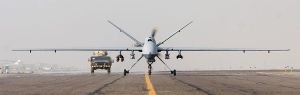
    An MQ-9 Reaper takes off on a mission from Afghanistan. Source: Wikimedia

    An MQ-9 Reaper takes off on a mission from Afghanistan. Source: Wikimedia

    So why the mounting interest in the use of drones by these groups? And why is this a reason for concern? The armed forces of US-allied states are increasingly relying on drones for Intelligence, Surveillance and Reconnaissance (ISR) missions. Intelligence gathering capacity and strike capabilities have both increased hugely with the introduction of unmanned military systems on the battlefield. A handful of states, led by the US, Israel and the UK, have used drones for lethal strike capabilities, including large drones such as the MQ-1 Predator or the MQ-9 Reaper, or smaller, pocketsize kamikaze drones such as the Switchblade.Drone use by the US and its allies has set the stage for others to jump in on these developments and apply this technology in their military operations. This has resulted in a booming multi-billion dollar drone industry and the proliferation of various types of drones, both for civilian and military applications. Over the last few years, the regimes in Iran, Syria, Sudan and groups as Hezbollah, Hamas, and recently the Islamic State have acquired unarmed drones and have actively used them during their operations. The origin of these drones? Iran.

    The further application of drones for a variety of purposes is certain, yet what implications does this have for the military application of drones, and what challenges does this pose to international security and the use of these new types of technologies and weapon systems?

    Concerns

    Although the use of unmanned systems for a range of civilian tasks clearly has its advantages, from checking oil pipelines, wind turbines and agricultural purposes, to name a few, other tasks such as law enforcement and military use deserve close scrutiny. In particular, how will drones have an impact on the use of armed violence, and are they an effective means for counter terrorism operations?

    The expanding use of drones for lethal operations has been met with severe criticism from human rights groups, UN Special Rapporteurs and civilian victims of drone attacks. Drone strikes outside armed conflict have stretched the boundaries of International Humanitarian Law and have violated the right to life of civilian victims. Moreover, due to these civilian casualties, there is concern that drone strikes as a counter-terrorism strategy [PDF] only bolster support for armed or terrorist groups. The recent use of drones over contested air space between China and Japan and over the Persian Gulf between the US and Iran have demonstrated the ‘potential for miscalculation and military escalation’. The absence of transparency over targeting procedures and of an accountability mechanism further clouds proper judgement on the legality and effectiveness of drone strikes in and outside armed conflict. [i]

    Mapping the spread

    Drones, both low-tech and high-tech, have definitively changed the way we wage wars. Added capabilities include improved information gathering, better targeting, and even the option of equipping drones with explosives and using them for strikes against military, but also civilian targets. A Russian expert has even speculated about the possible use of drones armed with chemical and biological weapons in densely populated areas in the West.  Conventional armaments such as explosives are also possible. Finally, there is added psychological value to using drones to frighten a population, which is clear from reports from Pakistan and Yemen. Unsurprisingly, these are assets that various states and groups are keen to expand, and we are seeing more drones being operated by states and groups that are not allied with the US.

    Non-US allied states

    Here are some examples of non-US allied states that have deployed drones during military operations:

    Iran. Iran has long worked on developing its drone arsenal. Although its technological level of expertise may far behind that of the US and Israel, they are able to produce quite some sophisticated drones which have proven effective on a number of battlegrounds. Most notably, its Shahed, Azem, Mohajer, Hamaseh and Sarir drones have been exported to Syria, Sudan, Hezbollah, Hamas and more recently Iraq.

    Syria. The Syrian army has acquired and used Iranian drones for ISR and target acquisition during a couple of battles near Aleppo, Homs and Damascus. Although an accurate overview of their arsenal is lacking, the Syrian Army is know to have a wide variety of drones at their disposal. Rebels reported drone use before artillery shelling started, and Islamist group Jabat Al-Nusra apparently managed to shoot down an Iranian made Yasir drone.  This drone was likely developed by reverse-engineering a US Scan Eagle drone, of which several have been shot down or crashed in Iran. Larger type drones, such as the Shahed-129, similar to the US Predator surveillance and armed drone (though the Syrian one is not armed), have been spotted over Syria.

    Sudan. The extent to which Sudan owns and uses unarmed drones remains unclear, but we do know they deployed Iranian drones over several contested areas. During the operations of the Sudanese army over the Nuba mountains against local rebel groups, different types of Iranian drones have been spotted, minutes before artillery bombardment took place on villages in the Nuba mountains.  The SPLM-A, the South Sudanese armed forces, shot down a Sudanese drone over Southern Kordofan in May 2014, which was apparently used for ISR and targeting operations. Another drone that was captured, the design of which appears to be consistent with an Iranian Pahpad type drone, had Iranian and Irish technology on board. Given that there is an arms embargo to Iran and Sudan, it would be interesting to know how this type of technology, which is probably dual-use, ended up in the hands of the regime. UN Reports on drone use for ISR missions flown by Sudan go back to 2009, when drones were spotted over Darfur.

    China. China is establishing itself as a major producer and exporter of drones. Saudi Arabia has reportedly already made a deal to purchase the Chinese Pterodactyl drone, a design similar to the US Predator drone. China’s aim to explore new markets and build their own UAV industry will presumably also lead to increased cyber espionage on American defense companies, which underlines the sensitivity of keeping this type of technology under control. China is likely to have relatively light restrictions in its export policies, meaning that China will be even less accountable in this regard than the US and its allies. As a US Senate report stated, providing an overview of Chinese developments:

    “Surging domestic and international market demand for UAVs, from both military and civilian customers, will continue to buoy growth of the Chinese industry… As a result, China could become a key UAV proliferator, particularly to developing countries.”

    Non-state actors

    Low-tech drones are cheap, can be assembled from easily accessible materials, fly low and can easily evade air defences, and are able to access restricted areas and reach their target in a short time – making them the ideal weapon of choice for terrorist groups.

    Here are some examples of deployments of drones by non-state actors:
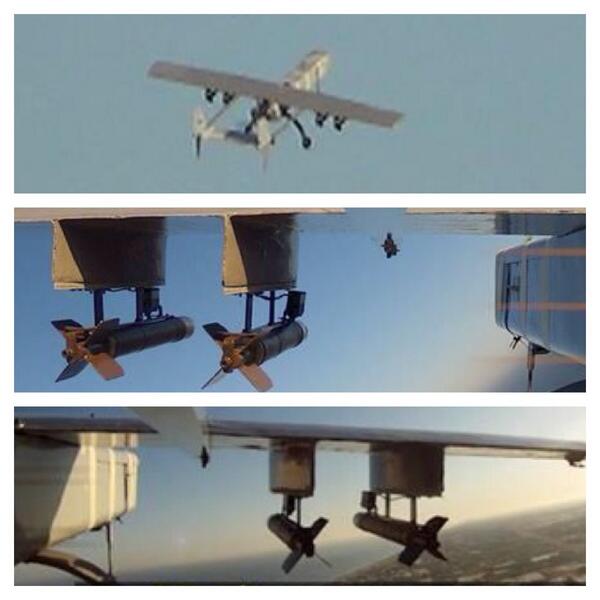
    Footage released by Hamas apparently showing 'armed' drone. Source: Twitter

    From footage released by Hamas apparently showing ‘armed’ Arbabil 1 drone. Source: Twitter

    Hamas. In June 2014, Hamas released footage of an Iranian Arbabil 1 drone flying over the Gaza Strip, which looked as though it was armed. Before it could do any damage, it was shot down by a Patriot.  Although the missiles were likely fake, Hamas is demonstrably able to operate and exploit this new technology, which could have added value for their operations. This recent incident wasn’t the first attempt to use drones against Israel. In October 2013, news outlets reported that the Palestinian Authority had arrested a Hamas cell which was preparing a small drone with explosives to be used in an attack against an Israeli target. The IDF reported that it had previously struck Hamas’ drone capabilities in an airstrike against a drone on a runway in November 2012.

    Hezbollah. Hezbollah has operated drones over their border areas for a number of years. This includes occasionally flying them over Israeli territory, which seeks to probe Israeli defences (and taunt their military supremacy) and in 2006, Hezbollah tried to crash a small drone with explosives on a military site in a kamikaze drone attack. This was part of a broader attempt using three small drones with explosives for attacks on different targets in Israel. In 2012, Hezbollah flew an Iranian-made drone over the Mediterranean Sea, before it was shot down by the Israeli Air Force.  Current estimates are that Hezbollah possesses over 200  unarmed drones, which has led to serious concerns among Israeli military commanders about the potential for armed attack with drones. In particular, existing Israeli air defences seem less capable against smaller drones: “It’s very complicated to defend against the drones, because they’re so difficult to spot,” an Israeli military spokesman said. The United States has already started blacklisting companies selling drone related technology to Lebanon, citing security concerns over Hezbollah’s growing drone capacity.

    Footage from Islamic state surveillance drone showing Syrian military airport.

    Footage apparently from Islamic State surveillance drone showing Syrian military airport. Source [Graphic]: YouTube (Creative Commons)

    Islamic State. The first indication of the use of drones in Fallujah was in February 2014, when Islamic State in Iraq and Syria (ISIS), as it was then called, used drone footage for propaganda purposes. Several videos that went online in August showed that drones were used for ISR operations in Iraq and Syria, and it is likely that these drones are used for their military operations, strengthening Islamic State’s  ISR capabilities and target acquisition. The drones used seem to be quad-copters, which are fairly easy to use and acquire as they can be bought in any hobby shop.  Nonetheless, the use of these drones by Islamic State is an interesting development with regard to the new dynamic in the conflict. It means that states and armed groups such as the Kurdish Peshmerga will need to have additional defence systems to detect and shoot down these drones, adding to the complexity of the conflict in Iraq and Syria.

    Improved controls

    What can be done to limit the proliferation of drone technology? Current arms export control regimes that cover UAV technology are fairly limited both in participants and means. The Missile Technology Control Regime (MTCR) and the Wassenaar Arrangement have a clear set of standards that could be applied to control UAV technology more strictly. However, only 43 States are members of these agreements. Moreover, these agreements are voluntary, making them difficult to enforce. The booming civilian market for UAV technology makes it more difficult to control all the items used to assemble and operate drones, ranging from software, parts, components, and different payloads.  These dual-use items are listed in the  and the European Union’s Common Positions on Arms Export Control’s Munitions List. But states have indicated that it’s close to impossible to make an individual risk assessment for each license.

    As well as encouraging the uptake of existing arms export control regimes, an essential way to limit drone technology is an international push for strong norms on the use of drones on the battlefield. Urgent issues such as extrajudicial killings, the psychological impact of continuous armed drone presence on communities, and the lowering threshold for the use of armed violence in military operations must be addressed through international agreements. Most importantly, there must be a transparency and accountability mechanism ensuring oversight. Though this might place restrictions on the use of armed drones by states, it would not have an impact on non-state actors. Yet it should lead to more awareness that this technology can be used in new ways for both extrajudicial executions and terrorist operations.  Drones are here to stay, and the need for developing global norms on their export and deployment can not be ignored any longer.  States and the broader international community will have to take more responsibility for setting in motion a new process to ensure accountability and solid regulation. Indeed, as former CIA Director John Brennan said in 2012:

    “If we want other nations to use these technologies responsibly, we must use them responsibly. If we want other nations to adhere to high and rigorous standards for their use, then we must do so as well.”


    [i] PAX has outlined some of these concerns and fundamental questions about armed drones, reviewing the impact on military operations and underlining the need for political accountability in its Armed and Dangerous [PDF] policy paper for the Dutch government.

    Wim Zwijnenburg works as Project Leader on Security & Disarmament for Dutch peace organisation PAX on drones, toxic remnants of war, and the international arms trade. He has a MA in International Development and Conflict Studies.

    Featured image: Group photo of aerial demonstrators at the 2005 Naval Unmanned Aerial Vehicle Air Demo. Source: Wikipedia

  • New Report Highlights the Links between Poverty, Marginalisation and Terrorism

    New Report Highlights the Links between Poverty, Marginalisation and Terrorism

    A new report on the causes of terrorism has been released by the Norwegian Defence Research Establishment. The report provides a critical survey of the relevant academic literature and demonstrates the link between marginalisation and levels of political violence and terrorism. 

    The study focuses primarily on theories that seek to explain why some societies are more exposed to terrorism than others, i.e. theories on a national or societal level of analysis. It also examines theoretical frameworks for explaining terrorism on an international or world system level of analysis. The report underscores the importance of understanding terrorism in its political and societal contexts. 

    The report concludes: 

    The fact that terrorists themselves are often well-educated and even wealthy does not disprove any correlation between terrorism and poverty at a country-wide level. Furthermore, the recruitment of operatives and suicide bombers by a terrorist organisation involves a careful selection and screening process, which most likely favours well-educated middle class youth. This does not disprove widespread support for the same organisations among the poor. More importantly, ideologies embraced by terrorist organisations exhort the individual to act on behalf of the workers, the masses, the Islamic umma, the ethnic community in question, etc. Hence, societal ills and injustices suffered by the community, ranging from political oppression and humiliation to poverty and dispossession, become the driving forces for terrorist groups, even if the members themselves may be relatively prosperous within their own societies.

    The full report, Causes of Terrorism: An Expanded and Updated Review of the Literature can be accessed here.

  • Sustainable Security

    Carefully planned interventions in the water sector can be an integral part to all stages of a successful post-conflict process, from the end of conflict, through recovery and rebuilding, to long-term sustainable development.

    Does the better post-war water resource management contribute to peacebuilding by generating legitimacy within a society and for the state? Research has become increasingly interested in the potential role of natural resources, especially freshwater resources in war affected societies, because the misuse of natural resources is increasingly being seen as one of the key challenges for sustaining and promoting peace. This link has of late received serious traction in research and policy circles as the international community stresses the significance of environment for the peaceful societies by including both in the 2015 UN Sustainable Development Goals.

    Water Management after War

    Post-war countries are among the most difficult policy arenas for international agencies and domestic stakeholders. The challenge is not only to bring an end to the war and prevent violence from reoccurring, but also to help countries reset the dynamic among their internal actors on a peaceful path. The long-term adverse effects of wars further amplify this policy challenge.

    Many of these challenges for post-war countries relate to political and social aspects. Lasting impressions of human rights abuses committed during wars continue to shape the relations among members of societies for decades to come. Both socio-economic crunch and political churning can challenge the stability of post-war countries for many years if not decades. The public health crisis has been found to be especially severe and affect disproportionately the civilian population in post-war countries. Environmental and climate change exposes war affected people further to new risks, exaggerating the human costs of war long after active combat has ceased.

    In order to address public health crisis and to reduce further human costs of war, it is critical for a post-war country to be able to provide access to clean water and sanitation for its population. Often in war times, water storage facilities and installations for water delivery are damaged and sometimes even targeted. Thus, after the end of the war it often needed for the focus to be placed on the rapid restoration of water infrastructure.

    When a war affected country fails to swiftly and smartly manage its water resources it amplifies the vulnerability of post-war communities on water and inevitably exacerbates and prolongs the human costs of war. Increasing demand for freshwater and climate change induced variability of its availability are further adversely affecting the agricultural production and the provision of sustainable livelihood for post-war communities. Thus, addressing the war related damages to the water infrastructure are often key to rebuilding a state after war. Then, it is necessary to develop the increasingly scarce water resources in a sustainable manner, which will bring inclusive development and promote peace in the society.

    Yet, even though the international community is aware of these tasks, — recent research indicates that while addressing water management in post-war period — the emphasis is usually placed on expert-oriented solutions, which bypass the complex and critical political aspects of it. Ignoring political factors might expedite the implementation process in short run, however, it can possibly create worrying challenges not only for the smooth operation of the water projects, but also for the peace itself.

    Lessons from Kosovo and Nepal

    Asian development Bank

    The Kali Gandaki “A” Hydroelectric Project in Nepal. Image by Asian devlopment bank via Flickr.

    A recent analysis of the post-war water resource management in Kosovo shows how the international community, choosing a highly expert driven technocratic approach to rebuild Kosovo’s water sector after the violent conflict came to an end, frequently clashed with political realities in this landlocked and conflict affected territory. The United Nations Interim Administration in Kosovo (UNMIK), which assumed trusteeship of the territory in 1999 until a European Union mission replaced it in 2008, favored technical solutions and bypassed the political realities. Especially the case of the divided city of Mitrovica exemplifies that UNMIK sought to avoid confrontation. As the central political authority in Kosovo, UNMIK rather paid outstanding water bills for Kosovo Serbs, than facilitating the collection of fees for supplied water. Overall, the empirical analysis shows that UNMIK’s technocrat driven management of the water sector in fact impeded the peace process rather than aided it.

    Other recent findings on the water resource development in conflict affected Nepal, show the positive potential of ecologically sensitive service provision as these can yield tremendous socio-economic benefits for rural communities. The provision of energy in Nepal remains a pivotal challenge. In 2010, almost a quarter of the country did not have access to electricity, and even those households that were connected did not receive continuous power. The capital, Kathmandu, experiences scheduled power cuts up to 14 hours a day during the drier winter season, when hydropower ebbs, and two to three hours a day in the water-rich monsoon months. The study of two localities in rural Nepal, shows that micro-hydropower development has had many positive effects for rural communities, especially in regard to socio-economic development. This improved socioeconomic status of households reflects a clear reduction in vulnerability to poverty and even food security as the improved cannels diverting water to the micro-hydropower station have improved irrigation of nearby fields. Though it does not immediately translate into improving the legitimacy of the Nepali state, by helping to bring over all sustainable development of its citizens, the state is most likely going to reap the benefit in the future. The experiences from the study of micro-hydropower development in Nepal show that the state needs to actively pursue and project the ownership of the water sector development process in a post-war period in order to legitimize itself.

    Conclusion

    There is certainly a need to acknowledge the long-term interplay of social, political, and ecological processes in post-war countries and to understand the potential and dynamics of natural resources and environmental issues in this context. The interactions of these processes decisively shape the post-war landscape. It is therefore prudent to help building a peace that is ecologically sensitive and socially and politically relevant and desirable.

    Thus, the carefully planned interventions in the water sector become an integral part to all stages of the post-conflict process, from the end of conflict, through recovery and rebuilding, to long-term sustainable development. A recently published article in the Hydrological Sciences Journal argues that for the best possible use of water resources in the peacebuilding process, there is a need for a comprehensive approach. Both the Nepal and Kosovo cases show the unintended consequences that result from narrow focused interventions in the post-conflict landscape. It is pivotal that the international community engaged in peacebuilding must plan, think and execute with a long-term perspective that sets the conditions for sustainable peace. Drawing on an extensive reading of the current literature, such a comprehensive approach includes a series of measures to be taken in a post-conflict setting: legal reforms and building of sound water institutions; careful planning of water use to achieve sustainable food security; and cooperative involvement of international, national and local stakeholders in the planning and managing of water resources.

    Further reading:

    Swain, A., & Jägerskog, A. 2016. “Emerging Security Threats in the Middle East.” Lanham: Rowman and Littlefield Publishers.

    Krampe, Florian. 2016. “Empowering Peace: Service Provision and State legitimacy in Peacebuilding in Nepal.” Conflict, Security, and Development 16 (1), pp. 53-73.

     Krampe, Florian. 2016. “Water for Peace? Post-Conflict Water Resource Management in Kosovo,” Cooperation and Conflict. DOI: 10.1177/0010836716652428.

     Ashok Swain. 2016. “Water and post-conflict peacebuilding.” Hydrological Sciences Journal  61 (7), pp. 1313-1322.

    Florian Krampe is a political scientist specializing in peace and conflict research, international relations, and political ecology at the Department of Peace and Conflict Research at Uppsala University.

     Ashok Swain is Professor of Peace and Conflict Research and Director of the Research School for International Water Cooperation at the Department of Peace and Conflict Research, Uppsala University. He is also Professor at the Department of Earth Sciences of Uppsala University.

  • How Climate Change Can Amplify Social, Economic, and Political Stresses

    “Rather than climate change being this single, direct causal factor which will spark conflict at the national level” Vivekananda said, these stressors “will shift the tipping point at which conflict might ignite”. In places that are already weakened by instability and conflict, climate change will simply be an additional challenge.

    Source: youtube

  • Global Security after the War on Terror

    In the months and years after the 9/11 attacks, a series of analyses published by Oxford Research Group offered a critical perspective on the war on terror, arguing that the forceful military response was both wrong and dangerous. It could even prove highly counterproductive to US security interests and would certainly do little to promote international peace and stability. While the response to 9/11 was readily understandable, given the appalling nature of the attacks but also the neoconservative overtones of the Bush administration, it was argued that it was deeply mistaken and would lead to a long period of war.

    This perspective has stood the test of time. Moreover, the experience of the eight years since 9/11 supports a wider ORG analysis of global security that argues that there is a need for a fundamental rethinking of those current approaches to security that focus primarily on military instruments. Instead, the major global trends of a wider socio-economic divide, mass marginalisation and environmental constraints all require an approach rooted in what is now being termed sustainable security.

    This paper examines the context of the decision to go to war after 9/11 and the anticipated results. It goes on to analyse the actual  consequences and seeks to explain why they have been so radically different to original expectations by the United States and its closest coalition partners such as the UK. The paper then updates the analysis of the major global challenges that Oxford Research Group has previously discussed and the need for a new paradigm focused on sustainable security. It concludes by assessing how the experience of the eight years that have followed the 9/11 atrocities might make a change of paradigm more likely.

    Excerpt from Global Security after the War on Terror.

     The full briefing is available here.

  • Sustainable Security

    Implementation of the interim deal with Iran, which freezes the country’s nuclear enrichment in exchange for limited sanctions relief, began last week. As an initial outcome of this deal, we are witnessing a substantial shift in diplomatic relations and relationships between Iran and its regional neighbours – some positive, some not. This deal marks a significant step for the international non-proliferation regime, but will it achieve the trust and confidence-building goals intended? As the US and Iran face increasing domestic pushback on the terms of the agreement, questions remain on the interim deal’s impact on relations in the region and abroad, and the effect these relations may have on the prospects of coming to a full comprehensive follow-up agreement between Iran and the P5+1 countries.

    The Interim Deal

    P5 + 1 Iran 2

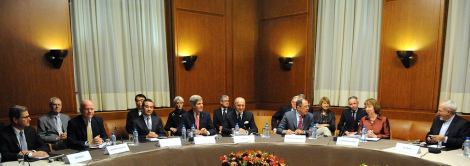
    P5+1 foreign ministers — as well as European Union High Representative Catherine Ashton and Iranian Foreign Minister Javad Zarif — at the United Nations Headquarters in Geneva, Switzerland, after the group concluded negotiations about Iran’s nuclear capabilities on November 24, 2013. Source: US State Department (Flickr)

    The current deal, in which Iran will halt further progress on its nuclear programme and roll back key elements in return for temporary and limited sanctions relief from the P5+1, was originally negotiated at the end of November in Geneva, but the details of implementation were confirmed in early January. After a decade of negotiations to solve the Iranian “nuclear crisis”, the implementation of this deal marks a significant step forward for the international non-proliferation regime, and is an important success story for international diplomacy. Despite the misgivings of a number of sceptics, this six-month interim deal brings countries together to work towards developing assurances around Iran’s nuclear programme, acting as a trust and confidence building exercise with the intention to create opportunity and space for a more ambitious longer term agreement in the future.

     A Positive Impact on Diplomatic Relations…

    As an initial outcome of this deal, we are witnessing a substantial shift in diplomatic relations and relationships between Iran and its regional neighbours. While the outset of the interim deal saw a number of sceptics, encouraging reactions have developed, including positive official responses from Kuwait, Qatar, Bahrain and Oman. Even the Prime Minister of the UAE officially welcomed the deal and called for lifting sanctions and a partnership with Iran.

    Relationships between Iran and Western partners have also begun to restore themselves as a result of the deal. After three decades of no sustained direct contact, back channels were set up prior to and early on during Rouhani’s presidency to help unlock the negotiations and in a pinnacle moment in September, Barack Obama and Hassan Rouhani spoke on the phone after the UN General Assembly.

    The United Kingdom also hasn’t had bilateral diplomatic relations with the Islamic Republic since 2011, when the British Embassy in Tehran was stormed.  However, the UK and Iran agreed to renew direct diplomatic links during November’s Geneva talks and shortly thereafter, a newly appointed British chargé d’affaires, Ajay Sharma, travelled to Iran as the first British envoy since 2011. It was announced on the 28th of January that a delegation of Iranian parliamentarians will visit London during the summer months. This follows a visit by British Members of Parliament, led by former Foreign Secretary Jack Straw MP, to Tehran that took place in early January.

    This overall confidence-building between regional states and diplomatic restoration between Iran and the P5+1 negotiating partners promises to improve the chances of negotiating a comprehensive nuclear deal next month.

    …But Not for Everyone

    Netanyahu and Obama

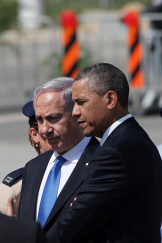
    US President Obama with Israeli Prime Minister Netanyahu Source: The Israel Project

    However, the possible détente between Iran and Western countries – the US in particular – may be a game changer for some regional states and parties. Israel’s response to the interim deal has been continuously vocal and disapproving from the start, with Israeli Prime Minister Benjamin Netanyahu condemning the deal as a “historic mistake”. It comes as somewhat of a personal defeat for the Israeli Prime Minister, who has been campaigning to strip Iran from all of its enrichment capability. Some analysts have hinted that this deal will damage the prospects for the Weapons of Mass Destruction Free Zone in the Middle East as it will pull Israel even further away from the negotiation table. Perhaps, though, the fear of losing US interest will bring them even closer to it.

    Responses in Saudi Arabia have also been less than enthusiastic: while the official response labelled the deal as a good solution to the Iranian nuclear programme, the unofficial response fears proliferation in the region and the enhancement of Iran’s role as a regional power. Members of the Saudi royal family have labelled Obama’s strategy with Iran as flawed and claimed that sanctions relief was a huge mistake that will now give Iran the upper hand. The Saudis see this deal as giving Iran more power, which threatens their status as a regional hegemon. In an unusual turn of events, this sees Saudi Arabia’s and Israel’s interests aligning—both feeling disappointed and outraged towards the US and fearing Iran’s potential.

    Hints of a rift between Gulf Cooperation Council (GCC) states have also been noticed as a result of this deal. Unlike Saudi Arabia, most of these states have signalled their modification in policy to match US goodwill towards Iran. This is especially seen in Oman, a state with strong historic ties to Iran and which helped broker the initial back channels established between the Islamic Republic and US in early 2013. At the IISS Manama Dialogue in December 2013, Omani Foreign Minister Youssef bin Alawi candidly spoke out against the Saudi proposal to upgrade the GCC union. The Sultanate state has always intended to pursue an independent foreign policy path, careful to balance relationships on both sides of the Gulf. The proposal, which strengthens the union of the GCC, was rejected by the Omani Sultanate on the grounds that there is a failure to agree on the foundations of the GCC and economic integration, but it would also force Oman to align more closely with Saudi Arabia which might in turn antagonise Oman’s relationship with Iran. With the complex combination of global and regional structural shifts and intersecting economic interests, this is perhaps the first of many small fissures between the Gulf States and regional partners that will come as unintended consequences of this deal.

    Hurting at home

    Even within Iran, the reaction has been mixed, and Rouhani has faced criticism for being too close to the West. Since his election in June of last year, he and his administration have been leading a public relations campaign to repair relations with the West, but he has faced problems with hardliners who are sceptical of US motivations or hold on to historical grudges.  While this deal helps to relieve some of Iran’s economic hardship, Rouhani has gone out on a limb in easing off enrichment, a capability which is seen by many within Iran to be entrenched within their national identity.

    Obama faces similar problems in Washington, as lawmakers in the Congress come dangerously close to causing the collapse of the deal by supporting the Nuclear Weapons Free Iran Act (S.1881) in the Senate. This bill, introduced in December by New Jersey Democratic Senator, Robert Menendez, imposes additional financial sanctions against Iran if it were to default on the terms of the interim deal, or if a long term deal was not agreed to after the end of the six months. Terms of the initial deal with Iran stipulates there will be no new nuclear related sanctions but core sanctions will remain intact for now and Iran will continue to lose $4-$5 billion in revenue per month.

    Crucially,  the Nuclear Weapons Free Iran Act would require zero enrichment from Iran, which is a red line for Iranians. Under the terms of the Non-Proliferation Treaty, all Parties have the inalienable right “to develop research, production and use of nuclear energy for peaceful purposes without discrimination”. Blatant discrimination against these rights is a deal breaker for Iran and in response (or perhaps retaliation) to Menendez’s bill, Iranian parliament has proposed new legislation that would allow for Iran to increase uranium enrichment to 60 percent, enough for weapons grade uranium. Iranian Foreign Minister Mohammad Javad Zarif has threatened that if bill S.1881 is passed in Congress, “the entire [interim] deal is dead”.

    Moving Forward

    The next round of talks between Iran and the P5+1 to negotiate a more comprehensive nuclear deal is reportedly to be held in New York in mid-February. However, with domestic and regional backlash from the deal threatening to collapse the interim deal – and worse, threatening to prohibit the agreement of a more sustainable deal in February – the chance of achieving further negotiations now depends on successful physical implementation of the interim deal Joint Plan of Action.

    While many remain sceptical of the parties involved or the implications on the region and beyond, this interim deal is a positive breakthrough for the international non-proliferation regime, which has needed a major boost like this for some time. We have a major opportunity ahead of us for restoring trust and strengthening Iran’s partnership on the global non-proliferation and disarmament agenda. This potential for such positive outcomes must now be the focus of the next month, because losing the momentum of this deal and starting from scratch would be a setback that global security cannot afford.

    Rachel Staley is currently the Programme Manager for the British American Security Information Council (BASIC) in their London office. Since 2011, Rachel has managed the operations of the office and assisted in developing the organisation’s programmes working on nuclear non-proliferation and disarmament in the Middle East, as well as engaging directly in the Trident renewal debate in the United Kingdom. Rachel holds an MA with Distinction in Non-Proliferation and International Security from King’s College London and a BA with Honours in International Affairs and Anthropology from Northeastern University.

    Featured image: British Foreign Secretary William Hague, German Foreign Minister Guido Westerwelle, EU foreign policy chief Catherine Ashton, Iranian Foreign Minister Mohammad Javad Zarif, Chinese Foreign Minister Wang Yi, US Secretary of State John Kerry, on early November 24, 2013 in Geneva. Source: European External Action Service (Flickr)

  • Rapid Climate Change, Short-lived Forcers & Geoengineering: IES at the European Parliament to discuss about geoengineering with Jason Blackstock

    On 9th November the Institute for Environmental Security organised the fourth in a series of events at the European Parliament run in collaboration with Nirj Deva, MEP, Vice President of the European Parliament Development Committee.


    The speaker was Jason Blackstock, a Fellow at the Centre for International Governance Innovation (CIGI) at the University of Waterloo in Ontario and Visiting Research Scholar at the International Institute for Applied Systems Analysis in Vienna. His subject was Towards Climate Security & Equity in 2020: Rapid Climate Change, Short-lived Forcers & Geoengineering.

    Jason Blackstock stressed the urgency of understanding rapid climate change and in particular the impact of short lived climate forcers other than the greenhouse gasses dealt with by the UNFCCC.

    Turning to geoengineering, Mr Blackstock argued that this could no longer be ignored by those negotiating on climate change. Technologies were now being developed that could cheaply alter aspects of the climate. He was at pains to point out that climate interactions are complex and difficult to predict. For example, spraying sulphates in the atmosphere would reduce the rise in global temperature, but it would be impossible to estimate the regional consequences on rainfall.

    “Because of their potential to radically alter the climate system in a matter of years, rather than decades, the lack of adequate international governance for short-lived forcers, such as black carbon, and geoengineering present among the most serious climate security challenges we face today. At this moment we have no plan for handling the global governance aspects”.

    Nirj Diva, MEP and Tom Spencer cross examined Mr Blackstock, who then answered lively questions from parliamentarians, parliamentary staff, NATO and the European Defence Agency.

    Source: Institute for Environmental Security

    Image Source: davedehetre

  • Space: the final frontier of Sino-US rivalry?

    China’s development of a space programme threatens to increase Sino-US tension as the latter’s dominance of space, with all its military and commercial potential, is undermined.

    China’s sky-high space ambitions have the potential to upset the current world order. Within the coming decade, China may become capable of challenging America’s dominance over space and its monopoly over global navigational systems.

    Over the past few years, China has engaged in completing high-profile, grand projects like high-speed rail, the world’s biggest airport terminal (since overtaken by Dubai) and the 2008 Beijing Olympics. Its space programme, like all else, is a matter of Chinese prestige. On successful completion, it will be yet another grand feather in China’s cap signalling its ambition of becoming a world power.

    China’s ambitious space programme has three tracks. Track one is the setting up of China’s own space station. The Chinese were successful in launching their first astronaut or taikonaut into space in 2003. Since then, China’s space programme has witnessed major breakthroughs. By summer 2011, it plans to launch its first unmanned space module called ‘Tiangong – 1’. The ‘Shenzhou – 8’, scheduled for later this year (2011), will attempt to dock with the ‘Tiangong – 1’. Both these launches are the initial stages of Chinese plans for setting up a space station by 2015. Once its space station is completed, China will become the third country in the world, after Russia and the US to do so with indigenous technology.

    The second track is China’s lunar ambitions, scheduled to be carried out over three phases. The first phase of this was successfully completed in October 2010 with the launch of the “Chang’e – 2” lunar orbiter. By 2020, China could actually land its first astronaut on the moon. The third track of its space programme involves the development of a Chinese global navigational system called ‘Beidou’. Until now, the US has had a monopoly over navigation systems with its global positioning system (GPS). China aims to make ‘Beidou’ available to Asia-Pacific by 2012, which will go global by 2020.

    China’s programme could have repercussions for the Sino-US relationship. Chinese President Hu Jintao’s recent US visit resulted in a number of trade and investment deals being inked between the two countries. However, space was not one of them even though according to Washington, the 4 main areas of potential cooperation with China include space alongside cyber-security, missile defense and nuclear weapons. But since mutual trust is important for any kind of cooperation between the two nations, space is a ‘no-go’.

    The US and Chinese space programmes cannot be compared directly. The American programme precedes China’s by at least 40 years and China has yet to land its first man on moon. The US satellite and spacecraft technology is still years ahead of China. But China is on the fast track right now. In 2011 alone, China aims to put more than twenty vehicles into space. Compared to this, the US space programme is in a state of inertia. It has had to scrap its ‘Constellation Program’ since the struggling American economy cannot afford the huge price tag attached to the programme at present.

    Details of the Chinese space programme remain undisclosed and even its civilian component is run primarily by its military. For the US, this limits strategic cooperation to a large extent. The US is also wary of China’s growing military ambitions. China has recently tested its first stealth fighter aircraft. Since space technology almost always has military uses like missile development and remote monitoring and control, it is likely that a successful space programme in China would bolster its military and naval prowess. Hence, the US is clearly uneasy about the programme even though the administration has downplayed reports of China’s goal of a manned moon mission.  

    For China, the US skepticism over its space programme as well as its ban on high-tech exports to China is a hurdle to cooperation in space. The navigational system ‘Beidou’ is crucial for the Chinese military as presently it has to depend on the US GPS. The Chinese fear is that this GPS could be blocked or manipulated in case of a conflict.

    The US is also jittery because of fears of technology proliferation since China’s allies include countries like Pakistan, Iran and North Korea. Supremacy in space would also aid China in elevating it to the status of a global superpower. Commercially too, an advanced space programme could eventually result in China being first in the race to extract lunar resources like uranium and titanium.

    Over the next few years, it is unlikely that the speed of China’s progress in its space programme will go down. Also, as it achieves its goals, China’s programme will definitely make many countries around the world nervous. Hence, with each of China’s successes, the world will see other countries taking frantic action to catch up with it. It is also possible that with a robust and thriving space programme in its kitty, China may be the next nation to be included in International Space Station (ISS). Such a situation may lessen the atmosphere of mutual suspicion to a certain degree.

    Image source: Matthew Simantov

    Article source: openDemocracy

  • Sustainable Security

  • Sustainable Security