Blog

  • Competition over resources

    In November 2009, Saferworld, the Conservation Development Centre, and the International Institute for Sustainable Development launched a new report on climate change and conflict in Kenya. “The theoretical case for the connections between climate change and conflict has been well articulated, but we’re still learning how this relationship manifests itself in practice,” said Ivan Campbell, Senior Advisor on Conflict and Security at Saferworld. “This study tests that theory against realities on the ground in Kenya – and then makes practical and targeted recommendations in response to the actual policy context”.

    Read more »

  • Climate change

    Writing exclusively for SustainableSecurity.org, Joe Thwaites takes an in-depth look at the discussion at the UN Security Council on the security implications of climate change. Joe analyses the debate over whether the Council is an appropriate forum for dealing with climate change discussing the views of both great powers and those who are set to lose most from a warmer global climate in the years ahead. 


    Image source: United Nations

    Read more »

  • Sustainable Security

    Contributing an Article

    We are always on the lookout for new authors with new perspectives to add to the debate on the blog – especially if you think we’ve missed something!

    We aim to address a wide range of evident and emerging security issues and take a broad and integrated approach to the term ‘security’. Generally, we look for insightful pieces which seek to explore, question and suggest solutions for ongoing security situations and the underlying issues which drive them. While we do place an emphasis on our ‘key’ drivers (climate change, marginalisation, competition over resources and militarisation), contributors should not feel limited to these subjects alone.

    Please note that, as a nonprofit blog that serves as a resource for interested readers, sustainablesecurity.org does not have the resources to pay contributors.

    If you are interested in contributing an article, please get in touch with us using the form to the right.

    Guidelines

    • 1,400 words max.
    • Please fact-check your article, especially if the subject is controversial or emerging . Although we check submissions carefully, authors are ultimately responsible for the factual accuracy of their contributions.
    • We do not use footnotes or endnotes. Embedded links for information that is sourced from other websites are a great opportunity to support your argument and opinions, especially for subjects that are not common knowledge. Please be sure to include a hyperlink for specific statistics and quotations.
    • Spelling: UK or US English – we don’t mind which, as long as it is used consistently throughout your article.
    • Please avoid unnecessary jargon and explain any that is used in a clear and concise manner.
    • You are welcome to cross-post your article in other places if we are accredited as the original site of publication.
    • We do not reprint pieces published elsewhere (with the exception of Sustainable Security programme staff articles that have been featured in the media).

    Would you like to contribute a video?

    Our readers would love it if you did! Sustainablesecurity.org deals with an often complex interplay of difficult subjects.  We are therefore very interested in presenting analysis of these issues in a range of media for those who wish to interact in different ways with our content.

    If you are interested and have the means to produce a video, get in touch with us using the form above with ‘VIDEO’ in the subject line. Thanks!

    Legal stuff…

    All content and downloads are licensed under a Creative Commons Attribution-NonCommercial-NoDerivs 3.0 Licence unless stated otherwise.

    We look forward to hearing from you!

    SusSec Team

  • Rivers a source of rising tension between Pakistan and India

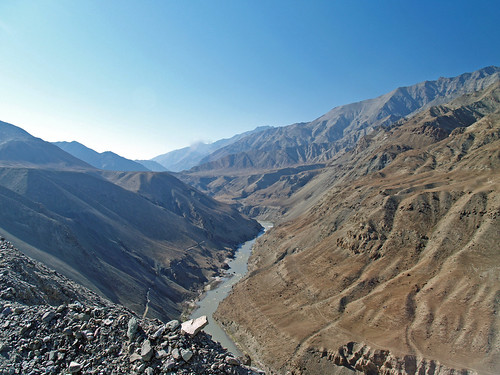
    A 1960 trans-boundary water sharing agreement between India and Pakistan has stood the test of two wars and various periods of unease. Climate change, however, may prove the toughest test of the Indus River deal, observers say. The two rival South Asian nations share the 190 billion cubic meters of Himalayan snowmelt that course through the Indus each year. The river originates from India’s Himalayan Hindu Kush mountains and flows through Jammu and Kashmir and then through Pakistan to reach the Arabian Sea. But experts say that climate change could alter the timing and rate of snow melt, with an initial increase in annual runoff followed eventually by a steep decrease that will severely curb river flows.

    CONFLICT OVER RIVERS?

    That could provoke conflict between the two nations, particularly as India develops dams along the upper riches of the Indus, raising questions in Pakistan over whether falling water availability is due to climate change or to India’s reservoirs. A 2009 World Bank report “South Asia: Shared views on Development and Climate Change,” says the two South Asian monsoon-dependant agri-economies may be in for big upsets as a result of climate change. “Upstream or downstream, we (India and Pakistan) are in the same boat,” said Hameed Ullah Jan Afridi, Pakistan’s federal minister for environment, at a recent workshop in Islamabad on cross-border water scarcity and climate change. The tortuously negotiated 1960 water-sharing treaty owes its roots to the 1947 separation of India and Pakistan into separate countries. It gives India rights to the natural flow of water of the Indus’ three eastern tributaries – the Ravi, Sutlej and Beas – while Pakistan controls the main Indus channel itself and two western rivers, the Jhelum and Chenab. But determining what amount of water constitutes a river’s natural flow is growing more difficult as climate change affects glacial runoff and the monsoon. Pakistan has increasingly raised concerns about data sharing and transparency, particularly because the upper reaches of all of the rivers lie in Indian-controlled territory, giving that nation greater scope for control of the entire Indus river system.

    LACK OF ALTERNATIVE SOURCES

    Pakistan’s anxieties stem in large part from its lack of alternative water resources. Seventy-seven percent of its population survives on water from the Indus basin. High levels of poverty and population density also render both countries particularly vulnerable to climate change-related water shortages, said Munawar Saeed Bhatti, of Pakistan’s ministry of foreign affairs. The changes threaten to have a strong impact on agriculture in both nations as well. Changes in temperature and precipitation patterns will alter crop yields and growing seasons, and a predicted increase in more extreme storms, rainfall and drought could cut harvests, according to the U.N. Environmental Programme. Experts believe new pests and diseases also will emerge, and could contribute to seriously impacting food security in both nations. Pakistan’s meteorological department has already recorded a 10 to15 percent decrease in winter and summer rainfall in the country’s coastal belt and arid plains, with a temperature rise of 0.6 to 1.0 degree Celsius over historical levels, officials said. Per capita water availability in Pakistan has dropped in last 50 years from 5,600 cubic metres to 1,038 cubic meters today. By 2025 it is predicted to be 809 cubic meters, according to the Pakistan government’s Water and Power Development Authority. Humid areas of Pakistan, meanwhile, have seen an 18 to 32 percent increase in monsoon rainfall. In India and Pakistan, 70 percent of rain falls during monsoon periods, which cover four months of the year.

    TAKING ACTION

    In Pakistan’s western Himalayan foothills, where farmers rely on glacial melt from the Karakoram range and year-round rainfall, both water sources are now reducing. Fruit farmers in the area, such as 65-year-old Muhamud Riyaz, have already responded by harvesting summer stream water into 3,000 litre gravity-fed storage tanks. “When I was a boy, summer came but mounds of snow at the foot of thick foliage trees would sit there, melting slowly, keeping the soil moist until the summer rains came. Since the last two years, the snow is just a thin layer and it rains only in monsoons,” Riyaz said. In other areas, flooding is the problem. Pakistan records floods almost every year now, and in India the area affecting by flooding more than doubled between 1953 and 2003, and currently represent about 11 percent of its geographic area, according to the World Bank. Even in areas that regularly flood, “high frequency, low intensity flood events have now turned into high intensity, high frequency floods,” said Daanish Mustafa, a water specialist and geography professor at London’s Kings College. River siltation is contributing to the problem, he said. The problems facing both sides of the India-Pakistan border are particularly bad because “water management is literally a little above Stone Age,” said Richard Garstang, national programme manager of Pakistan’s wetlands programme. Up to 30 percent of water is lost from the country’s unlined irrigation canals, experts said. The country has some 16 million hectares of irrigated farmland, one of the largest contiguous irrigated areas in the world. Poor water management is to a great extent responsible for Pakistan’s water woes, a 2006 World Bank report noted. It warned that ground water is being over exploited and 20 million tonnes of salt has accumulated in the water system.

    AQUIFERS BEING DEPLETED

    “Half a million vertical wells in the Indus basin are depleting aquifers faster than they can be replenished,” Mustafa said. Agriculture accounts for half of total fresh water use in Pakistan. “Due to a combination of age and ‘build/neglect/rebuild’ philosophy of public works, much of the infrastructure is crumbling,” the World Bank report said. Indian officials have attributed Pakistan’s water woes in part to a dearth of water storage infrastructure, noting that a huge 38 million acre-feet of fresh water goes un-utilized into the Arabian Sea every year.

    Manipadma Jena is a Reuters AlertNet correspondent and freelance development journalist based in Bhubaneswar, India

    Source: Reuters AlertNet

    Image source: stevehicks

  • Climate Change and Migration: An Asian Perspective

    The Asian Development Bank has recently published a report on the effects of climate change on migration in and from the continent. Although migration need not necessarily be a security concern, people can be propelled to move for reasons of personal safety, such as extreme weather events, or livelihood insecurity caused by long-term land degradation or river salination. This report provides a useful perspective on climate change, representing the conclusions drawn by an organisation from the region most likely to suffer the harshest consequences. The following is taken from the introduction. To read the full report, click here


    Addressing Climate Change and Migration in Asia and the Pacific

    This report concludes an Asian Development Bank (ADB) project initiated in 2010 to develop policy responses to climate-induced migration in Asia and the Pacific. It is one of a series of ADB publications shedding light on the forecasted impacts of climate change on the countries and people of Asia and the Pacific. The report examines how climate change will affect migration patterns in Asia and the Pacific, and identifies various policy interventions and funding vehicles that can help manage the emerging phenomenon of climate-induced migration.

    The displacement of people due to environmental events has received increased attention in recent years, yet much uncertainty remains about the way populations will actually react to long-term environmental change. The relationship between climate change and migration flows is often thought to be of a deterministic nature, where all populations living in regions affected by climate change would be forced to relocate. Many empirical studies show, however, that this relationship is far more complex, and is compounded by a wide range of social, economic, and political factors (Foresight 2011; Jäger et al. 2009).

    More than two decades ago, the Intergovernmental Panel on Climate Change (IPCC) warned that “one of the gravest effects of climate change may be those on human migration” (McTegart, Sheldon, and Griffiths 1990). Today, as the effects of climate change intensify, action is needed in two different directions. Mitigation of greenhouse gases needs to remain a priority, as it is the only way the challenge of climate change can be tackled at source. At the same time, it is important to recognize that some impacts of climate change are already happening, and will become more pronounced in the future.

    Environmental changes in general, and those associated with climate change in particular, are increasingly recognized as growing drivers of migration across the world. Because of the unavoidability of these impacts, mitigation alone will not suffice to fight climate change; it needs to be complemented by adaptation measures. Adaptation seeks to alleviate the impacts of climate change by increasing the resilience of people and communities to these impacts. Though mitigation and adaptation measures once used to be seen as two possible alternatives, it is now recognized that both will need to be implemented in order to fight climate change.

    In Asia and the Pacific, large numbers of people are displaced every year due to floods, droughts, soil degradation, typhoons, and cyclones. Poor people suffer a disproportionate share of deaths, displacement, and damage associated with such events. Forced by poverty to inhabit the low-lying coastal deltas, river banks, flood plains, steep slopes, and degraded urban environments where the impact is most severe, they are least able to rebuild when their homes and communities are battered by extreme weather. Though the region is expected to be profoundly impacted by climate change in the coming decades, it is also expected to undergo other significant social, political, and economic transformations. Thus, migration behaviors are likely to be influenced by this wide range of transformations, ranging from climate change to cheaper travel. Public policies, including adaptation strategies and migration management, will also play a determining role in the nature and extent of the movement of people.

    This report considers long-term environmental change as a growing driver of migration. Climate change will accentuate the impact of the environment on human displacement. Migration flows associated with the environment will be intertwined with broader migration dynamics, and therefore should not be considered in isolation. Understanding environmental migration as part of a global transformation process constitutes a major ambition of this work, as well as a necessary condition for sound migration and adaptation policies.

    Image Source: Amirjina

  • Sustainable Security

    RC_long_logo_small_4webThis article is part of the Remote Control Warfare series, a collaboration with Remote Control, a project of the Network for Social Change hosted by Oxford Research Group.

    Editor’s note: Remote Warfare and the War on Drugs mini-series: This series of articles explores how remote warfare is being used in the war on drugs. To date, much of the debate on remote warfare has focused on its use in the war on terror. However, the use of drones, private military and security companies (PMSCs), special forces and mass surveillance are all emerging trends found in the US’s other long standing war, the War on Drugs. The articles in this series seek to explore these methods in more depth, looking at what impact and long term consequences they may have on the theatre in which they’re being used. Read other articles in the series.

    Ever advancing remote warfare technology is being increasingly used by law enforcement agencies to counter drug trafficking. In response, drug cartels are also adopting new technology to smuggle and distribute drugs. However, the technological superiority of law enforcement-military actors is also causing criminal and militant groups to adapt by employing the very opposite tactic, by resorting to highly primitive technology and methods. In turn, society is doing the same thing, adopting its own back-to-the-past response to drug trafficking and crime.

    The history of drug trafficking and crime more broadly is a history of adaptation on the part of criminal groups in response to advances in methods and technology on the part of law enforcement agencies, and vice versa. Sometimes, technology trumps crime: The spread of anti-theft devices in cars radically reduced car theft. The adoption of citadels (essentially saferooms) aboard ships, combined with intense naval patrolling, radically reduced the incidence of piracy off Somalia. Often, however, certainly in the case of many transactional crimes such as drug trafficking, law enforcement efforts have tended to weed out the least competent traffickers, and to leave behind the toughest, meanest, leanest, and most adaptable organized crime groups.

    Increasingly, organized crime actors have adopted advanced technologies, such as semi-submersible and fully-submersible vehicles to carry drugs and other contraband, and cybercrime and virtual currencies for money-laundering. Adaptations in the technology of smuggling by criminal groups in turn lead to further evolution and improvement of methods by law enforcement agencies. However, the use of ever fancier-technology is only a part of the story. The future lies as much behind as ahead (to paraphrase J.P. Wodehouse), with the asymmetric use of primitive technologies and methods by criminal groups to counter the advanced technologies used by law enforcement.

    The Seduction of SIGINT and HVT

    The improvements in signal intelligence (SIGINT) (information gained by the collection and analysis of the electronic signals and communications of a given target) and big-data mining (the extracting of useful information from large datasets or streams of data) over the past two decades have dramatically increased tactical intelligence flows to law enforcement agencies and military actors, creating a more transparent anti-crime, anti-terrorism, and counterinsurgency battlefield than before. The bonanza of communications intercepts of targeted criminals and militants that SIGINT has come to provide over the past decades in Colombia, Mexico, Iraq, Pakistan, Afghanistan, and other parts of the world has also strongly privileged high-value targeting (HVT) and decapitation policies-i.e., principally targeting the presumed leaders of criminal and militant organizations.

    JJprogects

    Artwork of drone warfare by JJprojegts.

    The proliferation of SIGINT and advances in big-data trawling, combined with some highly visible successes of HVT, has come with significant downsides. Although high-value targeting has been effective, this has only occurred under certain circumstances. In many contexts, such as in Mexico, HVT has been counterproductive, fragmenting criminal groups without reducing their proclivity to violence; in fact, exacerbating violence in the market. Other interdiction (the targeting of opponent’s organizational structures or disrupting their logistical chains) patterns and postures, such as middle-level targeting and focused-deterrence, would be more effective policy choices.

    A large part of the problem is that the allure of signal intelligence has led to the discounting of other key intelligence techniques, including developing a strategic understanding of criminal groups’ decision-making in order to anticipate the responses of targeted nonstate actors to law enforcement actions (here Mexico provides a disturbing example). It also requires the cultivation of human intelligence assets (sorely lacking in Somalia, for example) and obtaining a broad and comprehensive understanding of the motivations and interests of local populations that interact with criminal and insurgent groups (notably deficient in Iraq, Afghanistan, and Pakistan). Finally, establishing good relationships with local populations to advance anti-crime and counterinsurgency policies is essential. In Colombia, for example, drug eradication policy antagonized local populations from national government and strengthened the bonds between them and rebel groups.

    In other words, the tactical tool, technology – in the form of signal intelligence and big-data mining – has trumped strategic analysis. Instead, strategic intelligence analysis needs to be brought back, to drive interdiction targeting patterns, instead of letting the seduction of signal data drive intelligence, analysis and targeting action. Indeed, the political effects, as well as the anticipated responses by criminal and militant groups, and any other outcomes of targeting patterns, need to be incorporated into the strategic analysis. Questions to be assessed need to include: Can interdiction hope to incapacitate – arrest and kill – all of the enemy or should it seek to shape the enemy? What kind of criminals and militants, such as how fractured or unified, how radicalized or restrained in their ambitions, and how closely aligned with local populations against the state, does interdiction want to produce?

    Dogs Fights or Drone Fights: Remote Lethal Action by Criminals

    Criminal groups have used technology not merely to foil law enforcement actions, but also to fight each other and dominate the criminal markets and control local populations. In response to the so-called Pacification (UPP) policy in Rio de Janeiro through which the Rio government has sought to wrestle control over slums from violent criminal gangs, the Comando Vermelho (one of such gangs), for example, claimed to deploy remote-sensor cameras in the Complexo do Alemão slum to identify police collaborators, defined as those who went into newly-established police stations. Whether this specific threat was credible or not, the UPP police units have struggled to establish a good working relationship with the locals in Alemão.

    The new radical remote-warfare development on the horizon is for criminal groups to start using drones and other remote platforms not merely to smuggle and distribute contraband, as they are starting to do already, but to deliver lethal action against their enemies – whether government officials, law enforcement forces, or rival crime groups.

    Eventually, both law enforcement and rival groups will develop defenses against such remote lethal action, perhaps also employing remote platforms (drones to attack the drones). Even so, the proliferation of lethal remote warfare capabilities among criminal groups will undermine deterrence, including deterrence among criminal groups themselves over the division of the criminal market and its turfs. This is because remotely delivered hits will complicate the attribution problem – i.e., who authorized the lethal action — and hence the certainty of sufficiently painful retaliation against the source and thus a stable equilibrium.

    More than before, criminal groups will be tempted to instigate wars over the criminal market with the hope that they will emerge as the most powerful criminal actors and able to exercise even greater power over the criminal market – the way the Sinaloa Cartel has attempted to do in Mexico even without the use of fancy technology. Stabilizing a highly violent and contested – dysfunctional – criminal market will become all the more difficult the more remote lethal platforms have proliferated among criminal groups.

    Back to the Past: The Ewoks of Crime and Anti-Crime

    In addition to adopting ever-advancing technologies, criminal and militant groups also adapt to the technological superiority of law enforcement-military actors by the very opposite tactic — resorting asymmetrically to highly primitive deception and smuggling measures. Thus, both militant and criminal groups have adapted to signal intelligence not just by using better encryption, but also by not using cell phones and electronic communications at all, relying instead on personal couriers, for example, or by flooding the e-waves with a lot of white noise. Similarly, in addition to loading drugs on drones, airplanes, and submersibles, drug trafficking groups are going back to very old-methods such as smuggling by boats (including through the Gulf of Mexico), by human couriers, or through tunnels.

    Conversely, society sometimes adapts to the presence of criminal groups and intense, particularly highly violent criminality by adopting its own back-to-the-past response – i.e., by standing up militias (which in a developed state should have been supplanted by state law enforcement forces). The rise of anti-crime militias in Mexico, in places such as Michoacán and Guerrero, provides a rich example of such populist responses and the profound collapse of official law enforcement. The inability of law enforcement there to stop violent criminality – and in fact, the inadvertent exacerbation of violence by criminal groups as a result of HVT – and the distrust of citizens toward highly corrupt law enforcement agencies and state administrations led to the emergence of citizens’ anti-crime militias. The militias originally sought to fight extortion, robberies, theft, kidnapping, and homicides by criminal groups and provide public safety to communities. Rapidly, however, most of the militias resorted to the very same criminal behavior they purported to fight – including extortion, kidnapping, robberies, and homicides. The militias were also appropriated by criminal groups themselves: the criminal groups stood up their own militias claiming to fight crime, where in fact, they were merely fighting the rival criminals. Just as when external or internal military forces resort to using extralegal militias, citizens’ militias fundamentally weaken the rule of law and the authority and legitimacy of the state. They may be the ewoks’ response to the crime empire, but they represent a dangerous and slippery slope to greater breakdown of order.

    In short, technology, including remote warfare, and innovations in smuggling and enforcement methods are malleable and can be appropriated by both criminal and militant groups as well as law enforcement actors. Often, however, such adoption and adaptation produces outcomes that neither criminal groups nor law enforcement actors have anticipated and can fully control. Technology cannot fix defecting anti-crime and anti-drug policies, such as preoccupation with drug seizures , or absent rule of law and culture of lawfulness. Advances in technology do not obviate the need to strengthen bonds between citizens and the state and to create law enforcement and socio-economic conditions which allow citizens to internalize laws. Nonetheless, crime and some illegal economies will always persist and law enforcements and criminals will compete with each other in adopting improving technologies and finding measures to counter them, including most primitive but effective ones. The criminal landscape and military battlefields will thus increasingly resemble the Star Wars moon of Endor: drone and remote platforms battling it out with sticks, stones, and ropes.

    Dr. Vanda Felbab-Brown is a senior fellow in Foreign Policy at the Brookings Institution and co-director of the Brookings projects on Improving Global Drug Policy: Comparative Perspectives and UNGASS 2016 and Reconstituting Local Orders. Dr. Felbab-Brown is an expert on illicit economies and organized crime and international and internal conflicts and their management, including counterinsurgency and statebuilding. Her research focuses particularly on South Asia, Burma, the Andean region, Mexico, and Somalia, and she has conducted fieldwork in some of the most dangerous parts of the world. Dr. Felbab-Brown has an extensive publication list of books, policy reports, academic articles, and opinion pieces, including Poached: Combating Wildlife Trafficking, with Lessons from the War on Drugs (forthcoming 2016); Narco Noir: Mexico’s Cartels, Cops, and Corruption (forthcoming 2016); Aspiration and Ambivalence: Strategies and Realities of Counterinsurgency and State-building in Afghanistan (2013); and Shooting Up: Counterinsurgency and the War on Drugs (2010). Dr. Felbab-Brown is a frequent consultant for national, multilateral, and non-governmental organizations and a frequent commentator in U.S. and international media. She also regularly provides expert testimony to the US Congress. Prior to joining the Brookings Institution, Dr. Felbab-Brown was an Assistant Professor at the Georgetown University School for Foreign Service. She received her PhD in political science from MIT and her BA from Harvard University.
  • Teaching Religion, Taming Rebellion? Religious Education Reform in Afghanistan

    In this Peace Research Institute Oslo (PRIO) Policy Brief, Kaja Borchgrevink & Kristian Berg Harpviken explore claimed links between Taliban militancy and religious education in Afghan and Pakistani madrasas.


    Access the report online at the PRIO website

    Image source Rizwan Sagar

  • Sustainable Security

  • User account

  • Sustainable Security

    Several diplomatic efforts have been made both domestically and internationally to enhance peaceful unity since the start of the Cyprus Problem. Despite the shortcomings of past efforts, it is still desirable not only to resolve the issue, but also to do so in a timely manner.

    The Cyprus Problem

    Cyprus, the third largest island in the Mediterranean Sea, is home to 1.1 million and has a tempestuous history involving many actors ranging from different empires and nations of the past to regional and global actors of today, including the UN, EU and NATO. As George Christou highlights, the history of Cyprus “has been characterised by tension and conflict due to the diametrically opposed interests of Greece and the Greek-Cypriots on the one hand, and Turkey and the Turkish-Cypriots on the other”. If we add the colonial heritage, proximity to the Suez Canal and interests of Great Britain, remnants of Cold War paranoia that the island was to become a Russian satellite or a ‘Cuba in the Mediterranean’, the British Sovereign Base Areas that host one of the biggest intelligence infrastructures in the region and the close links between the Greek and Russian Orthodox churches to the equation, the protracted conflict on the island starts looking multi-layered, multi-factored and multi-faceted.

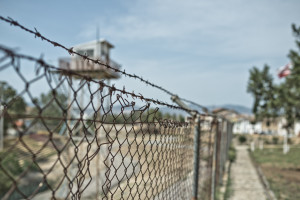
    The United Nations Buffer Zone, also known as the Green Line, a demilitarised zone patrolled by the United Nations Peacekeeping Force in Nicosia,  Cyprus. Image credit: Marco Fieber/Flickr.

    Historically, the Cyprus conflict is usually boiled down to competing ethno-nationalisms between Turkish-Cypriot and Greek-Cypriot communities; it is usually read in tandem with the ‘motherland’ nationalism in Turkey and Greece, is entrenched in the 1960s constitution along consociational lines and traced back to the decolonisation period in the 1950s. At one time or another, both communities in Cyprus have linked their destinies to those of their ethnic kin, to that of the large-group outside the island. Due to the pursuit of mutually exclusive destinies, Cyprus suffered from inter-communal violence from late 1950s until its decolonisation and independence in 1960. However, the newly founded Republic of Cyprus was only ephemeral, and inter-communal conflict erupted once again only after 3 years in 1963. Since 1964, the island hosts one of the longest-standing peacekeeping missions – The United Nations Peacekeeping Force in Cyprus (UNFICYP). The next 50 years witnessed a long and frustrating process of inter-communal talks and several UN settlement plans, turning the island into a ‘graveyard of diplomats’. As a result, the communities, who were psychologically divided under the new federation, would soon become physically and demographically divided. As such, following the Turkish intervention in response to the Greek coup on the island in 1974, Cyprus has effectively been divided in two, with Greek-Cypriots living in the southern part under the legally recognised Republic of Cyprus (RoC) and Turkish-Cypriots living in the northern part under the unrecognised, self-declared, administration called the ‘Turkish Republic of Northern Cyprus’ (TRNC).

    Despite the cease-fire and the protracted conflict, Cyprus is a safe place. This safety may be a common characteristic of small communities where social control is prevalent because of close familial and social relationships, but Cypriots are generally and unarguably non-violent people, demonstrated by low crime rates. In spite of the daily frustrations of the conflict, and its economic, social and political cost to Cypriots, it is hard to deny that the situation is ‘comfortable’ and ‘normalised’. Not only does Cyprus remain a popular holiday destination for many Europeans, but it officially became an EU member state with all its ‘anomalies’ in 2004. At times, Cyprus markets itself as the home for the last divided capital of Europe—at other times, as the furthest Eastern corner of Europe that offers pristine and exotic beaches—or as the multi-cultural holiday resort that is simultaneously European, Middle-Eastern and Mediterranean.

    The Cyprus Problem operates on local, regional and international levels. The local entails the relationship between the two ‘ethnically’ categorised communities. Owing to Turkey and Greece’s involvement since its early stages, the conflict has also had a distinct regional dimension for many years. This regional dimension is also the product of islands geography as a bridge between 3 continents and due to the history and demographics of the region. At the international level, the problem has preoccupied the UN since 1964 and involved NATO, the United States and since 2004, the EU became more directly embroiled when Cyprus acceded the Union without a peace settlement.

    Solving the Problem

    Numerous diplomatic efforts have been made both domestically and internationally to enhance different forms of peaceful unity since the conception of the Cyprus Problem. Over the decades, myriad negotiations and peace-talks have also begun and have been later halted, fast-tracked, and revisited. Nevertheless, it is still imperative to find a comprehensive solution to the Cyprus Problem.

    Such a solution, which would also advance the wider cause of peacebuilding and reconciliation, is crucial for several main reasons:

    • The prolongation of the conflict presents a myriad of human rights violations for the communities of Cyprus. While the RoC enjoys full EU membership, Turkish-Cypriots—who are also EU citizens—live in the northern part of Cyprus where the RoC does not exercise effective control and where the Acquis Communautaire is suspended. The Acquis Communautaireis the accumulated body of European Union (EU) law and obligations from 1958 to the present day. It comprises all the EU’s treaties and laws (directives, regulations and decisions), declarations and resolutions, international agreements and the judgments of the Court of Justice. The unrecognised status of the northern administration also amounts to a violation of the human rights of those Greek-Cypriots who became internally displaced people during 1974 and had lost access to their properties. As such, Cyprus is an explicit case of legality and politics persistently challenging each other, a situation which creates inherent contradictions for the EU project.
    • The accession of the RoC to the EU without the inclusion of the Turkish-Cypriots also presents a significant challenge for EU governance across a diverse range of issues, including the EU objective of achieving stability in the eastern Mediterranean. The EU accession also creates a state of exception that galvanises Cyprus’ ‘special status’ that is in reality not that special. As Harry Anastasiou eloquently puts it, Cyprus was “… the first EU member country that was ethnically divided; that was represented at EU level exclusively by members of one of the rival ethnic communities; that was partially occupied by the military forces of an EU candidate state; that had the institutional means to apply the Acquis Communautaire in one part of its territory but not in another; that had a cease-fire line and a buffer zone manned by UN peacekeepers; and that had one portion of its citizens deprived of the right to their property and residence and another portion of its citizens deprived of the right of access to and participation in the EU economy and EU political institutions. Moreover, Cyprus was the only EU member where its major ethnic communities recognise the EU law while simultaneously rejecting each other’s law; where its major ethnic communities accept the legitimacy of the EU while rejecting each other’s legitimacy within their own shared island”.
    • The ramifications of the conflict on the NATO–EU relationship and European energy policy is disconcerting due to newly discovered natural gas resources in Cyprus, competing claims over these resources and the fact that Turkey’s geographical location makes it an important corridor- particularly for gas and oil for the EU. When we look at regional alliances and hydrocarbon interests, we can see a highly intricate web of relationships. These include the hyper-securitisation, where threats are constructed and legitimised through security speech acts, of Turkey in the RoC, the latter’s close links with Russia and Greece, Turkey’s significance for NATO, and the fact that Russia and Cyprus are not part of the alliance. Such dynamics clearly add further tension to Turkey-EU, EU-Russia and Russia-Turkey relations, and create further instability in the region. Thus, solving the Cyprus problem can ease tensions in the region and positively influence the regional dynamics particularly those about regional energy policies.
    • Even though the intentions of Turkey’s Justice and Development Party (AKP) regarding full EU membership are highly questionable, non-resolution of the Cyprus Problem presents an obstacle for Turkey’s EU accession as well as being a persistent and bitter thorn in Turkey–EU relations. Solving the Cyprus Problem may also help normalise Turkey’s relationship with its neighbours. Considering the deteriorating diplomatic relationships between Turkey and the ‘West’, deep polarisation among different groups in Turkey, crumbling economy and intra-state violence, conflict and terrorism, Cyprus can help relieve much pressure off Turkey and restore its diplomatic stance.
    • Considering Cyprus’ geographical proximity to Syria and Iraq and to the Middle East and North Africa, it could be argued that the instability in the region (including Turkey)—and the subsequent ‘refugee’ crisis—are factors that add to the urgency of finding a comprehensive solution to the protracted conflict. The Cyprus Problem is a non-violent, ‘normalised’, and ‘comfortable’ conflict (see Adamides and Constantinou 2011), thus the regional dynamics can help cultivate a sense of urgency for reaching a comprehensive solution, which may contribute to eventual increased stability in the region, as it would not only ‘reconcile’ Greek-Cypriots and Turkish-Cypriots but ease much pressure off Turkey, Greece and the EU as well.

    What’s more, it is not only pertinent to solve the Cyprus Problem, but to do so in a timely manner too. In 2004, Cypriots came close to finding a solution to their intractable problem. A comprehensive settlement plan (a.k.a The Annan Plan) on a bi-zonal bi-communal federal state with single citizenship was accepted by the Turkish-Cypriot community but rejected by the Greek-Cypriot community in a simultaneous referenda in April 2004. Following the disappointment of the peace referenda, Cypriots became disengaged from the peace process, which was further exacerbated by the global economic crisis. Following the financial crises that hit the RoC in 2012, the economic concerns of communities have gradually pushed the Cyprus Problem behind other concerns and priorities, specifically unemployment, inflation and increasing crime rates.

    The peace negotiations resumed in 2008 but failed again in 2011. After independent left-wing Turkish Cypriot presidential candidate Mustafa Akıncı assumed office in the northern part of Cyprus in April 2015, hopes were revitalised. Known for his pro-solution and Turkey-defying stance and surprisingly clean political slate, many accounts argue that the centre-right Nicos Anastasiades, who has been the President of Republic of Cyprus since 2013 from the only party that supported the Annan Plan, and Akıncı duo has created a very favourable environment and that the stars are perfectly aligned this time, bringing the island closer than ever to reaching a comprehensive settlement. This gave birth to increasing public engagement in the peace process, which contributed to the ‘favourable’ environment by supporting and legitimising the mandate of the negotiation teams and creating a more convincing and prosperous ‘vision’ for the future of Cyprus without ‘the Problem’.

    Unfortunately however, this trend was showing signs of reversal. Following the Geneva summit disappointment, lack of convergence on the security dossier of the negotiations is reproducing sense of insecurity and triggering historic traumas, which underpins highly polarised internal narratives based on zero-sum discourse. Especially after the parliamentary Enosis commemoration vote in the RoC and Turkey’s four freedoms demand in Cyprus, the ‘peace fatigue’ is starting to set in once again. Frustration over lack of progress and impetus showing itself in low hope: While 53% of Greek Cypriots and 48% of Turkish Cypriots wish for the peace process to succeed, 43% and 50% respectively express no hope that the peace process will produce results. As the new security architecture proposal of SeeD Security Dialogue Initiative provides a four-step road map to break the current deadlock:

    Step 1: Shift the focus away from hard security and guarantees that only emphasize on last resort, deterrence and worse case scenarios to soft security and preventative measures that emphasize on sustainability and viability, by broadening the concept to include human security, economic, social and ontological security. The underlying objective should be to achieve an endogenously resilient Federal Cyprus that relies on its own institutions to guarantee the security of its citizens.

    Step 2: Acknowledge that a transitional period will be required before Federal Cyprus can be endogenously resilient and secure, where special arrangements and external support will be necessary to build the capacity of Cypriot institutions and provide a sense of security to all citizens and communities. Focus on benchmarks and performance indicators that can ensure a smooth implementation period.

    Step 3: Negotiate and agree those aspects of transitional arrangements that are less controversial (e.g. timelines for implementation of the settlement, what support will be provided by an international mission) in order to prevent deadlock, increase points of convergence and reinforce hope and public engagement in the process before negotiating those aspects of transitional arrangements that are more controversial (e.g. ‘last resort’ provisions, role of historic guarantors).

    Step 4: Enshrine all agreements and steps in a Treaty of Implementation, which will outline a robust bridge from the current status quo, to the ultimate vision of an endogenously resilient Federal Cyprus.

    What is needed to revitalise the peace process in Cyprus is innovation and reflection both on the process and on the content. Specifically relating to the security dossier, we need a different approach that broadens the concept of security beyond the realpolitik regional bargaining and beyond the narrow understanding that talking about the security of a federal Cyprus is talking about military arrangements and guarantees. It is crucial to capitalise on these proposals and regional dynamics and add a success story to the world’s peacemaking and peacebuilding record.

    İlke Dağlı, a Senior Researcher for the international think-tank SeeD (The Center for Sustainable Peace and Democratic Development), completed her PhD in Politics and International Studies at the University of Warwick, focusing on “Securitisation of Identities in Conflict Environments and its Implications on Ontological Security”.  She has a degree in European and International Politics and completed her MSC in Bristol on Security and Development. Since 2006 she has been working closely with CSOs and SMEs in Cyprus as a project coordinator, project developer, consultant and facilitator. She co-authored and coordinated many local projects such as The Civil Society Dialogue Project, Cyprus Community Media Centre initiative, Access Info Cyprus Project and Play for Peace Project and is closely involved with the ENGAGE Do Your Part for Peace project.