Blog

  • Gaza: Context, Consequences and the Utility of Force

    10 years of US Drone Strikes in Pakistan – What Impact Has it Had?

    This week marks 10 years since the first reported US drone strike in Pakistan. It has also seen the resumption of US drone strikes in the country following a five-month pause. Considering the length of time the CIA-led programme has been running, a number of questions deserve consideration: namely, how effective has the decade long covert drone programme been in Pakistan and what impact have drones had on wider Pakistani society? As the military technology for remote-control warfare spreads, there is a need to question whether drones provide significant tactical advantage or whether their proliferation could lead to greater long-term global insecurity.

    Read Article →

  • 10 years of US Drone Strikes in Pakistan – What Impact Has it Had?

    by Caroline Donnellan and Esther Kersley

    This article was originally published on openSecurity’s monthly Sustainable Security column on 22 June 2014. Every month, a rotating network of experts from Oxford Research Group’s Sustainable Security programme explore pertinent issues of global and regional insecurity.

    Caroline Donnellan manages of the Remote Control project of the Network for Social Change, which examines and challenges the new ways of modern warfare, including the use of Unmanned Aerial Vehicles (UAVs), Private Security Companies, Special Forces, aspects of cyber warfare and surveillance methods. Caroline has a background in multilateral diplomacy and has worked on international security and human rights issues for a number of years. Before joining ORG, she was Senior Policy Advisor to the Ambassador, Irish Permanent Representation to the Organization for Security and Cooperation in Europe (OSCE) in Vienna. 

    Esther Kersley is the Communications Assistant for Remote Control. Prior to joining ORG, Esther worked in Berlin for the anti-corruption NGO Transparency International as an editorial and online communications officer. She has a particular interest in counter-terrorism and conflict resolution in the Middle East, having previously worked with the Quilliam Foundation and IPCRI (Israel/Palestine Center for Research and Information), a Jerusalem based think tank.

  • Nuclear Weapons: From Comprehensive Test Ban to Disarmament

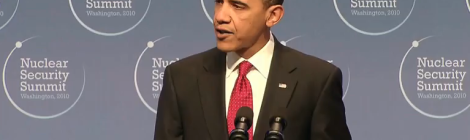
    Nuclear Weapons: From Comprehensive Test Ban to Disarmament

    Despite not yet entering into force, the 1996 Comprehensive Test Ban Treaty has succeeded in almost eliminating nuclear weapons testing and in establishing a robust international monitoring and verification system. A breakthrough in its ratification by the few hold-out states could have important positive repercussions for the Nuclear Non-Proliferation Treaty or nuclear disarmament in the Middle East.

    Read Article →

    Can the Nuclear Non-Proliferation Treaty outrun its double standard forever?

    The recent walkout by Egyptian negotiators at UN talks have demonstrated that, like a building with rotten foundations, the nuclear non-proliferation regime is far less stable than many believe it to be. Egypt’s actions make clear that anything less than a regime specifically geared towards addressing the reasons why some states seek nuclear weapons is a regime existing on borrowed time.

    Read Article →

    Bay of Bengal: a hotspot for climate insecurity

    The Bay of Bengal is uniquely vulnerable to a changing climate because of a combination of rising sea levels, changing weather patterns, and uncertain transboundary river flows. These problems combine with already existing social problems like religious strife, poverty, political uncertainty, high population density, and rapid urbanization to create a very dangerous cocktail of already security threats. Andrew Holland argues that foresight about its impacts can help the region’s leaders work together to solve a problem that knows no boundaries.

    Read Article →

  • A long road ahead: integrating gender perspectives into peacekeeping operations

    Engendering Peace? The militarized implementation of the women, peace and security agenda

    Almost 15 years after the first resolution to address women, peace and security, the agenda’s implementation is increasingly subverted by the militarised security paradigm. Implementing UNSCR 1325 has been interpreted as being about fitting women into the current peace and security paradigm and system; rather than about assessing and redefining peace and security through a gender lens. As a result, the opportunity to create a new recipe for peace and security, based on taking women’s perspectives into account, is being lost.

    Read Article →

    Security Sector Roles in Sexual and Gender-based Violence

    Democratic Republic of Congo’s sexual violence epidemic is not only a weapon of ongoing violent conflict but an expression of entrenched systemic problems. Indeed, sexual and gender-based violence (SGBV) is most commonly perpetrated by the security services in place to protect civilians. In Quartier Panzi in South Kivu province, innovative processes of security sector reform and strengthened police-civilian channels of communication may be providing an opportunity for change, argues World Bank adviser Edward Rackley.

    Read Article →

  • The Ukraine conflict’s legacy of environmental damage and pollutants

    The Ukraine conflict’s legacy of environmental damage and pollutants

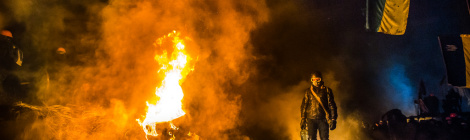
    One year after violent conflict began, information is now emerging on the specific environmental impact of war in Ukraine’s highly industrialised Donbas region. Although obtaining accurate data is difficult, indications are that the conflict has resulted in a number of civilian health risks, and potentially long-term damage to its environment. In order to mitigate these long-term risks, international and domestic agencies will have to find ways to coordinate their efforts on documenting, assessing and addressing the damage.

    Read Article →

    The ‘High Politics’ of Sustainable Security

    If events like those in Ukraine have taught us anything it is that, despite the predictions of many, the potential for conflict between the major powers is still one of the defining characteristics of world politics. Crisis diplomacy and inter-state rivalry is back on the global agenda. But if policymakers, analysts and civil society actors are to try and come up with ways of reversing the trend towards an increasingly competitive, militarised and crisis-driven inter-state order, then thinking carefully through the implications of a sustainable security approach to great power politics would appear to be a most useful starting point.

    Read Article →

    International Dimensions of the Ukraine Crisis: Syria and Iran

    The Russian annexation of Crimea may be in direct contravention of international agreements but is popular in Russia and almost certain to hold. Given tensions within Ukrainian society and its weak transitional government, there remains some risk of further intervention in eastern Ukraine and possibly the Trans-Dniester break-away region of Moldova. Even if there is no further escalation in the crisis, the deterioration in EU/Russian and US/Russian relations is of great concern, not least in relation to two aspects of Middle East security – the Syrian civil war and the Iran nuclear negotiations.

    Read Article →

  • Understanding Sexual Violence in the Democratic Republic of Congo

    Much has been written about the prevalence of sexual violence in the Democratic Republic of Congo (DRC), and in particular about the use of rape as a “weapon of war”. The horrific stories of rape and sexual violence published worldwide have led to the DRC being labeled the “worst place in the world for women” and the “rape capital of the world”. Feminists have long decried the silence which has historically surrounded rape and sexual violence during conflict, and so the fact that political leaders and world media are now talking about sexual violence in the DRC and pushing for solutions to this problem should be applauded. However, much of the discourse and reporting reduces this to a simple narrative of “bestial” or uncontrolled soldiers or militias raping the women and girls in villages which they attack. This narrative, in addition to employing colonialist and racist stereotypes about the behaviour of Congolese men and women, fails to grasp the complexities of gender relations in the DRC, the multiple and varied nature of sexual and gender-based violence, and of the social structures and norms which underlie this violence.

    One of the common perceptions about gender-based violence in the DRC, is that rape is the prevalent form of this violence and that sexual violence committed as a direct consequence and/or a strategy of war. It is undeniable that Forces Armées de la République Démocratique du Congo (the official army of the DRC) soldiers as well as numerous other rebel fighting groups have committed acts of sexual violence during the multiple and ongoing conflicts in the country, and continue to do so, as demonstrated by an attack in 2015 on the town of Kikamba in South Kivu during which over 100 women were raped. But to think of gender-based violence only as war rape is to miss the multiple other forms of violence, and the fact that these persist not only in areas of the country most directly affected by the conflict (notably the Eastern Regions) but across the whole country.  Common barriers to reporting GBV, such as stigma and fear of reprisals of the survivors, as well as poor infrastructure within the DRC mean that there is a lack of accurate statistics on GBV. But studies that do exist have shown that most of the incidences of GBV recorded in recent years are committed by civilians and not by soldiers, and that the most prevalent forms of GBV are domestic or intimate partner violence. A recent study by UNFPA listed multiple forms of GBV which are common in DRC including domestic  violence, rape and sexual violence, forced and early marriage, mistreatment of widows, psychological violence, economic violence and deprivation of resources.

    Meeting of victims of Sexual violence in the Democratic Republic of the Congo.

    Meeting of victims of Sexual violence in the Democratic Republic of the Congo. Image by USAID via Wikimedia.

    So although armed conflict has exacerbated gender-based forms of violence in the DRC, it cannot be the only explanation for the existence or persistence of this violence. Instead, we should look to the country’s underlying gender norms, discriminatory laws and policies, and socio-economic structures. Although the new  2006 constitution of the DRC has made some progress towards recognizing gender equality, such as in article 14 which states that the public authorities should ensure the promotion and protection of women’s rights,  discriminatory laws still remain, which reinforce persistent norms and beliefs about the roles of men and women in society. The Family Code of the DRC still maintains that a man is the head of the household who has authority over all other members of the household including his wife who must obey him. Women must obtain their husband’s permission before performing any legal act such as selling or leasing property, opening a bank account or applying for a visa or passport. The idea that men are heads of the household is strongly engrained and supported by many Congolese who see it as a part of the national “family values”. This persistence of a family code which legitimates men’s control over women and the symbolic and normative values which it perpetuates are key barriers to the achievement of gender equality. Further, research has shown that prevalent gender norms seem to accept a certain level of violence within couples as normal and even desirable.

    A new law on sexual violence passed in 2006, showed progress in criminalizing forms of violence not previously recognized such as sexual harassment, sexual slavery or forced pregnancy, but it still fails to recognize marital rape. This reflects that fact that many men and women think it is part of a woman’s duty to have sex with her husband whenever he wishes. And, for many, a certain level of violence within couples is “normal”, so that a man giving a “light tap” to his wife or girlfriend to keep her in line is perfectly acceptable.  Some even share the belief that if a man does not hit his partner, then he does not really love her. This normalization of a certain level of violence in intra-personal relationships is just part of a wider continuum of gender-based violence which is normalized and accepted. There are also various forms of violence which are condoned or encouraged by customary law which remains strong in some areas of the country, such as the rules of sororate and levirate under which women may be forced to marry the brother of their dead husband or the widow of their dead sister.  The continuum of these different forms of violence, which are accepted and normalized within Congolese society, can be seen to provide the context within which the rape and sexual violence, that has occurred during the armed conflicts, should be understood.

    The normalization of GBV also contributes to the continuing impunity of perpetrators, as do the weak police and judicial systems in the country. As noted above, many incidences of GBV are not even recognized as such, and even when it is acknowledged that an act of gender-based violence has been committed, it is unlikely that he perpetrator will be prosecuted or punished. And in the absence of a robust judicial system, many cases are still settled through “amicable” arrangements between perpetrator and victim.

    Gender inequalities are also obvious in many areas of public life, such as the lack of women in decision making positions in the government. Women make up only 8.9% of representatives in the National Assembly, 5.5% of Senators and 14.8% of government ministers (despite a strong recommendation from the national consultation held in Kinshasa in 2013 to appoint at least 30% of women to the government). Although a law on gender parity in political representation was passed by the National Assembly in April 2014, so far it has not had any noticeable impacts. There is still widespread opposition to women’s participation in public and political life because this is equated with a threat to the “traditional” family life and culture of the DRC. Women have also been under-represented in all of the various peace negotiations which have taken place to try and end the conflicts in the DRC, and remain a very small minority in the armed forces, the police and the judiciary.

    Much more can be written about the various forms of gender inequality which persist in the DRC and which provide foundations for the various forms of GBV which exist in the country. The necessary links between broader social gender inequalities and GBV are vital to understand if there is to be any effective response to the problem of GBV, and effective policies for prevention. The Women, Peace and Security agenda, has a focus on not only prevention of violence, but also of increased participation of women in public life and decision making. Increasing participation means considering women not only as “vulnerable victims” of sexual violence, but as actors should be given an equal role in political life.  All of the many complexities and layers of gender inequality need to be taken into account if real solutions to the problem of GBV are to be found, and in doing so Congolese women need to be actively engaged in making decisions and finding the solutions.

    Jane Freedman is Professor at the Université Paris 8, and member of the Centre de recherches sociologiques et politiques de Paris (CRESPPA). She has researched and published widely on issues relating to gender, violence, conflict and forced migration.

  • Belize: challenges and contradictions in gang policy

    Belize: challenges and contradictions in gang policy

    Like its neighbours in the northern triangle (El Salvador, Honduras and Guatemala), Belize has a high murder rate that is closely connected to the strong presence of gangs. But the character of gang activity in Belize is quite different from its Central American neighbours. Belize has pioneered some innovative solutions to the problem it is facing. But it will need to overcome the challenges of internal resistance and an acute lack of resources in order to address the political, economic and social issues that marginalise Belize’s large youth population.

    Read Article →

  • The Cyprus Problem: Why Solve a “Comfortable” Conflict?

    Several diplomatic efforts have been made both domestically and internationally to enhance peaceful unity since the start of the Cyprus Problem. Despite the shortcomings of past efforts, it is still desirable not only to resolve the issue, but also to do so in a timely manner.

    The Cyprus Problem

    Cyprus, the third largest island in the Mediterranean Sea, is home to 1.1 million and has a tempestuous history involving many actors ranging from different empires and nations of the past to regional and global actors of today, including the UN, EU and NATO. As George Christou highlights, the history of Cyprus “has been characterised by tension and conflict due to the diametrically opposed interests of Greece and the Greek-Cypriots on the one hand, and Turkey and the Turkish-Cypriots on the other”. If we add the colonial heritage, proximity to the Suez Canal and interests of Great Britain, remnants of Cold War paranoia that the island was to become a Russian satellite or a ‘Cuba in the Mediterranean’, the British Sovereign Base Areas that host one of the biggest intelligence infrastructures in the region and the close links between the Greek and Russian Orthodox churches to the equation, the protracted conflict on the island starts looking multi-layered, multi-factored and multi-faceted.
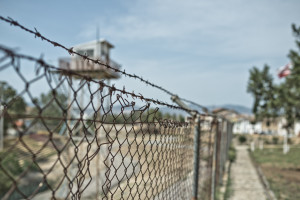
    The United Nations Buffer Zone, also known as the Green Line, a demilitarised zone patrolled by the United Nations Peacekeeping Force in Nicosia,  Cyprus. Image credit: Marco Fieber/Flickr.

    Historically, the Cyprus conflict is usually boiled down to competing ethno-nationalisms between Turkish-Cypriot and Greek-Cypriot communities; it is usually read in tandem with the ‘motherland’ nationalism in Turkey and Greece, is entrenched in the 1960s constitution along consociational lines and traced back to the decolonisation period in the 1950s. At one time or another, both communities in Cyprus have linked their destinies to those of their ethnic kin, to that of the large-group outside the island. Due to the pursuit of mutually exclusive destinies, Cyprus suffered from inter-communal violence from late 1950s until its decolonisation and independence in 1960. However, the newly founded Republic of Cyprus was only ephemeral, and inter-communal conflict erupted once again only after 3 years in 1963. Since 1964, the island hosts one of the longest-standing peacekeeping missions – The United Nations Peacekeeping Force in Cyprus (UNFICYP). The next 50 years witnessed a long and frustrating process of inter-communal talks and several UN settlement plans, turning the island into a ‘graveyard of diplomats’. As a result, the communities, who were psychologically divided under the new federation, would soon become physically and demographically divided. As such, following the Turkish intervention in response to the Greek coup on the island in 1974, Cyprus has effectively been divided in two, with Greek-Cypriots living in the southern part under the legally recognised Republic of Cyprus (RoC) and Turkish-Cypriots living in the northern part under the unrecognised, self-declared, administration called the ‘Turkish Republic of Northern Cyprus’ (TRNC).

    Despite the cease-fire and the protracted conflict, Cyprus is a safe place. This safety may be a common characteristic of small communities where social control is prevalent because of close familial and social relationships, but Cypriots are generally and unarguably non-violent people, demonstrated by low crime rates. In spite of the daily frustrations of the conflict, and its economic, social and political cost to Cypriots, it is hard to deny that the situation is ‘comfortable’ and ‘normalised’. Not only does Cyprus remain a popular holiday destination for many Europeans, but it officially became an EU member state with all its ‘anomalies’ in 2004. At times, Cyprus markets itself as the home for the last divided capital of Europe—at other times, as the furthest Eastern corner of Europe that offers pristine and exotic beaches—or as the multi-cultural holiday resort that is simultaneously European, Middle-Eastern and Mediterranean.

    The Cyprus Problem operates on local, regional and international levels. The local entails the relationship between the two ‘ethnically’ categorised communities. Owing to Turkey and Greece’s involvement since its early stages, the conflict has also had a distinct regional dimension for many years. This regional dimension is also the product of islands geography as a bridge between 3 continents and due to the history and demographics of the region. At the international level, the problem has preoccupied the UN since 1964 and involved NATO, the United States and since 2004, the EU became more directly embroiled when Cyprus acceded the Union without a peace settlement.

    Solving the Problem

    Numerous diplomatic efforts have been made both domestically and internationally to enhance different forms of peaceful unity since the conception of the Cyprus Problem. Over the decades, myriad negotiations and peace-talks have also begun and have been later halted, fast-tracked, and revisited. Nevertheless, it is still imperative to find a comprehensive solution to the Cyprus Problem.

    Such a solution, which would also advance the wider cause of peacebuilding and reconciliation, is crucial for several main reasons:

    • The prolongation of the conflict presents a myriad of human rights violations for the communities of Cyprus. While the RoC enjoys full EU membership, Turkish-Cypriots—who are also EU citizens—live in the northern part of Cyprus where the RoC does not exercise effective control and where the Acquis Communautaire is suspended. The Acquis Communautaireis the accumulated body of European Union (EU) law and obligations from 1958 to the present day. It comprises all the EU’s treaties and laws (directives, regulations and decisions), declarations and resolutions, international agreements and the judgments of the Court of Justice. The unrecognised status of the northern administration also amounts to a violation of the human rights of those Greek-Cypriots who became internally displaced people during 1974 and had lost access to their properties. As such, Cyprus is an explicit case of legality and politics persistently challenging each other, a situation which creates inherent contradictions for the EU project.
    • The accession of the RoC to the EU without the inclusion of the Turkish-Cypriots also presents a significant challenge for EU governance across a diverse range of issues, including the EU objective of achieving stability in the eastern Mediterranean. The EU accession also creates a state of exception that galvanises Cyprus’ ‘special status’ that is in reality not that special. As Harry Anastasiou eloquently puts it, Cyprus was “… the first EU member country that was ethnically divided; that was represented at EU level exclusively by members of one of the rival ethnic communities; that was partially occupied by the military forces of an EU candidate state; that had the institutional means to apply the Acquis Communautaire in one part of its territory but not in another; that had a cease-fire line and a buffer zone manned by UN peacekeepers; and that had one portion of its citizens deprived of the right to their property and residence and another portion of its citizens deprived of the right of access to and participation in the EU economy and EU political institutions. Moreover, Cyprus was the only EU member where its major ethnic communities recognise the EU law while simultaneously rejecting each other’s law; where its major ethnic communities accept the legitimacy of the EU while rejecting each other’s legitimacy within their own shared island”.
    • The ramifications of the conflict on the NATO–EU relationship and European energy policy is disconcerting due to newly discovered natural gas resources in Cyprus, competing claims over these resources and the fact that Turkey’s geographical location makes it an important corridor- particularly for gas and oil for the EU. When we look at regional alliances and hydrocarbon interests, we can see a highly intricate web of relationships. These include the hyper-securitisation, where threats are constructed and legitimised through security speech acts, of Turkey in the RoC, the latter’s close links with Russia and Greece, Turkey’s significance for NATO, and the fact that Russia and Cyprus are not part of the alliance. Such dynamics clearly add further tension to Turkey-EU, EU-Russia and Russia-Turkey relations, and create further instability in the region. Thus, solving the Cyprus problem can ease tensions in the region and positively influence the regional dynamics particularly those about regional energy policies.
    • Even though the intentions of Turkey’s Justice and Development Party (AKP) regarding full EU membership are highly questionable, non-resolution of the Cyprus Problem presents an obstacle for Turkey’s EU accession as well as being a persistent and bitter thorn in Turkey–EU relations. Solving the Cyprus Problem may also help normalise Turkey’s relationship with its neighbours. Considering the deteriorating diplomatic relationships between Turkey and the ‘West’, deep polarisation among different groups in Turkey, crumbling economy and intra-state violence, conflict and terrorism, Cyprus can help relieve much pressure off Turkey and restore its diplomatic stance.
    • Considering Cyprus’ geographical proximity to Syria and Iraq and to the Middle East and North Africa, it could be argued that the instability in the region (including Turkey)—and the subsequent ‘refugee’ crisis—are factors that add to the urgency of finding a comprehensive solution to the protracted conflict. The Cyprus Problem is a non-violent, ‘normalised’, and ‘comfortable’ conflict (see Adamides and Constantinou 2011), thus the regional dynamics can help cultivate a sense of urgency for reaching a comprehensive solution, which may contribute to eventual increased stability in the region, as it would not only ‘reconcile’ Greek-Cypriots and Turkish-Cypriots but ease much pressure off Turkey, Greece and the EU as well.

    What’s more, it is not only pertinent to solve the Cyprus Problem, but to do so in a timely manner too. In 2004, Cypriots came close to finding a solution to their intractable problem. A comprehensive settlement plan (a.k.a The Annan Plan) on a bi-zonal bi-communal federal state with single citizenship was accepted by the Turkish-Cypriot community but rejected by the Greek-Cypriot community in a simultaneous referenda in April 2004. Following the disappointment of the peace referenda, Cypriots became disengaged from the peace process, which was further exacerbated by the global economic crisis. Following the financial crises that hit the RoC in 2012, the economic concerns of communities have gradually pushed the Cyprus Problem behind other concerns and priorities, specifically unemployment, inflation and increasing crime rates.

    The peace negotiations resumed in 2008 but failed again in 2011. After independent left-wing Turkish Cypriot presidential candidate Mustafa Akıncı assumed office in the northern part of Cyprus in April 2015, hopes were revitalised. Known for his pro-solution and Turkey-defying stance and surprisingly clean political slate, many accounts argue that the centre-right Nicos Anastasiades, who has been the President of Republic of Cyprus since 2013 from the only party that supported the Annan Plan, and Akıncı duo has created a very favourable environment and that the stars are perfectly aligned this time, bringing the island closer than ever to reaching a comprehensive settlement. This gave birth to increasing public engagement in the peace process, which contributed to the ‘favourable’ environment by supporting and legitimising the mandate of the negotiation teams and creating a more convincing and prosperous ‘vision’ for the future of Cyprus without ‘the Problem’.

    Unfortunately however, this trend was showing signs of reversal. Following the Geneva summit disappointment, lack of convergence on the security dossier of the negotiations is reproducing sense of insecurity and triggering historic traumas, which underpins highly polarised internal narratives based on zero-sum discourse. Especially after the parliamentary Enosis commemoration vote in the RoC and Turkey’s four freedoms demand in Cyprus, the ‘peace fatigue’ is starting to set in once again. Frustration over lack of progress and impetus showing itself in low hope: While 53% of Greek Cypriots and 48% of Turkish Cypriots wish for the peace process to succeed, 43% and 50% respectively express no hope that the peace process will produce results. As the new security architecture proposal of SeeD Security Dialogue Initiative provides a four-step road map to break the current deadlock:

    Step 1: Shift the focus away from hard security and guarantees that only emphasize on last resort, deterrence and worse case scenarios to soft security and preventative measures that emphasize on sustainability and viability, by broadening the concept to include human security, economic, social and ontological security. The underlying objective should be to achieve an endogenously resilient Federal Cyprus that relies on its own institutions to guarantee the security of its citizens.

    Step 2: Acknowledge that a transitional period will be required before Federal Cyprus can be endogenously resilient and secure, where special arrangements and external support will be necessary to build the capacity of Cypriot institutions and provide a sense of security to all citizens and communities. Focus on benchmarks and performance indicators that can ensure a smooth implementation period.

    Step 3: Negotiate and agree those aspects of transitional arrangements that are less controversial (e.g. timelines for implementation of the settlement, what support will be provided by an international mission) in order to prevent deadlock, increase points of convergence and reinforce hope and public engagement in the process before negotiating those aspects of transitional arrangements that are more controversial (e.g. ‘last resort’ provisions, role of historic guarantors).

    Step 4: Enshrine all agreements and steps in a Treaty of Implementation, which will outline a robust bridge from the current status quo, to the ultimate vision of an endogenously resilient Federal Cyprus.

    What is needed to revitalise the peace process in Cyprus is innovation and reflection both on the process and on the content. Specifically relating to the security dossier, we need a different approach that broadens the concept of security beyond the realpolitik regional bargaining and beyond the narrow understanding that talking about the security of a federal Cyprus is talking about military arrangements and guarantees. It is crucial to capitalise on these proposals and regional dynamics and add a success story to the world’s peacemaking and peacebuilding record.

    İlke Dağlı, a Senior Researcher for the international think-tank SeeD (The Center for Sustainable Peace and Democratic Development), completed her PhD in Politics and International Studies at the University of Warwick, focusing on “Securitisation of Identities in Conflict Environments and its Implications on Ontological Security”.  She has a degree in European and International Politics and completed her MSC in Bristol on Security and Development. Since 2006 she has been working closely with CSOs and SMEs in Cyprus as a project coordinator, project developer, consultant and facilitator. She co-authored and coordinated many local projects such as The Civil Society Dialogue Project, Cyprus Community Media Centre initiative, Access Info Cyprus Project and Play for Peace Project and is closely involved with the ENGAGE Do Your Part for Peace project.
  • Floating liabilities? Maritime armouries, risks and solutions

    RC_long_logo_small_4webThis article is part of the Remote Control Warfare series, a collaboration with Remote Control, a project of the Network for Social Change hosted by Oxford Research Group.

    The use of security forces to protect merchant vessels from piracy has led to a rise in ‘floating armouries’: vessels that are used for weapons storage, often moored in international waters. This growing trend raises a number of concerns over security, oversight and transparency. 

    From 2005 onwards, cargo ships traversing the seas off the coast of Somalia into the Gulf of Aden have become targets of maritime piracy.  One of the responses has been to station armed guards on the ships, or on support vessels travelling with the ships to protect them. On commercial ships these guards have generally been provided by Private Maritime Security Companies (PMSCs) with weapons owned by the PMSCs themselves or leased from governments or other PMSCs in the region.

    PMSCs need to have storage for the weapons when not in use. One option is to store them in land-based armouries, the other is to store them in ‘floating armouries’. A new report by the Omega Research Foundation commissioned by the Remote Control project examines the issue of floating armouries and offers recommendations for how they could be regulated.

    What are floating armouries and why are they used?

    Floating armouries are ships that store weapons, ammunition and other equipment such as night vision goggles and body armour for use by PMSCs engaged in vessel protection. They also provide other logistics support including accommodation, food and medical supplies storage. They are typically commercially owned vessels, and are often anchored in international waters. These vessels are not purpose built, but ships that have been converted and retrofitted.

    Due to the tightening of state regulation over the use of land based armouries, restrictions on weapons in some territorial waters, as well as the fees levied at PMSCs to move weapons through ports, PMSCs have increasingly turned towards floating armouries.

    What are the issues?

    Whilst PMSCs have dramatically reduced piracy off the coast of Somalia, the Omega Research Foundation’s report sheds light on an underexplored issue: the lack of regulation, oversight and security of floating armouries. It is not known how many floating armouries there are in operation – due to the lack of information on these vessels it is hard to verify their numbers. In 2012 a UN report detailed 18 floating armouries; other reports put the number at between 12 and 20 (See an industry newsletter and a Guardian article quoting the EU Naval Force). In September 2014 the UK Government published a list of floating armouries that UK PMSCs were licensed to use, stipulating 31 armouries. As this number only represents floating armouries licensed for use by UK companies, there may well be other armouries in operation.

    In 2012 the UN Monitoring Group on Somalia and Eritrea highlighted concerns over the safety and security of floating armouries, citing the lack of national and international regulations. The Group stated:

    This new and highly profitable business for PMSCs is uncontrolled and almost entirely unregulated, posing additional legal and security challenges for all parties involved.

    Two years on there is still no international regulation and only limited national regulation. As the floating armouries are often moored in international waters, they operate in a ‘legal grey area’ with, in some cases, the only regulation coming from the states that register the vessels (the flag states). There are at least 3 states (Djibouti, Mongolia, and St Kitts and Grenadine) that give explicit approval for vessels to operate as floating armouries. Other states do have some regulation regarding the carrying of weapons on board ships but it mainly relates to PMSCs rather than floating armouries specifically.

    Some of the vessels operating as floating armouries are flagged to countries that are on the Paris MoU or Tokyo MoU ‘black lists’. These black lists are derived from the Port State Control authority’s inspection of ships for compliance with international conventions and international law. Port State Control publishes an annual list evaluating the performance of flag states and assigning each a white, grey or black classification. The Omega Research Foundation has raised concerns that some floating armouries are flagged to states where there are serious concerns over the regulation of ships that fly under their flags.

    There are also concerns over the construction and physical security standards of the floating armouries. None of the vessels currently used as floating armouries have been purpose built for that function. Existing vessels have been adapted, which means they may not have acceptable storage facilities for arms and ammunition. As a minimum, floating armouries should have an armoury contained within the structure of the ship and should have a secure entrance. Arms and ammunition should be stored separately, and should be kept in a weatherproof, ventilated and shelved environment.

    What are the solutions?

    Whilst states can introduce legislation to regulate floating armouries operating within their jurisdiction, the most effective regulation needs to be at an international level. The International Maritime Organisation (IMO) as well as international trade bodies, such as the Security Association for the Maritime Industry (SAMI), should review current regulation and implement the necessary changes.

    As a first step there should be an international in-depth study into the number of floating armouries currently in operation and the establishment of a central registry that contains information on the vessels used as floating armouries and the companies that operate them. The IMO or another international body should also review any existing national regulations and examples of best practice. Subsequent work should focus on establishing an international regulatory framework for floating armouries and an effective monitoring and compliance mechanism.

    The Omega Research Foundation (@Omega_RF) is an independent UK-based research organisation dedicated to providing rigorous, objective, evidence-based research on the manufacture, trade in, and use of, military, security and police (MSP) technologies. Their report, ‘Floating Armouries: Implications and Risks’ is available here.

    The Remote Control project is a project of the Network for Social Change hosted by Oxford Research Group that looks at the current developments in military technology and the re-thinking of military approaches to future threats.

    Featured image: Offshore tug, the same kind of vessel used for floating armouries. Source: Flickr | Luc Van Braekel

  • Spetsnaz: An Interview With Mark Galeotti

    Humanitarian Consequences of Nuclear Weapons: Five Reasons for the P5 to participate in Vienna

    The ‘humanitarian dimension’ initiative highlighting the consequences of nuclear weapons has evolved and consolidated itself in the non-proliferation regime since 2010. The five nuclear weapons states (NWS or P5) under the NPT – China, France, Russia, UK and US – boycotted the first two international conferences on the humanitarian consequences of nuclear weapons. A third conference will be held in Vienna on 8-9 December 2014. This article gives five reasons why the P5 should consider participating.

    Read Article →

    Building the Case for Nuclear Disarmament: The 2014 NPT PrepCom

    The humanitarian impact of nuclear weapons, highlighted by a wide-ranging, cross-grouping, multi-aim initiative which continues to consolidate itself in the non-proliferation regime, has come to the fore in the 3rd Prepatory Committe for the 2015 NPT Review Conference. Frustrated with the lack of progress towards NPT Article VI commitments to complete nuclear disarmament, the initiative has invigorated attention to the urgency of nuclear disarmament and a need for a change in the status quo. NPT member states and civil society continue to engage actively in publicizing the humanitarian consequences of nuclear weapons as an impetus to progress towards nuclear disarmament.

    Read Article →

    The ‘High Politics’ of Sustainable Security

    If events like those in Ukraine have taught us anything it is that, despite the predictions of many, the potential for conflict between the major powers is still one of the defining characteristics of world politics. Crisis diplomacy and inter-state rivalry is back on the global agenda. But if policymakers, analysts and civil society actors are to try and come up with ways of reversing the trend towards an increasingly competitive, militarised and crisis-driven inter-state order, then thinking carefully through the implications of a sustainable security approach to great power politics would appear to be a most useful starting point.

    Read Article →