Blog

  • Sustainable Security

  • Resources and Militarisation in the East China Sea

    Resources and Militarisation in the East China Sea

    Ben Zala | | October 2012

    Issues:Competition over resources, Global militarisation

    As the long running tensions over the set of islands in the East China Sea appear to be coming to a head, the time for thinking through the alternatives to the militarisation of this conflict seems to be well and truly upon us.

    The conflict raises interesting issues about sovereignty claims based on offshore territories, particularly as we face a climate-constrained future as well as the increasing importance of competition over scarce resources. The latter is fast becoming one of the most important global trends if one thinks about the potential ‘drivers’ of conflict and even war.

    Spiralling naval spending in the region has been tracked by analysts for some years now, and flashpoints such as the dispute over the Senkaku/Diaoyu islands could show rampant military spending and arms racing for the dangerous trends that they are if things deteriorate rapidly. Arms racing helps to reinforce security dilemmas (the problems of interpreting the motives of potential adversaries and responding in-kind by arming yourself thus creating a spiral towards ever increasing militarisation). Arms racing also discourages the development of what Ken Booth and Nicholas Wheeler refer to as ‘security dilemma sensibility’ – the ability to “perceive the motives behind, and to show responsiveness towards, the potential complexity of the military intentions of others. In particular, it refers to the ability to understand the role that fear might play in their attitudes and behaviour, including, crucially, the role that one’s own actions may play in provoking that fear.”

    But what is particularly important to note in relation to this crisis is the interaction between the trends of increasing militarisation and competition over resources. The potential hydrocarbon resources beneath the ground around the islands as well as the rich fishing grounds in the surrounding waters gives the competing claims to sovereignty a particular strategic bite.

    Imposed on top of this is the effect of unresolved historical tensions and fierce nationalist sentiment in some quarters of both Japan and China. The coverage of the dispute in the media has been particularly important. Kevin Clements and Ria Shibata have noted that “this might be expected in China, which has a state-run media. In democratic Japan and Taiwan, however, the media have also promoted official and unofficial nationalist positions on the conflict. This has been accompanied by a marginalising or silencing of moderate voices favouring negotiated non-violent solutions to the conflict.” Interestingly, the most constructive voices calling for calm who have been able to cut through the jingoism and sabre rattling have been the business community concerned with the bigger picture issues of losing trade and tourism between China, Taiwan, Japan and South Korea. 

    Clements and Shibata have outlined five initial steps that could be used to de-escalate the issue and begin the difficult but unavoidable process of a negotiated solution. In the longer-term, both regional powers and important external players will need to put addressing the inter-linked trends of militarisation and increasing competition over strategic resources at the heart of any attempts to avoid the worst case scenarios playing out.

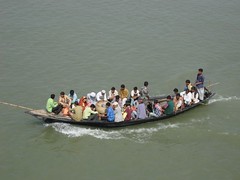
    Image source: Al Jazeera English. 

    Comments

    Post new comment


  • Selling Nature to Save Nature, and Ourselves

    Selling Nature to Save Nature, and Ourselves

    Stephen Leahy | Terraviva | July 2011

    Issues:Climate change, Competition over resources, Marginalisation

    THE HAGUE, Jul 5, 2011 (IPS) – Avoiding the coming catastrophic nexus of climate change, food, water and energy shortages, along with worsening poverty, requires a global technological overhaul involving investments of 1.9 trillion dollars each year for the next 40 years, said experts from the U.N. Department of Economic and Social Affairs (UN-DESA) in Geneva Tuesday.

    “The need for a technological revolution is both a development and existential imperative for civilisation,” said Rob Vos, lead author of a new report, “The Great Green Technological Transformation”. 

    Absent in the U.N. report is a call for the other necessary transformation: what to do with the market-driven economic system that has put humanity on this catastrophic collision course? Attempts to “green” capitalism are failing and will fail, according to many of the more than 200 social science researchers at a groundbreaking international conference in The Hague titled “Nature Inc?” Jun. 30 to Jul. 2. 

    “We must start tackling and questioning some core capitalist dictums, such as consumerism, hyper-competition, the notion that ‘private’ is always better, and especially economic growth,” says Bram Büscher, the conference co-organiser and researcher at the Institute of Social Studies (ISS) at Erasmus University in The Hague, Netherlands. 

    Equally important is to stop looking at nature as a collection of economic objects and services that “must only benefit some specific idea of human economic progress”, Büscher told IPS. 

    Governments, the World Bank, the United Nations and development agencies, international conservation organisations and others have all come to see markets as the only way to mobilise enough money to end deforestation, increase the use of alternative energy, boost food production, alleviate poverty, reduce pollution and solve a host of other serious and longstanding problems. 

    Started as a small gathering of academics, Nature Inc? became a major event as hundreds of experts from around the world wished to participate. Büscher believes the main reason for this is that many are actively doing research on environmental and conservation issues and are increasingly running into new market schemes like carbon credit trading, payments for ecosystem services, biodiversity derivatives and new conservation finance mechanisms, and so on. 

    “Payments for ecosystem services are the newest tropical ‘miracle’ crop,” said Kathleen McAfee of San Francisco State University. 

    The market is putting new values on tropical forests as carbon sinks, reservoirs of biodiversity or ecotourism destinations, McAfee said during the conference. 

    The World Bank, U.N. and others say that the only way to generate large corporate sector and private investment to protect tropical forests is by payments for ecosystem services such as carbon and biodiversity offset markets such as Reduced Deforestation and Degradation for biodiversity known as REDD+. These are also touted as the way out of poverty for communities living in or near forests. 

    “However, markets are preconditioned on inequality and will only make matters worse,” McAfee said. 

    Markets will look for the cheapest land available, which means the poorest will be displaced because they don’t have formal land tenure or they will be persuaded by promises of large payments. In order to secure the investment, carbon traders will place restrictions on the use of the land for decades. 

    Technical assessments and monitoring will also be needed, which results in high costs as was the case for a project in Costa Rica, McAfee said. “The poor got very little…it didn’t even cover their costs,” she noted. 

    When the European Union committed to reduce its carbon emissions by 20 percent by 2020, some European multinational industries with high carbon footprints simply moved to countries like the United States where there were no restrictions, said Yda Schreuder of the University of Delaware. 

    “Europe going it alone on carbon reductions has resulted in higher overall emissions globally,” said Schreuder, author of “The Corporate Greenhouse”, a critical look at the political economy of the climate change debate. 

    Globalisation greatly enables companies to quickly shift their operations to where costs or restrictions are lower. To meet its 2020 target, Europe reduced its use of coal 35 to 50 percent by switching to renewable energy like wind, but mainly through much higher use of natural gas obtained from Russia. 

    Natural gas emits much less carbon than coal. However, over the same time period, Russia increased its use of coal for domestic energy because it could make more money selling natural gas to Europe, Schreuder said. 

    “The World Trade Organization encourages all this to happen. Markets are a driving force behind increasing emissions of carbon,” she added. 

    Digging deeper into these schemes reveals their inherent contradictions and unintended consequences, but they are “often promoted in lyrical win-win language”, said Büscher. 

    Many believe the green technology transformation that the new U.N. report calls for is unlikely to succeed without a move away from the economic growth-at-all-costs paradigm that dominates nearly everyone’s thinking. There is an overwhelming need to find alternatives and stop promoting an economic system that has created the crisis. 

    “These are incredibly complex problems and there are no simple solutions,” Büscher concluded. 

    Article source: Terraviva

    Image source: Paul Keller

    Comments

    Post new comment


  • Sustainable Security

    Resources

    Climate Change and Security in Bangladesh

    Issue:Climate change

    This case study explores the potential impact of climate change on security and conflict in Bangladesh. As international researchers have started to make the link between climate change, insecurity and conflict, they have raised concerns that Bangladesh’s extreme vulnerability to the environmental effects of climate change may create conditions that put it at risk of greater insecurity and possible conflict.

    From Within and Without: Sustainable Security in the Middle East and North Africa

    Chris Abbott and Sophie Marsden | Oxford Research Group | March 2009

    Issues:Climate change, Competition over resources, Global militarisation, Marginalisation

    Tag:report

    The Middle East and North Africa is a region of great diversity. It encompasses Arab and many other ethnic populations, theocratic and secular states, democracies and authoritarian regimes. A region of immense wealth and crippling poverty; it is blessed (some might say cursed) with vast resources, not least oil, but has not always proved able to manage them for the benefit of ordinary people. Read more »

    Climate change, conflict and fragility: understanding the linkages, shaping effective responses

    Issue:Climate change

    This excellent report by International Alert examines the growing risk of armed conflict as a result of climate change now being experienced by some of the most fragile regions of the world, and reveals the alarming consequences of continued inaction to enable affected countries to adapt to the consequences of climate driven changes on their populations.

    Taken from the introduction:

    Climate Wars

    Gwynne Dyer | CBC Radio One | January 2009

    Issue:Climate change

    Tag:podcast

    Global warming is moving much more quickly than scientists thought it would. Even if the biggest current and prospective emitters – the United States, China and India – were to slam on the brakes today, the earth would continue to heat up for decades. Read more »

    Tigers and Dragons: Sustainable Security in Asia and Australasia

    Chris Abbott and Sophie Marsden | Oxford Research Group | November 2008

    Issues:Climate change, Global militarisation

    Tag:report

    Asia is a region in transition, and transition creates uncertainty. The political, economic and societal landscape is shifting, with major new powers emerging and smaller states attempting to protect their interests in this changing dynamic. At the same time, climate change and the other long-term emerging threats to security will require regional responses and thus a degree of regional unity. Read more »

    An Uncertain Future: Law Enforcement, National Security and Climate Change

    Chris Abbott | Oxford Research Group | January 2008

    Issue:Climate change

    Tag:report

    Climate change will have serious environmental, socio-economic and security consequences for both developed and developing nations alike. This report explores these consequences and demonstrates that they will present new challenges to governments trying to maintain domestic stability. Read more »

    National Security And The Threat of Climate Change

    Issue:Climate change

    CNA Corporation, a US Department for Defense funded think-tank, published this report in April 2007. The report was produced by CNA’s writers and researchers under the guidence of a Military Advisory Board (MAB) consisting of retired admirals and generals.  Read more »

    Beyond Terror: The Truth About the Real Threats to Our World

    Chris Abbott, Paul Rogers and John Sloboda | Rider | April 2007

    Issues:Climate change, Competition over resources, Global militarisation, Marginalisation

    Tag:book

    Many leading military analysts in the United States are increasingly alert to the link between security and climate change. Is international terrorism really the single greatest threat to world security? Read more »

    Al-Qaeda: The True Story of Radical Islam

    Issues:Global militarisation, Marginalisation

    Tag:book

    Image of Al-Qaeda: The True Story of Radical Islam

    • Purchase from Amazon:
    • Al-Qaeda: The True Story of Radical Islam
    • Author: Jason Burke
    • Publisher: Penguin ()
    • Binding: Paperback, pages
    • Price: £8.99

  • Sustainable Security

    Another year has confronted us with yet another tragedy in another European Capital – Madrid in 2004, London in 2007, Paris last year – and, most recently, Brussels. The litany of such incidents, augmented by countless other atrocities further afield and perpetrated originally by those claiming connections to Al Qaeda but now eclipsed by similarly asserted affiliations to ISIS, seems set to continue. Accordingly, it makes sense for a publication called Sustainable Security to ask what, if anything, has been sustainable about responses to terrorism worldwide since 9/11?

    After Brussels, many of the usual suspects with connections to the world of security have been wheeled out as usual to offer advice on the need for ever greater scrutiny at airports. But, having made air-side a challenge to reach through a panoply of checks and scanners, it seemed inevitable to those who understood displacement that attacks would simply migrate to the less scrutinised entrance spaces. We could turn these into fortified complexes too – only for the locus of atrocities to move on again – or we could begin to ask more challenging questions of our authorities.

    Of course, none of us wishes to sit next to a deluded individual about to detonate their device on a plane or Metro train. In that regard, security and intelligence gathering are absolutely necessary. But they are clearly not sufficient as, despite the billions spent in hardening private facilities and civic spaces, including transport hubs since 2001, the evidence still serves to remind us that determined individuals – and even a few chancers – will get through. It is simply not possible to secure all of society, all of the time. Prevention – in this sense at least – is far too limited a goal.

    What’s more it has often been the authorities who have ended up ‘doing the terrorists’ job for them’. To call for three days of national mourning after the latest disasters may seem sensitive to those who lost a loved one – but it flies in the face of the rhetoric of resilience and those who claim the need for a rapid return to normalcy. In that respect, the public often display considerably greater courage by determinedly meeting together for vigils in open spaces, whilst the authorities advise against collective gatherings and look to cancel concerts and sporting events.
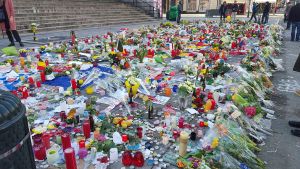
    Brussels_after_the_attacks_(4)

    Image of Bourse, Brussels after terrorist attacks in March 2016. Image by Romaine via Wikimedia Commons.

    There can never be security solutions to social problems. At best, these conceal the underlying challenges that lie ahead. Worse, operational fixations allow those in charge to evade articulating a broader vision for their societies. This latter aspect shapes both the perpetrators – who appear sometimes to almost drift into becoming radicalised through their being disengaged from a world that offers them (and others) little by way of vision or ambition – and the respondents – who are lulled into a phoney sense of knowing what they are doing and why, when in fact they have little appreciation for, or understanding of, the dynamic they seek to redress.

    In such a situation, it may indeed only be the public who can maintain a modicum of humanity through their determination – albeit unavoidable in most instances – to get on with life. They are also apparently not so readily fooled by the rhetoric of the self-styled ‘jihadists’ who represent no-one and whose actions in the name of Islam most Muslims deplore, nor by the actions of the authorities who, by securitising the world, hope to make their task easier whilst providing themselves with a flimsy – if largely unconscious – sense of purpose in an age when they seem to lack any other.

    But there are others, critical of the authorities, whose narrative and interpretative framework we should be just as critical of and interrogate too. If, as we are often told, alienated individuals in corroded communities in run-down districts have a supposedly understandable sense of grievance – at the racist hostility they encounter, as well as with regards to Western foreign policy – then why is it that not all brought up under such conditions respond the same way, or that the terrorists target civilians, including children as in Lahore, rather than government ministries?

    In the aftermath of the Cold War, security increasingly became represented through the prism of human security whereby the referent for security shifted from the state to the individual and, in particular, the latter’s assumed existential sense of vulnerability. This, in turn, opened the door to securitisation – the possibility that the state and other actors might transform specific problems into security-related concerns in the pursuit of their agendas. Foremost among these have been the securitisation of health and the securitisation of development. So might there now be a securitisation of education too?

    Securitisation allows challenges to be ‘constructed as a matter of national security’, encouraging a demands for perpetual preparedness, constant surveillance and eternal vigilance. It offers unfocused authorities clear actions to engage in, thereby making ‘an uncertain future available to intervention in the present’. This coincides with the rise of risk management that also readily become an organising framework in periods lacking clear direction. Worse, by promoting an emphasis on procedural management through expert knowledge these both disenfranchise people from the possibility of solving their own problems and allows the authorities ‘to become fixated on external threats rather than examining their own internal confusions’.

    Another critical factor here appears to be the race to the bottom that best describes identity politics today. The end of the Cold War, and with it the gradual erosion of the politics of Left and Right that had defined it, left a big gap where collective social discourse, debate and deliberation ought to be. It is this hole in values and vision that the use of identity as a claim on resources – particularly through attempts to define particular groups as being the most oppressed or victimised – has sought to fill. Many campaigners have now learnt to play this game. There is evidence to suggest that today’s terrorists do so too.

    But, rather than challenge such approaches, governments the world over have often indulged the claims and patronised the claimants accordingly. Far better to deal with individuals and groups prostrating themselves to you and making claims for remedy or therapy than having to confront those who are being Bolshie and demanding more. In an age when the authorities are not so sure of whom they are themselves – having sought to disown aspects of their imperialist past to the point of self-loathing and confusion – as well as sensing themselves isolated, it makes for a perfect match.

    While campaigners understandably concern themselves with government moves to introduce a Communications Data Bill – the so-called ‘Snoopers’ Charter’, now renamed the Investigatory Powers Bill – what many fail to recognise is the extent to which such a push from above has been facilitated by erosions to absolute freedom of expression down below. The notion, for instance, that students are vulnerable and need to be protected by the authorities, whilst appearing in the new Prevent Duty, first emerged as the gradual extension of various campaigns for ‘no platform’, ‘safe space’ and ‘trigger warnings’ promoted by Students’ Unions across the UK and US.

    Prevent is an affront to liberty, not least in its infringements on academic freedom, but the notion that everyday social relations are ‘toxic’ and ought to be scrutinised by the powers-that-be is entirely mainstream. This latter has served as a mechanism whereby febrile individuals and institutions, as well as directionless authorities have been able to catch up with the popular mood that fears active engagement and robust exchanges of opinion by playing the ‘victim card’ and looking for protection. Notably, the language is one that presumes a passive, innocent and sponge-like public – young people and others are (it would seem) simply ‘drawn into terrorism’ by those who groom them, thereby diminishing their agency and, inadvertently, absolving them of accountability for their actions.

    At a recent dissemination session I attended relating to the Prevent Duty at which an eager regional coordinator presented upon its trajectory and implications, I was particularly struck by this use of the language of protection. Authorities are merely implementing a ‘duty of care’ we were advised, for people who might be ‘influenced by’ ideology. The notion that it might be the specific role of Higher Education to influence young people, or of the state to inspire us all with ideas, was not countenanced. And, ironically for institutions now driven by the need for so-called evidence-based policies, the positivist ‘what is’ question was replaced by a speculative ‘what if’?

    As I have also noted elsewhere, we were advised that Prevent had now shifted ‘from a moral duty to a legal duty’. In that regards, the presenter, who described themselves (and us) as a practitioner (as opposed to a planner maybe) was at least refreshingly honest. But that we now invoke the law to attempt to prevent terror should alert us more significantly to the failure of the authorities to win the moral argument or to engage their own public. Free speech and privacy are messy matters of course, as is real life. But attempts to shy away from this are worse for us all.

    That is the real challenge ahead – one that no amount of legislation or intelligence and security can by-pass. Academics will continue to debate what the real causes of terrorism today are, as well as how best to address these. In the meantime, the authorities, following the cue of a nervous culture and lacking any coherent vision for society of their own have assumed that they know what to do and are acting accordingly through their enthusiastic practitioners.

    It is what we want for society beyond the terror and our responses to it that really needs debating.

    Professor Bill Durodie is Chair of International Relations and Head of the Department of Politics, Languages and International Studies at the University of Bath. His most recent journal article was ‘Securitising Education to Prevent Terrorism or Losing Direction?’ published in the British Journal of Educational Studies in March 2016. His work focuses on risk, resilience, radicalisation and the politics of fear.

  • Sustainable Security

  • Sustainable Security

    This interview was conducted by the Remote Control project. 

    Dr. Jon Moran is Reader in Security and the School of History, Politics and International Relations at the University of Leicester. He is interested in the role of the state and military and intelligence agencies both domestically and internationally. He has conducted field research with police and security agencies and civil society activists in Western Europe, Eastern Europe, South Africa and East Asia. For three years he conducted training for the EU for security professionals on the reform of intelligence agencies as part of a programme on Security Sector Reform. He wrote a Briefing Paper on understanding and evaluating Remote Warfare in 2015 for the project. It is available here and organised a conference on remote Warfare in conjunction with the Remote Control project in February 2015.

    Dr. Moran’s last book was ‘From Northern Ireland to Iraq: British Military Intelligence Operations, Ethics and Human Rights’ which covers the role of army intelligence and special forces since the 1970s. He is currently working on a book concentrating on the use of intelligence and special forces in the most recent phase of the War on Terror.

    In this interview, Dr. Moran discusses the use of remote warfare in Libya, its effectiveness and some of the key problems yielded by the use of this tactic.

    Q. In 2011, the UK took part in the NATO military intervention in Libya which led to the overthrow of Gaddafi. Official government statements suggest that the UK’s military operations in Libya both began and ended with this campaign. Since then, however, evidence has gradually surfaced suggesting that the UK has been conducting ‘remote warfare’ in Libya. What is remote warfare and how has this tactic been used in the case of Libya?

    Remote warfare is a term used to describe a group of tactics that allow states to prosecute military activities from a distance rather than using conventional warfare. These tactics include:

    1. the use of special operations forces (SOF) either directly, or as trainers or mentors to local forces
    2. the use of airpower (including drones)
    3. the use of intelligence assets to direct forces on the ground and
    4. the use of local security forces, either official forces or militias or paramilitaries.

    One important thing to note about remote warfare is that it is a set of tactics that can be very effective. Remote warfare was employed in Libya in 2011. United Nations Resolution 1973 called for the protection of civilians against threats by the Gaddafi regime. However, the use of airpower for this purpose was then expanded by Western and other powers into remote warfare in order to overthrow the Gaddafi regime.

    In 2011 the civil war between Gaddafi and the rebels was in a stalemate. It was not just airpower that made the difference to the rebels. In addition to airpower, special forces from France, the UK and Qatar were deployed not just for forward air control, but to help the rebels become a more professional force. Special forces and UK intelligence assets were used to support the rebels as they advanced. This involved assistance to them in developing combat plans, gaining tactical skills, identifying Gaddafi forces, and supporting them with air strikes on Gaddafi forces. Foreign intelligence support was particularly important in the final operation to take Tripoli. It is my assessment that without this remote warfare support the rebels would have been unable to defeat Gaddafi.

    However, this also highlighted one problem with remote warfare. Although as a set of tactics it can be very effective, it cannot by its nature involve long term planning. Following the overthrow and execution of Gaddafi, Libya descended into chaos. This chaos, involving the development of militias, organised crime, widespread general crime and the collapse of public services led to such instability that Islamic State (IS) identified Libya as a suitable base for its operations outside Iraq and Syria. Such has been the instability in Libya since 2011 that the West is now engaging in a second round of remote warfare to defeat IS forces in Libya and promote one of the competing governments as a stable political actor. This is having success in defeating IS but it still leaves the future of Libya in doubt.

    Remote warfare can have strategic effect (in overthrowing Gaddafi and defeating IS) but it is not a strategy in itself. If it is not part of a long term strategy it may end up creating more problems than it solves.

    Q. So what are the problems that remote warfare can create?

    Remote warfare can have a short term strategic effect (e.g. in stabilising or overthrowing a regime). But by its nature it cannot have a long term strategic effect. Remote warfare involves small numbers of specialist troops (special forces, intelligence, air control) and air power which by their nature cannot be deployed over the long term and can only have a limited effect. Even if remote warfare operatives work with local security forces or militias they cannot control them over the long term since they are small in number and that is not the point of a remote warfare mission. With this is mind remote warfare can create a number of problems:

    • Long term instability. The overthrow of Gaddafi in Libya in 2011 was a classic example of a successful remote warfare operation. But the operation had no plans for the aftermath. Libya descended into political and security chaos with rival governments, militias and criminal groupings all contributing to a situation in which citizens became more insecure. By 2016 Western and other states were again engaging in remote warfare in Libya, this time to try and stabilise the area and defeat IS – aiming to solve the problems created by the first phase of remote warfare in 2011.
    • Perpetuating conflict. In places such as Yemen remote warfare may assist local forces but not in a game changing (strategic) way. It may end up creating a stalemate where no side is strong enough to prevail and ongoing conflict continues to cost civilian lives and create insecurity.

    Overall, remote warfare is no substitute for a long term commitment, either politically (though aid and diplomacy) or militarily (large scale deployment in conjunction with local forces – itself a serious decision).

    Q. Given the problems that remote warfare can create, why is the use of remote warfare by states on the rise?

    For a number of reasons. One is the lack of success of long term deployments of regular troops by Western countries in Iraq and Afghanistan. In Iraq approximately 4500 US military troops were killed and over 30,000 wounded. In Afghanistan the casualties were fewer but the conflict dragged on for a long time. Both conflicts have to be judged as a failure. Iraqi security was only evident for a period after the surge in 2007 and then the rise of Islamic State showed how weak public security was, and is, in Iraq. In Afghanistan the Taliban remain undefeated and indeed the period after 2010 saw the UK and US negotiating with the Taliban and redefining them as insurgents rather than terrorists in the global jihad against the US. Remote warfare is a way for the US to maintain its pressure on jihadist groups without necessitating massive troop deployments and long term counter insurgency operations. It saves money also – both wars cost the US perhaps $3 trillion dollars.

    For the UK, remote warfare is way of keeping up its security profile and assisting the US as its conventional power has declined. The UK military was, in a sense, exhausted after Iraq and Afghanistan and then military cuts imposed by the Coalition government further reduced its capacity for large scale deployments. Further, the UK public would not support any large scale ground force deployment for the next few years or in the absence of direct major terrorists attacks on the UK. They are more inclined to support remote warfare.

    The French have used remote warfare in Mali and Libya because again it is way to maintain a security presence without the large deployment of troops that the French public might not support even after the IS attacks in France. The French already had a crucial experience with large scale troop deployments and drawn out conflict in Indochina and Algeria in the 1950s and 1960s, and since then have often relied on airpower and paratroopers to support friendly local regimes in Africa.

    It should also be pointed out that although remote warfare by Western states has been patchy in its success, elsewhere countries are using remote warfare very effectively. The Russians have used remote warfare very effectively in Ukraine. They have used special operations forces, military advisers and local militias supported where necessary to take the Crimea and parts of eastern Ukraine under effective Russian control.  Remote warfare seems to have been a success in Syria. The Iranians developed remote warfare against the Coalition forces in Iraq after 2003 and have been involved in remote warfare in the Lebanon supporting Hezbollah for a long period.  Recently, they have joined with Russia in using local or other forces (such as Lebanese Hezbollah) and their own operatives to stabilise the Assad regime, while Russia has employed surveillance, reconnaissance and airpower to batter the rebels. These are successful operations because they have been used by Russia and Iran not as an antidote to the failure of large scale operations – they have seen what disasters this can bring and they also want to avoid direct conflict with the USA. Rather, for them, remote warfare allows them to achieve their objectives – it’s a useful way of achieving foreign policy objectives. For the West, remote warfare is often a reaction to previous failures at invasion, occupation and nation building.

    Q. So is remote warfare better at achieving political stabilisation or destabilisation?

    I think overall remote warfare is better at destabilisation. This is not to say that remote warfare cannot stabilise countries. There are examples including the US in Afghanistan (2001-02), the UK in Sierra Leone (2001), and the French in Mali (2011) where remote warfare successfully defeated local militias or terrorist groupings and prevented the further development of conflict. In Afghanistan the Taliban, never viewed as legitimate and not in full control of the country, was deposed and a fragile democracy imposed; in Sierra Leone remote warfare helped to defeat the militias who were opposed to the UN brokered peace agreement; and in Mali remote warfare prevented the overthrow of the government by a combination of insurgent and terrorist groups.

    However, remote warfare only started these processes. In all three cases extra support in the areas of security, aid, civilian assistance etc. was provided to make sure the stabilisation was secured in the longer term. In areas where remote warfare has been the start and the finish of the operation it has created far more instability. Libya is the prime example, where intervention successfully overthrew Gaddafi but left the country in anarchy. In Yemen it is also the case as is the remote warfare conducted on the Pakistan-Afghanistan border. Remote warfare operations in these two areas have ‘managed’ conflict and have not reduced it.

    Remote warfare is only the start of any process of intervention. It might be seen as useful tactic but it cannot operate in a vacuum. Russian remote warfare has been effective because the Russians have been working with strong local forces to effectively wrest parts of the Ukraine away; these territories will now need continuing Russian support (like other breakaway areas such as Transdnistria). In Syria the Russians (and Iranians) have been able to bolster Assad’s exhausted but still coherent national army. But a long term peace process will determine the future of Syria and Russia and Iran realise this – they have just used remote warfare to ensure Assad will be a big player in this and that rebel forces will not be negotiating from a position of strength. In Iraq, the rise of IS exposed the weakness of the Iraqi security forces. The US could only work with the Kurdistan Peshmerga and the reliable US-trained Iraq Special Operations Forces, assisted by Shia militias. The disparate group of local forces has been able to stop Islamic State’s advance but with far more difficulty than should have been the case. US and UK remote warfare support has allowed this but this is not any long term solution to the weakness of the Iraqi state.

    Q. Taking into consideration the mixed results of remote warfare, how do you see its use evolving in the future?

    Remote warfare will not replace conventional warfare but it is likely to be the dominant form of warfare for the next decade at least. There are differing reasons for this depending on the country involved. In the USA, the UK and France there is little public support for any large scale conventional intervention in other countries. So remote warfare remains the main way that countries such as these can maintain some sense of control. Taking into consideration the limits of remote warfare, this will probably remain reactive and have limited success. (It will remain a response to the long term problems of the West ‘Losing Control’ of international security as Paul Rogers pointed out in his book of the same name some years ago). For other countries such as Russia and Iran remote warfare has been effective and is a sign of their gaining more control as the West loses it. Russia used remote warfare effectively in Ukraine and now controls a substantial part of the east of the country and will likely use remote warfare to intervene where it feels necessary to protect its security interests. Iran effectively used remote warfare to destabilise the US intervention in Iraq after 2003 and to support the Assad regime in Syria. Other countries like Saudi Arabia and Qatar have employed remote warfare techniques in Yemen and Libya. It is possible that countries like China in its territorial disputes in Southeast Asia may use remote warfare to gain control of the islands involved.

  • Sustainable Security

    Engendering Peace? The militarized implementation of the women, peace and security agenda

    Almost 15 years after the first resolution to address women, peace and security, the agenda’s implementation is increasingly subverted by the militarised security paradigm. Implementing UNSCR 1325 has been interpreted as being about fitting women into the current peace and security paradigm and system; rather than about assessing and redefining peace and security through a gender lens. As a result, the opportunity to create a new recipe for peace and security, based on taking women’s perspectives into account, is being lost.

    Read Article →

    Security Sector Roles in Sexual and Gender-based Violence

    Democratic Republic of Congo’s sexual violence epidemic is not only a weapon of ongoing violent conflict but an expression of entrenched systemic problems. Indeed, sexual and gender-based violence (SGBV) is most commonly perpetrated by the security services in place to protect civilians. In Quartier Panzi in South Kivu province, innovative processes of security sector reform and strengthened police-civilian channels of communication may be providing an opportunity for change, argues World Bank adviser Edward Rackley.

    Read Article →

  • Sustainable Security

    Author’s Note: All views in this piece are the author’s own and do not reflect her employer’s views or anyone else’s.

    In 1996, the Comprehensive Nuclear-Test-Ban Treaty (CTBT) opened for signature. The CTBT is a multilateral treaty that bans all nuclear explosions on Earth. Its predecessor, the 1963 Partial Test Ban Treaty (PTBT), banned nuclear explosions except for underground testing. Between 1945 and 1996, over 2000 tests were conducted by the five NPT nuclear-weapon states. Since 1996, India, Pakistan and the DPRK have conducted around half a dozen tests. A ban on testing limits further development of nuclear explosive devices. Twenty years since the CTBT opened for signature, the Treaty has not yet entered into force given the pending necessary ratifications by eight Annex 2 states (China, the DPRK, Egypt, India, Iran, Israel, Pakistan and the United States).  Annex 2 states are the 44 states that participated in the negotiations of the CTBT and possessed nuclear power or research reactors at the time.

    Marking the 20th year of the CTBT, I attended the 2016 CTBTO Symposium, including several panel events on the treaty in Vienna, and organized a public panel event at the Vienna Center for Disarmament and Non-Proliferation (VCDNP). Last week, I attended a high-level CTBTO public discussion panel featuring the UN Secretary-General Ban Ki-Moon, among other dignitaries. The following are a few reflections and musings on issues surrounding the CTBT at 20 to stimulate discussion. These include issues and questions which continue to irk me—an analyst—and which remain unanswered.

    Trite but true: political will vs policy priorities

    CBTO

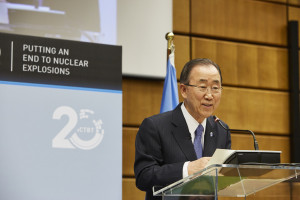
    UN Secretary-General Ban Ki-moon at the CTBTO Symposium. Image by the Official CTBTO Photostream via Flickr. 

    Twenty years on, the bottom line ultimately remains languishing political will. Let’s be honest—the CTBT is not a priority for most states who have yet to sign or ratify this treaty. If this issue had been a policy priority for states, there would have been positive progress towards ratification by now, despite domestic hurdles. Some Annex 2 states may be increasingly perceived to be holding CTBT entry-into-force hostage to other regional issues and priorities.

    Political will is again tested when those few windows of opportunity for exerting political leverage on other states vis-à-vis non-proliferation and disarmament are dismissed for more pressing policy objectives. In bilateral nuclear cooperation deals with India, NPT states who advocate routinely for the entry into force of the CTBT—including the US and Australia—could have used the negotiation of a bilateral commercial cooperation deal to include some requirement for India to progress on its CTBT status. More significantly, if the Nuclear Suppliers Group (NSG) has to take a decision in the future on admitting India into the NSG as a participating government, then the pre-condition of adhering to nuclear non-proliferation conditions such as ratifying the CTBT could be pushed. Yet these small windows of opportunity for bilateral or multilateral leverage on non-proliferation priorities are squandered.

    In a similar vein, one could wonder whether requiring Iran to ratify the CTBT was sacrificed early on in the negotiation process of the multilateral deal seeking to curtail Iran’s nuclear activities. Of course, more pressing objectives vis-à-vis Iran’s nuclear program were at stake. The CTBT and missile development issues were expendable.

    If CTBT entry-into-force is indeed a priority for states of the international community, as oft heard in high-level declarations of support and urgency for this issue, political will and determination for the CTBT should align with policy priorities. It currently doesn’t and, as evidenced by bilateral nuclear cooperation agreements, securing trade policy objectives seem instead to be prioritized.

    With the DPRK’s continued defiance of the nuclear testing moratorium, more than high-level statements of condemnation and expressions of regret need to take place following suspected nuclear tests and missile-related activities. China seems to be finally exerting some pressure on the DPRK in the UNSC and via bilateral channels after all these years of acquiescence. Concerted and united action by the international community and the UN Security Council needs to be taken against the DPRK. Such action should include curtailing bilateral trade relations with the DPRK. Again, this will require policy priorities—trade versus non-proliferation—to be assessed by governments.

    CTBT: is it a disarmament, non-proliferation, or an arms control treaty?

    Throughout the various sessions of the CTBTO Symposium, there were comments and unanswered questions posed by speakers on their views of how to categorize the CTBT. For example, is it a disarmament, non-proliferation or arms control treaty? Or possibly a hybrid of these? There was no clear consensus of views on this issue which was recurrently woven throughout sessions and presentations. An academic assessment of this issue would be useful and may have implications on practicalities.

    During a session on the CTBT and nuclear security, I posed a politically sensitive question which remains unanswered. What are the prospects of the CTBT contributing to issues of the broader nuclear security agenda given the existing apprehension and political sensitivities by IAEA member states to link any aspects of nuclear disarmament in addressing nuclear security issues post the Nuclear Security Summit (NSS) process? The “d” word inside certain corridors of the Vienna International Center (VIC) seems to raise apprehension and discontent, with arguments voiced by member states of certain international organizations that nuclear disarmament is not covered by the mandates. Disarmament seems to traditionally not be a Vienna issue, and belongs to the enclave dialogue in the NPT and First Committee bubbles in Geneva and New York. Until, that is, 2017, when the NPT PrepCom is due to roll into town for the kick-off of the 2020 NPT review cycle. How states parties view the CTBT—as a disarmament, non-proliferation or arms control treaty—may have implications for this question on whether the CTBT can contribute towards the broader nuclear security priorities.

    Is testing necessary?

    During the CTBTO Symposium there was a very interesting panel discussion between scientists elaborating the technical rationale for why states conduct nuclear tests. One passing comment on the Vela Incident—a 1979 event which is believed to be a nuclear test conducted by Israel and South Africa over the ocean between the southern part of Africa and the Antarctic–prompted  me to think the unthinkable quietly to myself. Given the existing moratorium on testing (not including subcritical)—which only the DPRK defies–and based on the technical assessment that testing is not necessary for certain devices, would the potential sharing of nuclear test data amongst allies be a preferable solution to testing?

    Although this would strictly not contravene the testing moratorium and the text of the CTBT, assisting proliferation and nuclear weapons advancement to NPT non-nuclear weapon states and non-NPT states would still contravene the NPT and the spirit of the CTBT. Although states could potentially avoid international condemnation by transgressing the established testing moratorium e.g. by relying on allies for the required testing data and expertise in relation to simple devices, this would still be contradictory to the spirit of the established non-proliferation treaties which underpin the broader nuclear non-proliferation regime. Moreover, some Annex 2 states seem to be debating domestically whether computer simulations, subcritical tests and activities not specifically prohibited by the CTBT are sufficient for the maintenance of their safe, secure and reliable nuclear arsenals. A comment by a Chinese Ambassador at this week’s recent CTBTO discussion panel, alludes to this debate as the National People’s Congress deliberate the Treaty.

    Definitional issue: does nuclear testing constitute nuclear use?

    There is a definitional issue which remains to be addressed adequately: does nuclear testing constitute nuclear use? Individuals affected by nuclear testing definitely consider the testing of nuclear explosives and devices as nuclear use. In his intervention at this week’s CTBTO discussion panel, UN Secretary-General Ban Ki-Moon argued that bringing the CTBT into force would honour the victims of nuclear testing. The Secretary-General noted that nuclear testing poisons water, causes cancers and pollutes the environment with radioactive fallout for generations.

    Whilst most states, academics and analysts would consider the explosion of nuclear devices at Hiroshima and Nagasaki the two instances of nuclear use, many —including victims of nuclear testing— would argue that nuclear testing actually constitutes nuclear use. This is based on the detrimental effects and impact that nuclear testing has had on individuals, communities and the environment where these tests were conducted. In Australia, “nuclear nomads” from aboriginal communities have been forced to leave their spiritual lands. In the South Pacific, including the Marshall Islands, many communities are still living with the long-term reproductive health implications from the nuclear testing that was conducted on their territory.

    During this year, marking the 20th anniversary of the CTBT, it may therefore be fitting to have an honest conversation about whether the international community ought to start considering and reframing our understanding and discourse of what actually constitutes nuclear use. This wouldn’t be politically popular, given the many states who have conducted nuclear tests. Given the highly contentious discord and fractures in the multilateral nuclear non-proliferation and disarmament fora—the NPT review process,the UNGA First Committee and the Open Ended Working Group taking forward multilateral nuclear disarmament negotiations (OEWG)—in multilateral discussions of pathways towards nuclear disarmament and the humanitarian consequences of nuclear weapons, discussions of reframing the discourse on nuclear testing as nuclear use may add further contention. It could, however, also serve to discursively elevate the issue of nuclear testing, and strengthen the case for entry-into-force of the CTBT. Additionally, it would raise the political costs of future nuclear tests. It does however remain an issue—along with several others raised in this short piece—which ought to be assessed and adequately discussed, even if only in wonky academic circles.

    Jenny Nielsen is a Postdoctoral Fellow at the Vienna Center for Disarmament and Non-Proliferation (VCDNP). Previously she was a Visiting Scholar at the NATO Defence College (NDC), Postdoctoral Research Fellow at the University of Queensland (UQ), Research Analyst at the International Institute for Strategic Studies (IISS), and Programme Manager for the Defence & Security Programme at Wilton Park.

  • Sustainable Security

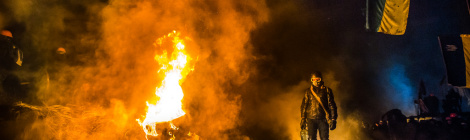
    The Ukraine conflict’s legacy of environmental damage and pollutants

    One year after violent conflict began, information is now emerging on the specific environmental impact of war in Ukraine’s highly industrialised Donbas region. Although obtaining accurate data is difficult, indications are that the conflict has resulted in a number of civilian health risks, and potentially long-term damage to its environment. In order to mitigate these long-term risks, international and domestic agencies will have to find ways to coordinate their efforts on documenting, assessing and addressing the damage.

    Read Article →

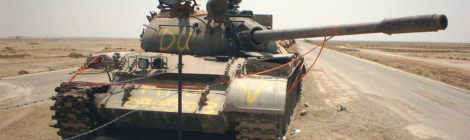
    DU-turn? The changing political environment around toxic munitions

    Is the US backpedalling on its use of depleted uranium (DU) rounds? There are indications that the use of these highly toxic munitions could increasingly be a political liability for the US, with countries affected by DU, like Iraq, other UN Member States, and populations in contaminated areas all expressing concerns over its use and impact. But stigmatisation, although important, is not enough on its own – in order to make sustained progress on accountability and in reducing civilian harm, a broader framework that addresses all toxic remnants of war is needed.

    Read Article →

    Breaking the silence: Protecting civilians from toxic remnants of war

    Toxic remnants of war and their legacy of civilian harm is seriously under-explored as an area of conflict. There is a growing consensus that the current legal framework governing conflict and the environment is not fit for purpose – so how could new international norms that merge environmental protection with civilian protection come into effect?

    Read Article →