Author: admin

  • Arms Flows to Sub-Saharan Africa

    SIPRI has published a policy paper examining arms flows into sub-Saharan Africa. The summary of the report below indicates that even legal transfers into the continent have implications for peace and security, not only because many SALW (small arms and light weapons) make their way illicitly to rebel groups or countries under UN embargo, but also because, “The supply of arms can be argued to to have been an incentive for the recipients to try to achieve their goals via violence instead of dialogue.”  The summary also touches on the motives behind supplier countries’ weapons sales, which include securing access to natural resources in the mineral-rich continent.

    There is a general need for more clarity throughout the arms-transfer process, as African governments themselves are not necessarily forthcoming in their reasons for wishing to purchase weapons, despite regular expressions of support for international arms control initiatives. With the waters this muddied, arms purchased both legally and illegally pose a serious threat to security in Africa.

    (To view or purchase a copy of the full policy paper, please go to the Publications page on the SIPRI website)


    Pieter D. Wezeman, Siemon T. Wezeman and Lucie Béraud-Sudreau, SIPRI Policy Paper 30 – Summary, December 2011

    Concerns regarding arms transfers to sub-Saharan Africa are widespread and have motivated worldwide efforts to control arms flows. Sub-Saharan Africa (excluding South Africa) accounted for 1.5 per cent of the volume of world imports of major arms in 2006–10. Although this is low by global standards, with little indigenous arms-production capacity in the region, most countries are fully dependent on arms imports.

    States in sub-Saharan Africa have received major arms from a wide variety of countries all over the world. China, Russia and Ukraine are consistently among the largest suppliers. Other countries that play a relatively modest role as arms exporters globally are significant arms suppliers to individual countries in sub-Saharan Africa or provide a significant proportion of the major arms supplied to the region as a whole. Due to a lack of accurate information, no comprehensive picture of transfers of small arms and light weapons (SALW) and other military equipment to the region can be given, but available open source information shows that transfers of such equipment to the region in 2006–10 was common.

    The motives for arms transfers to sub-Saharan African destinations are diverse, including direct financial revenues—even if they are small compared to revenues from sales to other regions—and strengthening political influence in sub-Saharan Africa in order to gain access to natural resources and to further the security interest of the supplier.

    Intergovernmental transparency is necessary for an informed debate about how the military needs of sub-Saharan Africa states should be taken into account in discussions on arms control in the region. While countries in the region regularly express support for conventional arms control initiatives, their low level of participation in the United Nations Register of Conventional Arms (UNROCA)—the key intergovernmental reporting instrument on conventional arms—casts doubts on their willingness to actively control arms. Public debate about arms procurement is often based on incomplete and confusing information which emerges only after key decisions have been made. Even those governments that have been more forthcoming with public information about their arms procurements tend to remain reluctant to discuss the rationale and underlying threat assessments in public or in the parliament.

    Case studies show that supplies of SALW and major arms play a role in armed conflict in sub-Saharan Africa; even supplies of relatively small quantities of older weapons can have a notable impact on conflicts. The uncertainty about the impact of arms transfers to conflict areas in sub-Saharan Africa is reflected in the experience of 2006–10. In several cases it could be argued that arms supplies have contributed to a government’s ability to legitimately maintain or restore stability in its country, including with the use of force against rebel groups. In a number of cases, exporting countries have supplied arms to governments in the region which supported efforts to achieve these objectives and in line with UN statements or actions. The least controversial arms supplies are those aimed at improving African states’ capabilities to participate in peace operations, even though these supplies remain insufficient to fulfil the needs of regional peacekeepers.

    However, in many cases arms supplied to sub-Saharan Africa have had clearly undesirable effects.

    1. The supply of arms can be argued to have been an incentive for the recipients
    to try to achieve their goals via violence instead of dialogue.
    2. Arms have been used in human rights violations.
    3. Arms recipients often do not have the capability to secure their stockpiles
    and weapons have been lost or stolen, including by rebel groups.
    4. Arms recipients have deliberately diverted weapons to targets of UN arms
    embargoes or rebel groups in neighbouring countries.
    5. Arms supplied to governments have been turned against those governments
    in military coups d’état.

    As a result of ambiguity about the impact and desirability of arms transfers, arms export policies by individual supplier countries vary widely. Some suppliers appear reluctant to supply arms to most countries in the region; others seem to consider only UN arms embargoes as a reason not to supply arms. The ambiguity is also reflected in the inconsistent approach of the international community to conflicts in sub-Saharan Africa: whereas arms embargoes have been agreed in relation to some conflicts, in other cases no embargo has been imposed.

    Weapons used in conflicts in sub-Saharan Africa by government forces have in general been delivered with the consent of the governments both in the supplier and recipient countries. Nonetheless, it appears that the illegal arms trade continues to play a role in the procurement of arms by both government and rebel groups in the region even though there is no hard evidence of widespread large illegal supplies from outside the region into sub-Saharan Africa in 2006–10. However, there have been regular instances of weapons flows within the region to, in particular, rebel groups in violation of UN embargoes. To better understand the nature of the illegal arms trade in sub-Saharan Africa, information about interceptions by government authorities of illegal arms transfers and related legal activity should be centrally collected, for example in the annual national reports
    on the UN Programme of Action on SALW.

    The lack of transparency in arms flows to sub-Saharan Africa obstructs an informed debate on the proposed arms trade treaty (ATT) and would be a serious obstacle to its verification. A starting point for improving transparency would be to support initiatives on corruption in the arms trade. Interest in the corruption issue and increasing willingness by governments to discuss it could be a stepping stone towards more transparency in arms procurement. If sub-Saharan African states want to persuade arms suppliers—which regularly hinder arms exports by refusing export licences—that they have legitimate reasons to procure arms, they should be more forthcoming about their motives.

    Article Source: Stockholm International Peace Research Institute

    Image Source: Enough Project


  • Sustainable Security

  • Sustainable Security

  • Sustainable Security

    Beyond Privacy: The Costs and Consequences of Mass Surveillance

    Last week the new UN privacy chief said UK surveillance was “worse than [George Orwell’s novel] 1984”. In the two years since the Snowden leaks revealed the existence of bulk internet and phone surveillance by US intelligence services and their partners, including the UK, the British government continues to engage in the mass collection of citizens’ communications data.

    Read Article →

    The cooling wars of cyber space in a remote era

    As current discussions highlight the possibility of “major” cyber attacks causing a significant loss of life or large scale destruction, it is becoming harder to determine whether these claims are hype or are in fact justified fears. Esther Kersley, Katherine Tajer and Alberto Muti offer some clarity on the subject by assessing the major issues in cyber security today to help better inform the debate and assess what threats and challenges cyber issues really do pose to international peace and security.

    Read Article →

  • Impact of Climate Change on Agriculture

    A report published on the 30th September by the International Food Policy Research Institute (IFPRI) estimates that 25 million more children will be malnourished by 2050 due to the effects of climate change. The report predicts that climate change will lead to price increases for the most important agricultural crops: rice, wheat, maize and soybeans. Wheat prices are projected to increase globally by 170 – 191% whilst rice prices may increase by 113 – 121%.

    The study: Climate Change: Impact on Agriculture and Costs of Adaptation, uses the IPCC Fourth Assessment Report’s A2 scenario with a best estimate temperature rise of 3.4 degrees centigrade and a likely range of 2.0 to 5.4 degrees centigrade. However, the report does not account for: the effects of increased variability in weather caused by climate change; the loss of agricultural lands due to rising seas levels; climate change induced increases in pests of diseases; or increased variability in river flows as glaciers melt.

    “Agriculture is extremely vulnerable to climate change, because farming is so water-dependent. Small-scale farmers in developing countries will suffer the most” not Mark Rosegrant, director of IFPRI’s Environment and Production Technology Division and report co-author. Gerald Nelson, IFPRI senior research fellow and report lead author suggested, “This outcome could be averted with seven billion U.S. dollars per year of additional investments in agricultural productivity to help farmers to adapt to the effects of climate change. Investments are needed in agricultural research, improved irrigation, and rural roads to increase market access for poor farmers. Access to safe drinking water and education for girls is also essential.”

    The full report can be downloaded here.


  • Sustainable Security

  • Preparing for the Impact of a Changing Climate on U.S. Humanitarian and Disaster Response

    Climate-related disasters could significantly impact military and civilian humanitarian response systems, so “an ounce of prevention now is worth a pound of cure in the future,” said CNA analyst E.D. McGrady at the Wilson Center launch of An Ounce of Preparation: Preparing for the Impact of a Changing Climate on U.S. Humanitarian and Disaster Response. The report, jointly published by CNA and Oxfam America, examines how climate change could affect the risk of natural disasters and U.S. government’s response to humanitarian emergencies.

    Connecting the Dots Between Climate Change, Disaster Relief, and Security

    The frequency of – and costs associated with – natural disasters are rising in part due to climate change, said McGrady, particularly for complex emergencies with underlying social, economic, or political problems, an overwhelming percentage of which occur in the developing world. In addition to the prospect of more intense storms and changing weather patterns, “economic and social stresses from agricultural disruption and [human] migration” will place an additional burden on already marginalized communities, he said. 

    Paul O’Brien, vice president for policy and campaigns at Oxfam America said the humanitarian assistance community needs togalvanize the American public and help them “connect the dots” between climate change, disaster relief, and security. 

    As a “threat multiplier,” climate change will likely exacerbate existing threats to natural and human systems, such as water scarcity, food insecurity, and global health deterioration, said Vice Admiral Lee Gunn, USN (ret.), president of CNA’s Institute for Public Research. Major General Richard Engel, USAF (ret.), of the National Intelligence Council identified shifting disease patterns and infrastructural damage as other potential security threats that could be exacerbated by climate change.

    “We must fight disease, fight hunger, and help people overcome the environments which they face,” said Gunn. “Desperation and hopelessness are…the breeding ground for fanaticism.”

    U.S. Response: Civilian and Military Efforts 

    The United States plays a very significant role in global humanitarian assistance, “typically providing 40 to 50 percent of resources in a given year,” said Marc Cohen, senior researcher on humanitarian policy and climate change at Oxfam America. 

    The civilian sector provides the majority of U.S. humanitarian assistance, said Cohen, including the USAIDOffice of Foreign Disaster Assistance (OFDA) and the State Department’s Bureau of Population, Refugees, and Migration. These organizations provide leadership, funding, and food aid to developing countries in times of crisis, but also beforehand: “The internal rationale [of the Office of Foreign Disaster Assistance] is to reduce risk and increase the resilience of people to reduce the need for humanitarian assistance in the future,” said Edward Carr, climate change coordinator at USAID’s Bureau for Democracy, Conflict, and Humanitarian Assistance.

    The U.S. military complements and strengthens civilian humanitarian assistance efforts by accessing areas that civilian teams cannot reach. The military can utilize its heavy lift capability, in-theater logistics, and command and control functions when transportation and communications infrastructures are impaired, said McGrady, and if the situation calls for it, they can also provide security. In addition, the military could share lessons learned from its considerable experience planning for complex, unanticipated contingencies with civilian agencies preparing for natural disasters. 

    “Forgotten Emergencies” 

    Already under enormous stress, humanitarian assistance and disaster response systems have persistent weaknesses, such as shortfalls in the amount and structure of funding, poor coordination, and lack of political gravitas, said Cohen. 

    Food-related aid is over-emphasized, said Cohen: “If we break down the shortfalls, we see that appeals for food aid get a better response than the type of response that would build assets and resilience…such as agricultural bolstering and public health measures.” Food aid often does not draw on local resources in developing countries, he said, which does little to improve long-term resilience. 

    “Assistance is not always based on need…but on short-term political considerations,” said Cohen, asserting that too much aid is supplied to areas such as Afghanistan and Iraq, while “forgotten emergencies,” such as the Niger food crisis, receive far too little. Furthermore, aid distribution needs to be carried out more carefully at the local scale as well: During complex emergencies in fragile states, any perception of unequal assistance has the potential to create “blowback” if the United States is identified with only one side of a conflict.

    Engel added that many of the problems associated with humanitarian assistance will be further compounded by increasing urbanization, which concentrates people in areas that do not have adequate or resilient infrastructure for agriculture, water, or energy. 

    Preparing for Unknown Unknowns

    A “whole of government approach” that utilizes the strengths of both the military and civilian humanitarian sectors is necessary to ensure that the United States is prepared for the future effects of climate change on complex emergencies in developing countries, said Engel. 

    In order to “cut long-term costs and avoid some of the worst outcomes,” the report recommends that the United States:

    • Increase the efficiency of aid delivery by changing the budgetary process;
    • Reduce the demand by increasing the resilience of marginal (or close-to-marginal) societies now;
    • Be given the legal authority to purchase food aid from local producers in developing countries to bolster delivery efficiency, support economic development, and build agricultural resilience;
    • Establish OFDA as the single lead federal agency for disaster preparedness and response, in practice as well as theory;
    • Hold an OFDA-led biannual humanitarian planning exercise that is focused in addressing key drivers of climate-related emergencies; and,
    • Develop a policy framework on military involvement in humanitarian response.

    Cohen singled out “structural budget issues” that pit appropriations for protracted emergencies in places like Iraq, Afghanistan, and Darfur against unanticipated emergencies, like the 2010 earthquake in Haiti. Disaster-risk reduction investments are not a “budgetary trick” to repackage disaster appropriations but a practical way to make more efficient use of current resources, he said: “Studies show that the return on disaster-risk reduction is about seven to one – a pretty good cost-benefit ratio.” 

    Edward Carr said that OFDA is already integrating disaster-risk reduction into its other strengths, such as early warning systems, conflict management and mitigation, democracy and governance, and food aid. However, to build truly effective resilience, these efforts must be tied to larger issues, such as economic development and general climate adaptation, he said. 

    “What worries me most are not actually the things I do know, but the things we cannot predict right now,” said Carr. “These are the biggest challenges we face.”

    Article source: The New Security Beat

    Image source: Oxfam International

  • Resources and Militarisation in the East China Sea

    As the long running tensions over the set of islands in the East China Sea appear to be coming to a head, the time for thinking through the alternatives to the militarisation of this conflict seems to be well and truly upon us.

    The conflict raises interesting issues about sovereignty claims based on offshore territories, particularly as we face a climate-constrained future as well as the increasing importance of competition over scarce resources. The latter is fast becoming one of the most important global trends if one thinks about the potential ‘drivers’ of conflict and even war.

    Spiralling naval spending in the region has been tracked by analysts for some years now, and flashpoints such as the dispute over the Senkaku/Diaoyu islands could show rampant military spending and arms racing for the dangerous trends that they are if things deteriorate rapidly. Arms racing helps to reinforce security dilemmas (the problems of interpreting the motives of potential adversaries and responding in-kind by arming yourself thus creating a spiral towards ever increasing militarisation). Arms racing also discourages the development of what Ken Booth and Nicholas Wheeler refer to as ‘security dilemma sensibility’ – the ability to “perceive the motives behind, and to show responsiveness towards, the potential complexity of the military intentions of others. In particular, it refers to the ability to understand the role that fear might play in their attitudes and behaviour, including, crucially, the role that one’s own actions may play in provoking that fear.”

    But what is particularly important to note in relation to this crisis is the interaction between the trends of increasing militarisation and competition over resources. The potential hydrocarbon resources beneath the ground around the islands as well as the rich fishing grounds in the surrounding waters gives the competing claims to sovereignty a particular strategic bite.

    Imposed on top of this is the effect of unresolved historical tensions and fierce nationalist sentiment in some quarters of both Japan and China. The coverage of the dispute in the media has been particularly important. Kevin Clements and Ria Shibata have noted that “this might be expected in China, which has a state-run media. In democratic Japan and Taiwan, however, the media have also promoted official and unofficial nationalist positions on the conflict. This has been accompanied by a marginalising or silencing of moderate voices favouring negotiated non-violent solutions to the conflict.” Interestingly, the most constructive voices calling for calm who have been able to cut through the jingoism and sabre rattling have been the business community concerned with the bigger picture issues of losing trade and tourism between China, Taiwan, Japan and South Korea. 

    Clements and Shibata have outlined five initial steps that could be used to de-escalate the issue and begin the difficult but unavoidable process of a negotiated solution. In the longer-term, both regional powers and important external players will need to put addressing the inter-linked trends of militarisation and increasing competition over strategic resources at the heart of any attempts to avoid the worst case scenarios playing out.

    Image source: Al Jazeera English. 

  • Sustainable Security


    Bay of bengal Climate InsecurityThere is no region of the world that faces more threats from climate change than South Asia. Of particular concern is the littoral surrounding the Bay of Bengal, including the Eastern Indian states of West Bengal and Odisha, Bangladesh, and coastal Burma. This region is uniquely vulnerable to a changing climate because of a combination of rising sea levels, changing weather patterns, and uncertain transboundary river flows. Away from the seashore, China holds the high ground in the Tibetan Plateau and the Himalayas, and complicates the geopolitical picture further by acting as the source of the region’s fresh water.

    On the Bay of Bengal’s coast these problems of a changing climate combine with already existing social problems like religious strife, poverty, political uncertainty, high population density, and rapid urbanization to create a very dangerous cocktail of already security threats. Climate change has been called a “threat multiplier” or “an accelerant of instability” by military and intelligence communities because of how it will impact these already existing threats. With a population of more than 300 million people (91 million in West Bengal, 42 million in Odisha, 142 million in Bangladesh, 52 million in Burma), tense militarized borders, overlapping ethnic and religious communities, and uncertainty about the future, there is no region in the world that faces a more dangerous combination of threatsfrom climate change than here.

    Rising Sea Levels

    One of the key tenets of national security is the ability of a country to ensure the integrity of its sovereign territory. Yet, as glaciers far from South Asia melt, the sea rises and encroaches upon its farms, villages, and cities. As Hemingway wrote about going bankrupt, sea level rise happens “gradually, then suddenly.” Slowly, a rising ocean brings increasing intrusion of brackish water into groundwater, harming costal agriculture. Moreover, gradual ocean encroachment harms the coast’s natural protections, whether dunes, reefs, barrier islands, or mangrove forests. Then, suddenly, when a major cyclone blows in a storm surge will overcome previously unsurmountable barriers.

    The shorelines of the Bay of Bengal stand to lose swaths of territory from sea level rise. Bangladesh, as a country predominantly composed of river delta, is most at risk. It stands to lose 11% of its territory – home to 15 million people – from a sea level rise of only 1 meter, a level that is not a particularly extreme prediction over the next 4 decades. Few invading armies could do worse damage.

    Oddly enough, the world’s oceans do not rise at the same rate. With rising global sea levels, in some areas the sea level could actually fall while it rises in others. A recent study from the National Center for Atmospheric Research (NCAR) found that sea level rise will be particularly high along the Bay of Bengal, due to changes in currents caused by rapid surface warming of the Indian Ocean.

    In the region, the cities of Dhaka, Kolkata, and Yangon all lie in major river deltas and are vulnerable to storm surges. In its 2007 report, the Intergovernmental Panel on Climate Change (IPCC) specifically listed cities in Asian mega deltas as “hotspots for vulnerability” because of sea level rise and changing patterns of river flow. Already straining at their infrastructure limits, these densely packed cities are becoming more vulnerable in a warming world.

    Changing Transboundary Water Flow

    Water does not stay within lines on a map. Instead, gravity draws it inexorably from the mountains to the sea. China, through its control of Tibet, controls the headwaters of almost all of the major rivers of Asia – only the Ganges lies outside of China’s control, originating in India. Of the major rivers that empty into the Bay of Bengal, all cross borders. Water is only plentiful during the monsoon season, so these rivers provide much-needed sustenance to agriculture, people, and ecosystems throughout their trip to the sea during the dry season – when they are fed by glacier and snow melt. Competition and tension over that flow is evident around the world when water crosses borders.

    This is true of Bangladesh and India, for which the flow of the Ganges are a source of tension. The Farakka Barrage on the Ganges River, just 10 miles upriver from the Bangladesh border, allows India a measure of control over the river. The dam allows India to divert the flow of the Ganges down a canal to the Hooghly River and into the port of Kolkata. Since the dam was built in 1975, there have been allegations from Bangladesh that India diverts water in the dry season and releases too much in the monsoon season. In 1996, the two countries agreed to a 30 year treaty to share the Ganges’ flow, but tensions still remain.

    The Brahmaputra River, meanwhile, provides a source of tension between the two regional powers, India and China. China recently announced that they are building a series of hydroelectric dams along the Brahmaputra’s upper reaches in Tibet, but they have forsworn any attempt to divert or hold back the great river’s flow. However, these assurances have not quieted all voices in India, who point to plans in China’s South-North Water Diversion Project to divert water from the Brahmaputra in order to ensure water for industry and the cities of China’s parched north. China’s leaders have denied these extravagant plans, but their engineers have lobbied for such a project. It would complete a dream of Chairman Mao’s, who said: “Southern water is plentiful, northern water scarce. If at all possible, borrowing some water would be good.”

    Climate change exacerbates these concerns about transboundary water management in the region. Climate change is threatening both the glaciers that sit at the top of these mighty rivers, feeding them during the dry season, and the very viability and predictability of the Indian Monsoon rains. Temperatures in the Tibetan Plateau and the Himalayas have risen 1.5 degrees Celsius since 1982, a rate more than three times as fast as the global average. Meanwhile, changes in weather patterns due to climate change could cause repeated failures in the monsoon. While there is little likelihood of an immediate and total melting of the glaciers, uncertainty about their future flows is enough to stoke tension in the region.

    The Potential for Conflict

    Climate change is altering the environment of the region; the glaciers are retreating, the rivers’ flows are becoming more unpredictable, and the seas are rising. However, whether those changes manifest themselves into either civil or interstate conflict will depend upon how both the populations and the governments in the region react to those changes. How long governments have to adapt depends upon unpredictable weather and climate patterns – but as the Stern Review bore out, earlier action is almost always cheaper and more effective than waiting. How governments adapt is important as whether; some adaptations, like capturing water that would otherwise flow across borders in new reservoirs could actually make the threat of conflict worse. If countries do not work cooperatively, they could stoke conflict.

    Throughout history, one of the most effective ways to deal with climate change has been migration – from a climate that is no longer hospitable to one where living is easier. However, modern borders do not reflect the historical ties between the regions. Migration is a natural response. However, in areas with already high population density and an overlapping patchwork of ethnic and religious communities, new immigrant communities often come into direct conflict with established communities. Last year saw ethnic strife in the Indian state of Assam between indigenous Bodos and immigrant Muslims, many of whom hailed from over the nearby border in Bangladesh. Over 75 people died, and over 400,000 people were temporarily displaced. In this region, it is impossible to say whether a group of migrants are “climate refugees” or simply moving to a place with better economic opportunity, but this is what we should expect in the future.

    It is difficult to find examples of any interstate wars fought directly over water; to the contrary, water has been a catalyzer of cooperation. However, as countries realize that they can control and shape water flow through mega dams and water diversion projects, there is a danger that the claims of downstream countries could be ignored. Along the Mekong River, for example, China has proceeded to dam and control the river’s flow through its territory – leading downstream neighbors to complain that China is causing droughts. Yet because of the power imbalance between China and smaller countries like Laos and Cambodia, the Chinese have little to fear. Similar thinking by Chinese leadership over dam building along the Brahmaputra, their shared river with India, could lead both countries to stumble into a conflict that neither of them want.

    In the age of climate change, conflict is more likely as threats are multiplied. Nowhere is this truer than around the Bay of Bengal. However, war is never pre-ordained. Instead, the threat of conflict is determined by how countries react. Good international governance can encourage countries to not simply pull up the drawbridge and think only of themselves, but will encourage them to see what their actions will mean for regional neighbors. Climate change is increasing the threat of wars and unrest around the Bay of Bengal; but foresight about its impacts can help the region’s leaders work together to solve a problem that knows no boundaries.

    Andrew Holland is Senior Fellow for Energy and Climate at American Security Project, a Washington D.C based think tank. He is an expert on energy, climate change, and infrastructure policy. He has over seven years of experience working at the center of debates about how to achieve sustainable energy security and how to effectively address climate change.

    Image source: amioascension

  • Global Security and the War on Terror: Elite Power and the Illusion of Control

    Image of Global Security and the War on Terror: Elite Power and the Illusion of Control (Contemporary Security Studies)

    • Purchase from Amazon:
    • Global Security and the War on Terror: Elite Power and the Illusion of Control (Contemporary Security Studies)
    • Author: Paul Rogers
    • Publisher: Routledge ()
    • Binding: Paperback, pages
    • Price: £22.99

  • Sustainable Security

  • Sustainable Security

    Human Security and Marginalisation: A case of Pastoralists in the Mandera triangle

    This paper seeks to bring out the relevance of human security in pastoral areas of Mandera triangle and the relationships and contradictions that exist between it and national security. The “Mandera Triangle” encompasses a tri-border region of Ethiopia, Somalia, and Kenya that exemplifies, in a microcosm, both a complex and a chronic humanitarian crisis that transcends national boundaries.

    Read Article →

  • Competition over resources

    Food security will remain out of reach for many people, especially women and children, in the Lao People’s Democratic Republic, or Laos, if the country continues to emphasize commodities and resources development at the expense of the environment and livelihoods while ignoring global trends for food and energy. Read more »

  • Peacebuilding IN Europe? An analysis of how European peacebuilding efforts overseas could apply closer to home

    EU attitudes to peacebuilding have always assumed that it essentially applies to other people, who live outside of the Union’s developed borders. However, since the financial crisis of 2008 and the austerity that followed, the certainties underpinning western models of aid and conflict-resolution have taken a knock from the riots and protest movements shaking cities from Athens to London. While not equating the various reactions and levels of violence across the continent, Dan Smith suggests in both this piece and a follow-up post that EU peacebuilding efforts would be well-directed inwards. In particular, he highlights a growing alienation from professionalised political systems, and how a very small number of actors can cause havoc against a background of marginalisation, both real and perceived. He therefore recommends that we focus our attention on the context against which people act, rather than on the actors themselves, because it is only through ‘mobilising social energy for building peace’ that individuals can find a place in society and disaffection can be tackled at its root cause.


    In 2001 – a different time and a different world – the EU Gothenburg summit agreed to make the prevention of violent conflict a priority for the EU. Measured by money, it’s now the world’s biggest player in peacebuilding. But look around Europe now and we can ask, should peacebuilding also start to be a priority inside the EU?
    The EU’s peacebuilding

    Since 2001 the European Commission has spent €7.7 billion on conflict prevention and peacebuilding, more than any government or other international organisation and about 10 per cent of its total spending on external aid.

    A recent evaluation concluded the money has been well spent overall, albeit with room for improvement – the sort of balanced conclusion you expect from a review like that. The report finds that the EC has undertaken and supported some pretty good work in places as different as the western Balkans, the DRC, Nepal and Central Asia. Not everything works, but nothing has been done that is actually harmful, much that is distinctly beneficial to the common good, and important lessons have been learned.
    That was then

    The Gothenburg decision was taken at a different time. The Euro and the big enlargement had been decided. Confidence, expansiveness and optimism were in the air. If confidence was shaken by 9/11, the beginning of “the war on terror” and the start of the build-up to invasion of Iraq, nonetheless it was an era of growth and of projecting the EU’s core mission of enlarging the zone of peace to far flung corners of the world.

    But in 2007 came the sub-prime crisis in the US and the start of the international credit crunch. In September 2008 Lehman Brothers went down and the world started to be very, very different.
    Tragedy and reflection

    In fact, for my own organisation, International Alert, things had already started to change. In 2005, the day after London was awarded the Olympic Games of 2012, the city was visited by the worst terrorism it has experienced, far more lethal than anything inflicted in 25 years of war by the Provisional IRA – in four bomb attacks (one on a bus and three on underground trains), 52 people were killed (plus the four bombers) and over 700 severely injured. The city was quiet for the next few days and people worried about whether it was safe to use the bus and tube and go to work.  Two weeks later four more bombs were discovered before they detonated.

    In that over-heated atmosphere, on the next day, a policeman shot and killed a young Brazilian, Jean Charles de Menezes. It has since been proven that he had no connection with terror groups of any kind. It has been proven that the police had no basis in fact for following him. They panicked and a young man lost his life. I reflected on this and its implications in a post on the day a permanent memorial was dedicated to his memory.

    For me and for colleagues at Alert, this awful incident was very immediate: our office happens to be five minutes’ walk from the station where Menezes was shot. Like many others we reflected on these events and we wondered whether skills we have learned in trying to build peace in Africa, Eurasia and Asia since we started up in 1986 might be useful in Britain. We made contact with groups working on community conflict and cohesion and compared notes. Might what we do in Beirut, Monrovia or Kathmandu have some bearing, some relevance in Bradford, south London or Bristol?

    The answer was yes (and we now have a programme of activities in the UK), not because we have a magic technique but because we start with a dispassionate analysis of the context of conflict and use a vision-based approach. We don’t only start with ‘what’s the problem and how do we handle it?’ – but with ‘where do we want to be in x years’ time?
    This is now

    In the summer of 2011, England had its riots. We look around Europe and we see different sorts of disaffection and action: the anger in the anti-austerity, anti-government riots in Greece, the thin patina that people tell me stands between order and a similarly angry chaos in Ireland, the youth movements in Spain, the simmering anger in Italy. Even in a country self-proclaimed by an opinion survey to be among the 2two or three happiest in the world* – Denmark’s capital has been scarred by school-burning and gang warfare in the last couple of years. And at the psychotic and extreme end,  Breivik’s monstrous massacre on the island of Utoya in July 2011 and the discovery of a series of murders of immigrants by right-wing extremists in Germany;

    I am not equating these events. This atmosphere of dissatisfaction and violence does not arise everywhere from the same source, the same social groups or the same politics.

    But they are nonetheless connected, not by motive or participants, but by the political and social landscape in which they occur.

    It is a landscape where people’s sense of social belonging and engagement in the common good is challenged as never before. It is challenged by economics as job opportunities and the belief in a better future diminish before our eyes. Politics is professionalized and in most countries is ever more distant from growing segments of the population, especially among the poor and among the young. Ordinary people feel they are paying the price for mistakes they did not make while those who had the biggest part in the errors in politics and finance are paying a much smaller price.

    Some people direct their anger about the injustices at the political establishment, some at the finance world and some – in their confusion at this diminished sense of belonging – against immigrants. But even when the anger is mis-targeted and even when the accusations are false, the feelings that lie behind are real. And sometimes lethal.
    Bringing peacebuilding home

    How might a peacebuilding approach look? Standard procedure for working in fragile states – rule number one – is to start with context. Which means starting with questions and an open mind.

    This makes it very difficult for politicians to bring a peacebuilding approach to their own home patch. At home, they are supposed to know the answers. That’s what we have politicians for – and then we get to choose which answers we like best. Or who answers best, which is not always the same thing.

    A peacebuilding approach would not look necessarily at the numbers involved in each action, even the riots. It is a staple of peacebuilding to acknowledge that in countries with a population of tens of millions, it only takes a few hundred unemployed young men, some leaders ready to act, and access to weapons – and you have a war. The IRA’s active forces probably numbered well below 1,000 throughout three decades of war in and over Northern Ireland.

    No, rather than the numbers, it’s the background that counts, the social, political and economic context in which this occurs. And the question is whether that background fosters peaceful relations or not.

    Last year the UK government brought out its Building Stability Overseas Strategy to guide its approach to peacebuilding in developing countries. Here is some of its analysis, full of resonance for Europe’s current social and political challenges. I have already drawn on it for clues for its resonance for the English riots. But its clues about what questions to ask are so useful it’s worth repeating them (but hurdle over the bullet points if you remember them) (and also get a life – come on).

        * ‘The stability we are seeking to support … is built on the consent of the population, is resilient and flexible in the face of shocks, and can evolve over time as the context changes…
        * ‘Effective local politics and strong mechanisms which weave people into the fabric of decision-making – such as civil society, the media, the unions, and business associations – also have a crucial role to play.
        * ‘All sections of the population need to feel they are part of the warp and weft of society, including women, young people and different ethnic and religious groups.
        * ‘Jobs, economic opportunity and wealth creation are critical to stability. Lack of economic opportunity is cited by citizens as a cause of conflict, and is often the most significant reason why young people join gangs…
        * ‘Without growth and employment, it is impossible to meet the basic needs of the population, and people’s aspirations for a better life for themselves and their children…
        * ‘While an inclusive and legitimate political system is a requisite for stability, confidence in the future comes when people see that their needs and expectations are being met on the ground.’

    On the basis of this kind of analysis, you would look at social inclusion/exclusion and marginalisation; at the degree of hope and confidence in the future – or their opposites; at our political institutions – both national and local; at the condition of the economy and whether economic policies are creating opportunities; and at the space for civil society and for bodies such as business associations and trades unions to represent people, articulate concerns and influence politics.
    How peacebuilding at home would look

    Peacebuilding looks different from one country to the next. But the golden thread that connects it all, expressed in abstract terms, is mobilising social energy for building peace. We work out what form this will take based on need, opportunity and ability in the country where we’re working: police reform, starting new institutions to promote transparency, cultural peace festivals, women’s forums, joint  micro-investment projects involving genocide victims and perpetrators in Rwanda, getting multinationals and community organisations round the table together, communications across the conflict lines, getting conflict-divided communities to cooperate on adaptation to climate change – and much more. Consistently, the theme is people coming together, their energy becoming synergy.

    In our atomised societies, bringing people together, asking questions, listening carefully for answers, and shaping common actions: never in the past 60 years has there been such a shortage of this, never has it been more needed.

    Growing youth unemployment is causing hurt and anger that a return to economic growth will not be enough to calm. Something else is needed too. It really does seem time to expand the mandate of peacebuilding to include the EU countries themselves.

    ___________________________

    * Denmark was ranked top in 2010 in a Gallup poll reported by Forbes in 2010 but more recently may have been shaded out by Norway.


    Article Source: Dan Smith’s Blog

    Image Source: how will i ever

  • AfPak-Iraq: wrong war, right path

    The term “global war on terror” has long since been dropped from the United States’s official vocabulary. The phrase that came to be proposed as a replacement even when George W Bush was still in office, the “long war”, has similarly fallen by the wayside, to be succeeded in March 2009 by a less overtly combative Pentagon formulation: “overseas contingency operation”. But it is easier for the Barack Obama administration to redefine the conflict it is involved in than to change the bleak current reality in three main flashpoints – Afghanistan, Pakistan and Iraq:

    * the coordinated suicide-attack and rocket-attack in the early morning of 28 October 2009 on two high-profile civilian targets in Kabul – the Bekhtar guest-house and Serena Hotel – are a sign that the deepening insecurity in Afghanistan reaches even to the heart of the capital. The Bekhtar incident ended in the deaths of twelve people, including five United Nations staff who were helping to oversee the re-run of the presidential election on 7 November

    * the devastating market-bombing in Peshawar, also on 28 October, are part of a widening insurgency in Pakistan. The attack killed over ninety people, and coincided with the arrival of United States secretary of state Hillary Clinton in the country for high-level talks with Pakistani leaders

    * the suicide-bomb operations against Iraq’s justice ministry and the administrative headquarters of Baghdad’s region on 25 October – which killed at least 155 people and wounded over 500 – are a reminded that violence in Iraq remains endemic and that insurgents retain the capacity to strike close to the heart of power.

    The rising tide

    In Afghanistan, the great concern over the Kabul assaults is accentuated by awareness of four serious security developments elsewhere in the country:

    * the war is continuing to spread to previously peaceful areas. German troops in Kunduz province in the north of the country, for example, are involved in direct combat for the first time in over six decades (see Nicholas Kulish, “German Limits on War Face Afghan Reality”, International Herald Tribune, 27 October 2009)

    * the increasing effectiveness of the attacks on foreign troops. United States forces are suffering relentless casualties: sixty-seven troops have been killed so far in October 2009, including seven on 27 October in multiple, “complex” bomb-attacks on an armoured vehicle in Kandahar province

    * after the United States withdrew troops from four bases in Nuristan province in northeast Afghanistan (and adjacent to Pakistan), it has effectively fallen under the control of a Taliban network led by Qari Ziaur Rahman, a leader with close links to al-Qaida (see Syed Saleem Shahzad, “Taliban take over Afghan province”, Asia Times, 28 October 2009)

    * it is now becoming ever more clear that the United States forces and the wider Nato/International Security Assistance Force (Isaf) coalition is facing military opposition from groups that extend beyond Taliban militias and some loosely associated warlord networks; these include scores of local militias that have very little to do with the Taliban but work to protect their own power-bases and resist what they see as a foreign occupation.

    All war is local

    The implication of these trends is that a transition from insurgency to a broader insurrection may be occurring – and that deploying even more American and allied troops (as Barack Obama and his advisers are currently discussing) risks increasing rather than diminishing the military challenge (see “Afghanistan: from insurgency to insurrection” [8 October 2009] and “AfPak: the unwinnable war” [16 October 2009]).

    Some US military and political officers on the ground are beginning to register these dynamics. Matthew Hoh, a senior US state department official and former marine who was based until recently in Zabul province, explained his resignation on 10 September 2009 by referring to his experiences in the Korengal valley and elsewhere. These, he is reported as saying:

    “taught him ‘how localised the insurgency was. I didn’t realize that a group in this valley here has no connection with an insurgent group two kilometres away.’ Hundreds, maybe thousands, of groups across Afghanistan, he decided, had few ideological ties to the Taliban but took its money to fight the foreign intruders and maintain their own local power bases. ‘That’s really what shook me,’ he said. ‘I thought it was more nationalistic. But it’s localism. I would call it valley-ism’” (see Karen De Young, “U.S. official resigns over Afghan war”, Washington Post, 27 October 2009).

    The Barack Obama administration has yet to decide whether to deploy up to the 40,000 additional troops requested in General Stanley A McChrystal’s report; it still appears to want to delay the decision until political stability can be established in Kabul (through the 7 November re-run of the presidential election, and perhaps the formation of a national or emergency government). But the core dilemma remains: that deploying more troops is in current conditions likely to prove counterproductive, and only deepen the military quagmire.

    There is a close parallel here with what is happening across the border in Pakistan. An extensive operation by the Pakistani army in Waziristan, launched with a certain fanfare on 17 October 2009 as attempt to occupy this key region and decisively curb Taliban control there, is too facing the reality of an intractable and well-organised opposition resistant to straightforward military solutions.

    The Pakistani offensive lacks the equipment, the flexibility and the combat-troop levels (perhaps as many as 50,000) that would all be required to subdue the entire district; as a result, it now has the more limited aim of neutralising the influence of some important militia leaders. Even this will be hard enough. In addition, cities such as Islamabad, Rawalpindi and Lahore as well as Peshawar have endured high-profile insurgent assaults; and the Peshawar explosion on 28 October is further evidence that the army’s well-publicised operations cannot prevent (and may indeed provoke) violent incidents elsewhere in Pakistan.

    The Baghdad blues

    Amid this comfortless prospect, the situation in Iraq has appeared to present more hopeful evidence that here at least – both before and since United States forces started their partial withdrawal from Iraq’s cities on 30 June 2009 – Washington’s military strategy was showing the desired results.

    At the same time, the very concentration of focus on “AfPak” during much of 2009 has tended to mean that the continuing severe violence and tension in parts of the country have been underplayed. There has, for example, been a series of bombings against Shi’a-populated areas whose resulting carnage is barely conveyed by the death-tolls: over 120 killed in the strikes against markets in Sadr city in April and June, seventy-one dead at a Shi’a shrine in Baghdad in April, forty-four  killed at a Shi’a mosque in Mosul in August. This is but a partial list.

    The intention seems clear: to polarise Shi’a and Sunni communities and provoke further conflict. But those responsible have other targets, including the Iraqi government’s infrastructure and its security forces (which are supplemented, despite the ending of full-scale American patrols in urban areas, by US troops in what amount to joint operations).

    It is in these circumstances that the insurgents have expanded their tactics by launching large-scale assaults against major government centres. In August 2009, these destroyed or inflicted serious damage on the foreign, finance and health ministries (with 102 people killed and more than 500 wounded); the 25 October attacks hit two more centres. An especially serious aspect of this approach is the suggestion that the militants’ ability to penetrate government buildings is possible only with a degree of collaboration from inside Iraq’s security forces.

    The real debate

    The death of the United Nations staff in the Kabul attacks on 28 October is a further significant aspect of the current situation. It shows that some militant groups deliberately target the more neutral expatriates precisely because their work involves efforts to resolve conflicts in times of intense difference. The input of UN agencies – such as the World Food Programme, five of whose officials were killed in an attack at its Islamabad offices on 5 October 2009 – can help provide space for limited progress even amid conflict, and this is what the more extreme elements in a dispute can find intolerable.

    In this respect the Kabul incident belongs to a pattern includes the assassination of Count Bernadotte by militants of the Israeli rightwing Lehi group in Jerusalem in September 1948, and the bombing of the UN headquarters in Baghdad in August 2003 which killed the envoy Sergio Vieira de Mello and twenty-one others. In the latter case, the Baghdad canteen of the UN complex was in the early months of the Iraq war was one of the very few “neutral spaces” where Iraqis and expatriates of widely differing backgrounds and attitudes could meet informally. That was reason enough for it to be vulnerable; the human and psychological damage hugely diminished the UN’s role in attempting to heal wounds and avert the continuation of violence.

    This adds a problematic element to the argument that the United Nations should play a more prominent and strategic role in current and future “international interventions” (see Pierre Schori & Shahrbanou Tadjbakhsh, “Afghanistan: peacekeeping without peace”, 26 October 2009). This is difficult enough to achieve when a military conflict has become rooted or where powerful trends point in that direction; it is made even harder when insurgent factions precisely seek to destroy UN personnel and disrupt their activities.

    All this focuses a chilling beam onto the troubles of the United States and its allies (see Ahmed Rashid, “Trotsky in Baluchistan” [National Interest, November-December 2009]). There seems little hope of immediate respite. The conflict in what has become known as “AfPak” has since 2006-07 continued even through the winter months, while the hoped-for peace in Iraq is looking brittle.

    If there is a way ahead, it rests not on short-term calculations about troop numbers but on a larger reassessment by the Barack Obama administration of the entire US security posture in the middle east and southwest Asia (see “A world in need: the case for sustainable security”, 10 September 2009). This will have to do more than crisis-manage the dire problems inherited from George W Bush; what is needed is no less than a move beyond military-led thinking to an integrated understanding of what security in the 21st century actually is. 

  • An Uncertain Future: Law Enforcement, National Security and Climate Change

    Climate change will have serious environmental, socio-economic and security consequences for both developed and developing nations alike. This report explores these consequences and demonstrates that they will present new challenges to governments trying to maintain domestic stability. Those agencies tasked with protecting and sustaining national security will need to adapt to better cope with a changing global environment.

    However, if governments simply respond with traditional attempts to maintain the status quo and control insecurity they will ultimately fail. As this report shows, the risks of climate change demand a rethink of current approaches to security and the development of sustainable ways of achieving that security, with an emphasis on preventative rather than reactive strategies.

    Download in English or Spanish as PDF

  • Sustainable Security

    Author’s Note: This article is expanded from a piece originally published on Defence Report on August 3rd.

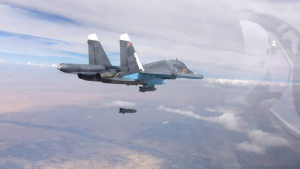
    Russia’s recent bombing of a Syrian base used by UK and US Special Forces exposes the flaws in the UK’s blanket “no comment” approach. The differences in the US and UK responses to the incident reveal that this policy is neither desirable nor standard practice amongst the UK’s allies.

    The Wall Street Journal (WSJ) has recently revealed that, in June, a Russian aircraft targeted a garrison in Southeastern Syria which was used by American and British Special Forces in their fight against ISIS. The attack missed 20 British Special Forces by just 24 hours and killed four US-backed rebels.

    US and UK reactions to the strike

    Much of the subsequent discussion has been on the specifics of the attack and its implications for future intelligence sharing with Russia; however, few have considered massive difference in the US and UK response. Given that the two allies shared use of the base, one may expect both countries to have shared a sense of outrage at the attack. However, their responses have been hugely different.

    The US has very publicly criticised the actions of Russia. After a similar attack in July, “US military and intelligence officials” gave a number of details about the two strikes and argued that it was part of a continued attempt by Russia to pressure the Obama administration into agreeing closer cooperation over the skies of Syria. Many officials, albeit anonymously, also shared their concerns over implications of the strike for the pending intelligence sharing agreements between the two countries. After the attack, Secretary of State John Kerry went to Moscow in a “hastily organized and very secretive” meeting to try to avoid similar incidents from happening again.

    In stark contrast, the UK has remained silent. In response, the Ministry of Defence (MOD) simply stated: “We do not comment on Special Forces”. In fact, even as this WSJ article marks the second article in two months documenting the presence of UK Special Forces in Syria the UK Government remains silent and refuses to acknowledge they are operating in the country.

    The UK’s “no comment” policy

    The MOD’s “long-held policy” of not commenting on Special Forces is well established. This most recent revelation adds to a long list of other incidents where, against mounting evidence, the UK has continued to avoid acknowledging their presence. For example, in March this year, when a story emerged that a British Special Forces Operative had fired on and destroyed an ISIS suicide truck, the response was: “The Ministry of Defence does not comment on Special Forces.” Similarly, in June 2016, when it was reported that British Special Forces are on the front line in Syria in the fight against ISIS, the MOD responded that: “It is our longstanding policy that we don’t comment on Special Forces operation”.

    Given the changing nature of these conflicts this approach may no longer be feasible. Special Forces are increasingly sent on long-term deployments to coordinate local forces and take part in combat in conflict zones, rather than the traditional “sharply in, sharply out” approach. For example, reports from Iraq, Libya and Syria indicate that Special Forces are now being used to train, advise and fight alongside local forces. Not only does this mean the presence of Special Forces is more likely to be exposed but it means that the justification of a blanket “no comment” approach – to avoid compromising the mission – are no longer as applicable.

    The approaches of the UK’s allies

    Soukhoï_frappant_une_position_ennemie_en_Syrie

    Image of Russian aircraft via Flickr.

    Moreover, as the US’s public criticisms of Russia reveal, this blanket “no comment” approach is also not standard practice. A recent report by Dr Jon Moran found that a number of the UK’s allies are far more accountable for their use of Special Forces. In the US, for instance, the deployment of Special Forces from the CIA now requires the notice of “the eight leaders of the relevant intelligence committees in Congress” and “JSOC is accountable via the JSOC commander to the Chiefs of Staff and the Secretary of State for Defense or the President”. There is also greater accountability in Australia which, rather than investing the authority to commit forces to military action in one man, shares responsibility among the Cabinet and the National Security committee through a need for “consensus decision-making”. Similarly, in Canada, the decision is taken at the highest political and military levels but Special Forces are accountable to the head of the Canadian Special Operations Forces Command, who in turn is accountable to the Minister of Defence and Prime Minister. Unfortunately, the UK’s no comment policy led Moran to argue that, amongst these allies, “[t]he British government is the most tightlipped of all”.

    Remote Control’s recent work also documents a number of instances that the US, Canada and Australia have discussed the deployment of Special Forces. For example in 2015 a US spokesperson announced the deployment of US Special Forces in Syria. He reported the number (50) and their purpose (to strengthen anti-ISIS forces) and defended the decision against accusations of mission creep. Similarly, in November 2015, the then-Australian Prime Minister Tony Abbott announced the deployment of 200 Australian Special Forces “to advise and assist local security forces” in Iraq. The same month, Canadian Prime Minister Justin Trudeau announced the deployment of 69 Canadian Special Forces to undertake a training mission, again, in Iraq. While none of the countries gave a lot of detail, they acknowledged the presence – and number – of Special Forces, defined their mission and allowed some room for discussion and debate around their deployment.

    The need for change

    The UK’s current policy is not only embarrassing when stories such as this surface but could have negative implications for the quality of UK intervention abroad. First, better accountability and transparency around Special Forces would mean they are used because they are the best solution rather than the easiest solution to a problem. In 2013, a leaked UK Ministry of Defence document argued that one way to continue conducting military operations despite the risk-averse nature of the British public was “investing in greater numbers of [special forces]” – indicating that the danger of the UK prioritising easy above best is real. Second, it is crucial for the success of any security strategy that its effectiveness can be assessed and adjustments made on the basis of that assessment.

    The reaction of US scholars, policy makers and journalists in the wake of the recent Russian strike is a case in point. The US’s decision to announce the deployment and the purpose of Special Forces in Syria from the outset, and decision to announce this most recent strike, give these groups a chance to debate its implications for relations with Russia, the US’s operations in Syria more generally and assess whether the US’s stated goals are being met. In contrast, the UK lacks such a debate because most scholars, journalists and policymakers do not know the extent of UK involvement in the country and have not been informed of the mission’s stated purpose. Without the level of discussion possible in countries such as the US, the UK lacks the same sounding board and its policies may suffer as a result.

    Russia’s recent strike points to the flaws in the UK’s continued “no comment” policy. When Special Forces rarely stay secret in a country, and fewer of the UK’s allies take the same blanket “no comment” approach, we should be asking why the UK continues to.

    Abigail Watson is Research Officer at Remote Control Project. Abigail holds an MA (with Distinction) in Contemporary European Studies, with a trans-Atlantic track, from the University of Bath and a BA in Politics from the University of York. Abigail writes on issues such as the new challenges to international humanitarian law and Britain’s foreign, security and defence policy.

  • food security

    Food security will remain out of reach for many people, especially women and children, in the Lao People’s Democratic Republic, or Laos, if the country continues to emphasize commodities and resources development at the expense of the environment and livelihoods while ignoring global trends for food and energy. Read more »

  • Middle East Nuclear-Weapon-Free-Zone: Problems and Prospects

    Living in an era plagued by a nuclear threat and arms race, wherein nations continue to nurse the ambition of producing nuclear weapons or acquiring the means to do, nuclear disarmament is possibly the most vital issue in the field of global security.

    There has been a global realization that nuclear disarmament is an important first step towards achieving general and complete disarmament at a later stage. A number of important steps have been taken towards achieving this end. However given the current international environment, the global non-proliferation regime faces challenges on the Korean peninsula and in the Middle East and when progress towards nuclear disarmament appears to have stalled, some believe that traditional instruments of non-proliferation policies have lost their relevance.
      
    In the light of the above, Nuclear-Weapon-Free-Zones (NWFZ) seem to be one of the most promising disarmament mechanisms. They have been recognized by the international community as a “step by step” approach in the process of arms control and disarmament . They are regarded as an effective non-proliferation tool as they fence off one entire region from nuclear weapons. In doing so, they rectify a ‘loophole’ in the NPT which allows the deployment in non-nuclear weapon states of nuclear weapons controlled by the nuclear weapon states . In this sense, NWFZ stop one form of horizontal proliferation.
      
    The rationale behind setting up NWFZ is the direct correlation between denuclearization and peace.  All states seek nuclear weapons for their deterrent potential, often pursuing them because they fear that that their neighbours are developing such weapons. In the light of such concerns, many a time, countries refuse to sign global disarmament treaties; if the neighbour that concerns you the most has not joined, what do you gain by joining?  The NWFZ play a significant role in acting as a possible solution for fixing such problems. This agreement, generally in the form of an international treaty prohibits the deployment, use, production, transfer and possession of nuclear weapons within a specified geographical region by all countries within that region. In addition to this, the treaty prohibits nuclear weapon states from deploying weapons in these areas and permits the IAEA to conduct regular inspections of the region’s nuclear activity.  Such treaties act as restraining forces on countries of that region preventing them from building or acquiring a nuclear arsenal by removing the danger of other countries doing the same.
      
    The idea of NWFZ was conceived with a view to prevent the emergence of new nuclear weapon states. As early as 1958, the Polish government, which feared the nuclearization of West Germany and wanted to prevent the deployment of Soviet nuclear weapons on its territory, put forward a proposal called the ‘Rapacki Plan’ for a NWFZ in Central Europe. In the political climate of the 1950s, the plan had no chance of becoming an international agreement. Nonetheless, several of its elements were later adopted as guidelines for the establishment of NWFZ and several such zones came up in different parts of the world in the subsequent years. 
      
    The first of such zones was established in Latin America in 1967 through the Treaty of Tlatelolco. All 33 Latin American and Caribbean countries are parties to this treaty (however, all countries became parties to this treaty over a period of 30 years), which bars nuclear material from the area except for peaceful purposes.  Since then the regions adopting NWFZs have been expanding. Following the Treaty of Tlatelolco, a similar treaty was adopted for the South Pacific region in 1985 known as the Treaty of Rarotonga. This zone includes Australia, the Cook Islands, Fiji, Kiribati, Nauru, New Zealand, Papua New Guinea, the Solomon Islands, Tonga, Tuvalu, Vanuatu and Western Samoa and prohibits the use of nuclear energy even for peaceful purposes. The treaty of Bangkok was signed next in 1995, whereby a NWFZ was established in Southeast Asia covering the seven members of the ASEAN, Cambodia, Myanmar and Laos . 
      
    The Pelindaba Treaty was concluded in 1996 creating a NWFZ in Africa but has not yet come into force as it has not been ratified by the required number of states. Austria and Mongolia announced their non-nuclear posture in 1999 and 2000 respectively making them single state zones, while the fifth NWFZ was created in Central Asia covering the five former Soviet Central Asian republics- Uzbekistan, Tajikistan, Turkmenistan, Kazakhstan and Kyrgyzstan- in September 2006. 
      
    Certain uninhabited areas of the globe have also been formally denuclearised. They include the Antarctica under the 1959 Antarctic Treaty; Outer Space, the moon and other celestial bodies under the 1967 Outer Space treaty and the 1979 Moon agreement; and the seabed, the ocean floor and subsoil thereof under the 1971 Seabed Treaty .
      
    Some experts have questioned the relevance and benefits of NWFZs. They believe that the role of NWFZs has been grossly exaggerated. However, NWFZs are only the means towards an ultimate aim; they are not the sole method to eliminate nuclear weapons.  Moreover, experts claim that only the “easy” areas have been included within NWFZs, while areas such as Europe, North America, Northeast Asia, South Asia and the Middle East, which either include an existing Nuclear Weapon State (NWS) or border with them have not been included into NWFZs.  Even in the so-called ‘easy’ areas, NWFZs have not been fully implemented, the case being Africa, where the treaty has still not come into force. Despite these limitations, the role of NWFZs towards disarmament and a general peace building process can not be minimised. 
      
    The objective of this paper is to trace the development of the idea of a NWFZ in the Middle East and to analyse the factors and elements which have stood in the path of the creation of such a zone despite the fact that enthusiasm and initiatives for a NWFZ have come from both sides- Israel and the Arab world. 

     
    Read the full paper at Indian Pugwash Society
     
    Image source: BlatantNews
  • Sustainable Security

  • The SWISH Report (16)

    A report from the South Waziristan Institute of Strategic Hermeneutics to the al-Qaida Strategic Planning Cell (SPC) on the progress of the campaign.

    The last report we presented to you was commissioned and prepared in the wake of President Obama’s speech in Cairo in June 2009 (see “The SWISH Report (15)”, 11 June 2009). At the start of his second year in office, we are pleased to offer you a further analysis. As per as your instructions, we will once again be frank in our assessment of your movement’s prospects.

    We will start by summarising the main points of our more recent work for you. For some time we have emphasised that the George W Bush administration was very good for you – much of the United States military activity could easily be represented by your associates as an assault on Islam, with the United States/Israeli links being particularly useful. Iraq, especially, could be represented as a “crusader/Zionist plot aimed at the heart of Islam”. We advised you that a John McCain administration would be greatly preferable to one led by Barack Obama (see “The SWISH Report (11)”, 11 September 2008); and we suggested that Obama’s election would present you with difficulties (see “The SWISH Report (12)” (6 November 2008). The impact of his Cairo speech confirmed this view.

    We indicated that from your perspective there were promising developments in a range of locations: among them Somalia (where Washington might become more deeply involved in assaults on local enemies), Iraq (where a continuing war might interfere with planned US troop withdrawals), and Afghanistan (where the new administration showed signs of pursuing what it regarded as a “good war”). There was therefore still the prospect that your “far enemy” would become even more mired in intractable difficulties, with conflict in Afghanistan carrying the added potential for instability in Pakistan.

    We also noted aspects of Israel’s behaviour that were of value to you. Among them was the Gaza assault of December 2008-January 2009. “Operation Cast Lead” was widely covered by the Arabic TV news channels and provided sustained and concentrated evidence of Arab suffering. This was highly useful to you, even if your movement receives little direct support from Palestinians.

    We highlighted too the the risk for you that Iran might elect a moderate president, thus downgrading the perception in Israel of an existential threat and exposing Israel in turn to the risk that the Obama administration would exert serious pressure on it to compromise with the Palestinians. A settlement would, in our view, be very damaging to your movement. It was then a favourable outcome for you that Iran’s incumbent president, Mahmoud Ahmadinejad, did enough in June 2009 to ensure that he would stay in office.

    We further reported – recalling your invitation to be unvarnished in our analysis – the problem that ensued when Islamist governance of the kind you espouse was implemented briefly in some parts of Pakistan: namely, that it had initially delivered stability but rapidly became unpopular. This had echoes of Afghanistan’s experience in the late 1990s, where the early welcome to and acceptance of the incoming Taliban did not last.

    We therefore concluded by strongly doubting that your plans for a radical caliphate can be realised as long as you pursue your current approach to governance; and thus recommending that you review your ultimate aims in this area. This, in our view, remains your fundamental long-term predicament. You cannot achieve your aims in governance without a degree of moderation that we think, given your present culture and experience, you are unlikely to develop. Yet that does not mean that your enemy is winning.

    A movement in decline?

    Many western analysts have for some months taken the view that yours is a movement in decline. Your losses of middle-ranking leaders to drone attacks have been serious; the instability in Pakistan has little to do with the actions of your paramilitary cohorts; the Saudi crackdown on dissidents and the accompanying re-education programme has had some effect; and your movement has not staged any direct attacks on your “far enemy” or those associated with it for many months.

    We acknowledge this view but think it is mistaken. You have indeed lost many key people, but they have been rapidly replaced by members of a younger generation. Moreover, whereas many of the older generation had experience against Soviet conscripts in 1980s Afghanistan the new generation has fought highly professional and exceptionally well-equipped American troops, as well as being more radical in outlook.

    We would also point to the near-success of the Detroit attack on 25 December 2009; the destruction of key members of a CIA team in Khost province on 30 December; and, above all, the consolidation of your movement in Yemen, where the 3,000 Yemenis who have fought US troops in Iraq in recent years have brought you great benefits.

    We would mention too the ongoing violence in Iraq, especially the manner in which your associates in that country have become adept at destroying government offices, despite the levels of security that such operations have to overcome.

    The “far enemy” and your prospects

    These elements of current experience largely counterbalance the claims that you are in retreat. At the same time, we judge that events may move against you in three respects. The first is that the Barack Obama administration has not yet expanded its military operations in Yemen, even though the Detroit attack was designed to do just that. John McCain would undoubtedly have “gone in big” but Obama has not done so, and is unlikely to greatly expand operations. For your movement this is a real setback.

    The second trend is that the modification of the American troop presence in Iraq is not in your favour. In a rather clever move, the US army is establishing a series of support-brigades that are designed to aid the development of Iraqi national forces but also have immediate combat-potential. The number of troops in the country will, we expect, fall from around 120,000 to 50,000 during 2010; this smaller number will have relatively low visibility while being readily available should your associates maintain their activity. The artful part of the US plan is that it will appear that such activity is being controlled by government forces, thus reassuring most Iraqis in a manner that is thoroughly unhelpful to you.

    The third circumstance relates to an environment that is more congenial to you, Afghanistan and Pakistan; but there are problems here as well. The Pakistani army’s activities will almost certainly not extend to taking full control of the border districts, so their effects will not incite the levels of violence that you would most wish to see across the country.

    Again, the major expansion of foreign troops in Afghanistan is excellent news for you. But there are indications that these forces will make determined efforts to win over elements of the insurgency with bribes, roles in government and other inducements. As we have made clear in the past, the George W Bush administration was your greatest ally, but the new administration is far more intelligent.

    Two elements, as yet existing in potential only, may influence the evolving situation. The first is whether Barack Obama has understood that the Afghanistan war is essentially unwinnable, and will require a degree of compromise that is much greater than currently contemplated. The second is that any appearance of serious compromise in the country might cause domestic opposition on a scale that would threaten Obama’s re-election in 2012.

    We conclude by drawing a lesson from the experience of recent years: that you cannot achieve your ultimate aim of a radical caliphate founded on your particular understanding of Islam’s distant past, but that you will continue with the conflict even so. Your enemy, for now at least, will pursue its strategy in a manner that delivers real value to you. We suspect, though, that this enemy may be more intelligent than you believe. For you, hubris may turn out to be the greater threat.

    We rather think that, given this conclusion, you may not require more work from us; but rest assured that we stand ready to provide further assessments should you so desire.

    Wana

    South Waziristan

    21 January 2010

  • Sustainable Security

    RC_long_logo_small_4webThis article is part of the Remote Control Warfare series, a collaboration with Remote Control, a project of the Network for Social Change hosted by Oxford Research Group.

    Following a recent Remote Control Project briefing paper, Mass surveillance: security by ‘remote control’ – consequences and effectiveness, this piece explores the hidden costs of government mass surveillance programmes.

    Last week the new UN privacy chief said UK surveillance was “worse than [George Orwell’s novel] 1984”. In the two years since the Snowden leaks revealed the existence of bulk internet and phone surveillance by US intelligence services and their partners, including the UK, the British government continues to engage in the mass collection of citizens’ communications data.

    camera-19223_1280

    Image Credit: https://pixabay.com/en/camera-cameras-traffic-watching-19223/

    Whilst the US Congress barred the National Security Agency (NSA) from collecting US phone data in bulk in June this year after the US court of appeals ruled it to be unlawful, in the UK the mass collection of communications data was found by both the parliamentary Intelligence and Security Committee and David Anderson QC, who is responsible for reviewing UK terrorism legislation, to be legal and should be maintained. Furthermore, the Investigatory Powers Bill, dubbed the “Snooper’s Charter”, which was blocked by the Liberal Democrats party three years ago, has re-emerged under the Conservative majority government. Now firmly back on the agenda, it would move to strengthen the security services’ powers for the bulk interception of communications data.

    To date, the debate around mass communications surveillance has focused primarily on the infringement of privacy it entails. But, beyond privacy implications, government mass surveillance programmes come at further costs.

    Proliferation, public trust and internet security

    A major concern with the development of mass surveillance tools is that they can be used by authoritarian regimes to suppress freedom of information and expression and track down political opponents.  There is evidence that this is already happening: Privacy International’s publicly available database on the private surveillance sector has found that surveillance companies are selling powerful and invasive surveillance technologies, with the potential for the mass interception of communications, to a number of authoritarian regimes globally, including Bahrain, Ethiopia, Libya and Pakistan. Much of this technology is at pace with the capabilities of the NSA and its UK equivalent, GCHQ, which is having clearly visible consequences. In Ethiopia, for example, mass surveillance technology was found to be used to regularly arrest and detain citizens, in particular as a tool to silence dissenting voices, targeting the ethnic Oromo population. The widespread use of torture and other ill-treatment against political detainees in Ethiopian detention centre makes the use of these technologies even more troubling.

    Another cost of mass surveillance is the weakening of public trust in national governments. An erosion of public trust in government in general (see this report from President Obama’s own Review Group on Intelligence and Communications), coupled with a weakening of trust in governments for citizens online security in particular, was found to have occurred since the Snowden leaks. The steep increase in the use of Tor (an open source network that allows users to obscure their online activity) which went from 500,000 daily users worldwide to more than 4 million following the Snowden leaks, as well as an increase in other internet privacy platforms since the leaks seem to confirm this.

    Furthermore, the weakening of internet security is another cost of mass surveillance programmes. These programmes rely on creating and maintaining vulnerabilities in communications networks that undermine the communications infrastructures that we all rely on (see this report from The Council of Europe). The creation of “back doors”, for example, along with other weaknesses in security standards and implementation could easily be exploited by non-state groups.

    In May this year, a group of tech companies, including Facebook, Google and Yahoo (as well as civil society groups and academics) signed a letter to President Obama urging him to oppose efforts that would force companies to build in ways for law enforcement to access products and services protected by encryption. The letter warned that introducing intentional vulnerabilities into secure products for the government’s use will make those products “less secure against other attackers”, including street and computer criminals, repressive or dangerous regimes and foreign intelligence agencies.

    Is mass surveillance stopping terror attacks?

    Beyond the risk of proliferation, the weakening of government trust and the threat to internet security, the UK government’s reliance on mass surveillance could also come at a cost to its citizens’ physical security. The use of data-mining and automated data-analysis techniques used to filter down the vast amounts of data acquired in mass surveillance programmes comes with a high risk of false positives. It has been suggested that data-mining for counter-terrorism in particular comes with a higher risk of false positives than when used in other settings (such as credit card fraud detection) due to the quality of data available and the rarity of terror attacks. This high number of false positives associated with counter-terrorism will, in turn, cause an overload of data, swamping analysts and thus taking resources and attention away from more appropriate counter-terrorism methods.[1]

    Recent evidence suggests that mass surveillance may not be an effective tool for foiling terror plots. A number of reports from the US, including a declassified 2009 report from the US government and a report from a review group appointed by President Obama, have shed doubt on the supposed effectiveness of mass surveillance programmes. One in particular, from Washington based think-tank New America Foundation, found traditional investigative methods played a far greater role than mass surveillance in initiating investigations into the majority of terror cases reviewed. In one case (a 2009 plot to attack the Danish newspaper Jyllands-Posten), the US government was found to have exaggerated the role mass surveillance played in thwarting the plot.

    Recent terror attacks have further exposed the limits of surveillance. In the Boston Marathon bombing in 2013, for example, it was revealed that the failure to foil the bomb plot was due to a failure in sharing and coordination of information between departments, rather than the bombers being unknown to intelligence agencies prior to the attack. Similarly, the 2014 Charlie Hebdo and French grocery store attackers in Paris were not only known to French and US authorities but one had a prior terrorism conviction and another was monitored for years by French authorities. In both cases the attackers were known to authorities and had been under surveillance.

    Security by ‘remote control’

    The use of mass surveillance programmes by government must not be seen in isolation but should be viewed as part of the trend towards maintaining security by ‘remote control’, the global shift towards countering threats at a distance without the need to deploy large military force. As technological advances have increased governments’ digital intelligence gathering capabilities, mass surveillance techniques demonstrate the interdependence between intelligence and surveillance and the growing relationship between intelligence, technology and modern combat.

    Like the use of drones, special forces and private military companies, the secretive nature of mass surveillance programmes means they operate in an accountability vacuum, with little transparency or oversight, rendering the public unable not only to hold government to account, but to assess these techniques’ perceived effectiveness. In the UK, recent Anderson, ISC and RUSI reports all stressed the need for greater transparency and oversight with regards to government mass surveillance programmes.

    Like other remote control methods, mass surveillance of citizens’ communications data is appealing as it is perceived as cost-free and plays to Western states’ technological strengths. The perceived ease of remote control has, however, blinded policy makers from considering its broader and long term implications. There is a need for greater transparency and accountability with regards to government mass surveillance in the UK, along with a robust regulatory framework for private security companies which are trading surveillance technologies globally. As well as this, far more consideration must be given to the unforeseen and long-term costs of mass surveillance in order to evaluate its utility for long-term sustainable peace and security.


    The Remote Control project recently published a briefing paper “Mass surveillance: security by ‘remote control’ – consequences and effectiveness”, read it here.

    [1] For more information please see report by the Committee on Technical and Privacy Dimensions of Information for Terrorism Prevention and Other National Goals, National Research Council, “Protecting Individual Privacy in the Struggle Against Terrorists: A framework for program assessment”, William Binney in “NSA Struggles to Make Sense of Flood of Surveillance Data”, Wall Street Journal, December 2015 http://www.wsj.com/articles/SB10001424052702304202204579252022823658850, and Bruce Schneier, “Why Mass Surveillance Can’t, Won’t, And Never Has Stopped A Terrorist”, digg, March 2015 http://digg.com/2015/why-mass-surveillance-cant-wont-and-never-has-stopped-a-terrorist


    Esther Kersley is the Research and Communications Officer for the Remote Control project. Prior to joining ORG, Esther worked in Berlin for the anti-corruption NGO Transparency International as an editorial and online communications officer. She has a particular interest in counter-terrorism and conflict resolution in the Middle East, having previously worked with the Quilliam Foundation and IPCRI (Israel/Palestine Center for Research and Information), a Jerusalem based think tank.

  • Maoists

    In an age of climate change and deepening inequality, the spreading Naxalite insurgency in India – not al-Qaida – may show the world its future.

    This article was originally posted on openDemocracy.

    Read more »

  • Global militarisation

    In a piece for the International Movement for a Just World, William Rees maps out a vision for what he calls ‘Survival 2100.’ The goal of such a strategy would be “to engineer the creation of a dynamic, more equitable steady-state economy that can satisfy at least the basic needs of the entire human family within the means of nature.” The alternative, Rees argues is to “succumb to more primitive emotions and survival instincts abetted by cognitive dissonance, collective denial, and global political inertia.”

    Image source: hundrednorth.

    Read more »

  • Sustainable Security

  • Sustainable Security

    NASA main1_kuwait-compare670

    Whilst withdrawing from Kuwait at the end of the first Gulf War, Iraqi troops set fire to over 700 oil wells  south of the Iraq border (yellow line). These images show before, during and after the release of 1.5 billion barrels of oil into the environment, the largest oil spill in human history. Image by NASA’s Goddard Space Flight Center.

    February marked the 25th anniversary of the Gulf War’s end. The intensity and magnitude of the allied coalition’s offensive, followed by the systematic destruction of Kuwaiti oil wells by retreating Iraqi troops, led to an unprecedented environmental disaster. Yet within two months, and in a first for international armed conflict, a post-war claims and remediation mechanism ─ the United Nations Compensation Commission (UNCC) ─ was in place. Its aim was to not only help neighbouring states recover from the personal and financial losses inflicted during the war, but also to help repair the environmental damage caused. With protection for the environment in armed conflict under increasing scrutiny, it seems useful to re-examine how this mechanism worked.

    Following the conflict, there was an expectation that reparations were due to neighbouring countries and Iraq’s oil revenues offered a ready source of finance. The UNCC was established and mandated to: “…process claims and pay compensation for losses and damage suffered as a direct result of Iraq’s unlawful invasion and occupation of Kuwait”. The 2.69 million claims it processed were categorised according to claimant and type of compensation sought. These ranged from individuals’ personal injury, deaths and financial losses, to costs incurred to neighbouring countries in housing refugees, to damage to businesses and governmental property. Last but not least, was the “F4” sub-category for “Environmental damage and depletion of natural resources”.

    Using expert panels, the UNCC assessed 170 F4 claims from 12 States (Australia, Canada, Germany, Iran, Jordan, Kuwait, the Netherlands, Saudi Arabia, Syria, Turkey, UK and USA) and awarded US$5,261m ─ just 6.2% of that claimed ─ to 10 States in five instalments over as many years: the Dutch and Turkish claims were unsuccessful. Oversight of payments was strict, with regular reporting to establish that funds were used as specified. All payments have now been completed, although some projects will run until at least 2020.

    Environmental Damage on a Massive Scale

    Black smoke plumes stream into the skies around Kuwait City in April 1991 five weeks after the fires were set. Credit: NASA's Earth Observator

    Smoke plumes in the skies around Kuwait City in April 1991. Image by NASA’s Earth Observator.

    The recognition of the F4 claims for remediation and restoration was unquestionably due to the highly visible environmental damage the conflict caused. Aside from the unexploded ordnance covering 3,500km2, the footprint of the 700,000 allied troops, and the effect of millions of Iraqi, Kuwaiti and other refugees relocating to Jordan, Iran, Turkey and Syria; Kuwait and its neighbours suffered from the unique impact of the calculated use of oil as a weapon of war.

    More than 700 oil wells were blown up, with most igniting, burning 6m barrels per day for nearly ten months. Damaged oil wells spewed crude oil, forming lakes covering at least 50km2. Fallout from dispersing smoke plumes created a thick deposit known as tarcrete over 1,000km2 of Kuwait’s deserts. Meanwhile, 11m barrels of crude oil from storage units, sabotaged pipelines and oil tankers spilled into the Persian Gulf, damaging 800km of coastline. The impact of the oil on air and land quality, terrestrial and marine habitats and biodiversity was immediate, severe and long-lasting, damaging natural resources and threatening human health.

    Putting a Price on the Environment

    Placing a financial value on the environment is no easier than defining what the environment is. As they counted the cost, affected countries submitting UNCC claims were clear that economic, social, public health and biodiversity concerns were all linked to environmental quality. States not only wanted to reinstate pre-war environmental conditions in heavily polluted areas, they also wanted to address the damage to land and natural resources, and the footprints of the military and refugees. Concerned about the health implications for their populations from pollution, they also sought acknowledgment of the risks, and funds for health monitoring.

    The difficulty in assessing the monetary value of the damage was evident throughout the process. Both Iraq and the UNCC demanded that claims be supported by precise estimates, detailed costs and clear scientific evidence. The difficulties this presented, in the absence of an agreed framework to quantify damage, and debates over the quantity and quality of evidence, led to 94% of claims being dismissed.

    The bulk of the claims from Jordan, Iran, Kuwait and Saudi Arabia related to either oil spills or damage from oil well fires. Because of the visibility and immediacy of the damage, and the necessity for data gathering, monitoring and assessment claims were often upheld and remediation claims, which were reviewed later in the process, were considered favourably. Nevertheless the remediation costs, area calculations and baseline comparisons of pre-war environmental conditions were still debated and individually re-negotiated by the UNCC’s experts.

    Claims for the degradation of natural resources such as groundwater, and the loss or damage of habitats due to population displacement proved less successful. This was partly due to the difficulties in quantifying the harm caused, and the uncertainty in assessing refugee numbers and their collective behaviour. The few non-regional States’ claims related to technical and expert services provided to Kuwait and its neighbours; these were just as hotly debated as other claims.

    Claims linking the oil fires to human health risks considered the financial impact of long-term health problems and the additional deaths expected due to inhalation of the fires’ toxic fumes. However, due to the difficulty in meeting the evidentiary standard requiring harms to be the “the direct result of the invasion and occupation” these proved unsuccessful. Health monitoring and assessment projects were awarded funds, although the expert panels contested the methodologies and models they used to assess exposure, morbidity and mortality in Kuwait and Iran. Similarly, other claims relating to the impact of airborne particulates on land and heritage sites, including virtually all Syrian claims under “Transport and Dispersion of Air Pollution”, were also unsuccessful.

    Post-war Remediation and Restoration are Still Incomplete

    NASA 3

    The oily plumes climbed three to five kilometers into the atmosphere and hundreds of kilometers across the horizon. Image by NASA’s Earth Observatory. 

    Although capping the oil wells took only nine months, damage has proved long-lasting. The varied composition of soils caused different contamination problems. Wet oil, dry oil and solid tarcrete remained depending on absorption levels, length and severity of exposure. Oil spills covered coastlines and invaded mudflats, killing wildlife and transforming habitats. Remediation was highly specialised, often complicated by weather and the saline conditions, and necessitated preliminary monitoring and assessment work. The technologies and remediation techniques used varied, including chemical oxidation, soil washing, tilling in mudflats, soil excavation, transportation, landfills and thermal treatment.

    The necessary assessments slowed the claims process; Kuwait was still processing and awarding tender applications in 2013. Often, delays led to natural environmental changes in habitats, for example the colonisation of coastlines by algal mats, preventing their return to pre-war conditions. Such changes led to questions over what constituted successful remediation for these degraded and altered habitats, especially when remediation had not been initiated by the affected States prior to claims being filed – for instance Saudi Arabia’s duty to prevent and mitigate environmental damage was examined.

    Recognising the long-term and technical nature of environmental remediation work, the UNCC mandated further monitoring until 2013 through the Follow-up Programme for Environmental Awards – now completed and wound up. Some national projects are still underway, relating to ordnance removal, the damage and stresses caused by refugee settlements and military camps and health monitoring. Other long-term works, including irrigation improvements, livestock management, soil improvements, re-vegetation, marine reserves, saltmarsh clear-up, wildlife re-introduction and protection continue in Iran, Jordan, Kuwait and Saudi Arabia.

    Learning from the UNCC

    More than 600 Kuwaiti oil wells were set on fire by retreating Iraqi forces, causing massive environmental and economic damage to Kuwait.

    Image of oil well on fire from the ground by US Army Corps of Enginners.

    That the UNCC process included the F4 environmental damage category at all was a step in the right direction, setting a precedent and demonstrating the importance of post-conflict environmental restoration. Although influenced by well-established peacetime environmental norms, the UNCC claims and awards process had limitations. But could its lessons be developed for environmental restoration after future conflicts?

    One starting point would be to develop a common legal definition of the environment, derived from environmental and humanitarian principles. This could be used to help frame the necessity of preventing harm, and ensuring environmental restoration. Complementing this with a common framework for damage assessment could accelerate recovery and reduce harm by avoiding further damage resulting from delays in remediation. The framework would need to be developed as part of a post-conflict environmental mechanism, with claims and operations processed through an independent institution with a clear mandate.

    To be successful, monitoring and clean-up operations should neither be dependent on the affected State’s finances, nor limited to post-conflict reparations. Ideally an international fund would be established and made available, not only to support public and environmental health monitoring throughout the conflict cycle, but also to ensure that urgent remediation and clean-up operations begin quickly.

    Another lesson from the UNCC is that it is essential to go beyond the purely financial implications of damage and loss. A more comprehensive approach would also consider the direct and indirect consequences of environmental damage, linking environmental health with humanitarian protection, promoting ongoing health monitoring and re-instating post-war environmental governance.

    Most of the UNCC decision-making process was not public, when instead it should have been accessible and transparent. “Non-claimant states, civil society and the media had no access at all. The panel’s proceedings were not open to public scrutiny”[1]. Today such opacity would run counter to the principles of the Aarhus Convention on access to information and participation in environmental decision-making, and act as a barrier to external scrutiny.

    In spite of the UNCC, and the precedent that it set, the fact that 25 years on the environmental legacy of the Gulf War has still not been fully addressed is a stark reminder of the long-term impact that wartime environmental damage can have. Armed conflict not only degrades the natural environment and damages human health, it also harms environmental governance. While the UNCC model may not be applicable to all conflicts, its lessons highlight serious limitations in how the international community currently responds to the environmental consequences of conflict: limitations that must be addressed in the growing debate on strengthening the protection of the environment from the impact and legacy of armed conflict.

    Laurence Menhinick is a research assistant with the Toxic Remnants of War Project, which studies the humanitarian and environmental impact of conflict pollution. The Project is a founding member of the Toxic Remnants of War Network, which advocates for a greater standard of environmental protection in armed conflict: @TRWNetwork. The author thanks Prof. Cymie Payne for her clarifications for this article.

    [1] De Silva, A. L. M. (2014), Conflict Related Environmental Claims – A Critical Analysis of the UN Compensation Commission, Faculty of Law, University of Sydney, Australia p70 http://ses.library.usyd.edu.au/handle/2123/10426

  • Sustainable Security

    Drones continue to play important roles in conflicts around the world. In Africa, drones have been tested for civilian projects, but they have been largely absent from miltary operations. But will this always be the case?

    With the enormous role drones have started playing in conflict areas around the world, it would not be unreasonable to think that, by now, African skies would be buzzing with them. There are many drones being tested for civilian projects in Africa, but for military purposes they are largely absent. Rather than being drones developed in Africa, these eyes in the skies can be traced back to French or American origin, with the occasional imported Chinese drone buzzing by. Why is this? Time for a short assessment on the state of drones in Africa and the challenges that lie ahead for local development and use of military drones.

    Doing Good

    Large parts of Africa are signified by vast distances and large swaths of difficult terrain combined with a lack of infrastructure. No wonder, then, that drones, with their ability to glide in a straight line over the jungles, hills, rivers and deserts for hours on end, have been considered part of a solution to many of Africa’s problems.

    And they have solved some problems. Drones keep an eye out above herds of elephants and rhino’s in order to stop poaching, they help farmers tend their crops, and they deliver blood and medicine to remote hospitals. Even Facebook is using drones to bring internet to dark spots in Sub-Saharan Africa. So what about military purposes?

    Security in Numbers

    Africa’s security problems are heavily influenced by the aforementioned geographic factors. Securing remote villages is an incredibly difficult task. International crime organizations, guerilla movements, and terrorist groups can all cross the long porous borders that many African countries have, only to disappear in enormous areas of seemingly impassable terrain. For security too, the surveillance capabilities of drones can be very beneficial to African states. This idea is supported by UN peacekeeping chief Hervé Ladsous, who expanded the use of drones to peacekeeping missions throughout Africa after testing them above the rainforests of the Democratic Republic of Congo.

    But aside from the UN, a few African states have taken control of their own drone deployment. Using the US Department of Defense categories, which separates drones according to their performance and capabilities, we can summarize the state of drones in Africa as follows:

    • Not one country on the African continent uses drones that have medium altitude, long distance capability, such as the Reaper or Predator drone.
    • Currently, 14 of 54 African states have used so called ‘Tactical’ drones, meaning drones that have low altitude and low endurance. These are mostly used for intelligence, surveillance and reconnaissance, such as the Scan Eagle.
    • Algeria, Tunisia, Egypt, Ethiopia and South Africa have claimed that they are now developing their own drones. South Africa is the only African country with a significant history of developing and deploying them.
    • Egypt, Nigeria and South Africa now have drones with lethal capability, while more states seek to acquire them. Egypt and Nigeria bought these from China, South Africa developed an armed version of its Seeker 400 line.

    For security, then, the use of drones is expanding too, but overall, drone acquisitions remain relatively limited. It might be tempting to explain this lack of wide-spread drone use by pointing to the idea of a cash strapped African government, but the real reason lies with the way in which the money is being spent.

    African Ways

    a_seeker_400_drone-_manufactur

    Image by Times Asi/Wikimedia.

    Military budgets throughout Africa have been expanded significantly in the past eleven years, only to be interrupted by low oil prices. According to SIPRI, Chad and Uganda recently invested in Russian MiG fighter jets, Ethiopia purchased 200 Ukrainian T-72 tanks, and Somalia and Nigeria invested in tanks, planes, armored vehicles and fighter jets. Interestingly enough, investments in military drone systems are largely absent, even though these systems are providing a growing tactical advantage for modern armed forces. Armed drones have seen a particular use in intrastate conflict as their loitering and intelligence capabilities enable forces to effectively monitor areas for insurgents. This choice for conventional weapons can be explained in part by the different solutions African governments have for conflicts, compared to the West.

    According to Prof. Ralph Rotte of the Aachen University, conventional weapons are favored over drones because they are better suited to the ways African governments fight civil wars. Western warfare is usually done by destroying the enemy while winning the ‘hearts and minds’ of the local population. This occurs less often in African civil wars, where military forces focus on outmaneuvering and disrupting each other in order to sap morale and willpower, only to incorporate the exhausted enemy in a system of patronage. This kind of low-intensity fighting does not require the destruction of troops or long-loitering surveillance capability through highly advanced technology. Hence, drones have taken a backseat in military spending in favor of small arms and conventional weaponry.

    Even in the few cases where African countries have tried to employ drones, a lack of maintenance, and limited institutional capability for intelligence sharing have grounded the few drones they had. This restricts the capability African states have in terms of tracking and identifying the locations of terrorist organizations such as Boko Haram, AQIM, ISIS and Al-Shabaab, which subsequently impacts the fight against these terror groups.

    No wonder, then, that Western states have stepped in the counter-insurgency vacuum with their own drones. France now operates drones from Chad, Nigeria and Mali, and the United States (US) flies them from 14 locations throughout Africa, while in the process of constructing a drone base with a 100$ million dollar price-tag in Niger. But the Western drone-monopoly will likely not be a permanent fixture of Africa.

    Drone Troubles

    Despite the shamble state of African drones, it is only a matter of time before they do become widespread and used effectively by African governments. As mentioned previously, five African nations are already developing their own. Several others, such as Algeria, are looking to acquire armed drones from China.

    Interest in using drones in Africa is growing, and the US has recently adopted a joint-statement together with 40 other countries on drone-exports, which will smooth the export of drone-technology. Even if Washington demands high regard for human rights from the countries that seek to acquire armed drones, Beijing won’t. Proliferation, then, either via import or local development, is bound to continue.

    That drones still have a future in Africa is exemplified by Nigeria as well, which, after having its Israeli drones grounded by corruption, and its Chinese drone crashing while carrying missiles, finally committed a successful drone-strike on Boko Haram.

    With the advent of African drones, the flaws of drones will also become a risk to security in Africa. The US has set dangerous precedents with its seemingly unlimited, obscure extra-judicial executions. In fact, UN Special Rapporteur Christof Heyns has warned that US drone strikes are undoing 50 years of international law. African states might be tempted to follow Washington’s lead, sending drones to neighboring states to stop those groups that abuse porous borders, without risking the lives of their own military forces. In turn, this cross-border activity might exacerbate conflict between states. Sounds farfetched? Just a few weeks ago India attacked terrorists in Pakistan-occupied Kashmir, with the help of a drone. This surgical strike worsened the already poor relationship between the two countries.

    Though current advanced strike-capable drones are reliant on a complex technological infrastructure, including satellites, and thus limit the number of States able to use them, other developments in the defense industry are focused on making smaller tactical drones capable for either armed use, or use them as loitering munitions that turn into kamikaze drones. These types of drones are more accessible for States that do not rely on high-tech networks to deploy them.

    It’s also not difficult to imagine what armed drones can do in the hands of oppressive governments. If Barack Obama can take out people without due process, there is no reason why the likes of Omar al-Bashir or Robert Mugabe cannot do the same to their political opponents under the guise of “security”.

    Then there is the question of whether drone-strikes can bring long-term security. New evidence suggests that more innocent civilians are being killed by drone strikes, and that communities are getting traumatized en masse. This might actually lead to an increase in militancy and terrorist activity, and thus only exacerbate the problem. African governments will have to be able to avoid the trap of drones as an ‘easy solution’, in order for drones to become a positive addition to stability and security.

    Drone Danger Ahead

    Drone development and imports are set to rise across Africa. With time, and through cooperation with the West and China, African military forces might develop the necessary technical know-how, organization and doctrine to deploy drones effectively. Because of the drone’s unique features, they might contribute greatly to security and stability across Africa.

    But there is also an incredible risk of escalating conflict if drones are used wrongly. The low threshold for use of force that armed drones bring, combined with the cross-border nature of criminal and terrorist organizations in Africa, can pit countries against each other if drones are used recklessly in each other’s territory. Drones might also appeal to African states that seek to eliminate rebels or dissidents, without full realization that drone strikes can actually worsen a conflict both internally and with neighboring states.

    The current use of drone strikes by the West sets the precedent for future abuse by African governments. The recent Joint Declaration on use and export of armed drones contains too many caveats, and the only African countries to sign it were Nigeria, Malawi, South Africa and the Seychelles. China was not a signatory to this declaration, even though it is the largest exporter of armed drones to Africa. Therefore, it’s imperative that the West becomes transparent about its use of drones, and that it (re-)establishes judicial norms and boundaries through which states can hold each other accountable. Stronger export control regimes, that include China, will be essential too. This will be necessary to prevent drone-chaos that we might otherwise see unfold in Africa in the near-future.

    Foeke Postma works for PAX, a Dutch peace organization, focusing on the subject of drones and the proliferation thereof. He holds a MSc degree in Conflict Analysis & Conflict Resolution from George Mason University, and a MA degree in Conflict Analysis & Mediterranean Security from the University of Malta.

  • Sustainable Security

    This month marks the 25th anniversary of the start of Operation Desert Storm, the combat phase of the Gulf War. Precipitated by Iraq’s invasion and annexation of Kuwait in August 1990, the conflict was the first to see the widespread use of depleted uranium (DU) ammunition. US and UK forces subsequently acknowledged firing a combined 286,000kg of DU – the vast majority of which was fired by US Abrams and M60 tanks, and A10 and Harrier aircraft.

    The decision to deploy the radioactive and chemically toxic weapons, which had been under development since the 1950s as a response to Cold War concerns over defeating Soviet armoured divisions, would prove highly contentious in the following years. Once the media and military’s enthusiasm for what was promoted as a new paradigm in high-tech low-casualty warfare began to subside, veterans, journalists and civil society organisations in the US and UK increasingly began to challenge the general conduct of the war, and the use of DU in particular.

    Soldiers in Gulf War wearing gas masks. Image by Wikimedia

    Soldiers in Gulf War wearing gas masks. Image by Wikimedia.

    This was largely to be expected, and had been anticipated just six months before the conflict in a US military study on the environmental and health risks of DU: “Public relations efforts are indicated, and may not be effective due to the public’s perception of radioactivity. Fielding and combat activities present the potential for adverse international reaction.” Those wishing to continue to use DU weapons recognised that they would need to plan vigorous public relations efforts in order to justify their continued use, a pattern that continues today. Following 1991, this saw DU branded as the “Silver Bullet” – a weapon capable of such astonishing feats, and so militarily important, that any concerns over its potential health or environmental impacts should be disregarded.

    “The most toxic war in history”

    As increasing numbers of veterans began to report post-deployment health problems in the years that followed, attention began to focus on the overall toxicity of the conflict. From oil fires and pesticides, to the use and disposal of chemical weapons, the Gulf War was increasingly viewed as “the most toxic in history”. Whether it was – conflict pollution had been developing in concert with the mechanisation of warfare and industrialisation throughout the 20th Century, or whether this just represented a growing awareness of the linkages between chemicals and health is a matter of debate. Nevertheless, questions were asked about whether possible exposures to a suite of chemicals could be responsible for the ailments reported by veterans. These ranged from birth defects to chronic fatigue, and led to the emergence of the catch all term Gulf War Syndrome (GWS).

    United States troops wearing NBC [Nuclear Biological and Chemical] outfits with a 'wounded' soldier on a stretcher during an exercise before the start of operations in Kuwait, 1991.

    US troops wearing Nuclear Biological and Chemical outfits with a ‘wounded’ soldier on a stretcher during an exercise before the start of operations in Kuwait, 1991. Image by Wikimedia.

    In the decade that followed a number of internal reviews, which were triggered by public concern over veterans, flagged problems caused by the haste to deploy DU weapons. For example, a 2000 review by the US Government Accounting Office found that there had been significant failures in the training policies intended to minimise the exposure of military personnel to DU. It also found flaws in the systems of data collection necessary to determine exposure levels and subsequent health impacts, not only for DU but also for other toxic exposures.

    In the case of DU, it also became clear that scientifically unjustified assumptions had been made about the health risks it posed. These ranged from basic information about the quantity of DU released when targets are struck, to the complex biological responses within the human body when cells are exposed, with the in vitro and animal studies necessary to identify DU’s role in causing cancer only initiated in 2000. For those troops caught in friendly fire incidents, or who returned to, or repaired, DU damaged vehicles, it was clear that the scientific knowledge available on these and other issues was insufficient to answer their concerns about the health risks they faced.

    The clear lesson from DU’s use in 1991 is that far more data is required on the health risks and environmental behaviour of the substances used in munitions before they are deployed. Indeed, such data should be a pre-requisite for determining both the legality and acceptability of munitions prior to their use. In the rush to deploy the weapons, DU advocates found it all too easy to rely on assumptions that were not based on robust scientific evidence. Similarly, the lack of accurate monitoring of other toxic battlefield exposures hampered efforts to determine the cause or causes of GWS among military personnel. The situation was similar to that experienced by veterans from the conflict in south-east Asia, when efforts were made to quantify their exposure to dioxin contaminated herbicides.

    Increasing concerns over the health of Iraqi civilians

    Concerns over the health risks that DU weapons posed to Iraqi civilians took rather longer to emerge but by 1996, reports had begun to circulate from western journalists visiting Iraqi hospitals. Harshly affected by the sanctions regime, which blocked access to basic equipment and medication, medical professionals were identifying changes in the rates and age distribution of certain cancers, and in the prevalence of birth abnormalities.

    Politicisation of the findings by the Iraqi regime, and a disinterest in the humanitarian consequences of the legacy of the 1991 conflict, contributed to a failure to meaningfully address these reports. Yet the problems that the US military had faced in trying to determine the health effects being reported by their own troops during the 1990s also applied for those who sought, and continue to seek, to examine the impact of the weapons on Iraqi civilians.

    Sole of shoe at 'Highway of Death' in Iraq, where DU munitions were used to destroy tanks and other vehicles of Saddam Hussein's retreating army in Gulf War

    Sole of shoe at ‘Highway of Death’ in Iraq, where DU munitions were used to destroy tanks and other vehicles. Image by Christiaan Briggs.

    As was the case with military personnel, systems to track and record potential environmental exposures for communities in conflict were, and remain, largely absent. Mechanisms for warning civilians about possible environmental exposures are largely non-existent, in spite of the numerous pollution risks found in contemporary conflicts. Systems to follow up possible exposures in order to determine health effects in the medium to long-term are almost unheard of. What civilian epidemiological or exposure research there is, is often undertaken independently with minimal resources, as a result studies may be temporally or geographically limited, which can leave methodologies open to criticism.

    The new norm?

    The pollution generated in 1991 affected military personnel and public and environmental health across the Persian Gulf area, with smoke plumes travelling 1,600km and oil slicks affecting 440km of coastline, but it was not unique by contemporary standards. The conflict in Ukraine is also thought to have produced significant pollution, due to the fighting taking place in one of the most heavily industrialised regions on Earth. Elsewhere, current Russian and Coalition bombing operations against Islamic State controlled oil facilities in Syria have also caused widespread air, water and soil pollution. This is also likely to be the case for the conflict as a whole, which has seen half of Syria’s housing stock pulverised to rubble and fighting in and around industrial areas. From Iraq, to Libya and South Sudan, isolated and strategically valuable oil and gas facilities are often the targets of choice for militaries and armed groups alike.

    Instability and armed conflicts also degrade the institutional frameworks that safeguard environmental and public health. These forms of degradation can create pollution problems in their own right, for example by limiting governmental systems of oversight or management for industrial or domestic wastes. Institutional damage also reduces the capacity of the State to properly address pollution threats to public health and the environment. Instability can also slow or halt progress towards the implementation of multilateral environmental agreements, be they on waste, water or biodiversity, ensuring that the environmental legacy of armed conflict lasts well beyond the cessation of hostilities. Together with the direct environmental damage caused by conflict, the diminution of environmental governance and institutional capacity has serious implications for the attainment of the environmental dimensions of the Sustainable Development Goals.

    Lessons learned?

    A quarter of a century on from the Gulf War, what have we learned? As anticipated in 1990, DU weapons have not become any more acceptable, with an overwhelming majority of States demonstrating their concerns at the UN General Assembly every two years. This has helped encourage a shift in US policy on their use. Gulf War veterans are still seeking recognition for their illnesses but the experiences from 1991, and Vietnam before it, have helped catalyse progress on the collection of “environmental intelligence” for troops on deployment.

    Gunners of 26 Squadron (Sqn) Royal Air Force (RAF) Regiment based at RAF Honington wearing the GSR10 gas mask during an exercise. Image by Defence Images

    Gunners of 26 Squadron (Sqn) Royal Air Force (RAF) Regiment based at RAF Honington wearing the GSR10 gas mask during an exercise. Image by Defence Images.

    Rather less progress has been made for the civilians living in environments polluted by conflict, and much more could and should be done to gather data on environmental risks and integrate it into humanitarian assistance and public health systems. As for environmental protection in times of war, little has changed since 1991. For that reason Ukraine deserves praise for sponsoring a resolution on the necessity of greater environmental protection and more effective response ahead of this May’s UN Environment Assembly.

    Last year, the Toxic Remnants of War Project completed a study that examined whether a more formalised mechanism of post-conflict environmental assistance could not only help address wartime environmental damage when it does occur, but also help to strengthen norms against the most damaging military behaviours. For inspiration, we looked to the treaties on land mines and cluster bombs but also to the norms and principles established by international environmental and human rights law. Although primarily a think piece, it clearly demonstrated that elements of these systems are readily transferrable to the protection of the environment in relation to armed conflicts – if the political will could be mobilised to address the topic in a meaningful way.

    Building the political will for the systemic change that could overhaul the existing ad-hoc responses to wartime environmental damage, and challenge the weakness of current protection under international humanitarian law is a significant challenge, but if we fail to do so we will be ignoring the lessons from 1991 and from many conflicts since.

    Doug Weir is the Coordinator of the International Coalition to Ban Uranium Weapons and manages the Toxic Remnants of War Project, which studies the environmental and public health legacy of conflict pollution @detoxconflict. The Project is a founding member of the Toxic Remnants of War Network, which advocates for a greater standard of environmental protection in conflict @TRWNetwork.

  • Sustainable Security

  • Sustainable Security

  • Sustainable Security

    The Ukraine conflict’s legacy of environmental damage and pollutants

    One year after violent conflict began, information is now emerging on the specific environmental impact of war in Ukraine’s highly industrialised Donbas region. Although obtaining accurate data is difficult, indications are that the conflict has resulted in a number of civilian health risks, and potentially long-term damage to its environment. In order to mitigate these long-term risks, international and domestic agencies will have to find ways to coordinate their efforts on documenting, assessing and addressing the damage.

    Read Article →

  • Sustainable Security

  • In Colombia, Rural Communities Face Uphill Battle for Land Rights

    “The only risk is wanting to stay,” beams a Colombian tourism ad, eager to forget decades of brutal internal conflict; however, the risk of violence remains for many rural communities, particularly as the traditional fight over drugs turns to other high-value goods: natural resource rights.

    La Toma: Small Town, Big Threats

    In the vacuum left by Colombia’s war on drugs, re-armed paramilitary groups remain a threat to many rural civilians. Organized groups hold footholds, particularly in the northeast and west, where they’ve traditionally hidden and exploited weak governance. Over the past five years, their presence has increased while their aims have changed.

    A recent PBS documentary, The War We Are Living, profiles the struggles of two Afro-Colombian women, Francia Marquez and Clemencia Carabali, in the tiny town of La Toma confronting the paramilitary group Las Aguilas Negras, La Nueva Generacion. The Afro-Colombian communities the women represent – long persecuted for their mixed heritage – are traditional artisanal miners, but the Aguilas Negras claim that these communities impede economic growth by refusing to deal with multinationals interested in mining gold on a more industrial scale in their town.

    For over seven years, the Aguilas Negras have sent frequent death threats and have indiscriminately killed residents, throwing their bodies over the main bridge in town. At the height of tensions in 2010, they murdered eight gold miners to incite fear. Community leaders know that violence and intimidation by the paramilitary group is part of their plan to scare and displace residents, but they refuse to give in: “The community of La Toma will have to be dragged out dead. Otherwise we’re not going to leave,” admits community leader Francia Marquez to PBS.
    La Toma’s predicament is further complicated by corruption and general disinterest from Bogota. Laws that explicitly require the consent of Afro-Colombian communities to mine their land have not always been followed. In 2010, the Department of the Interior and the Institute of Geology and Minerals awarded a contract, without consultation, to Hector Sarria to extract gold around La Toma and ordered 1,300 families to leave their ancestral lands. Tension exploded between the local government and residents.

    The community – spurred in part by Marquez and Carabali – geared into action; residents called community meetings, marched on the town, and set up road blocks. As a result, the eviction order was suspended multiple times, and in December 2010, La Toma officially won their case with Colombia’s Constitutional Court. Hector Sarria’s mining license as well as up to 30 other illegal mining permits were suspended permanently. But, as disillusioned residents are quick to point out, the decision could change at any time.

    “Wayuu Gold”

    Much like the people of La Toma, the indigenous Wayuu people who make their home in northeast Colombia have also found themselves the target of paramilitary wrath. Wayuu ancestral land is rich in coal and salt, and their main port, Bahia Portete, is ideally situated for drug trafficking, making them an enticing target. In 2004, armed men ravaged the village for nearly 12 hours, killing 12, accounting for 30 disappearances, and displacing thousands. Even now, seven years later, those brave enough to lobby for peace face threats.

    Now, other natural resource pressures have emerged. In 2011, growing towns nearby started siphoning water from Wayuu lands, and climate change is expected to exacerbate the situation. A 2007 IPCC report wrote that “under severe dry conditions, inappropriate agricultural practices (deforestation, soil erosion, and excessive use of agrochemicals) will deteriorate surface and groundwater quantity and quality,” particularly in the Magdalena river basin where the Wayuu live. Glacial melt will also stress water supplies in other parts of Colombia. The threat is very real for indigenous peoples like the Wayuu, who call water “Wayuu gold.”

    “Without water, we have no future,” says Griselda Polanco, a Wayuu woman, in a video produced by UN Women.

    The basic right to water has always been a contentious issue for indigenous peoples in Latin America – perhaps most famously in Cochabomba, Bolivia – and Colombia is no different: most recently 10,000 protestors took to the streets in Bogota to lobby for the right to water.

    Post-Conflict Land Tenure Tensions

    Perhaps the Wayuu and people of La Toma’s best hope is in a new Victims’ Law, ratified in June 2011, but in the short term, tensions look set to increase as Colombia works to implement it. The law will offer financial compensation to victims or surviving close relatives. It also aims to restore the rights of millions of people forced off their land, including many Afro-Colombian and indigenous peoples.

    But “some armed groups – which still occupy much of the stolen land – have already tried to undermine the process,” reports the BBC. “There are fears that they will respond violently to attempts by the rightful owners or the state to repossess the land.”

    Rhodri Williams of TerraNullius, a blog that focuses on housing, land, and property rights in conflict, disaster, and displacement contexts, wrote in an email to New Security Beat that there are many hurdles in the way of the law being successful, including ecological changes that have already occurred:

        “Perhaps the biggest obstacle is the fact that many usurped indigenous and Afro-Colombian territories have been fundamentally transformed through mono-culture cultivation. Previously mixed ecosystems are now palm oil deserts and no one seems to have a sense of how restitution could meaningfully proceed under these circumstances. Compensation or alternative land are the most readily feasible options, but this flies in the face of the particular bond that indigenous peoples typically have with their own homeland. Such bonds are not only economic, in the sense that indigenous livelihoods may be adapted to the particular ecosystem they inhabit, but also spiritual, with land forming a significant element of collective identity. Colombia has recognized these links in their constitution, which sets out special protections for indigenous and Afro-Colombian groups, but has failed to apply these rules in practice. For many groups, it may now be too late.”

    As National Geographic explorer Wade Davis said at the Wilson Center in April, climate change can represent as much a psychological and spiritual problem for indigenous people as a technical problem. Unfortunately, as land-use issues such as those faced by Afro-Columbian communities, the Wayuu, and many other indigenous groups around the world demonstrate, there is a legal dimension to be overcome as well.

    Article Source: New Security Beat

    Image Source: Philip Bouchard

  • Sustainable Security

    by Rebecca Sharkey and Laura Boillot

    International momentum towards a treaty to ban nuclear weapons reached a milestone in the December 2014 Vienna conference. Even assuming that the UK does not initially sign up to such a treaty, it is subject to the pressures of a changing legal and political environment and could find its present position increasingly untenable – not least on the issue of Trident renewal.

    The Vienna Conference on the Humanitarian Impact of Nuclear Weapons, held in December 2014, was the latest conference of the ‘humanitarian initiative’, following previous meetings in Norway and Mexico . Having fully explored the impact of a nuclear weapon detonation as well as the consequences of testing and production, the conference concluded with a pledge from the Austrian government to “fill the legal gap for the prohibition and elimination of nuclear weapons”. Since then, more than 50 countries have associated themselves with the Austrian Pledge and yet more are expected to join over the coming months, signalling readiness to begin negotiations for a treaty that outlaws nuclear weapons.

    A ban treaty could be a straightforward legal instrument with prohibitions on the use, development and production, transfer, stockpiling, deployment of nuclear weapons and on assistance with these prohibited acts. It could require the elimination of nuclear weapons for states that possess them, with the specific processes for elimination being left for these states to agree when they are ready to do so. Treaty negotiations are a logical and compelling next step for states no longer willing to accept the status quo, and no longer prepared to wait for nuclear-armed states to lead on nuclear disarmament. In addition, civil society organisations across the world, under the banner of the International Campaign to Abolish Nuclear Weapons (ICAN) are putting increasing pressure on states to begin treaty negotiations immediately – even if nuclear-armed states may initially not wish to join.

    Legal obligations

    Press conference by the five Nuclear Non-Proliferation Treaty (NPT) nuclear weapon states at the UN Office, Geneva in 2013. Source: United States Mission Geneva

    The UK and other nuclear-armed states have long expressed their desire for a nuclear weapon-free world. Alongside other nuclear-armed states, the UK has a legal obligation under article VI of the Nuclear Non-Proliferation Treaty (NPT) to pursue ‘effective measures’ towards nuclear disarmament and ‘a treaty on general and complete disarmament’.

    Despite this, there has been very slow progress so far towards nuclear disarmament, and nuclear-armed states continue to say that nuclear weapons are essential to their security doctrines. The UK advocates a ‘step-by-step’ approach towards nuclear disarmament, which has been marked by a lack of substantial progress. Most crucially, the UK government has seen this approach as compatible with getting new nuclear weapons. In 2007 UK Prime Minister Tony Blair claimed that “the Non-Proliferation Treaty… makes it absolutely clear that Britain has the right to possess nuclear weapons”. This bad faith reading of the treaty and continued investment in maintaining its arsenal of nuclear weapons raises concerns over the UK’s commitment towards fulfilling these legal obligations under the NPT. A significant recent development and challenge to this position is a Marshall Islands legal case, currently being taken against the UK and other states for failing to act on multilateral nuclear disarmament obligations.

    In the run up to the NPT Review Conference, the UK government has argued vigorously that the proponents of a ban treaty are misguided, and that such a treaty would undermine the NPT. However, the absence of any evidence to substantiate this claim suggests that such an argument will ring hollow against the persistent pursuit of Trident renewal. If the UK government is sincerely committed to pursuing nuclear disarmament then there is no need for it to oppose the development of a treaty with that aim. A ban treaty would actually constitute a long-overdue implementation of the NPT: the momentum towards a ban treaty could be seen as a positive opportunity for the UK to take concrete steps towards nuclear disarmament by creating the right conditions and helping to fulfil its own NPT obligations, even if the UK chose not to sign up immediately.

    Political pressure

    The international humanitarian initiative has sparked interest and debate inside Westminster, even if the government initially claimed the initiative would ‘divert discussion and focus away from… practical steps’ towards nuclear weapons reduction. At a debate on Trident renewal in the House of Commons on 20 January 2015, eleven MPs raised the spectre of the humanitarian consequences of nuclear weapons, with some specifically calling for a ban treaty.

    With the final decision over the renewal of Trident due to be taken in 2016, the incoming 2015 government will be faced with taking a decision over the renewal of the UK’s nuclear weapons – at the same time that other states are most likely to be engaged in treaty negotiations that will rule those weapons illegal. This development will significantly increase the political costs of holding onto nuclear weapons and sinking even more money in their maintenance and modernisation. As Dame Joan Ruddock MP has stated, “a global ban on nuclear weapons would present the greatest challenge to UK renewal of Trident”.

    Military cooperation

    Continued possession of nuclear weapons when other militaries are rejecting them could also put strain on the UK’s relationships with some of its military allies. Whilst a ban treaty would not prevent a state that joins the treaty from being in a military alliance with a nuclear-armed state like the UK, it should require states not to assist in acts that are prohibited under the treaty. As such, it would require states parties to renounce any joint policy that envisions the development, stockpiling, or use of nuclear weapons.

    There is however, no barrier to NATO member states’ adherence to a treaty banning nuclear weapons. The North Atlantic Treaty, which is a legally-binding instrument, makes no reference to nuclear weapons. And although NATO’s Strategic Concept does refer to nuclear weapons capabilities as part of its strategy, this is not a legally-binding document and would not prevent any NATO state from joining the ban treaty. Besides, the document gets revised and could be updated so as not to rely on nuclear weapons. The International Law and Policy Institute (ILPI) points out, “concerns about the political implications of such a treaty for NATO ignore historical variations in member state military policy and underestimate the value of a ban on nuclear weapons for promoting NATO’s ultimate aim: the security of its member states.”

    There has not been a coherent and uniform NATO position towards the humanitarian initiative. All NATO states are members of the NPT and as such are committed to pursue ‘effective measures’ towards disarmament. So far, virtually all NATO states have taken part in one or more of the conferences on the humanitarian impact of nuclear weapons. After all, the humanitarian initiative was spearheaded by a NATO state – Norway. A ban treaty should in fact be seen as a positive step towards NATO’s long-term security goals.

    Finance and investment

    A nuclear weapons ban treaty could also help to increase the stigma and practical difficulties attached to nuclear weapons by prohibiting investment in their development. According to a 2014 report by PAX, 35 financial institutions in the UK invested over US$27bn in 28 nuclear weapons producing companies over the past 3 years. A number of UK companies are involved in the ongoing production and maintenance of the UK’s nuclear arsenal.

    Prohibitions on assistance, such as financing the production of nuclear weapons, would mean that companies that produce nuclear weapons would find difficulty in securing financing to produce these weapons. As financial institutions move towards corporate socially responsible investments, many are anyhow adopting policies prohibiting investments in certain weapons, and this too will impact the producing companies and the states buying their products.

    Even without an international ban treaty there have been successful efforts to promote disinvestment. A well-known example of a nuclear weapons boycott is the campaign initiated in the 1980s by Infact (now Corporate Accountability International) against General Electric (GE). GE had played a major role in nuclear weapons production since the Manhattan Project. The boycott resulted in significant financial losses for the company and damage to its brand. Ultimately, it was compelled to end its involvement in nuclear weapons work. More recently, Allied Irish Bank, named as an investor in the 2013 Don’t Bank on the Bomb report, had fully divested by the time the 2014 report was published.

    A treaty signed by a majority of countries in the world that prohibits investment in the development, production, or testing of nuclear weapons would significantly increase pressure for many UK financial institutions to pull out their investments from companies that develop them. Past experience with the treaty that bans cluster munitions shows that the stigmatizing effect of outlawing weapons significantly reduces available financing for their production.

    Conclusion

    The conferences held as part of the humanitarian initiative have left no doubt over the severe and long-lasting effects that would result from a nuclear weapon detonation, as well as the devastation of lives and environment caused by testing and production. The resulting momentum created among the non nuclear-armed states to achieve a ban treaty is coupled with a conviction held by civil society and many states that a treaty can – and should – be achieved even if the nuclear-armed states do not join immediately. The UK should see the start of a treaty process as a positive development that is helping to foster the right conditions for its own nuclear disarmament, and that of other states too. But official responses notwithstanding, the climate surrounding the perceived status and security of nuclear weapons is changing – whether the UK government likes it or not.

    Rebecca Sharkey is UK Co-ordinator at the International Campaign to Abolish Nuclear Weapons (ICAN). Rebecca has worked on campaigns, communications, research and outreach at NGOs such as Freedom From Torture, the National Secular Society and the National Assembly Against Racism.

    Laura Boillot is a Project Manager for Article 36. Laura previously worked as Campaign Manager and subsequently as Director of the Cluster Munition Coalition (CMC). Prior to that she was a Program Officer for the International Action Network on Small Arms (IANSA).

    Featured Image: Trident Nuclear Submarine HMS Victorious near Faslane, Scotland. Source: Flickr | UK Ministry of Defence

  • Sustainable Security

    It has been over a year since the Saudi bombardment of Yemen began. In that time a humanitarian catastrophe has been unfolding, killing over 6000 people and leaving millions without access to vital infrastructure, clean water or electricity, leaving the country on “the precipice of disaster.” The destruction on the ground has exacerbated the ongoing civil war between Yemeni forces and Houthi rebels, helping to create a power vacuum that has allowed the expansion of Al-Qaeda and ISIS with reports describing the latter making serious territorial gains, such as around the port city of Mukalla.

    The price has also been felt in Saudi Arabia, where mortars and rockets being fired by Houthi groups in Yemen are also killing civilians. Saudi sources claim 375 civilians have been killed since hostilities began. The Saudi regime has said that the conflict is being downscaled, but the death toll is increasing. It claims that it is only striking legitimate military targets, and that much of its work is to spread humanitarian aid, but many of the sites being hit are civilian. A recent air strike on a busy market place killed over 100 people, with witnesses reporting two missiles being fired from the air. According to UN officials 22 children were killed in the strike. The violence has been rightfully condemned by a range of campaign groups and NGOs, with a growing number of voices suggesting the intervention has not just been immoral, it has also been illegal.

    In July 2015 the European Parliament passed a motion to “Condemn the air strikes by the Saudi-led coalition and the naval blockade it has imposed on Yemen.” The motion went on to state that “air strikes by the Saudi-led military coalition in Yemen have killed civilians, in violation of international humanitarian law, which requires all possible steps to be taken to prevent or minimise civilian casualties.” One month later, Stephen O’Brien, Under-Secretary-General for Humanitarian Affairs and Emergency Relief at the United Nations, reported to the UN Security Council, that the “scale of human suffering [in Yemen] is almost incomprehensible.” Condemning “attacks on residential areas and civilian infrastructure” he asserted that the Saudi attacks are “in clear contravention of international humanitarian law.”

    These condemnations have been supported by a growing number of NGOs. Human Rights Watch, Oxfam and Médecins Sans Frontières (MSF) have all accused Saudi Arabia of breaking international humanitarian law. Amnesty International and Saferworld also recently commissioned a legal opinion from Philip Sands QC, which accused Saudi forces of breaking international humanitarian law. Since then, both the European Parliament and the UN have taken their concerns further. This January, a UN panel accused Saudi Arabia of “widespread and systematic” attacks on civilian targets. Its 51 page report “documented 119 sorties relating to violations of international humanitarian law” and reported starvation being used as a war tactic. The report concluded by stating that “not a single humanitarian pause to alleviate the suffering of the Yemeni people has been fully observed by any Yemeni party or by the coalition.”

    Last month, despite a concentrated lobbying operation from Saudi Arabia, parliamentarians in Brussels went further, voting overwhelmingly to support an arms embargo against Saudi Arabia. The vote was not legally binding, but it sent a strong political statement and set an important precedent. Commenting on the destruction of the first of three hospital facilities it has lost in the last year, Hassan Boucenine, Country Director of MSF, said “the fact of the matter is it’s a war crime. There’s no reason to target a hospital. We provided [the Coalition] with all of our GPS coordinates.” Since then MSF has announced the closure of its fourth and final hospital in the country, following air strikes in the area. Despite all of these widespread and credible criticisms and allegations, there is no solid evidence of Saudi forces taking any meaningful action to minimize harm to civilians, or making any serious attempts to investigate the deadly consequences of the bombing.

    To this backdrop you would hope that the international community would be applying pressure to the Saudi government and calling for meaningful peace negotiations. Unfortunately the exact opposite has happened, with governments like the UK fuelling the devastation by providing political support and selling large quantities of arms to Saudi Arabia. The Foreign Secretary, Philip Hammond, made the UK’s position very clear from the outset, when he pledged to “support the Saudis in every practical way short of engaging in combat.” Unfortunately he has stayed true to his word.

    The UK government has licensed over £2.8 billion of arms to Saudi since air strikes began last March. UK fighter jets and bombs have been central to the bombing campaign, with Eurofighter aircraft taking part in air strikes and UK-supplied Paveway IV bombs being dropped from the skies. Last year the UK sent bombs that were originally earmarked for the RAF to Saudi forces to be used against Yemen. UK arms export law is very clear. It says that licences for military equipment should not be granted if there is a “clear risk” that it “might” be used in violation of international humanitarian law. By any reasonable interpretation these criteria should surely prohibit all arms sales to Saudi Arabia that could be used in Yemen. The support has gone beyond arming Saudi forces. Earlier this year, the Saudi Foreign Minister confirmed that UK military personnel have been in Saudi control rooms assisting with the bombing and helping to train Saudi forces.

    Air_strike_in_Sana'a_11-5-2015

    Air strike in Sana’a. Image via Wikimedia Commons.

    In response to growing concerns, the House of Commons Committee on Arms Export Controls has called an investigation into the use of UK arms in the conflict. The first sessions have taken place and the Committee is expected to report later this year. The government’s response has been to discard the growing body of evidence and argue that is has not seen any sufficient evidence to conclude that Saudi is breaching international law. It argues that the UK is in constant dialogue with the Saudis while parroting the tired old line that it has some of the most ‘rigorous’ and ‘robust’ arms export controls in the world. One of the arguments for this approach is that the UK can use a positive influence over Saudi forces and ensure that they are following international law. This is an implicit theme when government spokespeople use lines such as “We regularly raise with Saudi Arabian-led coalition and the Houthi the need to comply with International Humanitarian Law in Yemen.” However there is no evidence that the UK has ever reined in Saudi aggression. When it comes to arms sales the power in the relationship lies almost entirely with the buyer.

    Of course the relationship is nothing new. For decades now successive UK governments, of all political colours, have given an uncritical level of support to the Saudi regime. One outcome of this partnership has been the high level of integration between UK and Saudi military programmes. Around 240 UK Ministry of Defence civil servants and military personnel work to support the contracts through the Ministry of Defence Saudi Armed Forces Programme (MODSAP) and the Saudi Arabia National Guard Communications Project (SANGCOM).

    The last time the UK relationship with Saudi was put under the microscope as much as it is today was in 2006, when the Serious Fraud office began looking into corruption relating to arms sales to Riyadh. The investigation threatened to unearth a litany of embarrassing details, but, after a concerted lobbying effort, including interventions by Tony Blair and the Attorney General, it was dropped. Shortly after the investigation was stopped a major deal on fighter jets was agreed, one that would be worth over £4.4 billion. This pattern of trading arms deals and political favours has only continued. In the last few months serious allegations have emerged that the UK helped to lobby behind the scenes to secure Saudi Arabia’s election to the UN Human Rights Council; a membership which would be laughable if the on-going consequences weren’t so serious. Furthermore, it is perhaps no surprise that Saudi was the only major state with the death penalty to be omitted from the UK’s anti-death penalty strategy.

    Earlier this month, CAAT and our lawyers at Leigh Day submitted a claim for a Judicial Review into the arms sales. We are calling on the Department of Business, Innovation & Skills to suspend all extant licences and stop issuing further licences for arms exports to Saudi Arabia while it holds a full review into whether the exports are compatible with UK and EU legislation. It is likely to be a long process, but it is also a very important one. The action is specific to Yemen, but it will expose the hypocrisies at the heart of UK foreign policy, particularly concerning human rights. The longer that this hypocrisy goes on the more victims there will be. If UK arms export law is worth anything then the government must finally stop arming Saudi Arabia.

    Andrew Smith is a spokesperson for Campaign Against Arms Trade (CAAT). You can follow CAAT on Twitter at @CAATuk.

  • Sustainable Security

  • Climate change

    From the Center for American Progress:

    “If we are to meet the myriad challenges around the world in the coming decades,” argues Secretary of Defense Robert Gates, then our “country must strengthen other important elements of national power both institutionally and financially, and create the capability to integrate and apply all of the elements of national power to problems and challenges abroad.” Gates’s experience leading our armed forces under two presidents underscores the importance of not relying solely on our unquestioned military might to protect our shores and national security interests around the globe. Instead, Gates maintains, we need to adopt the concept of sustainable security—a strategy that embraces the need to slim defense spending, bringing our own fiscal house in order while investing in nonmilitary economic and social development programs abroad to combat the conditions that breed poverty and political instability.

    Article and image source: Center for American Progress

    Read more »

  • Sustainable Security

    Since the attacks of 9/11, the banner of national security has led to intense monitoring of the politics of Muslim and Arab Americans. Young people from these communities have come of age in a time when the question of political engagement is both urgent and fraught.

    Since the events of September 11, 2001, Muslim and Middle Eastern communities have increasingly been viewed through the prism of national security, and young Muslim, South Asian, and Arab Americans in particular have become objects of heightened scrutiny and surveillance. The U.S.-led global War on Terror has defined Muslim youth as objects of the counterterrorism regime, based on the presumption that young people are a cohort that is vulnerable to “radicalization” by Islamist movements and so they are increasingly in the crosshairs of intelligence agencies. The racialization of Muslims and Middle Easterners as terrorists is not new, however; there is a long history of constructing the Muslim and Arab as the “enemy” of the U.S. state, given its strategic interests in the Middle East during the Cold War and its enduring alliance with Israel. Post-9/11 repression also extends the imperial state’s policies of surveilling and containing radicals or leftist “subversives,” especially during wartime and the Cold War.

    The 9/11 generation
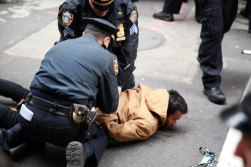
    occupr-arrest

    Image via Coco Curranski/Flickr.

    My new book, The 9/11 Generation: Youth,  Rights, and Solidarity in the War on Terror, is an ethnographic study of the forms that politics takes for South Asian, Arab, and Afghan American college-age youth in Silicon Valley who have come of age in the post-9/11 era. It examines the range of political critiques and identifications among South Asian, Arab, and Afghan American youth and explores the new, cross-racial alliances forged through civil rights and antiwar activism in northern California. The identities of these youth have been shaped by the racial and religious profiling of Muslim and Arab Americans under the PATRIOT Act, which has continued under the Obama administration, with Islamophobic and anti-Arab discourse persisting in the U.S. mainstream media. The politics of Muslim Americans, more than that of any other religious group, are viewed as necessary to surveil and contain. This constitutes the “new order of War on Terror” under the Obama regime, which relies on mass surveillance, clandestine cooperation between law enforcement and intelligence agencies, and programs that police political and social lives ( see Deepa Kumar 2012). Repression in the domestic War on Terror often remains invisible, however, for it is conducted through covert means, such as the use of undercover FBI informants, infiltration, and entrapment.

    Youth politics is a central target of the counterterrorism regime as the religious and political “radicalization” of youth variously defined as Muslim, Middle Eastern, Arab, Afghan, or South Asian has come to represent a threat to Western, secular, liberal democracy and to U.S. military and economic interventions. The framework of securitization defines Muslims as always a potential threat to U.S. homeland security and views this generational cohort as bedeviled by disaffection, cultural and political alienation, and psychological and social maladjustment. Muslim and Arab American youth, in particular, are viewed as susceptible to indoctrination and recruitment by Islamist movements, that is, as ripe for becoming enemies of the state. Muslim youth are also perceived as being vulnerable to “self-radicalization,” as in the case of the Chechen youth charged with the Boston marathon bombings in 2013. This is also a gendered form of surveillance as young Muslim males have been the major focus of counterterrorism programs, but young Muslim women are also, increasingly, objects of surveillance, especially in the wake of incidents such as the San Bernardino shootings.

    The focus on “homegrown terrorism” was ratcheted up after the July 7, 2005 bombings by British Muslims in London and occurred in tandem with shifts in U.S. wars and counterterrorism operations in Afghanistan, Pakistan, and Yemen. In 2007, Senator Joe Lieberman, Chairman of the Senate Committee on Homeland Security, held a series of hearings on the “homegrown threat of violent Islamic extremist terrorism,” focusing almost exclusively on Arab and Muslim Americans and dwelling on the role of the Internet in fostering Islamic “extremism”; in 2011, hearings on radicalization were also held by Congressman Peter King ( see American-Arab Anti-Discrimination Committee 2008, 39). Yet strikingly, the very real threat posed by white supremacist organizations and right-wing paramilitary movements is not at the center of debates about “homegrown” extremist violence, despite events such as the Oklahoma City bombings of 1995.

    Racial, religious and political profiling

    The homeland war on terror has increasingly focused on monitoring and prosecuting ideological and religious beliefs of Muslim and Arab Americans, not just terrorist activities, so this is a form of political, not just racial and religious, profiling. This strategy of pre-emptive prosecution and preemptive surveillance mirrors the doctrine of “pre-emptive war.” One problem with ideological profiling and the criminalization of beliefs is that political dissent is increasingly fragile and risky, especially for Muslim and Arab American youth. Despite this repression, youth in the 9/11 generation have mobilized in response to the War on Terror and the experience of collective profiling has, inevitably, politicized Muslim, South Asian, and Arab Americans. It has propelled new, cross-racial coalitions based on shared experiences of Islamophobia and racism. New cross-ethnic categories have emerged, such as AMSA (Arab, Muslim, and South Asian) and MESA (Middle Eastern and South Asian), as Muslim and Arab Americans became engaged in or led civil rights campaigns and antiwar organizing. For example, the Council on American-Islamic Relations (CAIR), the Islamic Network Group, the Muslim Public Affairs Council, and the American Arab Anti-Discrimination Committee have all led national civil rights efforts, in addition to numerous grassroots groups and coalitions, for example, the Arab Resource and Organizing Committee  (AROC) and the Asian Law Caucus in the San Francisco area, in which youth have been involved. Progressive-left campaigns against the wars in Iraq and Afghanistan and drone wars in Pakistan have also involved Muslim and Arab American activists and connected Muslim and Middle Eastern communities to overseas homelands, U.S. war zones in Iraq and Afghanistan, and the U.S-backed occupation in Palestine.

    There has also been a major push to engage in interfaith coalitions, focused on Muslim-Jewish-Christian dialogue and outreach, on the one hand, and in transnational solidarity activism, on the other. Campaigns have linked communities with shared experiences of police violence and surveillance, for example, during the Black Lives Matter movement and the Ferguson 2 Gaza campaign. So the racial profiling by the state has provoked new forms of racialization and affiliation on the ground, even if some of these are not entirely new but recreate earlier forms of cross-racial and international solidarity.

    The surveillance state

    The surveillance and counter-radicalization regime that has emerged in the U.S., as well as in the UK and Europe, is increasingly preoccupied with Muslim youth cultures and with cultural codes that presumably signify “radical dissent” and “youth alienation” (see Kundnani 2014). Obama’s domestic War on Terror drew on counter-radicalization practices in Britain in a transnational circuit of ideas and policies that focused on surveilling and entrapping Muslim American youth, through programs such as Countering Violent Extremism. While the emergence of ISIS/ISIL may have somewhat reconfigured this, it has long been the case that vocal critics of Israel were associated with “terrorist” movements and subject to surveillance. It is important to note, as Arun Kundnani has observed, that the template for the War on Terror was manufactured in the 1980s to demonize those resisting U.S. hegemony and U.S. allies in the Middle East, particularly Israel.

    In the current moment, as my research demonstrates, Palestine solidarity activism is a fraught terrain where youth have to contend with surveillance, censorship, including on college campuses, as well as harassment, allegations of anti-Semitism, smear campaigns, and blacklisting by right-wing organizations such as David Horowitz’ Freedom Center and Canary Mission. At the same time, this encounter with the exceptional lockdown on open discussion of Palestine-Israel leads to a process of what I call “Palestinianization,” that is, a process of politicization and racialization that is endemic to U.S. national culture given unconditional U.S. support for Israel and the power of the Israel lobby. Palestine solidarity is also a unifying hub for Muslim, South Asian, and Arab American youth and activism.

    I consider surveillance a technology of disciplining and managing racialized populations within neoliberal capitalism. The culture of surveillance highlights the tension that emerges between the police state’s repression and exceptionalist notions of U.S. democracy and “freedom” in the War on Terror. This tension is deeply felt by those who experience the brunt of policing and the curtailment of freedom in their daily lives. Nearly all the young people I spoke to as part of my research talked about the climate of permanent surveillance and the chilling effect it had on understandings of what it meant to be “political” and also “social.” Arab, South Asian, and Afghan American youth have to self-consciously regulate, or re-narrate, their social and political lives, including on social media. Given the state engages in warrantless wiretapping, monitors private emails and Facebook, and infiltrates mosques and activist groups with undercover informants, it is not just not those who are involved with formal political organizations who have reason to be anxious and self-conscious about their identities and sociality.

    In 2012, the stunning investigation by Associated Press of the NYPD’s surveillance program revealed that “mosque crawlers” and undercover informants, called “rakers,” (generally Muslim or Arab themselves), had been deployed to ferret out suspicious Muslim and Arab Americans, including students and youth, “monitoring daily life in bookstores, bars, cafes, and nightclubs” in “suspect neighborhoods”; this was part of a “human mapping program” in cooperation with the CIA and drawing on Israeli surveillance techniques, with a reach extending beyond New York state (Associated Press 2012, 5). The NYPD also infiltrated the Occupy Wall Street movement and Palestine solidarity rallies. The revelation of this infamous “demographics unit” sparked the first mainstream discussion of surveillance since 9/11, which increased with the revelations by WikiLeaks and Edward Snowden’s expose in 2013 of mass surveillance by the NSA and CIA. Some youth at campuses that had been surveilled by the NYPD used social media, including Twitter, and subversive humor to challenge this secret program; the Yale MSA created a Facebook page, “Call the NYPD,” with photos of Muslim college students holding signs declaring, “I am a . . . Blonde, Call the NYPD” (cited in Khabeer and Alhassen 2013, 308).

    Surveillance effects

    The social and cultural registers through which surveillance becomes a part of daily life are what I describe as surveillance effects, through which surveillance becomes normalized, even as it is resisted. Surveillance effects shape political culture and also ideas of selfhood. Many youth are aware that they are the exemplary objects of surveillance, because they fit a racial, religious, political or national profile. Law enforcement agencies, such as the New York City Police Department, have used behavioral models of “radicalization” based on profiles of youth subcultures, including markers such as clothing, religiosity, and activism (see American-Arab Anti-Discrimination Committee 2008, 39). This surveillance of everyday life has inevitably alienated many Muslim Americans even further while creating more distrust and divisions within targeted communities.

    In a surveillance state, many engage in self-regulation and self-censorship because they believe that they must sacrifice their freedoms for the sake of defending the nation, and that “national security” is, indeed, their own security. Some Muslim Americans engage in self-surveillance or the surveillance of others, hoping to avoid profiling or prove they are patriotic, “good” Muslim citizens. Yet my research also uncovered “surveillance stories” about life in the everyday of surveillance that demonstrate that the surveillance regime also provokes the opposite effect, producing challenges to intelligence-gathering and tactics of counter-surveillance that enable survival. Youth who negotiate these tensions expose the contradictions that animate life in the post-9/11 security state, and the fragility as well as the radical possibility of living life as the “enemy within.”

    The culture wars

    Surveillance is key to the post-9/11 culture wars, focused on Islam, gender, race, and nationalism. In my book, I argue these culture wars are also racial wars and class wars as they rest on racial and class struggles and fissures in U.S. society. These culture wars have evolved since the Cold War and in the  “new Cold War,” as well as the many hot wars waged by the U.S. from Iraq and Afghanistan to Pakistan and Yemen. Trump’s presidential campaign and election has inflamed the culture wars, and brought renewed attention to the already existing fault lines of race, class, and religion with the nation. As Americans debate the horrifying possibilities of a “Muslim registration,” some may not be aware that this actually already occurred in the U.S. with the Special Registration targeting Muslim immigrant men after 9/11 and that mass surveillance was intensified under the Obama administration. The generation that came of age since 9/11, especially those from communities targeted in the War on Terror and from immigrant communities, were already aware of the “white rage” and extremism that existed within the U.S. and that has now provoked shock and horror among those critical of Trump’s racism, Islamophobia, xenophobia, and misogyny. There is much to be learned from the stories of the 9/11 generation.

    Sunaina Maira is Professor of Asian American Studies, and is affiliated with the Middle East/South Asia Studies program and with the Cultural Studies Graduate Group. Her research and teaching focus on Asian American youth culture and the politics of cultural production as well as political mobilization and transnational movements challenging militarization, imperialism, and settler colonialism. She is the author of Desis in the House: Indian American Youth Culture in New York City and Missing: Youth, Citizenship, and Empire After 9/11. She co-edited Contours of the Heart: South Asians Map North America, which won the American Book Award in 1997, and Youthscapes: The Popular, the National, and the Global. Maira’s recent publications include a book based on ethnographic research, Jil [Generation] Oslo: Palestinian Hip Hop, Youth Culture, and the Youth Movement (Tadween), and a volume co-edited with Piya Chatterjee, The Imperial University: Academic Repression and Scholarly Dissent (University of Minnesota Press). Her new book project is a study of South Asian, Arab, and Afghan American youth and political movements focused on civil and human rights and issues of sovereignty and surveillance in the War on Terror. Maira launched a new section on West Asian American Studies in the Association for Asian American Studies and coedited a special issue of the Journal of Asian American Studies on Asian/Arab American studies intersections. She has been involved with various civil and human rights campaigns and antiwar groups in the Bay Area and nationally.

  • Sustainable Security

    In piaffe: multilateral nuclear disarmament dialogue in the year of the horse

    Shortly after the lunar New Year, UN Secretary-General Ban Ki-moon challenged the Conference on Disarmament to run with the ‘spirit of the blue horse’ towards substantive engagement on multilateral nuclear disarmament in 2014. While the regime may not achieve this speed, there are initiatives underway this year that may well help nuclear disarmament dialogues pick up speed ahead of the 2015 NPT review conference.

    Read Article →

    Beaux Gestes and Castles in the Sand: The Militarisation of the Sahara

    Whatever the benefits for Mali, the French-led eviction of jihadist groups from northern Mali may have made the wider Sahara a less safe place, and has done little to lower the capacity of such groups to threaten European interests.. In 2014, France is implementing a major redeployment of its forces in Africa into the Sahel and Sahara. Meanwhile, the US has been quietly extending its military reach from Djibouti to Mauritania. However, as elsewhere, the western military approach to countering Islamist insurgency in the Sahel rests on very unsteady foundations and the potential to provoke wider alienation and radicalisation is strong.

    Read Article →

    Chemical Weapons Use in Syria: a Test of the Norm

    Recent events in the Syrian civil war have proved an unparalleled test of the norm against the use of chemical weapons. At its core this was a test of the willingness of countries to uphold the norm, in this case in the face of a flagrant violation, and a response that in the end stumbled upon a satisfactory conclusion—reaffirming the special category of chemical arms—but which in the process said a great deal about current attitudes to the use of military force as a means of humanitarian intervention.

    Read Article →

  • Sustainable Security

    Hybrid warfare has become a popular term in academic, military and policy circles. But what does the term actually mean and how is this approach to warfare harnessed by state and non-state actors in practice?

    The term hybrid warfare (HW) came into prominence in 2014, when Russia annexed the Crimea, part of the Ukraine, proceeded to support autonomist Russian-speakers in the Ukraine, and crushed some Ukrainian regular battalions in border clashes. Barely six months later, hundreds of miles to the southeast, a revitalized non-state actor, the Islamic State of Iraq and Syria (ISIS) trounced the Iraqi Army in a ‘blitzkrieg’ that unraveled four Iraqi army divisions in the most humiliating defeat of an army since the Six Day War of June 1967. ISIS forces seized Iraq’s second largest city, Mosul located in the north, and proclaimed their caliphate there on June 29, 2014. These events were seen by many to be hybrid warfare in practice.

    Since 2014 there has been an explosion of op-eds, policy statements, policy papers and academic papers on the concept of hybrid war. Despite this plethora of literature, there is still a serious need to establish a better definition of HW, to describe its characteristics, assess the term’s relevance, and address the distinction between hybrid warfare as it is practiced by states and by non-state actors. This article addresses such issues.

    What is hybrid warfare?

    Image credit: Vitaly V. Kuzmin/Wikimedia.

    Despite gaining prominence since 2014, HW has been used to describe changes in the character of warfare since around 2005. The term was used to describe Hezbollah’s strategy in the 2006 Lebanon War. But some observers and strategic analysts have even argued that its contemporary origins lie in the Balkan War and the unraveling of Yugoslavia. Others have argued that elements of hybridity have occurred in many wars since the rise of ‘civilized’ warfare. In other words, there is nothing ‘new under the sun,’ except yet another term to describe the familiar.

    Defining HW has also been a matter of debate. While there are not as many definitions of HW as there are gainfully employed strategic thinkers (although at times it feels like it), it would be safe to say that there are as many definitions of the term and concept as there are countries worried by it or seeking to practice it. But even this is contestable too because a number of countries deny that what they actually practice hybrid warfare. Indeed, for Moscow ‘gibridnaya voina’ is what others (Western powers) have done to Russia. The definition I offer here derives largely from the various iterations of it by Frank Hoffman and others and from a variety of doctrinal manuals from the United States of America and those of other countries.  The term hybrid means something heterogeneous, multi-shaped or multi-varied. With respect to warfare, what does this mean? HW occurs when an actor practicing it against an opponent brings into play a ‘cocktail’ of conventional military capabilities, political warfare, terrorism, subversion, guerrilla warfare, organized crime, and, in contemporary times, cyber warfare. It may also include violations of international laws of war by the practitioner of hybrid warfare.

    However, haven’t nations in the past used a ‘cocktail’ of measures against their opponents? Is it not true that Russia, which stands accused of using HW, is successor to a nation, the Union of Soviet Socialist Republics, which used all kinds of measures and ‘skullduggery’ to advance its interests even times of peace? Hoffman argued that even though wars in the past, even the recent past, could also include both regular and irregular elements, these occurred in different places, were not coordinated, and often occurred in sequence or one after the other. In contemporary HW, all the above-listed elements are orchestrated to act in coordinated, coherent and often simultaneous ways. Hence, for the person or persons watching from outside as well as for the enemy, this ‘cocktail’ of measures – some designed to kill and others not to do so but just as deadly to morale and cohesion of the target — may become blurred into a unified force acting in a single and comprehensive battle-space. Thus, the practitioner of hybrid warfare achieves a synergistic effect against which the target is rendered hors de combat in lieu of a shooting war, before a shooting war starts, and during an actual war.

    When the term first appeared to describe what a certain number analysts like Hoffman saw as emerging trends some of their colleagues literally sighed because they wondered – politely and often not so politely — whether the term added anything new to describe wars other than the purely conventional or symmetric force on force clashes between like armies. Others wondered whether the term added much to the existing plethora of terms that describe wars other than purely conventional: irregular, guerrilla, low-intensity, fourth generation, asymmetric, new wars, forever war, etc. I argue that each term has a purpose and most should have a specified life-span before gracefully disappearing into the shadows instead of lingering on like an unwanted guest. Each term brings out certain aspects of indirect war associated with particular technologies, operational art, tactics, environment and cultural context. The same holds true for HW; if it still in existence a decade from now, then strategists are a dull lot indeed. Indeed, HW is not a prediction of what future warfare is going to be like. In this context, we need to avoid the ‘reification’ of HW.

    HW is also ‘transcultural.’ There are ways of warfare to be sure, but HW is not just Eurasian – Russian – or Oriental. This would be strategic ethnocentrism to borrow a recognized term from international relations scholar, Ken Booth. Russia is, indeed, right in arguing that the West, which sees itself as the target of HW, as being as much perpetrators of the genre as they are the victims. Russia perceives the West, rightly or wrongly, as making a ‘big issue’ of it in the last half decade because of the events in Ukraine where Moscow believes it has successfully blocked Western-inspired or even led HW against Russia’s resurgence. Ultimately, HW is a useful term because it draws out/highlights certain characteristics of contemporary warfare by states and non-state actors.

    HW is not replacing inter-state conventional warfare. The dominance of inter-state conventional warfare between roughly 1645 and 1945 has always been buffeted by forms of warfare that have been given various names throughout this three hundred year history. Many of these forms have actually been nothing more than appendages to conventional warfare; and HW is but one of the latest terms to describe certain characteristics of the contemporary conflict environment.

    Ultimately, though, HW is a useful term because it draws out/highlights certain characteristics of contemporary warfare by states and non-state actors.

    State and non-state hybrid war

    There are clear-cut differences between state and non-state hybrid warfare characteristics. Indeed, even the definition for state hybrid warfare might not fit what non-state actors do in terms of hybrid warfare. Russia is not the only state that has developed hybrid warfare capabilities; Iran, North Korea and China come to mind. Even here, we can see wide disparities in military power between these states that are alleged to be at the forefront of hybrid warfare developments. Similarly, IS was not the first to develop non-state hybrid warfare capabilities (nor will it be the last). In fact, when several American theorists, of whom the indefatigable former United States Marine Corps officer, Frank Hoffman, was in the lead in developing the concept, the focus was on groups like Hamas and Hezbollah.

    The output on hybrid warfare in 2014 and thereafter was almost overwhelmingly focused on the alleged hybrid warfare capabilities of these two distinctly different entities. This was, in fact, a huge problem: Russia on the one hand, and Islamic State are certainly not similar entities. Without meaning to state the obvious, one is a large and powerful legitimate state with a military establishment that has come out of the doldrums of the 1990s. Historically, the Russian military has engaged in some very innovative thinking, about which only a few Western experts are cognizant. For example, in the 18th century the great soldier, Frederick the Great of Prussia, was derisive of Russian military prowess. The Russians quickly disabused him of this derision when the Russian army trounced him in a major battle. In the 1920s and 1930s, Soviet officers formulated some very innovative military ideas, which those interested in current Russian military theorizing are revisiting. A considerable amount of literature has appeared in the West to address the matter of Russian hybrid warfare over the course of the past three years. This has elicited some humor and denials on the part of the Russians. Russian commentators argue that Russia, does not wage hybrid warfare, and that it is actually the West that is waging war against Russia. Russia is responding and developing its own approach to contemporary warfare, which Russians refer to as ‘New Generation.’

    For a state like Russia, hybrid warfare entails the composition of different elements of ways to wage war used simultaneously and in a coordinated manner to achieve one’s goals. If the measures work without leading to an extended or large-scale war or indeed lead to the achievement of the goals at stake below the threshold of the legal definition of war with the victim or the victim’s allies all the better as far as the state practitioner of hybrid war is concerned. Though the debate about evidence for Russia seeing contemporary warfare as being hybrid is still ongoing, for the sake of argument Russia’s hybrid capabilities as exhibited in the Ukraine and Crimea can be described as a ‘cocktail’ of measures that were used to achieve one’s goals in lieu of going to full-scale war, in shaping the theater of operations to one’s advantage, and as a force multiplier if need be in an actual exchange of violence with an enemy.

    HW is different for IS and entities like it. The literature on IS is now huge and almost unmanageable. Most of it, however, concentrates on its personalities, ideology and organizational structure. Very little deals with the military ideas or strategy of this entity, which is surprising because there remains the puzzle of explaining its military rise during the first Iraqi insurgency (2003-2011), its demise, which proved to be temporary, and then its rapid re-emergence from 2012 to 2015. Between 2016 and early 2017, it suffered enormous losses and has lost Mosul. However, the consensus is that the collapse of the caliphate in Iraq (and soon in Syria) will not be the end of that entity. How do we explain its military trajectory? Some analysts have argued that this is hybrid threat or hybrid entity. Unfortunately, the analysis of IS as a hybrid warfare has mainly been descriptive rather than analytical in that most of the literature narrates the trajectory of IS’ war fighting over the years without conceptualization or context. The underdevelopment of the literature on the hybrid threat posed by most dangerous current non-state actor then raises the question of how can we distinguish between the hybrid warfare capabilities of a state actor and that of a non-state actor.

    HW for a non-state actor also involves building a ‘cocktail’ of hybrid capabilities. Among these capabilities are political warfare techniques for propaganda against enemies, recruitment of supporters and shaping the ‘human terrain’ on the ground in the conflict zone in their favor. However, while states have the resources to develop robust hybrid capabilities only a few non-state actors in the contemporary conflict environment have been able to develop and maintain effective revolutionary political warfare infrastructures. These include the FARC in Colombia, the LTTE in Sri Lanka, Hezbollah in Lebanon, and of, course, Islamic State in Iraq and Syria. These groups have also incorporated terrorism to target civilians and to intimidate and terrify opponents or even force them to overreact. The practice of terrorism has, of course, been a subject of controversy even among its practitioners, some of whom have even distinguished between discriminate, which targets specific individuals or categories of people, and indiscriminate terrorism, which targets people collectively or whole communities. Indeed, indiscriminate terrorism became a source of contention even within the global constellation of violent jihadist groups such as al-Qaeda and Islamic State during the course of the war in Iraq between 2003 and 2011. These entities also develop robust guerrilla hit and run tactics for attacking small-scale enemy units. Finally, this limited set of non-state actors have moved up the spectrum of warfare to develop impressive semi-conventional forces, which have been able to conduct both offensive and defensive operations against seemingly more formidable conventional forces.

    Conclusion

    For an advanced and well-developed non-state actor hybrid warfare is part and parcel of their arsenal of war whereas for states it can be used in lieu of outright war. For a super-empowered non-state actor, hybrid warfare is scalar manner, defined as having ways of war – terrorism, guerrilla tactics, and semi-conventional war coupled with the requisite capabilities for each – necessary to go up and down the spectrum of conflict in accordance with environmental factors, enemy faced, operational art and tactics needed at a particular time.  When a non-state actor like IS first emerges, it is invariably weak, lacking in resources, personnel, and territory to control. This leads them down the path of using the most primitive and illegitimate form of political violence, namely terrorism. As such an entity develops it moves ‘up the chain’ of violence, as it were, to guerrilla warfare, which is more ‘advanced.’ As it acquires territory, which is both a sanctuary and a base, this enables it to develop semi-conventional ways of war. This has almost Hegelian march up the ladder of progress was, indeed, the trajectory of people’s revolutionary war as espoused by Mao Zedong and Vo Nguyen Giap in China and Vietnam respectively. So what is the difference?

    The key difference with hybrid warfare by contemporary non-state actors, like IS or the Liberation Tigers of Tamil Eelam, and state actors is that the progression towards a higher form of warfare is not one way; the lesser forms are not discarded. Indeed, they remain integral to the entity so that they can slide up and down the spectrum of violence when needed or when necessary. IS has its territory and Mosul, it will now revert to guerrilla warfare and terrorism. The ‘happy days’ of having a quasi-conventional military and a ‘state,’ are over, at least for now.

    The future is likely to witness the further evolution of HW; it will be developed both by states, including powerful and weak ones, as well as non-state actors. If HW is really nothing more than the effective, efficient, and often simultaneous use of a set of measures, military and non-military to achieve one’s goals before or during a war and if the use of these measures ultimately ensures that the lines between peace and war are blurred to the point of irrelevance, then we will see states scrambling to deal with this situation by devised offensive and defensive measures.

    Ahmed S. Hashim is Associate Professor in the Military Studies Programme at the Institute of Defence and Strategic Studies, RSIS, and specialises in Strategic Studies. He received his B.A. in Politics and International Studies from the University of Warwick, Great Britain and his M.Sc and Ph.D from the Massachusetts Institute of Technology (MIT). He has worked extensively in the fields of Strategy and Policy dealing in particular with irregular war and counter-terrorism for the past 20 years prior to taking up his current position at RSIS in 2011 where he teaches courses on insurgency and counterinsurgency, terrorism, and defense policies at RSIS and SAFTI Military Institute (SAFTI MI).

  • Israel

    Excerpt: Most of the international attention on Iran in the second half of 2009 focused on the political turmoil following the presidential election of 12 June. The discussion of Iran’s nuclear capabilities and plans receded from the foreground, though it continued behind the scenes among all the states and international agencies involved. The signs are that, whatever the outcome of the domestic confrontation between the Mahmoud Ahmadinejad regime and the opposition, the coming months will see a sharpening of tension over the nuclear issue. This raises the question of whether there will be a military assault on Iran’s nuclear facilities – most likely by Israel, since there is little likelihood that the Barack Obama administration would countenance direct United States military action against Iran – in an attempt to stop the country from acquiring a nuclear weapon.

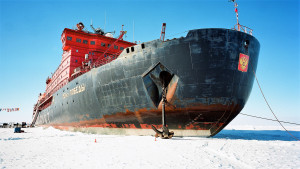
    Image: Globalsecurity.org

    Read more »

  • Sustainable Security

    Climate change and human migration are often presented as threats to national and international security. But what is the actual link between these phenomena and conflict?

    Author’s Note: This commentary presents key arguments from the articles Christiane J. Fröhlich (2016) Climate migrants as protestors? Dispelling misconceptions about global environmental change in pre-revolutionary Syria, Contemporary Levant, 1:1, 38-50, DOI: 10.1080/20581831.2016.1149355 (available online here), and Michael Brzoska & Christiane Fröhlich (2015): Climate change, migration and violent conflict: vulnerabilities, pathways and adaptation strategies , Migration and Development, DOI: 10.1080/21632324.2015.1022973 (available online here).

    Climate Change and Conflict

    Dry land near Manatuto. Timor-Leste.By 2025 it is expected that 1.8 billion people will be living in countries with absolute water scarcity, with 3.4 billion people living in countries defined as water-scare. Water scarcity can lead to both drought and desertification as well as instigating conflict in communities and between countries. Sunday 22 March is World Water Day, a day to focus attention on the importance of freshwater and advocate for the sustainable management of freshwater resources. Photo by Martine Perret/UNMIT. 20 march 2009.

    Photo by Martine Perret/UNMIT via Flickr.

    Today, climate change is often perceived predominantly as a security risk. The most common argument behind this train of thought is that many societies’ adaptive capacities will be overstretched by the effects of global warming within the short- to midterm, potentially leading to destabilization and violence, and jeopardizing national and international security in a way that is unprecedented (see WBGU, 2007; UNSC, 2007; UNGA, 2009). One additional concern is that, should the international community fail to adopt an effective and globally coordinated climate policy, climate change may deepen pre-existing lines of conflict on the local, national, inter- and transnational levels. Another worry are conflicts over natural resources, since reduced availability and changes in the distribution of water, food and arable land are considered by some to potentially trigger violent conflicts (Hsiang et al., 2013; Burke et al., 2009). Other hypothesized pathways from climate change to the onset of violent conflict are a deterioration of the governance capacities of formal and informal institutions as well as the increase in horizontal inequality among groups (see Gleditsch, 2012; Scheffran et al., 2012).

    Bringing Migration in

    Very much the same is true for human mobility: Large migration movements have frequently been presented as a threat to national and international security, particularly when crossing into the United States and Europe (see Huysmans 2000; Ceccirulli & Labanca, 2014; Adamson, 2006; Alexseev, 2006; Waever, Buzan, Kelstrup, & Lemaitre, 1993). The underlying assumption is that in a globalised world, states enjoy growing benefits and opportunities stemming from increasing human mobility, but are also threatened by an unknown and equally growing potential for crime, trafficking, drugs and terrorism within these new migratory flows. Therefore, human mobility is framed as a matter of security, leading to what has become known as the ‘migration-security nexus’.

    “Climate Migration”

    With global warming well under way, climate change-induced migration has come to the forefront of such risk assessments (see Myers 1998; Myers 2005; Myers and Kent 1995; Brown 2008; Barnett 2003, Smith and Vivekananda 2007; Boano 2008; Hummel et al. 2012; Warner et al. 2013). The underlying assumed causality is that climate change will engender or exacerbate resource scarcities, which in turn might drive migration as well as conflict. In its first assessment report, for instance, the Intergovernmental Panel on Climate Change (IPCC) warned as early as 1990: ‘the gravest effects of climate change may be those on human migration as millions are displaced by shoreline erosion, coastal flooding and severe drought’. This was the basis for predictions of major conflict in receiving regions both within countries suffering from climate change and internationally. In 2008, the European Commission and the EU’s High Representative for the Common Foreign and Security Policy released a report on climate change and international security in which they stressed that as a result of climate change, ‘Europe must expect substantially increased migratory pressure’.

    But reality is much less linear and simple, and empirical data is scant. The underlying imaginaire, which assumes linear causality between global environmental change and conflict via environmentally-induced migration, contains several misconceptions. Firstly, migration decisions are complex and not determined by environmental factors alone. Scholarship has identified five main drivers for (internal and international) human mobility, namely economic, political, demographic, social and environmental factors, which are deeply interconnected and mediated through socially, politically and economically determined institutions and structures. Secondly, chain migration and migration networks need to be taken into account as factors that guide migration streams in certain directions and not others. Thirdly, there are few systematic studies researching the assumed causality between climate change and migration (Reuveny 2007, 2008; Raleigh, 2010; Raleigh et al., 2010) or between (climate) migration movements and (violent) conflict. In fact, there is very limited evidence for both propositions. Fourthly, it remains disputed how many people will leave their habitat due to climate change: So-called maximalists assume a simple, direct relationship between migration and climate change and thus project comparatively large numbers of environmental migrants. Estimates reach from some 200 million up to 1 billion refugees globally by 2050 (Jacobson 1988; Myers 1997, 2002; Stern 2006). Minimalists, on the other hand, underscore the complex nature of migration decisions and stress the respective society’s vulnerability and adaptive capacity as a major factor for reducing the expected number of climate migrants (Suhrke 1994; Castles 2002; Morrissey 2009; Gemenne 2011, Morrissey 2012 gives a good overview). Fifthly, migration has been identified as a potentially powerful adaptation mechanism with regard to global warming, a view which is not reflected by the simple causality cited above. In a nutshell, the theoretical foundation and empirical support for propositions of a causal linearity between climate change, human mobility and conflict are thin. This does not mean that climate change will be irrelevant for future patterns of migration, including migration that may be linked to conflict. But the links are complex and defy simple and sensationalist conclusions.

    Case Study Syria: A Climate War?

    One case in point is Syria. The Syrian Arab Republic, as most of the Middle East and North Africa, has been suffering from long-term environmental changes linked to anthropogenic climate change. In recent years, a particularly long drought period immediately preceding the beginning of the Syrian uprising has negatively impacted what used to be the breadbasket of the Fertile Crescent, with consecutive crop failures in parts of the country, loss of livestock, the demise of whole villages and a distinct increase in internal migration. This has lead an increasing number of commentators to believe that this “century drought” was at least partly responsible for the timing and intensity of social upheaval in Syria (Werrell, Femia, and Sternberg 2015; Kelley et al. 2015, as well as numerous media contributions, for instance in The Independent and The New York Times. From the United States government to the European Union, from American to European think tanks, this powerful supposed ‘pre-story’ of the Syrian revolution is continuously gaining traction and has even been introduced into the overall discussion of the migration flows to Europe by assuming that the timing and magnitude of the current migration flows from the Middle East to Europe was at least partly environmentally motivated.

    However, the existing studies of this link, while having received a lot of public attention, do not present authoritative evidence on the issue. On the contrary, they overstress environmental drivers of migration while tuning out other factors that influence migration decisions. For instance, the Syrian state only created around 36,000 new jobs per year between 2001 and 2007, with the agricultural sector losing 69,000 per annum, making (un)employment a very serious issue in the Syrian economy and powerful driver of migration long before the drought began. Modernisation, rapid de-peasantisation and slow replacement of agricultural employment with waged work in industry or services in the formal sector had taken their toll on both rural and urban environments before the drought even began.

    Also, macro-economic policies of the Syrian government, which had for decades regulated agricultural crops, worked as economic push factor, too. The state-led system which had been imposed on the agricultural sector in the mid-20th century was characterised by subsidies for farm inputs and fuels, especially for strategic crops such as wheat, cotton and barley. These state-led structures introduced strong dependencies into the agricultural sector that became liabilities when Bashar al-Assad started to deregulate the Syrian economy into what the 10th five-year-plan calls “an open competitive economy”. Parallel to his reforms, an economy that had been based on rents from the oil sector started to give way to demographic pressures, a decrease in oil-production, depleting oil reserves and economic stagnation.

    Socio-political drivers for migration also played a role in pre-revolutionary Syria. The rule of law was ambivalent, state institutions were characterized by manipulation and poor performance, the business environment was extremely fragile, corruption abounded, and Syrian citizens had little to no avenue to participate in political decision-making processes. Power and wealth were being distributed along highly informal but extremely resilient patronage networks. But the decade-old strategy of repressing those who advocated taghyir (change), while at the same time attempting to bind those advocating islah (reform) in patronage networks, began to crumble.

    Finally, the assumed causality between climate change induced migration and social unrest is based on the idea that the migrants were the driving force behind the Syrian uprising. However, orchestrating popular protest requires social networks built on trust and at least some kind of organizational structure (McAdam, McCarthy, and Zald 1996; Tarrow 1998; Diani and McAdam 2003; Chesters and Welsh 2011). There is no evidence that new migrants, who were often living below the poverty line, could initiate large-scale, long-lasting popular uprisings, especially in repressive autocratic regimes like Syria.

    Christiane Fröhlich is Mercator-IPC-Fellow at the Istanbul Policy Center of Sabanci University and Research Fellow at the Institute for Peace Research and Security Policy at Hamburg University. Her research focuses on reasons for migration, with a particular focus on environmental drivers. She has done extensive ethnographic field research on the impact of a prolonged and climate change-related drought period in Syria which immediately preceded the Syrian war. Moreover, she inquires into the role of the Global North for current migration movements from the Global South from a Postcolonial Perspective. In the past, she has worked extensively on water conflicts on the international, national and local levels, as well as on the Israeli-Palestinian core conflict and its role for Middle Eastern geopolitics. She holds a PhD from the Center for Conflict Studies at Marburg University, and a Master in Peace Research and Security Policy from Hamburg University. More information is available at www.christianefroehlich.de

  • Sustainable Security

    Authors note: This short contribution is an updated assessment built on a previous article with free access until end of June 2017, among those chosen by Taylor & Francis to commemorate 25 years since the fall of the Soviet Union: http://explore.tandfonline.com/page/pgas/soviet-union-collapse-25-years-on-post-soviet. Tom Røseth, ‘Russia’s China Policy in the Arctic’, Strategic Analysis, 38.6 (2014), 841–59.

    Russia’s policy towards China in the Arctic is pragmatic and opportunistic, and increased collaboration between the two states is expected.

    Russia is destined to be the most significant player in the Arctic. It has the longest Arctic coastline, vast resources and the prospects of a new trade route. China has recently become a key actor in the Arctic. It has displayed an interest in the resources of several Arctic states, an ambition to utilise the Northern Sea Route (NSR), a strong research agenda on climate change in the region and has a permanent observer status in the Arctic Council. How does Russia welcome Chinese interest, and what kind of Russo-Chinese Arctic relationship should other states prepare for?

    Russia has a dual policy towards China in the Arctic. On one hand, Russia’ Arctic focus contains strong security concerns and a sensitivity to issues of sovereignty, which hamper opportunities with China. On the other hand, Moscow seeks to attract Chinese investments integrated in a strategy to promote the region commercially. In short, international euphoria seen 2007-2012 connected to the Arctic as an energy resource base and effective transit route between Asia and Europe has toned down, seeing little Chinese investments and activity. From a long term perspective, Chinese involvement in Russia’s Arctic is expected to raise, depending on continued retracting ice conditions, oil prices, increase infrastructure development and improve Beijing’s developing relationship with Moscow.

    Russia views its own position in the Arctic as privileged. In the Arctic, it has both a “treasure chamber” in the region’s vast resources, and its strong national security interests are protected by the Northern Fleet. Moscow demonstrated, through its Arctic strategies of 2008 and 2013, that developing its Arctic policy is a national priority, with a focus being placed on resource development, ensuring security and stability, developing the NSR and sustainable development. Through Russia’s geopolitical positioning and active Arctic policies, Asian countries such as China depend on the benevolence of Russia if they seek a role in Arctic affairs. China’s growing interest and Russia’s main role in the Arctic makes it paramount to study their relationship in the region, which, by and large, reflects improved general bilateral relations. Scholars tend to inflate Chinese activities and interests in the Arctic by aggregating positive cases over time. However, Chinese interests and expectations in the Arctic actually peaked under the accession process to the Arctic Council around 2010-2013, and then fell as Chinese actors obtained in depth knowledge of climate challenges, sovereignty issues and the lack of infrastructure, combined with hard-hitting external factors in place since 2014, such as low oil prices and Western sanctions over Ukraine. There are three cases which can be raised to illuminate why Russia’s policies towards China show greater potential for cooperation than conflict between the two powers in the Arctic.

    The grounds for Sino-Russian cooperation

    Image credit: Christopher Michel/Flickr.

    First, Chinese scholars and governmental actors had high expectations on shipping along the NSR, which became more realistic around 2013. Chinese commercial actors on shipping have never really embraced the NSR, and performed only test cases of utilizing the route. Currently, the route is important for Russian national shipments, and has the potential to bring resources out of the area both to the East and West. But as a proper transit route its prospects are still limited. Russian Arctic scholars have voiced disappointment on the low level of Chinese infrastructure investments along the route. China might wish for more unrestricted usage without Russian tariffs and special conditions with strict legislation including the exclusive economic zone, but both Beijing and Moscow have common aims in developing and commercialising the route. Russia sees China as a potential partner for making the route more feasible, as long as Beijing does not challenge Russia’s national interests in controlling and regulating the NSR. At the same time, Russia’s renewed focus on military presence in ensuring its sovereignty and security along the NSR indicates a defensive approach moving beyond commercial preparations, and conveys a strong message that it will balance other states’ security interests in the region.

    Second, in its quest to join the Arctic Council as a permanent observer, Beijing overstated the council’s role. While the council is the main forum for arctic affairs – it is not a decision-making body. After being accepted, Beijing seemed bewildered over what to do next and how to make use of this new-won position, treading carefully to see where it could play a constructive role that coincided with its interests. Under the US-chairmanship, China is well integrated into the council’s workgroups. Russia was reluctant to accept China and other applicants that do not border the Arctic as it may challenge Moscow’s position and make the council ineffective. Moscow changed its stance at the Kiruna meeting in 2013, as Canada suddenly changed to a positive position and Russia could not take the cost of standing alone in opposition to Beijing’s accession. Beijing had reassured Moscow over time that its intentions were not to go against Russia’s interest in the Arctic, made formal as the applicants were bound to adhere to the Arctic regime. Russia and China have since cooperated well in the council, and Russia seeks a constructive relationship in the forum, as long as China confines itself to its limited role as an observer and does not challenge Russian interests. The Russia-West conflict over Ukraine brings implications for intergovernmental cooperation although most states have tried to keep business as usual. China joined in a period where some participating states engaged in strong rhetoric over Ukraine, followed by limited cooperation avoiding sensitive issues in the council.

    Third, on Arctic energy, Chinese participation in the Russian Arctic was initially promising, but is now basically limited to the LNG-project at Yamal. The Chinese National Petroleum Company bought 20 percent from Novatek in 2013, with China’s Silk Road Fund acquiring another 9.9 percent in 2015. Other agreed projects between Russian and Chinese energy companies, especially offshore, have been put on hold awaiting a third western partner or higher oil prices. China has capital, but Western companies are main contenders for participating in offshore projects in the Russian Arctic due to their competencies. With the West’s sanctions, deep-water technology is unattainable. Also, Chinese financing is more complicated, as these often were channelled through western institutions. Arctic energy contrasts at the state-to-state level, where Russo-Chinese energy cooperation has turned strategic with large agreements on the delivery of oil and gas to China. Russia’s limited energy cooperation with China in the Arctic is due to more external factors than reluctance towards working with Chinese companies, as Moscow ideally would seek increased Asian investments, to balance Western influence and secure wider marked access and diversity.

    Conclusion

    By allowing China into the Arctic, Moscow signals a willingness to re-evaluate previous positions as it wants to benefit from greater bilateral issues. This change opens up the potential for increased Chinese activity, investments and co-operation in the Arctic. In moving towards a strategic Sino-Russian relationship, more co-operation and Chinese activity is to be expected in the Russian Arctic, as long as China is a proponent of commercial opportunities and does not challenge perceived Russian national interests in the Arctic. Sino-Russian co-operation in the Arctic through shipping, energy projects and investments in infrastructure will incrementally lead Beijing to seek more influence in Arctic matters as it is more affected by it. China’s economic rise might eventually give Beijing leverage over Russia on Arctic matters, as Moscow would become more dependent on Chinese capital and activity to make the region develop. Generally, Russia is initiating a constructive stance on Chinese economic interests in the Arctic, but takes great care in promoting its security interests. Russia’s approach towards China is first and foremost pragmatic, as no special treatment is given to Chinese actors in the Russian Arctic. Russia needs assistance to develop its Arctic and an eastward diversification is opportune both for political support on international issues and economic opportunities. There is therefore a duality in Russia’s China policy in the Arctic, between restrictions connected to security concerns and openness due to commercial interests, which Moscow needs to sort out before embarking a proper strategic relationship with China in the Arctic.

    Tom Røseth is an Assistant Professor at the Defence Command and Staff College, Norwegian Defence University College. His main research areas are Russo-Chinese relations, Arctic security policies, intelligence studies and Russian foreign policy.

  • A new security paradigm: the military climate link

    SustainableSecurity.org Associate Editor Professor Paul Rogers’s latest article for openDemocracy highlights the fact that many leading military analysts in the United States are increasingly alert to the link between security and climate change. If, at the same time, these analysts could expand their view of whose security is at risk, the policy consequences could be immense. 

    Read the full article here.

  • US Military

    SustainableSecurity.org Associate Editor Professor Paul Rogers’s latest article for openDemocracy highlights the fact that many leading military analysts in the United States are increasingly alert to the link between security and climate change. If, at the same time, these analysts could expand their view of whose security is at risk, the policy consequences could be immense.  Read more »

  • Sustainable Security

  • Sustainable Security

    One year after violent conflict began, information is now emerging on the specific environmental impact of war in Ukraine’s highly industrialised Donbas region. Although obtaining accurate data is difficult, indications are that the conflict has resulted in a number of civilian health risks, and potentially long-term damage to its environment. In order to mitigate these long-term risks, international and domestic agencies will have to find ways to coordinate their efforts on documenting, assessing and addressing the damage.

    The environmental legacy of conflict and military activities is rarely prioritised in post-conflict response, in spite of the short and long-term impact of damage on civilian health and livelihoods. At times relationships between incidents and harm may be complex, often requiring detailed and lengthy analysis. Warfare in highly industrialised areas has the potential to generate new pollution incidents and exacerbate existing problems; the conflict in Ukraine has done both, as well as damaging the area’s natural environment.

    The chronology of the Donbas conflict is widely accessible and there is no need to repeat it here. More important is the current uncertainty. With the signing of the second round of Minsk agreements in February 2015, hope re-emerged that a peaceful solution might be possible. For the moment the truce is holding but remains fragile. Should it collapse, it is likely that new and grave risks to the region’s people and environment will emerge.

    Scope of environmentally damaging incidents

    Prior to the outbreak of the war, more than 5,300 industrial enterprises were operating in the pre-war Donetsk and Luhansk oblasts (provinces). Damage to the region’s industry is widespread, and ranges from direct damage to industrial installations, to enterprises simply stopping production because of the lack of raw materials, energy, workforce or distribution channels.

    A map produced by Geneva’s Zoi environment network and the East Ukraine Environment Institute based on official information, media reports, assessments and interviews shows environmental damage in the region. Click here to view full size map

    It is this disruption of the region’s industry that is likely to be primarily responsible for the environmental side-effects of the conflict. In some cases, the disruption has led to accidental releases of pollutants from shelled or bombed facilities. In others, facilities have been forced to shift to more polluting technologies that have impacted regional air quality. Among dozens of facilities damaged by fighting are the Zasyadko coal mine, a chemicals depot at Yasynivskyi, coke and chemical works in Makiyvka, the Lysychyansk oil refinery, an explosives factory at Petrovske and a fuel-oil storage facility at Slavyansk thermal power plant.

    Coal mining has been the backbone of the economy of the Donbas region since the nineteenth century. With the intermittent collapse of the electricity supply across the entire conflict area, ventilation systems and water pumps in coal mines failed, resulting in the release of accumulated gases after ventilation restarted. The often irreparable flooding of mines not only damages installations but also waterlogs adjacent areas and pollutes groundwater. At the time of writing, permanent or temporary flooding has been reported at more than ten mines, yet due to the lack of uninterrupted monitoring and fieldwork to assess the damage, the exact extent of the risks to environmental and public health is unclear.

    The Zasyadko mine in Donetsk used to produce 4 million tonnes of coal annually and was one of the region’s economic flagships. A release and explosion of methane in March 2015 killed 33 of the 200 miners underground at the time. Even though this was not the first such accident at the mine (it is considered among the most lethal in the area’s risky mining industry), the chair of the mine’s board attributed the incident to heavy shelling at nearby Donetsk airport, where fighting continued until late January 2015.

    There have been numerous media reports about war damage caused to Donbas’ water supply, including in and around Luhansk and Donetsk – cities that had a combined pre-war population of 1.5 million. Repair work to the water infrastructure is still carried out, often under direct fire, but periods of irregular supply are common. Less well documented is the impact of the conflict on drinking water quality but one can reasonably assume widespread deterioration as a result of the disruption.

    At the moment, relatively little is known about the direct chemical impact of the war on the environment and people. Limited sampling by the Ukraine-based NGO Environment-People-Law confirmed the expected range of some ‘war chemicals’ from the use of conventional weapons in impact zones. Similarly, large quantities of damaged military equipment and potentially hazardous building rubble will require disposal. The Ukrainian Ministry of Defence also raised concerns that depleted uranium weapons may have been used in the fighting around Donetsk airport, and proposed to determine whether this was the case when conditions allowed.

    The region’s nature has also suffered. Already prone to fires because of the dry summer climate, steppes and forests have burnt more often than would have been expected. According to an as yet unpublished analysis of NASA satellite data, the Eastern European branch of the Global Fire Monitoring Centre showed that in 2014, the incidence per unit area of forest and grass fires in the Donetsk oblast was up to two to three times higher than in the surrounding regions of Ukraine and Russia.

    The conflict has also damaged the region’s numerous nature protection areas, from armed groups occupying their administrative buildings to the impact of fighting and the movement of heavy vehicles within nature reserves. The restoration of large tracts of agricultural and other land for normal cultivation and use will require considerable effort too, and will be complicated by the presence of new minefields and unexploded ordnance.

    Challenges in determining the extent of damage

    The prevailing media narrative over environmental damage from the conflict has sought to link it directly to the fighting, but the information currently available is too fragmented to fully confirm the extent of the relationship. Such simplifications can also mask the indirect effects of warfare on environmental quality.

    Graphs produced by the East-Ukraine Environment Institute shows a decrease in air quality in eastern Ukraine in summer 2014. Click here to view full size graphs

    As is common for armed conflicts in heavily developed areas, a large proportion of the pollution impact may not come directly from the fighting but from damage to industrial infrastructure and to the disruption of everyday economic activities. A good example from the Donbas region can be seen in data from its only functioning (until November 2014) automated air quality monitoring station. Located in the town of Schastya in the Luhansk oblast, the data demonstrate that peak concentrations are not obviously associated with periods of combat; instead, they correlate with a reduction in the supply of high-grade coal for the Luhanska power plant in August 2014.

    Coal supplies were first restricted when a bridge in Kondrashevskaya-Novaya was destroyed. Then an electrical substation was shelled, which disconnected the area from the rest of Ukraine’s electricity grid. As a result, the Luhanska power plant, which was responsible for supplying more than 90% of the oblasts’ electricity, was forced to simultaneously increase production while turning to lower-grade coal from its reserve stock. This caused a clear deterioration in air quality.

    Coverage of the conflict has also claimed that the fighting has caused 20 times more wildfires than in 2013. While 2014 had seen more fires in comparison to the previous year, 2013 was relatively wet so this comparison is hardly informative. Assessing the exact area affected by fires in the territories remains difficult and imprecise, requiring the use of more refined data and techniques. The task is further complicated by the fact that forest fire statistics, which would normally be used to verify the findings from satellite data, are not being collected at the moment as the conflict has rendered large areas unsafe for ground surveys.

    What next?

    In spite of the fragile Minsk agreement, the half-frozen conflict continues. At present it is impossible to predict whether further damage will be wrought on the people and the environment of Donbas. Insecurity continues to impact basic environmental governance on both sides of the line of contact, while cooperation across the frontline, even on urgent humanitarian issues, remains a remote prospect. Therefore expectations for cooperation over environmental issues at the current stage in the conflict are low.

    Based on the available evidence, it is clear that there is great potential for long-term civilian health risks from the pollution generated by the conflict. Efforts to collect systematic data on both pollution and health outcomes should start immediately, as must preparations for remediation. The financial and technical requirements for the comprehensive assessment and remediation of contaminated sites are considerable.

    These are problems common to many conflicts affected by toxic remnants of war and, as the ICRC noted in 2011, consideration should be given to whether a new system that ensures environmental assistance is required in order to protect both civilians and the environment from conflict pollution:

    “given the complexity, for example, of repairing damaged plants and installations or cleaning up polluted soil and rubble, it would also be desirable to develop norms on international assistance and cooperation… Such norms would open new and promising avenues for handling the environmental consequences of war.

    The broader context for the eventual remediation of the environmental damage should include the radical modernisation of the region’s notoriously unsustainable industry, much of which has for years presented direct and grave risks for its environment and people (see Zoi’s 2011 report Coalland). In this way, quite unexpectedly, the highly unwelcome conflict may in the end offer a rare and welcome opportunity to eventually ‘green’ the black and brown coalfields of Donbas.

    This blog was prepared by Nickolai Denisov and Otto Simonett of Zoi environment network together with Doug Weir of the Toxic Remnants of War Project and Dmytro Averin of the East-Ukrainian Environment Institute. The authors thank Serhiy Zibtsev, Victor Mironyuk and Vadym Bohomolov, National University of Life and Environmental Sciences of Ukraine / Regional Eastern European Fire Monitoring Center, for help with the analysis of forest and grassland fires data.

    Zoi environment network is a non-profit organisation in Geneva, Switzerland, with the mission to reveal, explain and communicate connections between the environment and society and a long record of working on environmental issues in and with the countries of Eastern Europe.

    Featured image: A barricade burns in Kiev, Ukraine in January 2014. Source: Flickr | Sasha Maksymenko

  • Sustainable Security

    Another year has confronted us with yet another tragedy in another European Capital – Madrid in 2004, London in 2007, Paris last year – and, most recently, Brussels. The litany of such incidents, augmented by countless other atrocities further afield and perpetrated originally by those claiming connections to Al Qaeda but now eclipsed by similarly asserted affiliations to ISIS, seems set to continue. Accordingly, it makes sense for a publication called Sustainable Security to ask what, if anything, has been sustainable about responses to terrorism worldwide since 9/11?

    After Brussels, many of the usual suspects with connections to the world of security have been wheeled out as usual to offer advice on the need for ever greater scrutiny at airports. But, having made air-side a challenge to reach through a panoply of checks and scanners, it seemed inevitable to those who understood displacement that attacks would simply migrate to the less scrutinised entrance spaces. We could turn these into fortified complexes too – only for the locus of atrocities to move on again – or we could begin to ask more challenging questions of our authorities.

    Of course, none of us wishes to sit next to a deluded individual about to detonate their device on a plane or Metro train. In that regard, security and intelligence gathering are absolutely necessary. But they are clearly not sufficient as, despite the billions spent in hardening private facilities and civic spaces, including transport hubs since 2001, the evidence still serves to remind us that determined individuals – and even a few chancers – will get through. It is simply not possible to secure all of society, all of the time. Prevention – in this sense at least – is far too limited a goal.

    What’s more it has often been the authorities who have ended up ‘doing the terrorists’ job for them’. To call for three days of national mourning after the latest disasters may seem sensitive to those who lost a loved one – but it flies in the face of the rhetoric of resilience and those who claim the need for a rapid return to normalcy. In that respect, the public often display considerably greater courage by determinedly meeting together for vigils in open spaces, whilst the authorities advise against collective gatherings and look to cancel concerts and sporting events.

    Brussels_after_the_attacks_(4)

    Image of Bourse, Brussels after terrorist attacks in March 2016. Image by Romaine via Wikimedia Commons.

    There can never be security solutions to social problems. At best, these conceal the underlying challenges that lie ahead. Worse, operational fixations allow those in charge to evade articulating a broader vision for their societies. This latter aspect shapes both the perpetrators – who appear sometimes to almost drift into becoming radicalised through their being disengaged from a world that offers them (and others) little by way of vision or ambition – and the respondents – who are lulled into a phoney sense of knowing what they are doing and why, when in fact they have little appreciation for, or understanding of, the dynamic they seek to redress.

    In such a situation, it may indeed only be the public who can maintain a modicum of humanity through their determination – albeit unavoidable in most instances – to get on with life. They are also apparently not so readily fooled by the rhetoric of the self-styled ‘jihadists’ who represent no-one and whose actions in the name of Islam most Muslims deplore, nor by the actions of the authorities who, by securitising the world, hope to make their task easier whilst providing themselves with a flimsy – if largely unconscious – sense of purpose in an age when they seem to lack any other.

    But there are others, critical of the authorities, whose narrative and interpretative framework we should be just as critical of and interrogate too. If, as we are often told, alienated individuals in corroded communities in run-down districts have a supposedly understandable sense of grievance – at the racist hostility they encounter, as well as with regards to Western foreign policy – then why is it that not all brought up under such conditions respond the same way, or that the terrorists target civilians, including children as in Lahore, rather than government ministries?

    In the aftermath of the Cold War, security increasingly became represented through the prism of human security whereby the referent for security shifted from the state to the individual and, in particular, the latter’s assumed existential sense of vulnerability. This, in turn, opened the door to securitisation – the possibility that the state and other actors might transform specific problems into security-related concerns in the pursuit of their agendas. Foremost among these have been the securitisation of health and the securitisation of development. So might there now be a securitisation of education too?

    Securitisation allows challenges to be ‘constructed as a matter of national security’, encouraging a demands for perpetual preparedness, constant surveillance and eternal vigilance. It offers unfocused authorities clear actions to engage in, thereby making ‘an uncertain future available to intervention in the present’. This coincides with the rise of risk management that also readily become an organising framework in periods lacking clear direction. Worse, by promoting an emphasis on procedural management through expert knowledge these both disenfranchise people from the possibility of solving their own problems and allows the authorities ‘to become fixated on external threats rather than examining their own internal confusions’.

    Another critical factor here appears to be the race to the bottom that best describes identity politics today. The end of the Cold War, and with it the gradual erosion of the politics of Left and Right that had defined it, left a big gap where collective social discourse, debate and deliberation ought to be. It is this hole in values and vision that the use of identity as a claim on resources – particularly through attempts to define particular groups as being the most oppressed or victimised – has sought to fill. Many campaigners have now learnt to play this game. There is evidence to suggest that today’s terrorists do so too.

    But, rather than challenge such approaches, governments the world over have often indulged the claims and patronised the claimants accordingly. Far better to deal with individuals and groups prostrating themselves to you and making claims for remedy or therapy than having to confront those who are being Bolshie and demanding more. In an age when the authorities are not so sure of whom they are themselves – having sought to disown aspects of their imperialist past to the point of self-loathing and confusion – as well as sensing themselves isolated, it makes for a perfect match.

    While campaigners understandably concern themselves with government moves to introduce a Communications Data Bill – the so-called ‘Snoopers’ Charter’, now renamed the Investigatory Powers Bill – what many fail to recognise is the extent to which such a push from above has been facilitated by erosions to absolute freedom of expression down below. The notion, for instance, that students are vulnerable and need to be protected by the authorities, whilst appearing in the new Prevent Duty, first emerged as the gradual extension of various campaigns for ‘no platform’, ‘safe space’ and ‘trigger warnings’ promoted by Students’ Unions across the UK and US.

    Prevent is an affront to liberty, not least in its infringements on academic freedom, but the notion that everyday social relations are ‘toxic’ and ought to be scrutinised by the powers-that-be is entirely mainstream. This latter has served as a mechanism whereby febrile individuals and institutions, as well as directionless authorities have been able to catch up with the popular mood that fears active engagement and robust exchanges of opinion by playing the ‘victim card’ and looking for protection. Notably, the language is one that presumes a passive, innocent and sponge-like public – young people and others are (it would seem) simply ‘drawn into terrorism’ by those who groom them, thereby diminishing their agency and, inadvertently, absolving them of accountability for their actions.

    At a recent dissemination session I attended relating to the Prevent Duty at which an eager regional coordinator presented upon its trajectory and implications, I was particularly struck by this use of the language of protection. Authorities are merely implementing a ‘duty of care’ we were advised, for people who might be ‘influenced by’ ideology. The notion that it might be the specific role of Higher Education to influence young people, or of the state to inspire us all with ideas, was not countenanced. And, ironically for institutions now driven by the need for so-called evidence-based policies, the positivist ‘what is’ question was replaced by a speculative ‘what if’?

    As I have also noted elsewhere, we were advised that Prevent had now shifted ‘from a moral duty to a legal duty’. In that regards, the presenter, who described themselves (and us) as a practitioner (as opposed to a planner maybe) was at least refreshingly honest. But that we now invoke the law to attempt to prevent terror should alert us more significantly to the failure of the authorities to win the moral argument or to engage their own public. Free speech and privacy are messy matters of course, as is real life. But attempts to shy away from this are worse for us all.

    That is the real challenge ahead – one that no amount of legislation or intelligence and security can by-pass. Academics will continue to debate what the real causes of terrorism today are, as well as how best to address these. In the meantime, the authorities, following the cue of a nervous culture and lacking any coherent vision for society of their own have assumed that they know what to do and are acting accordingly through their enthusiastic practitioners.

    It is what we want for society beyond the terror and our responses to it that really needs debating.

    Professor Bill Durodie is Chair of International Relations and Head of the Department of Politics, Languages and International Studies at the University of Bath. His most recent journal article was ‘Securitising Education to Prevent Terrorism or Losing Direction?’ published in the British Journal of Educational Studies in March 2016. His work focuses on risk, resilience, radicalisation and the politics of fear.

  • Sustainable Security

    Plan Colombia was an initiative aimed at combating drug cartels and left-wing insurgent groups and fostering economic development in Colombia. How effective was Plan Colombia in terms of decreasing drug production, generating economic development and reducing violence?

    In November 2016, the Colombian government signed and ratified a peace agreement with the Fuerzas Armadas Revolucionarias de Colombia (Revolutionary Armed Forces of Colombia, FARC), which officially brought an end to Colombia’s 53-year-long civil war. With this historic step towards peace, it is advisable to analyse and learn from some of the security policies Colombia implemented in the past. In a context where truth, justice and reconciliation are central aspects to achieving a sustainable and durable peace, it is particularly pertinent to look at the country’s largest, most extensive and controversial security, military and development policy programme: Plan Colombia.

    The plan

    The US $7.5 billion policy programme of Plan Colombia, which was implemented between 2000 and 2006, was an initiative to eliminate the production of illegal drugs, end violence, foster economic development and achieve social justice. Backed and financed by the United States and implemented largely during the presidency of the far-right populist Álvaro Uribe, Plan Colombia went well beyond being just a mere national security strategy. It was also an extensive programme borne out of the strong political conviction held by certain policymakers and leaders that Colombia’s security problems could only be solved through increased militarisation and attacks against FARC leaders and commandos (even if it meant risking the violation of international law).

    But what were the exact impacts of this militarised security and development imitative? What effects did the Plan have on reducing violence and illicit drug production in order to achieve development? And what lessons can be learned from the programme for building a society in which peace can be durably sustained?

    Plan Colombia had three main objectives: a) to diminish the cultivation, production and trafficking of illicit drugs by 50%; b) to bring an end to the violent conflict; and c) to spur economic growth and development in rural parts of Colombia that have been historically marginalised.

    The effects

    Image credit: Public domain.

    The policy programme largely failed in all of its three objectives. Despite the allocated US $3.8 billion to eradication efforts, Plan Colombia was only effective in reducing the cultivation coca crops from 160,000 hectares in 2000 to 74,000 in 2006. The intensified aerial spraying, however, did not have any significant effects on cocaine production, which only decreased by 5.3% in the period of implementation. Innovative production processes increased the productivity of coca per hectare and the increased coca supply from Bolivia and Peru provided input-substitutes for Colombian producers of illicit drugs.

    Plan Colombia’s effects on violence reduction were also rather ambiguous: the increased militarisation meant that violence from illegal armed groups decreased substantially over the time of implementation. FARC violence decreased from 489 cases of human rights violations in 2000 to 168 in 2006, similar to paramilitary violence, which went down from 1,191 cases to 510 in the same time span. These decreases in human rights violations by the illegal armed groups, as well as dramatic decreases in some of the main violence indicators, such as the homicide rate (43% decrease), the number of kidnappings (95% decrease) and the number of massacres (71.4% decrease) are arguments for the Colombian and the US governments to call Plan Colombia a success in reducing violence. However, human rights violations of the public forces (military and police) increased substantially from 270 cases in 2000 to 758 cases in 2006. For example, between 2004 and 2008, army troops extrajudicially executed more than 3,000 peasants, farmers, activists and community leaders to dress them in FARC uniforms and claimed they were killed in battle.

    Furthermore and linked to the aerial spraying and the increased human rights violations of the public forces, Plan Colombia caused various unintended costs as it directly led to an intensification of social and economic problems. While the GINI index stagnated at a high 0.59 between 2000 and 2006, the concentration of land ownership increased. In 2000 3.7% of the Colombian population possessed 40.7% of land, whereas in 2009 3.8% owned 41.1%. This is inter alia a result of as well as a factor for continued forced displacement in Colombia, which has increased by an estimated 300,000 internally displaced people per year since the beginning of the implementation of Plan Colombia in 2000. Rural poverty remains a major barrier for development and security with 65% of rural households living in poverty and 33% in extreme poverty without access to viable public services. These continued high levels of inequality, displacement, and poverty in agricultural regions are a major barrier for Colombia’s rural population to break out of the vicious cycle of poverty, dependence on drug income, and violence

    Despite these facts, during his tenure as Minister of National Defence (or “señor de la guerra”) Juan Manuel Santos was one of the main architects of this militarised initiative for peace, security and development, and his policy approach changed dramatically once he was elected president in 2010. His decision to embark on peace negotiations with the FARC also reflects a political realisation that effective security in Colombia cannot be achieved and sustained with a militarised approach à la Plan Colombia. However, while the strategy of the Santos government reflects a major shift in the country’s security strategy, there are many lessons yet to be learnt from the failures of Plan Colombia for the building of a peaceful future Colombia.

    Lessons learned

    Through its aerial spraying and the militarisation strategy, Plan Colombia had its most disastrous effects in geopolitically strategic areas of the country, many of which have been at the epicentre of the decades-long conflict such as the structurally marginalized regions of Cauca, Chocó and Urabá in the west and Putumayo and Nariño in the south. FARC commandos who controlled some of these areas for many years are now demobilising.

    Rather than witnessing a decrease in violence, these areas have experienced a recent spike in assassinations and forced disappearances, as paramilitary groups move in to fill the vacuum left behind by the demobilised FARC. This recent increase in violence is also linked to the historically weak state presence in rural Colombia. And the killings of community leaders, peasants and civil rights activists (35 since the beginning of the implementation process) are significantly diminishing chances of a secure and durable peace for Colombia.

    However, a call for a stronger presence of the state is oversimplified and misleading, as it disregards the lessons that need to be learnt from the failures of Plan Colombia – which after all was a state-driven strengthening of the military and its presence in these areas. Human rights violations of the military and the continued close ties between sections of the public armed forces and paramilitary groups make those who have been at the receiving end of violence suspicious of the state-backed security measures.

    Instead, security policy efforts should focus on supporting community organisations that for years have been building demilitarised spaces, such as Peace Communities or Comunidades de Paz, in which peasants, social leaders, indigenous communities, female and LGBT+ activists protect themselves from state, guerrilla, and paramilitary violence. As such, the current government faces the great challenge to go from fighting an enemy to protecting its most marginalised citizens who have turned away from the state in the search for security and peace.

    However, the challenge to achieve a sustained peace goes beyond the state’s capacity to provide protection. Much of the past failures to achieve increased security and peace (including Plan Colombia) are linked with structural failures to achieve wider socio-economic changes in Colombia. For too long, illegal armed groups, marginalised communities and peasants have relied and continue to rely on incomes of the illicit drug industry. Particularly in rural parts of the country where Plan Colombia’s aerial spraying of coca and poppy plants also heavily affected farmland for licit crops, the illicit economy remains the only viable option. This is particularly true given that the monthly minimum wage in Colombia is only 737,717 pesos (US $250), which is less than half of the average income of farmers working for the drug cartels and paramilitary groups (which is estimated at 1.8 million pesos/US $620 per month).

    And while the current peace treaty to some extent focuses on creating new markets and supporting farmers in marginalised areas, these plans for investments in many cases have been nothing but empty promises. The failure to commit to investment in farmland, fisheries, and infrastructure and to provide basic services of water, healthcare and education has recently resulted in new tensions between state forces and striking citizens.

    Conclusion

    Amid various struggles for a swift and thorough implementation, the current peace treaty truly represents a positive shift away from past militarised strategies for peace and security. However, the current situation following the ratification of the peace deal shows that the disastrous militarisation strategy Plan Colombia has left the country a painful aftermath. In order to break out of the vicious cycle of underdevelopment, dependence on drug income, and violence, Colombia needs a structural economic and social development plan that commits to long-term investments in infrastructure and basic services, that creates decent and well-paid jobs in the licit economy, and that provides security for communities and farmers who are being persecuted and killed by paramilitary groups.

    Tobias Franz is a postdoctoral researcher at the Centro Interdisciplinario de Estudios sobre Desarrollo (Interdisciplinary Centre for Development Studies, Cider), Universidad de los Andes, in Bogotá, Colombia. He holds a PhD in Economics from SOAS, University of London. His research focuses on the political economy of growth and development in Latin America, with a particular emphasis on institutions and organisations underpinning national and sub-nation economies in Colombia. His recent publications include Plan Colombia: illegal drugs, economic development and counterinsurgency – a political economy analysis of Colombia’s failed war (Development Policy Review) and Urban Governance and Economic Development in Medellín: An “Urban Miracle”? (Latin American Perspectives).

  • Why Here, Not There? Investigating emerging nonviolent movements

    The International Peace & Security Institute (IPSI), in collaboration with The Johns Hopkins University School of Advanced International Studies (SAIS) Conflict Management Program, hosted a high-level panel discussion and networking reception on Wednesday, August 17.  The event, “Why Here, Not There? Investigating emerging nonviolent movements,” examined the dynamics that enable nonviolent movements to occur in some regions and not others at specific moments in time.  The event was broadcast live nationwide and on the internet by C-SPAN.

    Watch the video here: IPSI

    Image source: Al Jazeera English