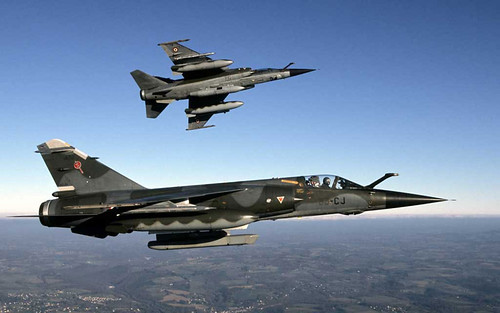
 Ian Shields writes exclusively for sustainablesecurity.org:
Aviation has come a long way in the century or so since the Wright brothers first flew, and there can be no doubt that it has brought some great benefits: bringing people closer together, allowing (through travel) individuals to experience other places and other cultures, and permitting a greater degree of freedom. The militaries have, after a rather slow start, grasped the opportunities that airpower now represents, and no major military power would seriously consider going to war without airpower and, ideally, mastery of the airspace over their own ground forces. Furthermore, there have been many scientific advances that have benefited mankind in general whose origins were in advances in military aviation, invariably forged in the crucible of war. Moreover, military airpower can contribute to humanitarian missions as witnessed following the floods in Pakistan, while with more precise weapons fewer civilian casualties are sustained due to aerial bombing: compare present-day Afghanistan with WWII Dresden.
But this article is not an ethical debate about the efficacy of military airpower, it is a look at the impact that military airpower has on the environment now, and what steps need to be taken to minimise that impact. I say “minimise” because there has to be a degree of realism here: Plato said that only the dead have seen the end of war: I will assume that military aviation is here to say and it is impact reduction that we should seek rather than an unrealistic desire to end the military use of the air completely.
The impact of the civil airline industry on the environment is well documented, but what is less well considered is the impact of the military sector. This article will identify three key areas where military aviation has a major impact on the environment, and suggest mitigation policies for each: hydro-carbon use, ground contamination and noise.
Unsurprisingly, by far and away the greatest environmental impact that military aviation has is the use of hydro-carbons. Military aircraft, for reasons of speed, power and response, utilise rapid-response, high power output engines for their attack and air defence aircraft. While this gives the necessary performance, environmental considerations are low on the priority list when designing new jet engines, the polar opposite from the civilian airline market where the cost-factor has driven up fuel efficiency. In America, the United States Air Force accounts for some 1% of the total hydro-carbon use across the country: it is, simply, a gas-guzzler. It is unlikely that environmental, or even cost, pressures will significantly reduce the carbon footprint while military requirements will continue to demand the immediate thrust response that in turn will require the type of engines presently in use and in development. However, the military requirement is not unchanging and a spin-off from two particular changes will be a reduction in hydro-carbon use. The first is increasing use of simulation for flying training on the grounds of cost, efficiency and safety; note that environmental concerns are placed firmly in the second-order effects bracket. The second, and more subtle change, is the increased use of unmanned or remotely-piloted air vehicles. This move, on the grounds of greater endurance and lower risk to the operator, has resulted in smaller and lighter vehicles since there is no requirement for the bulky and heavy life-support equipment needed to sustain on-board aircrew. Furthermore, with no risk to the operating crew, the platforms themselves do not have been as responsive, and engines are generally configured more for endurance than immediate response, resulting in lower hydro-carbon use (1). For both of these changes, then, while reducing fuel use will be a benefit it will not be an intentional goal: military requirements will continue to predominate and those seeking to reduce the environmental impact of military aviation will need to be mindful of the military imperative.
The other two concerns, though real, have far less environmental impact than hydro-carbon use. Ground contamination falls into two categories: first, and far from unique to military aviation, is the damage done to the soil at airbases: pollution from leaked aviation fuel, oils and hydraulic fluid used to service the aircraft, de-icing fluid used on aircraft and on runways, all leech into the local water courses and contaminate the environment. Of course, this happens on civilian airfields too, but at military bases there is the added issue of ammunition and high explosives. Although Britain’s Royal Air Force has disposed of its stock of nuclear weapons, one wonders what the radiation levels are like at the former storage sites, especially for the early and very crude weapons. However, there is good news here: as with other airports, environmental standards at today’s military air bases are high and increasing: the loss of Crown Immunity and raising awareness of standards are reducing such pollution markedly. Furthermore, and praise where praise is due, the UK’s Ministry of Defence has a generally good record for cleaning up sites when they vacate them. Nevertheless, aviation requires the use of some potentially very harmful chemicals and with the rise in use of carbon-fibre (excellent in aircraft as it is strong, light and flexible; really dangerous due to the carcinogenic properties of the material if broken by, say, an accident or hostile fire) new problems are likely to be encountered. Present legislation goes a long way to minimise this form of environmental damage, but we cannot afford to be complacent. Second, spent ammunition, as well as the destruction it causes with its initial effect (think the effects of the Dambusters Raid of WW II) there has been marked ground contamination from used ammunition in the past. Again, this article is not about the ethics of military airpower, but in terms of environmental impact it is good to note that Depleted Uranium is no longer used as ammunition by the RAF. However, destruction from the air is achieved almost exclusively through kinetic effect, and it is only recently that consideration has been given both to the environmental after-effects of destruction, and to the environmental impact of the chosen weapon system. These moves are in the right direction, and are to be welcomed, but there remains a long way to go.
My final area of concern is with noise pollution. While the civilian sector has invested a great deal of money in making jet engines quieter (and, of course, more fuel efficient to reduce operating costs) the same cannot be said for the engines in jet fighters and attack aircraft. The military requirements from their engines are, as intimated earlier, different from a civilian airliner, with the need for immense thrust at any moment (achieved by the use of “after-burners”: the pumping of aviation fuel into the rear of the engine where it is ignited by the hot gases) which achieves the goal, but not only burns considerably more fuel but creates a great deal of noise. Anyone who has ever attended an airshow where military jets are performing will understand! The noise issue is further evident with the large, and defensible, amount of training the military pilots undertake. Back in the 1980s low-flying jets, practicing evading enemy radar systems were a common feature of the more open space across the UK, and the source of many, many complaints for noise. While that has reduced due to a reduced requirement to low fly and a decrease in overall military jet numbers, the increasing use of night-vision devices with the need to practice night low-flying has brought a different noise disturbance. Furthermore, it is primarily in the helicopter and transport fleets that this increase has risen, with the inhabitants of those areas frequented by such aircraft subject to considerable night-time disturbance. While all is done within reason to decrease the disturbance, and the military has a fair point in claiming that it must practice, much more could and should be done to reduce further the level of noise contamination. Again, more investment in simulation would enable much more of this training to be undertaken synthetically; while live flying training will always be required, particularly in military aviation where the unexpected is more common than in the civilian sector, and while military simulators do not represent sufficient fidelity (due to under-investment), this problem is one that has a reasonable solution that should be pursued with greater vigour.
As an adjunct to this consideration of air power, man’s attempts to reach higher, above the atmosphere and into space, continue apace with ever more countries keen to have at least their own satellites, if not launch capability. There is no near-term likelihood of an alternative to the massive hydro-carbon use for launch: as the military – and civilian – use of space continues, the environmental bill for overcoming earth’s gravity will continue to be significant: an interesting point for the future.
To conclude. Military aviation has a marked impact on the environment. It is unlikely that ecological pressures alone will change the military mindset, although they can help to shape it. There are some benefits accruing from changes in behaviour (albeit that the changes are driven by military necessity), and increased simulation in particular is having a beneficial effect. Nevertheless, military aviation will continue to be environmentally unfriendly and efforts to reinforce good behaviour will have to continue. But why should the military start to take its impact, particularly its use of hydro-carbons and the subsequent carbon output, seriously? Ask any serious military man or woman about the experience of fighting, conflict, war (or whichever synonym you care to name) and they will emphatically state that they wish it could cease. No sensible person who has experienced conflict would wish to repeat it, and all militaries wish to see a more secure world. It is therefore ironic that carbon-generation, in which military aviation in particular excels, is clearly linked to climate change, and climate change itself threatens security and the global peace. In seeking to deter or resolve conflict, it is possible that military aviators and aviatrix are inadvertently creating an even greater problem for the future than the ones they are presently seeking to resolve(2).
(1) As an aside and outwith the main thrust of this article, there are marked human security concerns about the increased use of unmanned vehicles that have yet to be fully explored (see, for example,
http://www.huffingtonpost.com/laura-colarusso/military-drones-and-the-e_b_278195.html
(2) The UK MoD’s own Development, Concepts and Doctrine Centre has identified the security threat that climate change represents. See the DCDC’s Global Strategic Trends Out To 2040 (and in particular pages 21 and 106):
http://www.mod.uk/NR/rdonlyres/38651ACB-D9A9-4494-98AA-1C86433BB673/0/gst4_update9_Feb10.pdf
About the author: Ian Shields is a retired, senior Air Force Officer and now a respected commentator on Defence and security matters, particularly with relation to Air and Space Power. He holds an MA from KCL, and MPhil from Cambridge and is presently undertaking a PhD in International Studies, also at Cambridge. He can be contacted via his web-site, www.ian-shields.co.uk
Image source: chanelcoco872
<!–[if gte mso 9]>
Normal
0
false
false
false
MicrosoftInternetExplorer4
<![endif]–><!–[if gte mso 9]>
<![endif]–><!–[if gte mso 10]>
<![endif]–>
 Delicious
 Digg
Digg StumbleUpon
 Reddit
 Delicious
 Digg
Digg StumbleUpon
 Reddit
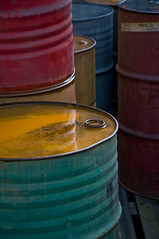 Persistent calls for clear and transparent information on Sudan’s oil revenues have yet to yield satisfactory information, says a new report published by Global Witness today. With a referendum on independence for southern Sudan just days away, oil sector transparency is now more important than ever to preserving the fragile peace between north and south.

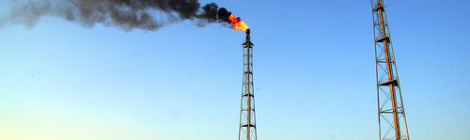









 The World Development 2010 climate Change Report published in September outlines how a 2 degree centigrade rise in global temperature would likely cost Africa 4% of GDP whilst the impact on India would be %5 of GDP.