Blog

  • Sustainable Security and Environmental Limits

    “Sustainable security – A briefing for Friends“, has been co-produced by peace and security think tank the Oxford Research Group (ORG), Northern Friends Peace Board (NFPB) and Quaker Peace & Social Witness (QPSW) in order to stimulate discussion, reflection and action among Quakers.

    Sustainable security is a paradigm that recognises we must work to tackle the causes of insecurity, not respond to it with attempts to control, often by military means. It is about curing the disease, rather than fighting the symptoms. The briefing identifies the major trends likely to cause large scale loss of life and security over the coming decades as:

    • marginalisation of the majority world (the global South);
    • climate change;
    • competition over resources;
    • global militarisation.

    With respect to environmental limits, the briefing says the following;

    The earth, which is abundant in natural and material resources, has been used to fulfil
    the desires (some essential, some not) of the population that lives on it. Many of the
    resources which have been exploited, such as fossil fuels, cannot be replaced; the extraction of others places habitats and ecosystems in danger; others produce damaging pollutants when used.

    The treatment of the natural world by humankind has contributed towards the two
    related major trends that are likely to drive insecurity in the coming decades: climate
    change and competition over natural resources.

    Climate change is high on the international political agenda. The likely and actual physical effects of these processes are well documented; the earth will be changed. Climate change will also have dramatic social and economic impacts. For example: a loss of, or damage to, infrastructure, shifts in disease patterns (e.g. spread of diseases like malaria and dengue fever, as the mosquitoes that transmit the infection are able to inhabit new locations because of changing temperatures), human crises as a result of more frequent extreme weather events such floods, water scarcity, and the mass displacement of peoples as some regions become uninhabitable. These trends could produce serious security consequences.

    A closely related driver of insecurity is competition over resources. The planet is more heavily populated than ever, and today some populations are already consuming far more than their share of the planet’s resources. As population growth continues, there will be greater scarcity of resources including food, water and energy, particularly if consumption patterns also increase. Once major demographic changes and the effects of climate change are factored in, greater competition for such resources should be expected. This will have local and global effects, as those nations rich in natural resources become subject to competition between local populations and international corporations who wish to buy their resources for sale in other parts of the world.

    Resource-conflict is already an issue: many anti-war activists cited oil as a cause behind the invasion of Iraq (central to the Persian Gulf, an oil-rich region) in 2003; water access is an ongoing source of tension between Syria, Lebanon, Jordan and Israel and the occupied Palestinian territories around the River Jordan basin; and in the same region, there are differences in how much water Israeli settlers and Palestinian inhabitants of the West Bank are able to access. The final example will relate in future also to climate change, as the Middle East is highly likely to suffer increased occurrences of drought. Competition will make some existing conflicts worse, and produce new struggles.

    These two related environmental crises will disproportionately affect the poor, and further entrench marginalisation. The Climate Justice movement has been prominent in describing the injustice of this situation: it is the poorest that have contributed least to the greenhouse gas emissions that are catalysing climate change, yet they will suffer most because of it.

    Read the whole briefing here.

    The above illustrates the normative underpinnings of QCEA’s sustainable energy security programme, and may help people understand why Quakers, with a strong tradition in working for peace, justice and equality, are working on issues related to sustainability, and indeed, energy security. It is precisely because the issues of climate change and increased competition over resources, including energy, have such strong implications for peace, justice and equality, that they cannot be ignored. The political importance of energy (and more broadly, resource) security, at European level, is a strong driver of traditional, militaristic security concepts – where “our” security increases the insecurity of others. It is this concept that the Quaker Council for European Affairs, by emphasising sustainable energy security – a sustainability that recognises both environmental and social sustainability not just within Europe, but in the wider world – urges against.

    Article source: Quaker Council for European Affairs

    Image source: kretyen

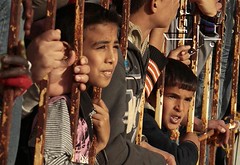
  • How Food Could Determine Libya’s Future

    As Libya’s protesters-turned-rebels fight a series of hard battles with forces loyal to Muammar Qaddafi, the United States — and the much of the world — struggles to find a meaningful response to the conflict. U.S. lawmakers have proposed such aggressive options as enforcing a no-fly zone over Libya or arming anti-Qaddafi rebels, both of which the White House has kept on the table. Critics of these plans argue that they risk involving the U.S. in another military engagement. But there’s another option that the U.S. could consider, one that might give anti-Qaddafi rebels crucial help while avoiding the messy complications of direct involvement: Send food.

    Food shortages in eastern Libya, the largest rebel-controlled area, have reached dire levels. Fighting has left food stocks depleted and food supply chains in shambles. Around Benghazi, food prices have reportedly risen by 50 to 75 percent. Due to its poor suitability for agriculture, Libya imports the majority of its food, which has become largely impossible since fighting broke out. The United Nations-run World Food Program is attempting to alleviate the food shortage, but so far with little success. Last Thursday, a ship that the World Food Program had chartered to carry 1,000 tons of flour to Benghazi, the provisional capitol of the rebel leadership, abandoned the trip after reports of attacks by pro-Qaddafi aircraft in the area. As food runs out and the conflict drags on, eastern Libya’s food crisis will only get worse. Qaddafi appears willing to use the shortage as a weapon against the rebels, reportedly blocking food from reaching the besieged rebel-held town of Zawiya.

    It still appears unlikely that Qaddafi will step down on his own accord. If the rebels are to free Libya, it will probably mean taking Tripoli by force and toppling Qaddafi outright. Currently, rebels in eastern Libya are mustering an army — mostly raw recruits and seized weapons — which they may use to do just that. But Benghazi is just over 1,000 km, about 630 miles, from Tripoli. Defeating Gadaffi would require this irregular force to travel hundreds of miles across the Mediterranean coast, all the while supplying itself through what would likely be a series of battles along the Gulf of Sidra, Sirte, and then in Tripoli itself.

    Warfare has changed much since Napoleon’s Grande Armée marched across Europe, but one of the Little Corporal’s maxims is just as true in Libya today as it was near Waterloo two centuries ago: armies march on their stomachs. The anti-Qaddafi rebels are no different. The push to Tripoli would require consistent access to — amongst other things — food supplies. While having adequate food alone would not be sufficient to take the capitol (they also need war materials, training, and transportation), it is an absolute necessity. And, right now, the rebels don’t have enough. But we do.

    The United States has the capacity and infrastructure to supply rebel-controlled eastern Libya with substantial amounts of food aid. These shipments could be transported directly into the rebel center of Benghazi, a major seaport with more than adequate facilities. The food aid would not only alleviate the emerging humanitarian crisis in eastern Libya — an important effort in itself — it would help the rebel cause. The shipments would boost the morale of rebel fighters and, more important, provide the supplies necessary to feed the newly formed army during any push towards Tripoli.

    The U.S. may be unable or unwilling to supply Libya’s rebels with everything they need to topple Qaddafi — since protests began in Libya and before that in Egypt, President Obama has made clear that the grassroots Arab uprisings must remain grassroots and Arab, rather than being co-opted by the U.S. But we can supply food. Supplying Benghazi with food aid is a viable and meaningful policy option short of risking the military entanglement Obama appears determined to avoid. Whether or not Libya’s revolution is ours to fight, it could well be ours to feed.

    Image source: B.R.Q.

    This article first appeared on The Atlantic.

  • Sustainable Security

    In the UK, tens of thousands of deer are poached annually. This has significant implications for the sustainability of British deer populations and human health.

    Recessions and economic slumps have effects on various aspects of people’s security and presumably, people’s food security is a part of this. In order to cope with food insecurity, some people may steal food or other items for money to buy food, but there is also the possibility that some people will turn to poaching. The British Deer Society places the number of poached deer in the UK as high as 50,000 each year yet in 2009 only 335 incidents were reported to the police.

    In 2013, I undertook a study to gather information as to whether deer poaching in the UK is linked purely to economics or if people who poach deer have other motivations beyond food or money. I sent online questionnaires to all police constabularies and the questionnaire was advertised in the monthly publication of the British Association for Shooting and Conservation. I received responses from 27 wildlife crime officers and six gamekeepers. Drawing on Nurse’s (2013) typologies of wildlife crime offenders, I asked respondents about the change in poaching around the time of the 2008 recession and about their perspective on the motivations of poachers. The four typologies consist of traditional profit motive, external economic pressure, masculinity and as a hobby. In particular, the traditional profit-driven motivation of offenders was explored by attempting to uncover if there is, as suspected, a black market in venison. From this data, I hoped to create a more detailed picture of deer poaching and to further inform wildlife law and poaching prevention.

    UK deer poaching: why it matters

    Image credit: Peter Trimming

    Understanding more about deer poaching is important for two main reasons. The first is in relation to human health. Presumably, experienced hunters are trained to inspect the deer they kill or poach for diseases. There is the possibility though of poachers infecting themselves with Bovine Tuberculosis or Foot and Mouth disease, which are known to occur in deer in the UK, though no data indicating deer meat has been found with these diseases. Additionally, if the poacher is selling the meat on the black market, there is the further possibility that any disease could be passed on to other people and the public.

    The respondents suspected some poached deer meat makes it way to pubs and restaurants, so disease transmission to the public, whilst unlikely, is not impossible. The second point is in regards to the sustainability of deer populations. It is difficult to manage wildlife populations where there is a significant amount of poaching, such as is suspected in the UK. Hunting licences and potentially other management strategies, like culling, need to be grounded in accurate population numbers in order to not over exploit the species in question. If too many individuals are killed through hunting and poaching, this could endanger the stability and survival of the population. With tens of thousands of deer potentially being poached each year, it is difficult to see how deer populations can be properly estimated and therefore managed.

    The police and gamekeepers who responded stated there are individual poachers and groups of poachers who do so for profit and financial reasons. As suspected, poachers personally consume the poached deer, but probably also sell the meat to make money. This fits Nurse’s (2013) first typology, ‘Model A’, where offenders are driven by traditional profit motives. ‘Model B’ wildlife crime offenders are also financially driven, but the pressure on the offender is from an external source like an employer. In the context of deer poaching, this helps to explain the poaching undertaken by some gamekeepers. Landowners pressure gamekeepers to maintain the landscape in particular way. The respondents indicated though there is more driving poaching than simply economics. Nurse (2013) proposes there are also offenders who do so to maintain or assert their masculinity, ‘Model C’, and those who offend as a hobby, ‘Model D’. The data confirm these typologies. Men carry out nearly all poaching. Apparently, often these men poach together as a form of male bonding, as a form of ‘sport’, or as one respondent stated ‘just for the hell of it!’.

    Each of Nurse’s (2013) typologies then were found within the respondents’ answers. The implications of this are two-fold. First, deer poaching, and presumably other poaching, is not only driven by food insecurity and money and therefore the motivations, and uncovering those motivations, are complex. Even when money is at the heart of the motivation, there are further distinctions to be made. The food and/or profit from the poaching may be for an individual, for an organized crime group or for an employer. For non-profit driven poaching such as for status, sport and/or fun, the motivations can be equally challenging to uncover.  Uncovering motivations though is an important and useful endeavour as this data can be used to improve policy and prevention strategies. Second, that motivations are varied means that policy and prevention strategies also need to be varied. To have policy interventions and wildlife law enforcement strategies targeted solely at food insecurity or profit motivations are likely to be ineffective.

    Addressing the problem

    Poaching, of deer and other non-human animals, must then be addressed through a multi-faceted approach. In the first instance, the punishment for poaching in the UK is not a deterrent and the risk of being caught or prosecuted is low (Nurse 2013). This is partly because wildlife crime is not a concern for most police constabularies and not an offense that is prioritized. Making the fines higher, sentences harsher and confiscation of poaching equipment mandatory may help to address this aspect. Nurse (2013) suggests banning hunters and gamekeepers who are caught poaching from being able to receive licences in the future and/or from working in the industry. Second, wildlife crime is viewed as a victimless crime. This is not the case. Deer are shot by bullets and arrows, trapped in snares and/or torn apart by dogs. People can potentially eat uninspected diseased venison.

    The environment as a whole or at least the ecosystem where deer live can be disrupted by overexploitation – people and non-human animals are victims of this too from the loss of a healthy environment. Public awareness needs to be raised through concentrated media campaigns as to the value and impact of biodiversity and the environment. Whereas regard for the environment has increased in recent years, there is still much more to be done to increase the knowledge of our connection to the planet. Additionally, there should be wide spread information about the danger of consuming uninspected meat and venison. In conjunction with these strategies in times of particular economic hardship, extra support should be put in place to assist people who may poach because of food insecurity. Addressing the enforcement side of deer poaching can help to impact upon economic motivations. Changing the view that poaching is victimless may help to alter motivations related to status and sport.

    Deer poaching and wildlife crime are worthy of being made more of a priority not only because of the victimisation to the non-human animals and the environment, but also because these crimes impact upon people and communities. A multi-faceted approach increasing the attention on and penalties for wildlife crime as well as educating the public to the nature and risks associated with wildlife crime are necessary first steps to reducing the harm and suffering linked to wildlife crime in general and poaching in particular.

    Tanya Wyatt is a lecturer at the University of Northumbria.

  • Sustainable Security

  • The Security Implications of the Current Resource Scramble

    Respected security analyst and author Michael Klare’s new book ‘The Race for What’s Left’ discusses the growing competition for resources across the globe driven by the depletion of fossil fuels, minerals, water and arable land. Klare argues that the full extent of the political, economic and security implications of this trend are yet to be fully understood in mainstream political circles. The alternative to this, Klare contends, is a coming race to adapt to a resource and climate-constrained world which can offer a way out of war, widespread starvation and environmental catastrophe.

    The book argues that the current scramble for the world’s resources and the new “assault on resource frontiers” is qualitatively different to the historical exploitation of undeveloped territories in years gone by. The analysis presented shows that “never have we seen the same combination of factors that confronts us today: a lack of unexplored resource preserves beyond those now being used for development; the sudden emergence of rapacious new consumers; technical and environmental limitations on the exploitation of new deposits; and the devastating effects of climate change.”

    One of the most interesting findings of the book is that “for all the importance and forthcoming scarcity of oil, gas, and vital minerals, perhaps the fiercest resource struggle in the coming decades will involve food and the land it is gown on.”  Klare describes the trend towards global ‘land grabs’ led by the governments of China, India, South Korea, and the Persian Gulf countries across parts of Africa, Central and Southeast Asia and even Russia. The relationship between this trend and the marginalisation of dispossessed and angry populations is likely to be a key driver of violence. The book states that “Land ownership has always been a source of conflict in the countryside, especially where notions of customary land rights collide with formal decrees handed down by distant, often suspect government bureaucracies; when the official new owners are foreigners who appear completely oblivious to the historic claims and customs of the people they are displacing, the hostility will be far greater still.”

    Klare is explicit in the stakes here: “The race we are on today is the last of its kind that we are likely to undertake” and this book provides a devastating critique of ‘business as usual’ thinking in times of intense global insecurity.

    More information on the book (including a sample chapter) is available here and a recent review on the Huffington Post is available here. An interesting video has also been released where the author explains a number of the issues raised in the book which can be seen here.   

    Image source: thelGl  
     

  • Climate Change and Security in Bangladesh

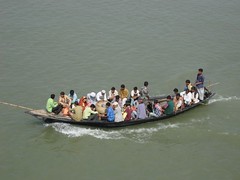
    This case study explores the potential impact of climate change on security and conflict in Bangladesh. As international researchers have started to make the link between climate change, insecurity and conflict, they have raised concerns that Bangladesh’s extreme vulnerability to the environmental effects of climate change may create conditions that put it at risk of greater insecurity and possible conflict. It is therefore important to analyse this issue in detail, in order to identify how serious the risk is and what can be done to address it.
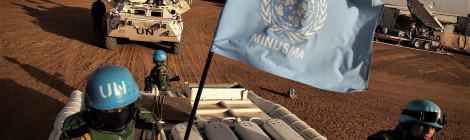
    Published by Bangladesh Institute of International and Strategic Studies and Saferworld

    Image source: Julie Lindsay

  • Sustainable Security

    Too Quiet on the Western Front? The Sahel-Sahara between Arab Spring and Black Spring

    While the world’s attention has been focused on the US-led military interventions in Iraq and Syria a quieter build-up of military assets has been ongoing along the newer, western front of the War on Terror as the security crises in Libya and northeast Nigeria escalate and the conflict in northern Mali proves to be far from over. In the face of revolutionary change in Burkina Faso, the efforts of outsiders to enforce an authoritarian and exclusionary status quo across the Sahel-Sahara look increasingly fragile and misdirected.

    Read Article →

    The Costs of Security Sector Reform: Questions of Affordability and Purpose

    In considering security sector reform, questions of affordability have often been subordinated to questions of effectiveness and expediency. A recent series of reviews of security expenditures by the World Bank and other actors in Liberia, Mali, Niger and Somalia has highlighted several emerging issues around the (re)construction of security institutions in fragile and conflict-affected states.

    Read Article →

  • Competition over resources

    Ian Shields writes exclusively for sustainablesecurity.org:
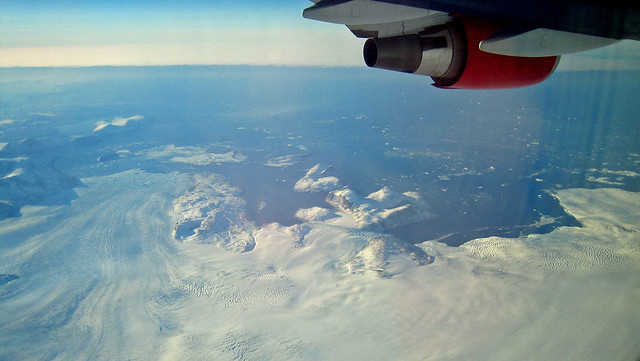
    “The impact of the civil airline industry on the environment is well documented, but what is less well considered is the impact of the military sector. This article will identify three key areas where military aviation has a major impact on the environment, and suggest mitigation policies for each: hydro-carbon use, ground contamination and noise.”

    About the author: Ian Shields is a retired, senior Air Force Officer and now a respected commentator on Defence and security matters, particularly with relation to Air and Space Power. He holds an MA from KCL, and MPhil from Cambridge and is presently undertaking a PhD in International Studies, also at Cambridge. He can be contacted via his web-site, www.ian-shields.co.uk

    Image source: chanelcoco872

    Read more »

  • Climate change

    Roger Howard writes, exclusively for sustainablesecurity.org, that:
    ‘The presence of valuable natural resources in the Arctic region, or even the mere possibility of finding them, poses a subtly different challenge to international peace than usually supposed. For instead of fighting over resources, governments could instead feel threatened by the heightened foreign presence that the search, or exploitation, of these resources will bring to places that are important for other, quite independent, reasons. This is potentially a recipe for international mistrust that could conceivably spill over’.

    Image Source: psd

    Read more »

  • Sustainable Security

    US Drone Strikes in Pakistan: ineffective and illegitimate

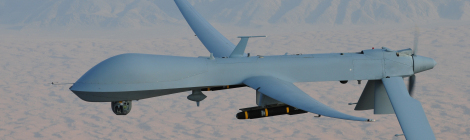
    Strikes by unmanned combat air vehicles, or armed drones, have become the tactic of choice in US counterterrorism efforts in Yemen, Somalia and, the topic of current controversy, Pakistan. The lack of transparency, dubious effectiveness, civilian casualties and negative consequences for US national security being highlighted by current debate means that Washington needs to re-evaluate its approach.

    Read Article →