Blog

  • Sustainable Security

    National Security, Climate Change and the Philippine Typhoon

    Super Typhoon Haiyan made landfall in the Philippines on 8 November, and is possibly the most powerful tropical cyclone on record. Beyond the immediate impact of the typhoon, the natural disaster is already proving to be a threat to national security, with reports surfacing of massive looting and military engagement following attacks on government relief convoys. As US and UK naval convoys head to support the situation, Andrew Holland discusses climate change’s impact as a threat multiplier and what plans militaries and governments must make to prevent the insecurity that will come with future disasters of this scale.

    Read Article →

    Militarised Public Security in Latin America in Venezuela

    Across Latin America, governments are sending their militaries into the streets to act as de facto police forces in the face of disproportionally high crime and violence rates. This trend has been going on for several years, but has accelerated in 2013. With the move to deploy over 40,000 troops for citizen security in Venezuela, President Nicolás Maduro joined a growing list of leaders throughout the region that have relied on their militaries to carry out police duties. In the first of our two-part discussion ‘Countering Militarisation of Public Security in Latin America’, Sarah Kinosian discusses the conditions that are causing the trend to thrive.

    Read Article →

    Countering Militarised Public Security in Latin America: Lessons from Nicaragua

    Facing a myriad of public security challenges that have provoked some of the highest indices of crime and violence in the world, authorities in Central America have followed a variety of different responses, ranging from repressive and reactive policies to grass roots prevention. Of these approaches, the Nicaraguan National Police’s Proactive Community Policing model stands out due to the results it has achieved. In the second of our two-part discussion, ‘Countering Militarisation of Public Security in Latin America’, Matt Budd explores the lessons that Latin American countries can extract from Nicaragua’s unique approach to public security.

    Read Article →

  • Sustainable Security

    Momentum towards a nuclear weapons ban treaty: what does it mean for the UK?

    International momentum towards a treaty to ban nuclear weapons reached a milestone in the December 2014 Vienna conference. Even assuming that the UK does not initially sign up to such a treaty, it is subject to the pressures of a changing legal and political environment and could find its present position increasingly untenable – not least on the issue of Trident renewal.

    Read Article →

    Nuclear Weapons: From Comprehensive Test Ban to Disarmament

    Despite not yet entering into force, the 1996 Comprehensive Test Ban Treaty has succeeded in almost eliminating nuclear weapons testing and in establishing a robust international monitoring and verification system. A breakthrough in its ratification by the few hold-out states could have important positive repercussions for the Nuclear Non-Proliferation Treaty or nuclear disarmament in the Middle East.

    Read Article →

    Humanitarian Consequences of Nuclear Weapons: Five Reasons for the P5 to participate in Vienna

    The ‘humanitarian dimension’ initiative highlighting the consequences of nuclear weapons has evolved and consolidated itself in the non-proliferation regime since 2010. The five nuclear weapons states (NWS or P5) under the NPT – China, France, Russia, UK and US – boycotted the first two international conferences on the humanitarian consequences of nuclear weapons. A third conference will be held in Vienna on 8-9 December 2014. This article gives five reasons why the P5 should consider participating.

    Read Article →

    Building the Case for Nuclear Disarmament: The 2014 NPT PrepCom

    The humanitarian impact of nuclear weapons, highlighted by a wide-ranging, cross-grouping, multi-aim initiative which continues to consolidate itself in the non-proliferation regime, has come to the fore in the 3rd Prepatory Committe for the 2015 NPT Review Conference. Frustrated with the lack of progress towards NPT Article VI commitments to complete nuclear disarmament, the initiative has invigorated attention to the urgency of nuclear disarmament and a need for a change in the status quo. NPT member states and civil society continue to engage actively in publicizing the humanitarian consequences of nuclear weapons as an impetus to progress towards nuclear disarmament.

    Read Article →

    The Threat of Nuclear Disconnect: Engaging the Next Generation

    The dramatic decrease in public awareness and engagement in the nuclear weapons debate since the 1980s poses a risk to our future, as younger generations and future policy shapers will be less familiar with the challenges posed by nuclear weapons when they take the helm. But nuclear weapons are too dangerous a threat for an entire generation to disconnect from. BASIC’s Rachel Staley explores the ramifications of not updating the nuclear debate.

    Read Article →

    In piaffe: multilateral nuclear disarmament dialogue in the year of the horse

    Shortly after the lunar New Year, UN Secretary-General Ban Ki-moon challenged the Conference on Disarmament to run with the ‘spirit of the blue horse’ towards substantive engagement on multilateral nuclear disarmament in 2014. While the regime may not achieve this speed, there are initiatives underway this year that may well help nuclear disarmament dialogues pick up speed ahead of the 2015 NPT review conference.

    Read Article →

  • Risk of extreme weather events highlighted by the Intergovernmental Panel on Climate Change

    The UN Intergovernmental Panel on Climate Change has produced a draft summary of a report that warns of a predicted increase in the number and intensity of extreme weather events.  As outlined below by Marlowe Hood for Agence France Presse, the 800-page report goes some way to addressing a subject largely untouched by their landmark 2007 report on climate change, and adds to the growing body of evidence outlining the potential security implications of a warmer planet.  Their findings, such as more frequent summer heat waves in Europe, and flooding in South Asia are supported by the findings of other climate monitors such as the UK Met Office Hadley Centre (2010).

    The report gives weight to the argument for climate change mitigation out of concern for human security, with its most troubling conclusions predicting major shocks for regions already vulnerable and ill-equipped to provide for the security of their inhabitants, such as West Africa and South Asia.  It also cites the probability of extreme weather impacts as ‘very likely’ – at 90% or greater – thereby tackling some of the uncertainty faced by security planners.


    Regions must brace for weather extremes: UN climate panel

    By Marlowe Hood (AFP)

    PARIS — Southern Europe will be gripped by fierce heatwaves, drought in North Africa will be more common, and small island states face ruinous storm surges from rising seas, according to a report by UN climate scientists.

    The assessment is the most comprehensive probe yet by the 194-nation Intergovernmental Panel on Climate Change (IPCC) into the impact of climate change on extreme weather events.

    A 20-page draft “summary for policymakers” obtained by AFP says in essence that global warming will create weather on steroids.

    It also notes that these amped-up events — cyclones, heat waves, diluvian rains, drought — will hit the world unevenly.

    Subject to modification, the draft summary will be examined by governments at a six-day IPCC meeting starting on Monday in the Ugandan capital of Kampala.

    In the worst scenario, human settlement in some areas could be wiped out, the report warns.

    “If disasters occur more frequently and/or with greater magnitude, some local areas will become increasingly marginal as places to live or in which to maintain livelihoods,” it says.

    “In such cases migration becomes permanent and could introduce new pressures in areas of relocation. For locations such as atolls, in some cases it is possible that many residents will have to relocate.”

    Three years in the making, the underlying 800-page report synthesises thousands of recent, peer-reviewed scientific studies.

    The authors expresses high confidence in some findings but stresses uncertainty in others, mainly due to lack of data.

    They also emphasise that the vulnerability of human settlements depends as much or more on exposure, preparedness and the capacity to respond as it does on the raw power of Nature’s violent outburts.

    Average global temperatures have risen by nearly 1.0 degree Celsius (1.8 degrees Fahrenheit) since pre-industrial times, with forecasts for future warming ranging between an additional 1.0 C to 5.0 C (1.8-9.0 F) by 2100.

    But these worldwide figures mask strong regional differences.

    Among the findings:

    — Western Europe is at risk from more frequent heat waves, in particular along the Mediterranean rim.

    Record-busting temperatures in 2003 responsible for some 70,000 excess deaths across Europe may become closer to average summer peaks by as early as mid-century, the report suggests.

    — The eastern and southern United States and the Caribbean will probably face hurricanes amplified by heavier rainfall and increased wind speeds.

    Greater population density in exposed areas, rising property values and inadequate infrastructure will boost vulnerability, the draft warns. Hurricane Katrina, which hit New Orleans in 2005, is seen by some scientists as an example of just such an confluence.

    — For small island states, the top threat is incursion from rising seas, which not only erodes shorelines but poisons aquifers and destroys farmland as well.

    Already measurable, these impacts are “very likely” — a 90-percent or greater probability — to become worse over time, even intolerable, the report concludes.

    “In some cases, there may be a need to consider permanent evacuation,” it says.

    — Climate models hold out the prospect of more droughts for West Africa, raising the spectre of famine in regions where daily life is already a hand-to-mouth experience for millions.

    Factor in the biggest population boom of any continent over the next half-century and the danger of food “insecurity” in Africa becomes even greater, it cautions.

    — In South Asia and Southeast Asia, computer models see a doubling in the frequency of devastating rainstorms. In East Asia, exceptional heatwaves will become hotter, and less exceptional.

    By mid-century, temperature peaks in East Asia will be around 2.0 C (3.6 F) more than today, and by 2100 some 4.0 C (7.2 F), even under scenarios that see some efforts to reduce greenhouse-gas emissions.

    The IPCC co-won the 2007 Nobel Peace Prize after publishing a landmark “assessment report” that sparked worldwide awareness about climate change and its impacts. That document made only a brief reference to extreme weather events, leaving a gap that the panel hopes to fill with the new report.

    The draft summary for policymakers will be reviewed, line-by-line, during a joint meeting of the IPCC’s Working Group I, which focuses on physical science, and Working Group II, which examines impacts. It is set to be released on Friday.

    Article Source: AFP

    Image Source: NASA

  • Sustainable Security

    This post is based on Paul Rogers’ Monthly Global Security Briefings and was originally posted by Oxford Research Group on 29 April, 2014.

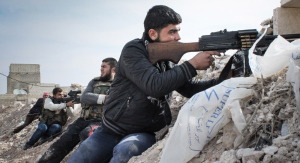
    Free Syrian Army rebels fighting Assad militias on the outskirts of the northwestern city of Maraat al-Numan, Idlib - Syria Source: Freedom House (Flickr)

    Free Syrian Army rebels fighting Assad militias on the outskirts of the northwestern city of Maraat al-Numan, Idlib – Syria Source: Freedom House (Flickr)

    The Syrian War is now in its fourth year and the indications are that the regime will survive and consolidate its position in 2014. This is radically different from early last year when many analysts thought it was under serious pressure, and it should be recalled that in mid-2011, a few months into the war, the prevailing view was that the regime would not last to the end of that year. The costs have been huge, with around 140,000 killed, twice that number injured and more than a third of the population displaced, millions of them refugees in other countries.  This article seeks to put this appalling conflict in a longer term regional context as an aid to looking at possible policy options in attempting to bring the war to an end.

    The Regional Context in 2011

    At the start of 2011 the region was struck by remarkable political upheavals as people in a number of countries reacted against autocratic rule and demanded political change. It commenced with the rapid and unexpected fall of the Ben Ali regime in Tunisia on 14 January and was followed on 11 February by the quite startling collapse of the Mubarak regime in Egypt. Across the region there were public uprisings of varying intensities in Oman, Bahrain, Yemen, Libya and Syria and political uncertainty in several countries including Kuwait, Jordan and Morocco.

    In broad terms, those political authorities that did not immediately collapse reacted in different ways that may be summarised as concession or repression or a mixture of both. In Oman, demonstrations were repressed with force but concessions were also offered and the innate wealth of the authorities was available to “buy off” resentment. In Bahrain the royal house opted for repression, aided by army and police support from Saudi Arabia and the UAE.  Saudi Arabia treated Shi’a opponents harshly but distributed many billions of dollars of resources across most of the population.

    In Morocco, King Mohammed sped up the pace of reform with some effect, and across the border in Algeria some economic concessions, including increased food subsidies, were made.  In Libya, Gaddafi used repression but western, and a few Gulf Arab, states intervened on the part of the rebels; a six-month war ended with regime collapse and Gaddafi’s lynching. This has been followed by huge insecurity, including rise of Islamist and local tribal militias.

    The Syrian regime faced extensive nonviolent demonstrations, most commonly after Friday prayers, and faced an escalation in dissent at a time when two regimes in the region had already fallen and in the same week that Saudi and Emirati forces intervened in Bahrain and the UN approved foreign intervention in Libya. The fate of Mubarak was particular striking for the Assad regime given Syria’s long-term historical relationship with Egypt, and it is probable that this meant the regime believed its only course of action was vigorous repression. It became progressively more vigorous and determined in its pursuit of control.

    Underlying Causes

    Although most of the individual anti-government actions across the Arab World were responses to persistent and long-term autocracy, these were in the context of a number of other factors:

    • Outside of a small cluster of oil-rich states, the wealth-poverty divide has become huge, often with the majority of populations marginalised.
    • Even in countries of modest wealth, much of the economic power has been concentrated in the hands of small groups of elites, often less than a tenth of the population. The world economic downturn from 2007 onwards exacerbated these socio-economic divisions.
    • The demographic transition is still in progress across much of the Middle East, meaning that a large proportion of the population is under the age of 30.
    • Although educational standards are highly variable and there is a still a marked gender gap, in most countries most people now go through high school and there is an increasing proportion of graduates among people under 30. There is frequently a serious lack of job opportunities, not least for well-educated young people. At the time of the changes in Tunisia it was reported to have 140,000 unemployed or seriously underemployed graduates out of a population of 11 million.
    • The surge in world grain prices in the late 2000s, not least following China’s harvest difficulties, added to the economic problems for many, not least in Egypt. Syria had a specific problem of drought stretching over many years, leading to an influx of the rural poor into urban areas.

    As a whole, these factors mean that there are trends across the region that point to the risk of longer-term social upheavals. These will persist and must be factored into any policy formulation that might relate primarily to Syria. Instability is highly likely to be a feature of the region in the coming years.

    Syria’s Perspective

    In the light of the regional upheavals, the Assad regime used high levels of violent repression from the start, which led to a transition from nonviolent to violent protest. From the start the regime presented itself as the guardian of stability against opponents that were essentially terrorists. This may have been a travesty of reality at that time, but in the context of the extraordinary upheavals and uncertainties across the region – as well as a keen understanding of the shared sectarian and geopolitical rivalries that tore Lebanon apart within recent memory – the need for a strong regime was more widely accepted within Syria than most diplomats and external analysts appreciated.

    The regime’s stance was aided by internal and external factors. Internally it had the strong support of the Alawi minority but most other Shi’a, Christians and Druze were also willing to accept the regime as guardian of the security of the state. In combination this represented close to a quarter of the population but there was also support from many in the Sunni business community who feared that regional upheavals would spread to Syria. By and large these elements persist, although the great majority of Syrians just want an end to the war.

    Externally, the regime has had support from three quarters. One is the Hezbollah movement in Lebanon that has long been heavily dependent on Syria for weapons and other support.  Hezbollah militias have become a crucial part of the paramilitary support base of the regime.  Second has been the continuing support of Iran, including weapons, training and supplies, and an important sub-set of this has been the increase in paramilitaries from Iraqi Shi’a communities, backed by Iran. Finally there has been the long–term relationship with Russia, with the Putin government seeing Syria as the key centre for remaining Russian influence in the Middle East.  In the past year Russia has been particularly useful in its support for repairing and upgrading military equipment, especially aircraft and related weapons systems.

    The Islamist Dimension

    In the past year, radical Islamist paramilitary groups such as ISIS, the Islamic Front and al-Nusrah have come to the fore among the rebellion, offering the strongest opposition to the regime. There has thus been an element of self-fulfilling prophecy for the regime. In 2014, internal conflicts among the Islamists have weakened them. They may still offer the strongest resistance but their relative decline is one reason why the regime is likely to survive long-term.  Western states, whatever their public stance, would now prefer to see the regime survive than lose control to al-Qaida-linked Islamists. This is clearly the case for Putin, where fear of an Islamist spill-over to the Caucasus is now considered less likely following the safe conclusion of the Winter Olympics and the internal Islamist conflicts within Syria.

    Policy Implications

    In a very pessimistic environment, there are two more positive elements. One is that relations between Iran and Saudi Arabia are showing signs of improvement, including reports of unofficial Saudi/Iranian discussions on Syria. The second is that a number of local ceasefires have been developed, not least in some parts of Damascus.  There may be scope for these to develop further, especially in parts of the country where Islamist groups are not prominent.

    The international community must seek to increase pressure on the UN to enhance multilateral processes, and specifically seek to engage Tehran and Riyadh. In addition, given that this war has many months and possibly years to run, states must commit to improve aid to refugees and to any initiatives that increase the possibility of gaining and embedding local ceasefires – not least by immediate aid for those districts where ceasefires take hold. Approaches to the region must now take a much longer-term view, based on the likely survival of the regime and the fact that the underlying elements behind changes in the region will persist.

    Paul Rogers is Global Security Consultant to Oxford Research Group and Professor of Peace Studies at the University of Bradford.

  • Iraq’s shadow over Afghanistan

    The current surge in United States military forces in Afghanistan part of a strategy designed to bring the war to an end from a position of strength. The great strains within the US military mean that the deployment of 30,000 troops to Afghanistan can be sustained only if forces can be withdrawn from Iraq at the scheduled rate: that is, all combat-forces out by August 2010 and the remaining (approximately 50,000) personnel by the end of 2011. The dynamics of violence in Iraq present a serious challenge to this strategy.

    Washington is thus engaged in a delicate balancing-act: managing disengagement from Iraq while ensuring that the United States will retain a significant military presence in the country well beyond 2011 in order to exercise a maximum degree of influence. 

    A new label

    The US forces remaining in Iraq after the substantial withdrawal of August 2010 – which follows the evacuation of troops from Iraqi cities at the end of June 2009 – are intended to perform a variety of roles. Some may be engaged in training Iraqi forces; others in guarding the huge embassy-complex in Baghdad; and still more in what will be described as support-roles at Balad and other air-bases that have acquired a distinct air of permanency. In addition to these core military contingents, there will be many US security-contractors, themselves mostly ex-military. 

    What will happen in the sixteen months between August 201o and December 2011 is pivotal. It is probable that at some point the remaining 50,000 American troops in Iraq will be designated “non-combat” – a wordplay that barely conceals the establishment by the US army of a new type of unit known as an “advise-and-assist” brigade (AAB). A new report explains their role:

    “These brigades are to have traditional strike capabilities, as well as advisory roles, the ability to augment local forces with ‘combat enablers’ and command and control (C2) tools to support its own manoeuvre units and indigenous units” (see Daniel Wasserbly, “US forces analyse future role of advise-and-assist brigades in Iraq”, Jane’s International Defence Review, January 2010).

    In effect, army units are both taking on new roles but retaining their existing and full combat-capabilities. It follows that their phased withdrawal will depend very much on the extent to which Iraq becomes a more peaceful state in which the interests of the United States and other western interests are secured.

    An evolving strategy

    The pattern of insurgent activity in Iraq suggests that this outcome is uncertain. In the course of 2009, the levels of violence across Iraq tended to stabilise after an initial decline. Around 5,000 Iraqi civilians were killed, and it was the first time since 2006 that there was no significant slump during the period (see “Civilian deaths from violence in 2009”, Iraq Body Count, 31 December 2009). 

    There were, moreover, significant changes in the types of violence. The first few months of the year were dominated by major suicide-bombing attacks on mosques or crowded markets in Shi’a areas. The intention was most likely to provoke sectarian antagonism and then encourage fearful members of the Sunni minority to see the insurgents as their defenders, leading in turn to a violent destabilisation of the government in the run-up to the Iraqi elections on 7 March 2010.

    In the second half of 2009, paramilitary groups began to target large government ministries in suicide-attacks. These naturally were located in high-security zones, but the assailants found ways of penetrating the cordons; in a series of attacks in August, October and December, five sets of government offices and ministries were hit and scores of civil servants killed (see “Iraq: the path of war”, 18 December 2009).

    These attacks in particular caused deep unease among the American and allied agencies, not least because of the levels of security that had to be breached (see Roger Hardy, “Violence returns to Iraq”, BBC News, 8 December 2009). By the end of 2009, there were serious concerns as to whether the Iraqi security forces were capable even of protecting government buildings, and deep suspicions that the insurgents had access to inside information.

    The operations extended beyond Baghdad, and they included frontal-assaults on Iraqi security forces. In Anbar’s provincial capital of Ramadi, for example, two suicide-bomb attacks in early January 2010 in a part of the city regarded as safe killed twenty-four people (mostly police-officers) and wounded around sixty, including the provincial governor Qassim Mohammed.

    Even this surge left the overall degree of violence in Iraq much lower than it had been in 2007.  In this respect, a further shift in the focus of activity in the past ten days is notable: namely, towards hitting “symbolic” targets and a return to the mass killing of Shi’a civilians.

    The biggest coordinated actions in several months were launched on 25 January 2010, when in the space of nine minutes coordinated blasts targeted three major hotels frequented by foreign visitors (and western journalists). Again despite high security, bombs were detonated close to the Ishtar Sheraton, the Babylon and the Hamra hotels, killing thirty-six people and wounding seventy-one (see Anthony Shadid & John Leland, “Baghdad Blasts Shatter Sense of Security in Capital”, New York Times, 26 January 2010). On the following day it was the turn of the Iraqi interior-ministry’s forensics offices, where at least seventeen people were killed and many more wounded.

    The hotel incidents aroused most international comment, but the interior-ministry attack caused the greatest domestic worry, especially from civil servants (see Anthony Shadid, “Latest Bombings Add New Layer of Anxiety and Suspicion in Baghdad”, New York Times, 27 January 2010). Indeed, the fact that a great escalation of security since August 2009 has had little apparent effect is creating pervasive fear among government officials (see Khalid al-Ansary & Hadeel Kamil, “Civil Servants Fear More Attacks”, Institute for War and Peace Reporting – Iraq Crisis Report 320, 21 January 2010).

    The spate of attacks on government targets has been accompanied by the targeting of Shi’a citizens – in this case, pilgrims taking part in the major religious festival centred on Karbala, 80 kilometres southwest of Baghdad. On 1 February, a female suicide-bomber killed more than forty people among a large crowd of pilgrims; and on 3 February there were three more attacks, including a huge car-bomb in Karbala itself which killed twenty-three people and injured scores more.

    A stressed project

    This combination of events and trends indicates that powerful paramilitary groups in Iraq (including al-Qaida) retain their ability to organise, plan and coordinate a deadly campaign. Their success in targeting some of the most heavily protected districts of Baghdad and other cities is a sign of a rooted influence among some sections of the Sunni population. Washington’s military and political analysts are deeply concerned that the campaign reflects a reorganisation of the insurgency that could further weaken official Iraqi security forces at the very time that US troops prepare to reduce their own role and depart the scene.

    The worry from the Pentagon’s perspective is that the forthcoming “advise-and-assist” brigades may have to do much more than these bland terms suggest: namely, remain in Iraq in large numbers and even engage in direct combat-operations against insurgents. That, in turn, implies that further stresses will be felt throughout the US military just as the surge in Afghanistan reaches its peak later in 2010. 

    Most Americans and citizens of other western countries may think that the Iraq war is more or less over, and that whatever remains of the conflict has nothing to do with Afghanistan. It seems probable that both beliefs are wrong. The implications for the United States, and other foreign powers waging the Afghanistan war, are serious.

  • Sustainable Security

  • Sustainable Security

  • Sustainable Security

  • Global militarisation

    Mineral resources have played a crucial role in fuelling protracted armed conflict in the east of the Democratic Republic of the Congo (DRC). This Policy Paper examines the the prospects for and interactions between various trade- and security-related initiatives that are aimed at demilitarizing the supply chains of key minerals. It also describes the changing context in which such initiatives operate. Finally, it offers policy recommendations for how the Congolese Government and international actors can coordinate and strengthen their responses in order to break resource–conflict links in eastern DRC.

    Article source: SIPRI

    Image source: Tim Pearce, Los Gatos

    Read more »

  • Global militarisation

    As the long running tensions over the Senkaku/Diaoyu islands in the East China Sea appear to be coming to a head, the time for thinking through the alternatives to the militarisation of this conflict seems to be well and truly upon us. The conflict raises interesting issues about sovereignty claims based on offshore territories, particularly as we face a climate-constrained future as well as the increasing importance of competition over scarce resources. The latter is fast becoming one of the most important global trends if one thinks about the potential ‘drivers’ of conflict and even war.

    Image source: Al Jazeera English. 

    Read more »

  • Sustainable Security

    The Responsibility to Protect (R2P) is a significant, if controversial, development in international affairs. China has proposed its own semi-official version of R2P called “Responsible Protection”.

    Author’s Note: This article highlights issues discussed in more depth in various publications, including Andrew Garwood-Gowers, ‘China’s “Responsible Protection” Concept: Reinterpreting the Responsibility to Protect (R2P) and Military Intervention for Humanitarian Purposes’ (2016) 6 Asian Journal of International Law 89 and Andrew Garwood-Gowers, ‘R2P Ten Years after the World Summit: Explaining Ongoing Contestation over Pillar III’ (2015) 7 Global Responsibility to Protect 300.

    Introduction

    Over the last decade and a half the Responsibility to Protect (R2P) principle has emerged as a significant normative development in international efforts to prevent and respond to genocide and other mass atrocity crimes. Yet it has also been controversial, both in theory and in practice. R2P’s legal status and normative impact continue to be debated in academic and policy circles, while its implementation in Libya in 2011 reignited longstanding concerns among many non-Western states over its potential to be misused as a smokescreen for regime change. These misgivings prompted Brazil to launch its “Responsibility while Protecting” (RwP) concept as a means of complementing and tightening the existing R2P principle. China, too, has proposed its own semi-official version of R2P called “Responsible Protection” (RP). This contribution explores the key features and implications of the lesser known Chinese initiative.

    The R2P Principle

    Peacekeeping - UNAMID

    Image by UN Photo via Flickr.

    R2P first appeared in a 2001 report by the International Commission on Intervention and State Sovereignty (ICISS), a body set up by the Canadian government to consider how the international community should address intra-state humanitarian crises. However, after the initial concept proved contentious a modified version of R2P – labelled “R2P-lite” by one commentator – was unanimously endorsed by states at the 2005 World Summit. In its current form R2P consists of three mutually reinforcing pillars. The first is that each state has a responsibility to protect its populations from the four mass atrocity crimes (genocide, war crimes, crimes against humanity and ethnic cleansing). Pillar two stipulates that the international community should encourage and assist states in fulfilling their pillar one duties. Finally, pillar three provides that if a state is manifestly failing to protect its populations the international community is prepared to take collective action in a timely and decisive manner on a case-by-case basis, in accordance with Chapter VII of the UN Charter.

    Action under pillar three can encompass non-coercive tools such as diplomacy and humanitarian assistance, as well as coercive means including sanctions and the use of force. The international community’s pillar three responsibility is framed in conservative terms, creating only a duty to consider taking appropriate action, rather than a positive obligation to actually respond to a state’s manifest failure to protect. Crucially, the UN Security Council remains the only body that can authorise coercive, non-consensual measures under pillar three. R2P does not grant states a right to undertake unilateral humanitarian intervention outside the Charter’s collective security framework. Overall, R2P is best characterised as a multi-faceted political principle based on existing international law principles and mechanisms.

    The most well-known instance of pillar III action to date is the international community’s rapid and decisive response to the Libyan crisis in early 2011. The Security Council initially imposed sanctions and travel bans on members of the Gaddafi regime before passing resolution 1973 authorising the use of force to “protect civilians and civilian populated areas under threat of attack’’. China, Russia, Brazil and India each abstained on the vote to mandate military force against Libya. As the extent of NATO’s military targets and support for the Libyan rebels became apparent, many non-Western powers criticised the campaign for exceeding the terms of the Security Council resolution. For these states, the eventual removal of the Gaddafi regime confirmed their perception that R2P’s third pillar could be manipulated for the pursuit of ulterior motives such as the replacement of unfriendly governments.

    The post-Libya backlash against R2P was at least partly responsible for Security Council deadlock over Syria. Russia and China have exercised their vetoes on four separate occasions to block resolutions that sought to impose a range of non-forcible measures on the Syrian regime. At the same time, there has been renewed debate about the strengths and weaknesses of R2P’s third pillar. In late 2011 Brazil’s RwP initiative proposed a series of decision-making criteria and monitoring mechanisms to guide the implementation of coercive pillar three measures. While RwP initially attracted significant attention and discussion, Brazil’s foray into norm entrepreneurship was short-lived and R2P has remained unaltered.

    Reframing R2P as “Responsible Protection”

    China’s traditional insistence on a strict interpretation of sovereignty and non-intervention has made it uncomfortable with the coercive, non-consensual aspects of R2P’s third pillar. As a result, Beijing has consistently emphasised the primacy of pillars one and two, while downplaying the scope for pillar three action. In this respect, its decision not to veto resolution 1973 on Libya came as something of a surprise.

    China’s contribution to the post-Libya debate over R2P’s third pillar is less widely documented than Brazil’s efforts. In mid-2012 the notion of “Responsible Protection” was floated by Ruan Zongze, the Vice President of the China Institute for International Studies (CIIS),  which is the official think tank of China’s Ministry of Foreign Affairs. Although China has not explicitly adopted the concept as a formal policy statement on R2P, its implicit endorsement means it can be described as a “semi-official” initiative.

    RP is primarily concerned with R2P’s third pillar and, in particular, providing a set of guidelines to constrain the implementation of non-consensual, coercive measures. It consists of six elements or principles, which are drawn from just war theory and earlier R2P proposals such as the 2001 ICISS report and Brazil’s RwP. In this respect, RP represents a repackaging of previous ideas, rather than an entirely original initiative. However, by reframing these concepts in stricter terms it reflects a distinctive Chinese interpretation of R2P that seeks to narrow the circumstances in which non-consensual use of force can be applied for humanitarian purposes.

    The first element draws on the just war notion of “right intention”. It provides that the purpose of any intervention must be to protect civilian populations, rather than to support “specific political parties or armed forces”. This conveys Beijing’s concerns over the motives and objectives of those intervening under the banner of R2P, as expressed during the Libyan experience. Element two relates to the “right authority” criterion. It reiterates the longstanding Chinese position that only the Security Council can authorise the use of coercive measures, and that there is no right of unilateral humanitarian intervention granted to states.

    RP’s third element is based on the traditional principle that military intervention should be a “last resort”. Its call for “exhaustion of diplomatic and political means of solution” is consistent with Beijing’s broader policy preference for diplomacy and dialogue over forcible measures. However, insisting on a strict, chronological sequencing of responses may deprive the international community of the flexibility needed to ensure timely and decisive action on humanitarian crisis. For this reason, some clarification or refinement of element three may be needed. The fourth element of RP draws on aspects of the just war principles of “right intention” (like element one) and “reasonable prospects”. In relation to the latter, it provides that “it is absolutely forbidden to create greater humanitarian disasters” when carrying out international action. This stipulation reflects Beijing’s position that external intervention often exacerbates humanitarian crises and can ultimately cause more harm than good.

    Element five of RP provides that those who intervene “should be responsible for the post-intervention and post-protection reconstruction of the state concerned”. Although the notion of a responsibility to rebuild appeared in the original 2001 ICISS report it was not included in the text of the World Summit Outcome document in 2005 and therefore does not form a component of the current concept of R2P. It is unclear whether China’s RP concept is explicitly seeking to resurrect this dimension or whether this element is simply intended to emphasise Beijing’s broader perspective on peacebuilding and development in post-conflict societies. Finally, element six calls for greater supervision and accountability of those carrying out UN authorised civilian protection action. This is a similar demand to that made in Brazil’s RwP proposal, though little detail is given as to what form any such monitoring mechanism would take.

    Conclusion

    Overall, the Chinese notion of RP is an attempt to reinterpret and tighten the content of R2P’s third pillar so that it aligns more closely with Beijing’s own normative preferences and foreign policy objectives. Compared to RwP and the ICISS report, RP outlines a narrower set of circumstances in which military intervention for humanitarian purposes would be appropriate. Some aspects of the proposal would certainly benefit from clarification and refinement.

    However, it is notable that despite strongly criticising the way R2P was implemented in Libya, China has chosen to engage with, and actively shape, the future development of the norm. This illustrates the extent to which China, as a permanent member of the Security Council, is enmeshed in the ongoing debate over R2P. In fact, RP is explicitly framed as an example of China “contributing its public goods to the international community”. In the future we can expect China and other non-Western powers to play increasingly influential roles in the development of international security and global governance norms.

    Andrew Garwood-Gowers is a lecturer at the Faculty of Law at Queensland University of Technology (QUT) in Brisbane, Australia. He has written extensively on R2P and the law governing the use of military force, with publications in leading journals including Global Responsibility to Protect, the Asian Journal of International Law, Journal of Conflict and Security Law and the Melbourne Journal of International Law.

  • Sustainable Security

    Drugs and Drones: The Crime Empire Strikes Back

    Ever advancing remote warfare technology is being increasingly used by law enforcement agencies to counter drug trafficking. In response, drug cartels are also adopting new technology to smuggle and distribute drugs. However, the technological superiority of law enforcement-military actors is also causing criminal and militant groups to adapt by employing the very opposite tactic, by resorting to highly primitive technology and methods. In turn, society is doing the same thing, adopting its own back-to-the-past response to drug trafficking and crime.

    Read Article →

    From Surveillance to Smuggling: Drones in the War on Drugs

    In Latin America drones are being used as part of the War on Drugs as both regional governments and the US are using surveillance drones to monitor drug trafficking and find smuggling routes.. However, as drones are increasingly being used by drug cartels themselves to transport drugs between countries, could Latin America find itself at the forefront of emerging drone countermeasures?

    Read Article →

    Privatising the War on Drugs: PMSCs in Colombia and Mexico

    US drug policy has become increasingly privatised in recent years as the US government contracts private military and security companies (PMSCs) to provide intelligence, logistical support and training to state security forces in drug-producing and –transit states. As the cases of Colombia and Mexico illustrate, this privatisation strategy is having a damaging impact on these already fragile environments.

    Read Article →

    Beyond Privacy: The Costs and Consequences of Mass Surveillance

    Last week the new UN privacy chief said UK surveillance was “worse than [George Orwell’s novel] 1984”. In the two years since the Snowden leaks revealed the existence of bulk internet and phone surveillance by US intelligence services and their partners, including the UK, the British government continues to engage in the mass collection of citizens’ communications data.

    Read Article →

    Losing control over the use of force: fully autonomous weapons systems and the international movement to ban them

    Later this month, governments will meet in Geneva to discuss lethal autonomous weapons systems. Previous talks – and growing pressure from civil society – have not yet galvanised governments into action. Meanwhile the development of these so-called “killer robots” is already being considered in military roadmaps. Their prohibition is therefore an increasingly urgent task.

    Read Article →

  • Sustainable Security

    Since the 9/11 attacks, and the ensuing “war on terrorism,” the U.S. government has engaged in a series of controversial counterterrorism policies. One such policy has been targeted killings, which have been used to try and eliminate the senior leadership of the global jihadist movement. How effective has the practice been?

    The recent high profile terrorist attacks perpetrated in the U.K. have generated a resurgence in the debate surrounding counterterrorism tactics. Targeted killings, defined by Alston as the “intentional, premeditated and deliberate use of lethal force, by States or their agents…against a specific individual who is not in the physical custody of the perpetrator,” are one such tactic; frequently employed, yet extremely controversial.  This practice most often takes two forms: kill/capture missions and unmanned aerial vehicle assaults (UAVs). Certainly the most well known of the former is that of the May 2nd, 2011 Navy SEAL raid on Usama bin Laden’s Pakistan compound. The use of UAVs has become much more common, with a recent Director of National Intelligence report indicating that 473 drone strikes had resulted in the deaths of around 2,500 terrorists and between 64-114 civilians.  Such civilian fatalities, criticized by independent organizations to be a low estimate, illustrate the largest criticism of the policy; that it can be, as it is even from China’s perspective, “a blank space in international law (that is) subject to abuse”.

    These issues have kindled a spirited discussion among scholars, but have yet to influence the policy’s role as a favoured strategy amongst policymakers.  Former President Obama, whose administration was responsible for the program’s significant expansion, declared just last year that “none of ISIL’s leaders were safe” and they were “going to keep going after them”. President Trump has also indicated that he plans to continue with the program, recently noting that “the terrorists and extremists and those who give them aid and comfort must be driven out from our society forever”.

    It would seem that the moral and legal consequences of targeted killings have been, at the very least, overlooked given the intense focus and leeway that has been granted to combating the global jihadist movement (GJM). However, this preference for the use of targeted killings as counterterrorism has become increasingly hard to rectify given the mounting lack of empirical evidence to support its effectiveness.  Indeed, a host of previous investigations into contexts both within and outside of the GJM has yielded a complex picture. This picture is one that does not necessarily indicate resounding ineffectiveness, but one that does not garner particularly strong support for the strategy either. Rather, conclusions regarding the capability of targeted killings vary by how the incident is perceived (discriminate vs. indiscriminate violence), what outcome is studied (group desistance; frequency versus severity), the type of leader killed (position in the group; presence of a tribal elder), and characteristics of the organization (size, structure, and ideology).

    Evaluating effectiveness

    Image credit: U.S. Air Force photo/Lt Col Leslie Pratt.

    Taking into account these nuances, my own work demonstrates that this policy has largely failed to decrease GJM-related terrorism, utilizing the Global Terrorism Database’s definition of, “the threatened or actual use of illegal force and violence to attain a political, economic, religious, or social goal through fear, coercion, or intimidation.” Rather, such killings, in the form of both kill/capture and UAVs, have been unsuccessful at decreasing the especially noxious outcomes resulting from jihadi terrorism; namely, casualties, along with the more detrimental attacks involving high civilian deaths and suicide attackers. Perhaps even more disconcerting, the deaths of certain al Qa’ida leaders like that of al-Awlaki, the infamous cleric responsible for many a terrorist’s radicalization, have led to an increase in incidents, or a backlash effect.

    Examining a slightly varied predictor in the form of monthly killings has yielded similar conclusions, again in the form of an increase in casualties. Still other al Qa’ida leaders’ deaths have produced decreases in terrorism incidents, while at the same time increasing other types of attacks. This displacement phenomenon is not new to studies of crime and terrorism, but adds to the general conclusion that targeted killings have yet to render consistent successes.

    While I have also discovered support for the notion that targeted killings are an effective deterrent, these findings are largely outweighed by the above. It would appear that this tactic, as one of the leading scholars on leadership decapitation Jenna Jordan notes, “is not enough to effectively fight a strong and emboldened terrorist organization.” Nevertheless, it may be too early to designate targeted killings a complete failure.  As Brian Forst has argued, “a failure to find is not at all the same as a finding of failure.” Certainly, other research has noted the short-term benefits like those present in the work of Patrick Johnston and Anoop Sarbahi, the lack of attacks on the U.S. Homeland, and the possibility that there are other purposes to the policy like that of retribution.

    Although not directly assessed in my work, the totality of countermeasure evaluations have become increasingly supporting of Laura Dugan and Erica Chenoweth’s contention that conciliatory, rather than punitive efforts, are the key to fighting terrorism. Actions like that of removing curfews, releasing prisoners, or even meeting to discuss issues have demonstrated their effectiveness in decreasing violence within the Israel-Palestine conflict. Even investigations outside the context of terrorism, like Matthew Dickenson’s study of Mexican drug-traffickers, are similarly reflective of the idea that incentives rather than punishments offer the most promise. Specifically, Dickensen has suggested that improving both the economic and law enforcement environments are better counter-narcos strategies than that of leadership removal. Jordan has also suggested that al Qa’ida’s organization, which tends to be bureaucratic, and its communal support, have been integral to its ability to rebound from killings. While such killings have the potential to affect the former, it is the opinion of this researcher that conciliatory efforts may have the best shot at addressing the latter.

    Conclusion

    All in all, and given the issues surrounding terrorist negotiation coupled with an ideology that is fraught with human rights’ violations, conciliatory actions are likely to remain unpopular. As the U.S. continues to fight a movement that has been responsible for a quarter of all deaths and injuries from terrorism, the policy of targeted killing is likely to remain.  Perhaps, at the very least, this strategy could be coupled with other efforts that address the larger causes and correlates of terrorism, like that of larger macro-level predictors.

    Jennifer Varriale Carson is an Associate Professor of Criminal Justice and the Coordinator of Undergraduate Research at the University of Central Missouri.  She holds a Ph.D. from the University of Maryland in Criminology and Criminal Justice.  Her work focuses on policy evaluation, particularly the use of quasi-experimental methods in assessing counterterrorism efforts, and can be found in a number of outlets including Criminology and Public Policy, Journal of Quantitative Criminology, and Deviant Behavior.

  • Sustainable Security

  • Reimagining Development

    Do recent crises in food, finance, fuel and climate – and the way that people are responding to them – present us with an opportunity to rethink or ‘reimagine’ what international development means and how it needs to change?

    A new initiative of the Institute of Development Studies at the University of Sussex brings together 34 research projects exploring crises and responses to crises. The initiative aims to identify new thoughts and ideas on international development from across the globe and to bring them together to build a new consensus on the conduct and performance of international development in the 21st century.

    The Reimagining Development initiative will focus on the following questions:

    What is the evidence of the impacts of the multiple crises (financial, energy, food, confidence) on lives and livelihoods?

    What is the evidence that significant shifts in values, relationships, ideas, methods, and behaviors are taking place?

    What are some alternatives to the status gap that a particular place/space proposes in terms of ideas, values, relationships, methods, behaviors and knowledge?

    Based on accumulated knowledge in the place/space what specifically has to change (or not) to support any alternatives emerging? And what are the best strategies and tactics for effecting change?

    More information on the initiative is available here.

  • Sustainable Security

    One of the leading sources of refugees in Europe is the impoverished east African nation of Eritrea. What role has the international community played in this crisis?

    Eritrea’s relationship with the international community (IC) has always been complicated. Eritreans see the IC’s history with their nation as one fraught with violation, neglect and, perhaps above all else, multiple betrayals. The first betrayal is seen to have taken place during the 1940s decolonisation process when Eritrea, against the wish of its people, was tied with Ethiopia in a UN enacted federal arrangement. The second betrayal occurred when the UN, who sponsored the federal arrangement, looked the other way when the Emperor of Ethiopia annexed Eritrea in violation of the arrangement. This was followed by another betrayal when the IC kept silent during the thirty years Eritrean War for Independence. Yet another betrayal occurred when the guarantors and witnesses of the Eritrea-Ethiopia Boundary Commission abdicated their responsibility to ensure its implementation. The recent imposition of sanctions by the IC on Eritrea added to this feeling of betrayal. All these events have certainly generated a psychology of victimhood among Eritreans and a belief that that the IC have sacrificed the interests of its people for geostrategic interests and politics. The IC’s response to Eritrea’s refuge crisis represents the latest chapter in this history of betrayal.

    This article argues that both the actions taken and those not taken by the IC contributed to the refugee/migration crisis in Eritrea. The actions taken included imposing sanctions and a concerted effort to isolate the country, while actions not taken include failure to implement a binding and final verdict of the International Court of Arbitration.

    Causes of the Exodus from Eritrea

    In recent years, the world has witnessed an unprecedented flow of people from Eritrea. The exodus, which has picked up momentum is the outcome of several factors that have been accumulating over the years. Relative to its population size, Eritrea has produced the largest flow of refugees/migrants in the world. What is driving people to leave the country in such large numbers? There are multiple causes of the exodus.

    • The no-war no-peace situation
    • The implementation of indefinite national service
    • A harsh political environment
    • Major economic difficulties such as mass unemployment
    • A lack of future opportunities and prospects for the country’s youth
    • The imposition of sanctions
    • A blanket asylum provision by host countries

    The rejection of the International Court of Arbitration verdict on the border issue by Ethiopia generated a no-war no-peace situation. The peace agreement was supposed to lead to peaceful coexistence between the Eritrea and Ethiopia. This no-war no-peace situation created constant tensions, a fear of an outbreak of war, and occasional engagement between the armies of the two countries along their common border. This means Eritrea has had to put itself in a constant state of high alert. It also compelled the Eritrean governement to extend its national service indefinitely. The majority of capable labour forces in the country are therefore tied to the national service system. Consequently, the economy suffered immensely because of a lack of a sufficient labour force. The youth who are in the national service have to pay a high price. They do not get proper salary; and they are not able to pursue a normal social and working life which could include education, building and supporting family, accumulating wealth, etc.

    The political environment has also hardened considerably. The country has been under an undeclared state of emergency since 2000. Gradually, the political climate became more authoritarian and less plural: political opposition was not tolerated; deviant views and political differences were perceived as dangers to national unity, stability and survival. Therefore, dissidence was harshly dealt with. Many ended up in prison accused of betraying or endangering the security of the nation. The economy, which was slowly recovering from the thirty years of independence war, suffered immensely from the two-year border war (1998-2000) between Eritrea and Ethiopia and the no-peace no-war situation. A major part of state budget now goes to military expenses and staggering unemployment overshadows the nation. What was primarily a subsistence economy spiralled down due to a shortage of an able workforce.

    The UNSC imposed sanctions further exacerbated the economic difficulties because they discouraged external investment and other bilateral relations with the wider world, particularly the West. The international community’s policy is geared towards isolation in order to force the Eritrean government to change its policy; however it achieved the opposite effect. Eritrea has been described as “hell on earth” and this was used to justify the blanket asylum provided by European governments. This open asylum policy further attracted a greater number of asylum and refugee seekers, even children who are not affected by the national service appeared at the doors of European countries claiming that they were fleeing from national service.

    Abdication of Responsibility

    The international community, represented by the UN, AU, EU and USA, assumed the responsibility of implementating of the of the EEBC’s verdict which it helped broker. The two-year war between Eritrea and Ethiopia was ended through the signing of the Algiers Agreement in December 2000. The UN AU, EU and USA put down their signatures as witnesses to and guarantors of the agreement. The main provisions of the agreement were:

    (i) The establishment of the Eritrea-Ethiopia Border Commission (EEBC). The EEBC consisting of eminent international judges was mandated to demarcate and delineate the border between the two countries. The EEBC was instructed, “The Commission shall not have the power to make decisions ex aequo et bono” (Article 4(2), Algiers Agreement 2000).

    (ii) That the verdict be final and binding. With regards to guaranteeing the implementation, the Cessation of Hostility Agreement of June 2000 notes, “The OAU and the United Nations commit themselves to guarantee the respect for this commitment of the two Parties until the determination of the common border on the basis of pertinent colonial treaties and applicable international laws” (Article 14).

    This guarantee shall be comprised of measures to be taken by the international community should one or both of the parties violate this commitment, including appropriate measures to be taken under Chapter VII of the United Nations Charter by the UN Security Council (Article 14 (a).

    The EEBC, per its mandate, issued its verdict on 13 April 2002 where it was stipulated to be implemented within a year, but to date it is still awaiting acceptance by Ethiopia. The verdict awarded the flashpoint of the conflict, the village of Badme, to Eritrea. Upon realising the decision, Ethiopia rejected it, calling it illegal, irresponsible and unjust. When the EEBC concluded its work in 2007 and announced that the border was virtually demarcated and the issue closed, the Prime Minister of Ethiopia called it legal nonsense and requested a renegotiation. The witnesses and guarantors, instead of honouring their solemn commitment and invoking Chapter II of the United Nation Charter, opted for appeasement. Indeed, US officials actively and systematically engaged in devising ways of renegotiating the verdict, particularly, Jandyi Frazer, George Bush’s Assistant Secretary of African Affairs, and Suzan Rice, Obama’s ambassador to the UN, who both played an important role in undermining the EEBC verdict.

    Eritrea is of the opinion that the border is delineated and demarcated, and therefore feels that Ethiopia should vacate from the Eritrean territories it illegally occupies. The juxtaposing Ethiopian stance is that the border issue can only be settled through bilateral dialogue, a position that declares the EEBC verdict null and void. Ethiopia has violated UNSC resolutions ordering it to implement the verdict without any consequence. This is because the USA tacitly sides with Ethiopia. Following the footsteps of the USA, the UN, AU and EU remain silent on the issue allowing the festering stalemate to continue with all the consequences effecting the people of the two countries and the region as a whole.

    The International Community’s Double Standards

    N0027571 Life in Eritrea, North Africa, refugee ca

    Image credit: Wellcome Images/Flickr.

    After signing the agreement of cessation of hostility in Algiers, in December 2000, the parties directed their attention to conducting proxy wars. Both governments were actively involved in support of opposition to each other’s government in the hope of weakening or even deposing. In addition, they intervened in neighbouring countries. Somalia became the obvious victim of the proxy war between Ethiopia and Eritrea. While Eritrea ended up supporting Union of Islamic Court (UIC), Ethiopia sided with warlords and the Transitional Federal Government (TFG). Finally, Ethiopia invaded Somalia in December 2006 and vanquished the UIC. This contributed to the emergence of al-Shabaab , a radical Islamic extremist group operating in Southern Somalia.

    Proxy war has become a rule rather than exception in the Horn of Africa. What has also become a rule is the international community (IC), mostly driven by geostrategic interest of the big powers, punishing and rewarding regional actors participating in wars highly selectively. Many scholars have purported that the Ethiopia-Eritrea conflict is the epicentre of conflicts in the Horn of Africa. This means settling the Ethiopia-Eritrea conflict would go a a long way in helping the larger endeavour to settle all the intricate conflicts in the region. In this respect, it will be in the interests, as well as part of the moral, political and legal obligation, of the IC to address the conflict. There is an obligation the IC to be even-handed, objective, neutral and balanced in treating its members. The reality is, however, that the IC practices double standards and its dealing with Ethiopia and Eritrea is a vivid testimony to this double standard.

    Eritrea was accused of supporting al-Shabaab and destabilising the region. But most of the evidence for Eritrea’s involvement ironically originates from Ethiopia. For the last five years, the Somalia-Eritrea Monitoring Group (SEMG), established to check that the sanctions are not violated, has not found any evidence that Eritrea is supporting al-Shabaab, yet the sanctions have not been lifted. As stated, Eritrea supports Ethiopian opposition groups as Ethiopia supports Eritrean opposition groups. Eritrea supported UIC when Ethiopia invaded Somalia. Ethiopia frequently attacks targets inside Eritrea; it openly threatens to depose the Eritrean government, which is against international law. Eritrea violates human rights as does Ethiopia. However, it is only Eritrea that is under UNSC sanctions and being subjected to isolation from the international community. Ethiopia is considered an indispensable ally of the US global war on terror, therefore it is excused of whatever misdeeds. This is a double standard that damages the credibility and integrity of IC, particularly the UN.

    Conclusion

    The no-war no-peace situation created a serious sense of insecurity, tension and instability in Eritrea. This in turn necessitated the implementation of indefinite national service in order to not only to defend the country from Ethiopian invasion, but also to ensure the economic and social survival of the nation. Tying the able-bodied Eritreans to national service deprives the economy of vital labour force. This curtails development. The conflict with Ethiopia triggered a chain of causal factors affecting the refugee crisis: constant fear of war, indefinite national service, economic stagnation, political hardship, and hopelessness compelling people to flee the country. It is understandable that few would wish to live under such circumstances.

    If the international community had honored its responsibility and upheld the implementation of the International Court of Arbitration per its commitment in 2002, the chain of causal factors producing the exodus might have been avoided. By now the relationship between the two countries could have been pacified. It would also meant that the actual international pressure on the Eritrean government would have also been effective, morally defensive and legitimate as opposed to hypocritical. The failure of the international community to put pressure on Ethiopia to implement and uphold the final and binding border verdict affects not only Eritrea, but also the region as a whole and, as the recent development demonstrate, Ethiopia. For Eritreans the current behaviour of the IC is déjà vu, and brings back the ghost they have been trying exoricse for the last seventy years.

    Redie Bereketeab is Senior Researcher and Associate Professor at the Nordic Africa Institute.

  • WEF examines the Risks of Global Marginalisation

    A new report from the World Economic Forum highlights the increasing importance of marginalisation as a security issue over the coming decades. The seventh edition of the WEF’s Global Risks report describes what they see as the ‘seeds of dystopia’ threatening both social and political stability across the world.

    The report describes dystopia as “the opposite of a utopia, describes a place where life is full of hardship and devoid of hope.” The reality is that after years of unequal growth and a growing divide between elites and non-elites both between and within countries, this description has become a reality for the majority of the world’s population. It would seem that the neoliberal economic consensus which has dominated the WEF’s own discussions for years has finally caught up with the long-term consequences of a global free market unable to effectively price externalities be they social, environmental or even strategic.

    The report’s analysis of the interconnections between a number of risks reveals “a constellation of fiscal, demographic and societal risks signalling a dystopian future for much of humanity.”

    Yet this is not just a problem for the developing world which the West can view from afar. The report warns that the states that could make up this dystopian future could be “developed economies where citizens lament the loss of social entitlements, emerging economies that fail to provide opportunities for their young population or to redress rising inequalities, or least-developed economies where wealth and social gains are declining.”

    The report is part of a growing awareness of the linkages between seemingly unrelated events and flashpoints such as the Arab Awakening, the “Occupy” movements worldwide and civil unrest in countries from Thailand to Chile, to Israel to India. The link according to a report is a common and “growing frustration among citizens with the political and economic establishment, and the rapid public mobilization enabled by greater technological connectivity.” The importance of this is that what appear to be simply isolated national problems may in fact be the symptoms of a much larger global trend (or more accurately a series of interlinking trends). This means that ad-hoc national approaches are insufficient for genuinely addressing the challenges of a marginalised majority world, as the WEF report puts it, “A macro and longer-term interpretation of these events highlights the need to improve the management of global economic and demographic transformations that stand to increasingly define global social trends in the decade to come.”

    Perhaps the most worrying finding of the report is that “As the world grows increasingly complex and interdependent, the capacity to manage the systems that underpin our prosperity and safety is diminishing.” As the tagline of this website says, we need global responses to global threats. 

    The full report can be read here. 


    Image source: ectopic (ibandera). 

  • Afghanistan

    At the beginning of February, ISAF sources announced that a major military offensive was about to be mounted in Helmand Province in southern Afghanistan. This was Operation Moshtarak (“together”), involving 15,000 US, British and Afghan National Army troops, and would concentrate on clearing Taliban and other paramilitary groups from two areas, one of them centred on the town of Marja. The publicity given to the operation appeared designed partly to encourage civilians to evacuate areas under Taliban influence, but would also serve to highlight the capabilities of coalition forces at a time when support for the war in the United States and Britain was fragile.

    Given the size of the operation, it is likely that it will provide a major focus for western media attention for some weeks, but to get a full measure of its significance requires seeing it in the wider context of the conflicts in Iraq and Pakistan, and of the Status of the al-Qaida Movement. There have, in particular, been significant developments in both Iraq and Pakistan, with each likely to have an impact on what is now happening in Afghanistan.

    Photo courtesy of Helmandblog.

    Read more »

  • Sustainable Security

    This article was originally published on openSecurity’s monthly Sustainable Security column on 18 May 2015. Every month, a rotating network of experts from Oxford Research Group’s Sustainable Security programme explore pertinent issues of global and regional insecurity.

    The truce declared in 2012 may have been imperfect and controversial but positive lessons must be learned amid the country’s current crisis of violence.

    Violence is escalating again in El Salvador. March 2015 was the most violent month in over a decade, and the government is preparing army and police battalions to fight the gangs. These trends mark the definitive end of a process which started in 2012 with a truce between the two main gangs—MS-13 and Barrio 18—and evolved into a more complex and multidimensional approach to reducing violence, with a degree of international support.

    The process was complicated, imperfect and subject to public controversy but it stands as one of the most significant examples worldwide of an effort to reduce violence through negotiation with criminal groups. With an annual homicide rate of 60 murders per 100,000 inhabitants, El Salvador is one of the most violent countries in the world. It is also a notable example of the trend towards non-conventional, hybrid and criminal violence.

    faces_of_those_disappeared_during_civil_war_el_salvador

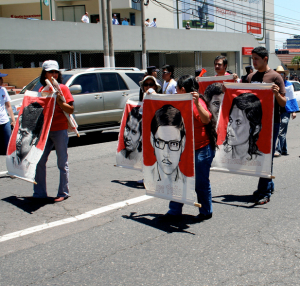
    On a march organised by the FMLN, people carry pictures of the faces of those disappeared during El Salvador’s civil war. Source: Flickr | Laura

    A peace agreement reached in 1992 put an end to civil war and initiated a peacebuilding process, which saw rebels of the leftist Farabundo Martí National Liberation Front (FMLN) make a successful transition to civilian and political life. The FMLN finally won the presidency by a tiny margin in 2009, and by an even smaller sliver in 2014, overturning 20 years of rule by the right-wing Nationalist Republican Alliance (ARENA).

    Meanwhile, a complex set of factors triggered a transformation of violence, which became criminal and perpetrated by illegal armed groups, most notably the gangs (maras). A profound crisis of public security has since shaken the country, as well as neighbours Honduras and Guatemala. Successive governments have responded with ‘iron-fist’ approaches focused on crime suppression and militarisation of security. These policies, although of limited effectiveness, have helped to cement the electoral support of a population angered and traumatised by decades of violence.

    Surprise news

    In March 2012 the country was taken by surprise by news of a truce between Barrio 18 and MS-13, facilitated by two mediators (a former insurgent and government advisor, and a Catholic bishop) and tacitly supported by the government of the FMLN president, Mauricio Funes. Imprisoned gang leaders were transferred from a maximum-security prison to other jails in exchange for a reduction in violence. The gangs agreed to end forced recruitment of children and young people, respect schools and buses as zones of peace and reduce attacks on the security forces.

    In the succeeding months, the gangs surrendered limited amounts of weapons and the government acted to address shortcomings in the overcrowded prison system, such as softening visitor searches and removing the army from the task. For the first time since the war, the International Committee of the Red Cross (ICRC) was invited to contribute and in October 2012 it established a special mission to monitor human rights in prison. The drop in homicides was immediate—from 14 per day to five.

    canadian_oas_visit_to quezaltepeque_prison_el_salvador

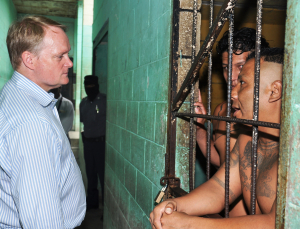
    Organization of American States (OAS) visit to a prison in Quezaltepeque, 2012. Source: Flickr | Arena Ortega

    The gangs’ leaderships and the mediators were discussing a list of issues to be included in an enlarged process with a wider pacification agenda. Their Proposal for a Framework Agreement for the Recovery of Social Peace in El Salvador included reform of the prison system, a public-private body with gang participation to oversee rehabilitation and reinsertion, derogation of the anti-gang law and removal of the army from public-security duties. Notably absent was any demand for amnesty or reduction of prison sentences. The proposals included suspension of all acts of violence, voluntary surrender to security forces, decommissioning of weapons and explosives, and an end to forced disappearances.

    As more details emerged, however, public opinion about the truce became increasingly polarised. The main opposition came from conservative sectors, parts of the legal establishment and law enforcement, and the media. Contributing to scepticism were unabated extortion and other violent crimes, such as ‘disappearances’—allied to concern about the potential empowerment and legitimisation of criminal structures and a widely-held perception that violence was being rewarded.

    But a second school of thought saw the truce as a way to reduce violence and reintegrate gang members. This vision was shared by segments of civil society and the Organization of American States, which became an observer and guarantor of the process. A formal agreement with the government resulted in the creation of a Technical Committee for the Co-ordination of the Process of Violence Reduction in El Salvador.

    Nevertheless, the government remained equivocal. Funes and other members refused to admit any participation and delivered contradictory statements, which fed distrust and confusion. But the sustained impact on violence and better understanding of the process gradually legitimised it and allowed the government to acknowledge involvement.

    The government’s ambivalence can be contextualised. This was the first FMLN administration and conservatives controlled the National Assembly. The United States prohibits negotiations between a government and a criminal organisation and in November 2012 it so labelled the MS-13. The US is El Salvador’s main trading partner and co-operation in trade and security has resulted in US support and military and police aid from programmes such as the Central America Regional Security Initiative. In what has been described as the performance of “a trapeze artist”, the FMLN has thus tried to develop progressive policies while not antagonising the US, foreign capital and the Salvadoran establishment (in control of the media).

    Transfer of gang leaders

    The truce was supported by the minister of justice and public security, David Munguía, a retired general and former minister of defence. Although his appointment in 2011 (and the removal of FMLN members from those positions) was largely interpreted as a move towards remilitarisation, he surprised his critics by encouraging the first steps of the truce—authorising the transfer of gang leaders to other jails. According to the analyst of Salvadoran politics Paolo Lubers, he and other generals took the initiative after improved intelligence co-ordination convinced them that most violence was gang-driven.

    Opposition came, however, from the Office of the Prosecutor and, later, sections of the police. They alleged that the truce was an opportunity for the gangs to reorganise, and that the drop in homicides was driving other crimes such as ‘disappearances’ and extortion. Some of this was a legacy of the peace accords, which disbanded the old security forces, established the National Civil Police (PNC) and reined in the armed forces.

    The PNC comprised civilians, demobilised guerrilla fighters and vetted members of the prior security forces—whose most authoritarian members, however, were able to secure the most prominent positions in the new service, particularly during the two decades of ARENA governments. The police force is thus politicised and plagued by poor performance, corruption and authoritarian practices. Meanwhile, the Office of the Attorney-General (as with Supreme Court judges) is marked by political appointments by the Legislative Assembly, which have benefited ARENA hitherto.

    More complex

    In 2013, the process entered a more complex second phase, centred on the creation of violence-free municipalities. These ‘peace zones’ were based on agreement among local authorities, gangs and facilitators, with groups committing to cease violence and crime in exchange for a reduction in police operations and raids and reinsertion programmes. The first four municipalities, presented in January 2013, were soon extended to 11, with a combined population of more than 1m (out of 6m in all in El Salvador) and support from the OAS and the European Commission.

    Mayors from both main parties, the FMLN and ARENA, participated in the initiative. Again, an ambivalent government promised, but then failed to deliver, grants and loans for prevention and rehabilitation. In Ilopango, the first peace zone, reduced violence presented an opportunity for the creation of a bakery and a chicken farm to generate employment, and the local government set up education centres and sports fields in marginalised neighbourhoods. But the mayor complained that the municipality had not received any of the $9 million promised by the government. Other cities were also left to their own devices.

    In May 2013, the process suffered a major blow: the Constitutional Court nullified the appointment of Munguía as minister of justice and public security and forced Funes to restructure the security cabinet. The new minister, Ricardo Perdomo, proved a sharp critic of the truce. Amidst a polarised debate leading up to the February 2014 presidential election, his hard-line discourse and the restrictions placed on the mediation mechanisms weakened the process. The downward trend in murder rates began to reverse, amid a turf war between two factions of Barrio 18.

    Support discontinued

    At the beginning of 2015, the new president, the former rebel Salvador Sánchez Ceren, said he would discontinue support for the truce. Leaders of the gangs were returned to the maximum security prison of Zacatecoluca.

    In March 2015 481 homicides were reported by the PNC (16 per day), a 52% increase on a year earlier. There were six massacres and on average 4.5 persons ‘disappeared’ each day.

    A recent report however suggests that the truce has had a lasting effect on the geographical distribution of violence. Murder figures remain lower than average in regions where the truce was strong and coalitions of local actors (such as mayors, churches and NGOs) took advantage of the opportunity to promote new policies. The trend is even more striking in the ‘peace zones’: in seven the drop in murders has been sustained in spite of the setbacks.

    But in other areas violence is soaring and tough positions are gaining a foothold. Sánchez Ceren has announced the creation of three battalions, with more than 1,200 troops, to fight crime in areas most affected by violence. And the rightist business association ANEP has hired the former New York mayor Rudolph Giuliani as an adviser.

    Particular problems

    This truce can be counted among so-called second-generation security promotion activities, which depart from conventional top-down approaches and are forged on “formal and informal cooperation with existing (including customary) sub-national institutions”. But making peace with criminal (as against political) actors poses particular problems.

    As James Cockayne put it, these cases are fraught with moral and political hazards, and there are critical questions. What is the desired end-state of negotiation? Is it a reduction of violence, a reduction of all criminal activities or dissolution of the illegal actor? The response to these questions will largely determine the contours of any negotiation in El Salvador and elsewhere.

    Despite its flaws and shortcomings, the experience can however provide invaluable lessons. Apart from a drastic reduction in homicides, it contributed to a recognition of the social contours of the gang phenomenon and opened discussions at national and international levels about prevention, reintegration and rehabilitation.

    The truce also demonstrated that a vast proportion of the violence afflicting the country was due to inter-gang confrontation. It revealed gang leaderships with a capacity for command-and-control and a sophisticated understanding of their role in society. Their ability to articulate demands surprised many, and to some extent changed conventional thinking.

    But exploitation of public security in electoral politics tends to favour hard-line approaches. As criticism and polarisation grew to politically untenable levels, the government adopted contradictory statements and policies and later distanced itself from the process. An overall lack of planning and co-ordination hampered effectiveness—not least because the civil-society actors with more experience in working with gangs and communities were not involved.

    Fear that the gangs might use the truce to rearm and reorganise, and anger towards perceived preferential treatment, is common in countries in transition from war to peace and with schemes of disarmament, demobilisation and reintegration (DDR) of former combatants. The accumulated experience of the global peacebuilding community can provide useful insights, including the adoption of community-based approaches to reintegration. Similarly, adaptation and use of mechanisms of transitional justice can help find a balance between security, justice and reconciliation.

    The truce in El Salvador has been a lost opportunity to take advantage of reduced violence to strengthen the institutional presence in communities affected by gangs and implement comprehensive approaches to prevention, reintegration and reconciliation. Any future attempt will need stronger political commitment, a long-term strategy and engagement with civil society and public opinion. Given the scope of the problem and an estimated gang membership in the tens of thousands, socio-economic programmes and opportunities are also imperative for sustainability. But, for the time being, the horses of war are riding again.

    Mabel González Bustelo (@MabelBustelo) is a journalist, researcher and international consultant specialising in international peace and security. She is author of Narcotráfico y crimen organizado: ¿Hay alternativas? (Narco-trafficking and Organized Crime: Are There Alternatives?), Icaria, Barcelona, 2014.

    Featured image: Salvadoran police officers. Source: Flickr | Paulien Osse

  • Sustainable Security

    Drone-tocracy? Mapping the proliferation of unmanned systems

    While the US and its allies have had a monopoly on drone technology until recently, the uptake of military and civilian drones by a much wider range of state and non-state actors shows that this playing field is quickly levelling. Current international agreements on arms control and use lack efficacy in responding to the legal, ethical, strategic and political problems with military drone proliferation. The huge expansion of this technology must push the international community to adopt strong norms on the use of drones on the battlefield.

    Read Article →

    Nuclear Weapons: From Comprehensive Test Ban to Disarmament

    Despite not yet entering into force, the 1996 Comprehensive Test Ban Treaty has succeeded in almost eliminating nuclear weapons testing and in establishing a robust international monitoring and verification system. A breakthrough in its ratification by the few hold-out states could have important positive repercussions for the Nuclear Non-Proliferation Treaty or nuclear disarmament in the Middle East.

    Read Article →

    International Dimensions of the Ukraine Crisis: Syria and Iran

    The Russian annexation of Crimea may be in direct contravention of international agreements but is popular in Russia and almost certain to hold. Given tensions within Ukrainian society and its weak transitional government, there remains some risk of further intervention in eastern Ukraine and possibly the Trans-Dniester break-away region of Moldova. Even if there is no further escalation in the crisis, the deterioration in EU/Russian and US/Russian relations is of great concern, not least in relation to two aspects of Middle East security – the Syrian civil war and the Iran nuclear negotiations.

    Read Article →

    The Iran Interim Deal: Responses, Potential Impacts, and Moving Forward

    Implementation of the interim deal with Iran, which freezes the country’s nuclear enrichment in exchange for limited sanctions relief, began in January. As a result, we are witnessing a substantial shift in diplomatic relations between Iran and its regional neighbours – some positive, some not. This deal marks a significant step for the international non-proliferation regime, but will it achieve the trust and confidence-building goals intended? As the US and Iran face increasing domestic pushback on the terms of the agreement, questions remain on the interim deal’s impact on relations in the region and abroad, and the effect these relations may have on the prospects of coming to a full comprehensive follow-up agreement between Iran and the P5+1 countries.

    Read Article →

    What next for Iran? Foreign Policy after a Nuclear Agreement

    If Iran and the P5+1 succeed in negotiating a robust agreement on the nuclear issue, then Iran will be less preoccupied with rebalancing its relationship with antagonistic western powers and its role in the Middle East and the wider region has scope for developing in many new directions. This briefing looks ahead to a post-agreement environment and assesses where Iran might chose to concentrate its resources. A key question is whether it will work to build better links with the US and selected European states or whether it will be more interested in the BRIC and other states, not least Turkey. Its choice will be influenced strongly by domestic politics and the urgent need for a more stable region.

    Read Article →

    Geneva II: Prospects for a Negotiated Peace in Syria

    The recent announcement that the so-called Geneva II conference would finally convene on 22 January 2014 is overdue but good news. What are the chances of it bringing peace? With an interim deal signed on Iran’s nuclear programme, Richard Reeve discusses what chance the great powers, Middle Eastern diplomats and the mediators of Geneva have as they turn their attention to ending the war in Syria.

    Read Article →

    Can the Nuclear Non-Proliferation Treaty outrun its double standard forever?

    The recent walkout by Egyptian negotiators at UN talks have demonstrated that, like a building with rotten foundations, the nuclear non-proliferation regime is far less stable than many believe it to be. Egypt’s actions make clear that anything less than a regime specifically geared towards addressing the reasons why some states seek nuclear weapons is a regime existing on borrowed time.

    Read Article →

  • Climate change

    In late 2010 the Heinrich Boell Foundation and the World Resources Institute convened a group of international experts to discuss policies and incentives for increasing the use of renewable energy in the developing world. WRI’s Davida Wood and Lutz Weischer discuss the key lessons learned at the workshop and their work on helping developing countries make the transition to renewable energy.


    Image source: Braden Gunem.

    Read more »

  • Sustainable Security

  • Sustainable Security

    Kristian Skrede Gleditsch is Professor in the Department of Government at the University of Essex, director of the Michael Nicholson Centre for Conflict and Cooperation, and a research associate at the International Peace Research Institute, Oslo (PRIO). His research interests include conflict and cooperation, democratization, and spatial dimensions of social and political processes. He is the author of All International Politics is Local: The Diffusion of Conflict, Integration, and Democratization (University of Michigan Press, 2002), Spatial Regression Models (Sage, 2008, with Michael D. Ward), Inequality, Grievances, and Civil War (Cambridge University Press, 2013, with Lars-Erik Cederman and Halvard Buhaug), and journal articles in the American Journal of Political Science, American Political Science Review, Annals of the Association of American Geographers, Biological Reviews, Comparative Political Studies, Conflict and Cooperation, Defence and Peace Economics, Economic History Review, European Journal of International Relations, International Interactions, International Organization, Internasjonal Politikk, International Studies Quarterly, Journal of Conflict Resolution, Journal of Peace Research, Journal of Politics, PLOS One, Political Analysis, Political Psychology, R Journal, and World Politics.

    In this interview, Professor Gleditsch discusses the global decline of violence since World War II and some of the challenges to this trend.

    Recently, several authors have declared that there has been a decline in armed conflict since the end of World War II. From your research on this topic, what does the data say about the global patterns of violence and is war really waning?

    On the question, yes, I think war is declining in most common data sources, although the causes remain contested. For civil wars there is at least some evidence that accommodation and conflict management has promoted a decline of war. Although Syria is a sever conflict, it is not by itself sufficient to say that we have a clear reversal. Perhaps the greatest current challenge is the alleged increase in terrorism. However, it is not obvious why we should see an increase in less severe and less organized conflict, and there is also some evidence that ethic terrorism has declined following accommodation in ways similar to civil war.

    You mention that the causes of this decline in war remain contested. What are some of the main explanations offered by scholars for this development and what do you feel are the main areas of disagreement on this issue?

    I think some of the key explanations include more democratization, less ethnic discrimination, globalization/increase in trade, and greater scope for conflict management by the UN and other regional organizations. All of these in my view are plausible and likely to be part of the explanation, but I think it is also fair to say that none of these alone provide a clear explanation for the decline in conflict.

    There has been a great deal of skepticism about some of these factors, especially democratization, as many point to examples where conflict has followed after elections. However, some of this research takes a very binary approach to violence, where any conflict is regarded as a failure even if the level of conflict declines or fewer actors engage in violence. To use another example, although some dissident republicans in Norther Ireland continue to use terrorist tactics, it would be absurd to say that there has been no decline in the volume terrorism after the Good Friday agreement.

    Do you feel that there has been a gradual shift in the attitudes of people towards war and, if so, that this might have also contributed to this decline of war?

    I think there has been a dramatic shift in attitudes to war. At least a 100 years ago it was common to glorify war as heroic and character forming. Countries had ministries of war. Now war tends to be seen as a regrettable last resort, and we have ministries of defense, and literature on the horrors of war. All of this contributes to make war a much harder sell. That is not to say that aversion to war is universal or that people have never approve of conflict, and attitudes can influenced, in both directions. Moreover, attitudes are probably influenced by views on the costs of war and feasibility of alternatives.

    I have been involved in some experiments on support for escalatory actions in territorial conflict with China among Japanese respondents, and there is some evidence that although people are generally quite hard line they become less belligerent when provided with information on the military or economic costs of conflict.

    With regards to democratization, why do you feel that democracy reduces the risk of war?

    For interstate war, then I think it is fairly well established that democracies rarely fight severe wars with each other. Of course, the risk of interstate conflict is low in general, at least for severe conflicts. Moreover, democracies may fight other states, and the democratic major superpowers are much more likely to be involved in conflict. However, I think there is also some evidence that the increased role of public opinion can constrain the use of force more generally, and that democratic states have supported a liberal order with emphasis on stronger international institutions and conflict management approaches that have helped reduce the risk of conflict more generally.

    I also believe that transitions to democracy reduce the risk of civil war, despite widespread pessimism and fears of democracies increasing conflict. Democracies provide alternative political avenues for conflict, and decrease the motivation to use violence compared to autocracies. Transitions to democracy may not eradicate all domestic violence. Many democracies have inherited ethnic separatist conflicts that started before democratization, and established organizations may remain active after transitions (ETA in Spain and the IRA can be interpreted in this perspective). Moreover, we may see violence around elections, under a climate of mistrust. However, the overall magnitude of civil violence tends to be lower under democracies.

    Whilst civil war is in decline, it became the principle form of armed conflict after the end of the Second World War. What were the main drivers for civil war becoming the main form of conflict?

    Civil wars became particularly common with decolonialization. Some anti-colonial movements turned violent, and, in some cases, competing factions continued to fight each other after independence (e.g., Angola). Moreover, after independence, many colonial states were prone to violence for a host of reasons. One the one hand, state weakness can by itself encourage violence as the barriers for taking on the state are lower. Moreover, the post-colonial states often had various features that could encourage violence such as ethnic nepotism, poor governance, or lack of legitimacy. Finally, although the Cold War did not escalate to a direct confrontation between the superpowers, many civil wars escalated as the opposing sides could obtain support from the superpowers.

    The end of the Cold War coincided with a spike in civil wars for somewhat similar reasons. Many weak states faced a loss of external support that weakened the central government (e.g., Somalia), and some larger federal units faced challenges form ethnic groups who sought independence and who might be willing to use violence (e.g., former USSR and Yugoslavia). However, other factors such as democratizations, decrease ethnic discrimination and powersharing, as well as more active UN conflict management efforts have likely all helped reduce the incidence of civil war from the immediate post cold war peak.

    Some studies have discussed an apparent revolution in warfare in the post-Cold War world, described using terms such as ‘new wars’, ‘hybrid wars’, and ‘post-modern wars’. Some of the characteristics of these wars include blurred distinctions between public and private combatants, warlords, and criminals; regular targeting of civilians and other war atrocities; war economies sustained by illegal trade in drugs, weapons, resources such as oil or diamonds; and violence being driven more by identity than ideology. Do you feel that these so called ‘new wars’ represent a revolution in warfare and have they also marked a shift in the nature of warfare?

    I am actually very skeptical of whether the concept of new wars is very helpful or whether the alleged trends exist at all. It is certainly not the case that targeting of civilians is a new feature – recall the shelling of cities during sieges in the 30 years war. The opium war was thus named for a reason. And the blurred lines between criminal gangs and warfare cannot be a new thing – the North African coast was known as the barbary coast due to the endemic piracy and the Mongol hordes probably picked up some things along the way too.

    I suppose this raises the question of why some find this concept so compelling. I can only speculate on this since I do not share this myself, but I believe that the decline of a master narrative of conflict after the Cold War increases people’s sense of new wars as different from old war. However, all systematic research that I have seen raises serious question over this.

    In addition to the alleged increase in terrorism, what do you see as the other greatest challenges to the decline in violence in the near and distant future?

     I actually think the long-term outlooks is relatively favorable, but I can imagine some cases that may contribute to long-term challenges

    1. increasing tension between the major power is unlikely to lead to direct conflict, but it may increase support to opposing sides in civil war and decrease the prospects for the UN to become involved.
    2. globalization has in all likelihood increased the costs of conflict and increased the value of peace, but there is a chance that globalization could be rolled back with increasing protectionism. This can make it more difficult to contain some territorial conflicts, such as the ones seen in Asia
    3. global challenges such as refugees change require cooperation, and if states fail to cooperate on these then poorer relations may weaken the ties that prevent conflict
    4. the consequences of climate change could increase the risk of conflict by undermining livelihoods and increasing competition between states. My own reading of the evidence says that there is little evidence of this happening so far, but skeptics would argue that dramatic consequences would move us into a new scenario.

    These are serious concerns, but at best indicate risk, and none of them imply that the decline of violence must be reversed.

  • Competition over resources

    Writing for the New Security Beat, Schuyler Null discusses a recent event on creating a new national security narrative for the US held at the Woodrow Wilson Center. The event was based on a white paper by two active military officers writing under the pseudonym “Mr. Y” (echoing George Kennan’s famous “X” article). In “A National Strategic Narrative,” Captain Wayne Porter (USN) and Colonel Mark Mykleby (USMC) argue that the United States needs to move away from an outmoded 20th century model of containment, deterrence, and control towards a “strategy of sustainability.”

    Image source: LizaP.

    Read more »

  • Sustainable Security

  • The Geopolitics of Climate Change


    In a speech to Future Maritime Operations Conference at the Royal United Service Institute, London, Secretary of State for Energy and Climate Change examines the security implications of climate change:

    “We cannot be 100% sure that our enemies will attack our country; but we do not hesitate to prepare for the eventuality. The same principle applies to climate change, which a report published by the Ministry of Defence has identified as one of the four critical issues that will affect everyone on the planet over the next 30 years.

    Around the world, a military consensus is emerging. Climate change is a ‘threat multiplier’. It will make unstable states more unstable, poor nations poorer, inequality more pronounced, and conflict more likely. And the areas of most geopolitical risk are also most at risk of climate change.”

    Read the full speech here: DECC

    Image source: DECCgovuk

  • Sustainable Security

    The political changes in certain South American countries, including most notably the case of Bolivia, could act as inspirations in the ongoing search for locally grown, hybrid variants of a post-liberal peace.

    Author’s Note: This article presents key arguments from my article Jonas Wolff (2015) Beyond the liberal peace: Latin American inspirations for post-liberal peacebuilding, Peacebuilding, 3:3, 279-296, DOI: 10.1080/21647259.2015.1040606.

    Responding to the sobering results of international peacebuilding missions around the world, a rich academic debate has emerged that, from different perspectives and with different aims, criticizes the practices and premises of peacebuilding. In particular, critics have suggested that the liberal template of social and political order (‘liberal peace’ and ‘liberal democracy’) which guides peacebuilding is a crucial part of the problem. As a consequence, scholars have started to think about – and empirically study – alternatives to the liberal peace. This idea of a hybrid, peaceful order that develops out of the encounter between external and local efforts at building peace is captured, most prominently, by Oliver Richmond’s notion of ‘post-liberal peace’. The crux of this deliberately ill-defined concept is that it denotes the emergence of hybrid social orders that somehow combine liberal and non-liberal (but not necessarily anti-liberal or non-democratic) norms and practices. Such orders, thereby, go beyond and may also partially contradict liberal principles – but do so without following an established, alternative template. According to Richmond (and other critical peacebuilding scholars), local resistance to, and local appropriation of, international peacebuilding activities will inevitably produce such hybridity. Yet, there is still limited empirical evidence and rather abstract theoretical ideas about what such post-liberal forms of peace could look like.

    With this piece, I bring in experiences that are usually not reflected in the debate about peacebuilding, namely: current political changes in a series of South American countries, including most notably the case of Bolivia. The context in which these processes occur is very different from the so-called post-conflict societies in which peacebuilding takes place. Yet, precisely because of these differences, conditions for locally driven experiments with post-liberalism are arguably better in Latin America.

    While the attempt to move beyond liberal peacebuilding does certainly not need yet another template to be implemented worldwide, these experiences might well serve as inspirations in the ongoing search for locally grown, hybrid variants of a post-liberal peace. Against those that defend liberal peacebuilding by suggesting that there is, simply, no alternative (as Roland Paris has argued), the Latin American experience at the very least shows that there are actual alternatives to liberal mainstream conceptions of political and economic order – even if post-liberal experiments in South America are limited and uncertain, diverse and contradictory.

    Post-liberalism in South America

    1024px-Aymara_ceremony_copacabana_1

    Photos of a traditional Aymara ceremony in Copacabana, on the border of Lake Titicaca in Bolivia. Image via Wikimedia Commons.

    In recent years, scholars working on Latin American politics have noted ‘post-neoliberal’ and ‘post-liberal’ trends in the region. On the one hand, the so-called left turn, i.e. the election and reelection of several left-of-center governments across the region, has been accompanied by attempts to turn away from neoliberal economic policies. On the other, with diverse experiences of participatory democracy at the local level and, in the Andean region, the adoption of new constitutions that partially deviate from the mainstream model of liberal democracy, contours of a possible post-liberal democracy have begun to take shape. These developments are diverse and contradictory, but they share one basic commonality: They are the result of attempts to go beyond liberal, representative democracy and neoliberal, market-oriented economics without entirely replacing the preexisting political or economic order through a new, alternative model of development. The new constitutions in Bolivia and Ecuador, for instance, maintain all the well-known institutions of representative democracy and the usual series of political and civil rights but add or strengthen mechanisms of direct democracy and societal participation, expand the notion of human rights in areas of economic, social and cultural rights and include collective indigenous rights.

    In the area of economic policy, contemporary attempts to strengthen the economic role of the state and expand social policies, to deepen the domestic market and implement some kind of redistributive policies differ from country to country, but in general do not break with the entire neoliberal model. The prefix ‘post’ in both post-liberal democracy and post-neoliberalism is precisely meant to capture this partial, and hybrid, combination of continuity and change.

    Redefining the nation-state and the rule of law

    A core question for international peacebuilding concerns the related task of nation-building. For obvious reasons, most post-conflict societies lack a common national identity. An innovative response that has emerged from Latin America, and particularly from the indigenous movements in Bolivia and Ecuador, is the notion of a ‘plurinational state’. On the one hand, this concept openly breaks with the unitary conception of the nation-state: The state at hand is supposed to not only include different cultures (‘multicultural’) or ethnic communities (‘pluriethnic’), but several nations or peoples that have their own right to self-determination. On the other hand, however, the concept as used and constitutionally recognized in Bolivia and Ecuador is rather a hybrid: It combines an overarching national identity with an acknowledgment of particular indigenous identities. The plurinational state, contradictory as this may seem, is both a unitary nation-state and an umbrella organization that includes partially autonomous indigenous peoples. This formula has been severely contested – and continues to be so – in both countries and is, certainly, far from offering a panacea for the complex problems of nation-building in divided societies. But it may still be worthwhile to take into account.

    Directly related to this, another crucial issue in the peacebuilding debate concerns the rule of law – and, more specifically, the tension between liberal state law that is to be implemented ‘from above’ (but usually does not work very well) and local forms of community justice that exist at the grassroots level (and frequently work much better but exhibit non- or illiberal features). The same kind of tension exists in a series of Latin American countries and concerns the existence of indigenous or community justice at the local level – also not least a result of the factual absence of the state’s judicial institutions especially in rural areas. Responding to this reality and to increasing claims by indigenous movements, several Latin American countries since the 1990s have progressively recognized indigenous customs and practices. In the case of Bolivia, the new constitution goes so far as to place ordinary and indigenous legal jurisdiction on an equal footing.

    In general, research on indigenous community justice in the Andean region shows that it works relative well: When compared to the state’s justice system, which is often hardly pre-sent in rural areas and frequently perceived as alien, community justice provides an important mechanism for resolving a broad range of conflicts in ways that local populations generally regard as much more efficient and legitimate. While studies show that indigenous community justice is not at all arbitrary, but follows specific rationalities, its logic is clearly different from the rationality guiding ordinary state justice: The overall aim is to preserve the social harmony of a given community; its main strategy is some kind of reconciliation. From this perspective, long-term imprisonment is irrational, while what is regarded as physical punishment from a liberal perspective (e.g., whipping with nettles, ice water baths) is considered rather symbolic acts of purification and/or reconciliation.

    Just as in quite a few post-conflict societies legal pluralism in the Andean region is both an empirical reality and a normative challenge – and research on the experiences in Bolivia, Colombia, Ecuador and Peru offers a series of crucial insights about both the diverse practices of indigenous/community justice and about different ways of dealing with legal pluralism in more or less pluralist ways.

    Broadening democratic participation and human rights

    In the mainstream model of liberal democracy, the people do not in fact govern but through elected representatives. In debates about peacebuilding, a common criticism has precisely been directed against an overly focus on (early) elections. In South America, disenchantment with the ways in which real-existing representative democracy worked has led to experiments with more direct and ‘participatory’ forms of democracy. Important innovations in this regard include the introduction of recall referenda that enable the citizens to revoke the mandate of their elected representatives and different types of participatory budgeting and participatory development planning.

    A related criticism of liberal peacebuilding concerns its focus on a relatively narrow, and specifically liberal, set of political and civil rights. Especially when combined with neoliberal recipes of economic reform, this frequently implies a disregard for economic, social and cultural rights, which are equally established as human rights at the international level. Yet, given the existing socioeconomic conditions in the global South, liberal democracy’s emphasis on formal political equality rings quite hollow to many people. As a consequence, across Latin America, the failure of democratic regimes to significantly reduce the dramatic socioeconomic inequalities has led, since the turn of the century, to a reemergence of the ‘social question’ and the ‘left turn’ discussed above.

    Social and economic rights have consequently been strengthened in several countries, but most notably in the new constitutions adopted in Bolivia and Ecuador (but, previously, also in Brazil, Colombia and Venezuela). And, with the ‘leftist turn’ (and the commodity boom), governments have generally started to govern a bit more in line with this notion of socioeconomic rights by expanding social policies, improving basic public services, and reducing poverty. To be sure, nowhere in the region has the constitutional recognition of a broad catalog of human rights led to a consistent policy of guaranteeing universal socioeconomic rights. Still, the constitutional promise of progressive change at least establishes an important normative reference point for those that mobilize in the name of ‘social justice’.

    Caveats

    The experiences indicated above also caution against expecting too much from experiments with alternatives to liberal democracy and neoliberal economics. Most notably for the debate on peacebuilding, the search for (some kind of) post-liberal political order – and, thus, also for post-liberal peace – is itself a conflict-ridden process. While ‘localizing’ peacebuilding may plausibly reduce conflicts between external and local actors, it may well increase intra-local struggle – precisely because local-local interactions then become decisive. If the very fundamentals of the politico-economic order are up for discussion, this plausibly increases the risk of violent conflict. In fact, the process of constitutional change in Bolivia was characterized by an open clash between different conceptions of democracy – and by mutual allegations that what was presented as democratic by the opponent was precisely the opposite (colonial or imperialist, exclusive or secessionist, autocratic or totalitarian).

    The Bolivian attempt to construct some kind of post-liberal democracy also brought about more specific risks. On the one hand, the transition process meant dismantling an existing structure of democratic institutions and led to a certain, if temporary, institutional vacuum during which the democratic shape of the future political order was uncertain. On the other hand, features of Bolivia’s new political order such as the emphasis on direct democracy do not only increase the power of the people, but more specifically the power of the majority; at the same time, a popular president can use plebiscitary mechanisms to further increase and consolidate his/her power vis-à-vis the opposition, minorities or other powers and levels of the state.

    Finally, the current economic crisis, triggered by the decrease in international commodity prices, reveals the limitations of the post-neoliberal economic policies in the region – and immediately threatens the advances in the reduction of poverty and inequality.

    Conclusion

    The most important feature of the debates about post-liberal peace, post-neoliberal economics and post-liberal democracy is, arguably, that they are not aimed at identifying yet another universal peacebuilding template. If anything, the main academic and political purpose is to open up discussions that have been too narrow and closed for too long. Thinking about alternatives, however, still requires concrete ideas about elements and characteristics, dynamics and paths that may characterize (different) post-liberal configurations. And while theoretical reflections are certainly needed, the very idea of post-liberalism as something arising ‘bottom up’ from dynamics at least partially driven by local knowledge and local agency points to the need to empirically study developments that point in some post-liberal direction. In this sense, I have argued, recent experiences from Latin America do offer political inspirations as well as important caveats which might be of interest for both scholars of peacebuilding and for those engaged in building whatever kind of hybrid peace in whatever kind of place.

    Jonas Wolff is head of the research department ‘Governance and Societal Peace’ and executive board member of the Peace Research Institute Frankfurt (PRIF) as well as adjunct professor (Privatdozent) at Kassel University. He studied Political Science, Economics and Sociology at University of Frankfurt, where he also received his PhD. He completed his habilitation at the University of Kassel. His research focuses on Latin American politics, international democracy promotion, and the interrelation between social conflict, political transformation and economic development.

  • East Africa’s Albertine Rift: Competition for land and resources in one of Africa’s most fertile and densely populated regions.

    As the global population soars toward nine billion by 2045, this corner of Africa shows what’s at stake in the decades ahead. The Rift is rich in rainfall, deep lakes, volcanic soil, and biodiversity. It is also one of the most densely populated places on Earth. A desperate competition for land and resources—and between people and wildlife—has erupted here with unspeakable violence. How can the conflict be stopped? Will there be any room left for the wild?

    The mwami remembers when he was a king of sorts. His judgment was sovereign, his power unassailable. Since 1954 he, like his father and grandfather before him, has been the head of the Bashali chiefdom in the Masisi District, an undulating pastoral region in eastern Democratic Republic of the Congo (DRC). Though his name is Sylvestre Bashali Mokoto, the other chiefs address him as simply doyen—seniormost. For much of his adult life, the mwami received newcomers to his district. They brought him livestock or other gifts. He in turn parceled out land as he saw fit.

    Today the chief sits on a dirty couch in a squalid hovel in Goma, a Congolese city several hours south of Masisi. His domain is now the epicenter of a humanitarian crisis that has lasted for more than a decade yet has largely eluded the world’s attention. Eastern Congo has been overtaken by thousands of Tutsi and Hutu and Hunde fighting over what they claim is their lawful property, by militias aiming to acquire land by force, by cattlemen searching for less cluttered pastures, by hordes of refugees from all over this fertile and dangerously overpopulated region of East Africa seeking somewhere, anywhere, to eke out a living. Some years ago a member of a rebel army seized the mwami’s 200-acre estate, forcing him, humiliated and fearing for his safety, to retreat to this shack in Goma.

    The city is a hornet’s nest. As recently as two decades ago Goma’s population was perhaps 50,000. Now it is at least 20 times that number. Armed males in uniform stalk its raggedy, unlit streets with no one to answer to. Streaming out of the outlying forests and into the city market is a 24/7 procession of people ferrying immense sacks of charcoal on bicycles or wooden, scooter-like chukudus. North of the city limits seethes Nyiragongo volcano, which last erupted in 2002, when its lava roared through town and wiped out Goma’s commercial district. At the city’s southern edge lies the silver cauldron of Lake Kivu—so choked with carbon dioxide and methane that some scientists predict a gas eruption in the lake could one day kill everyone in and around Goma.

    The mwami, like so many far less privileged people, has run out of options. His stare is one of regal aloofness. Yet despite his cuff links and trimmed gray beard, he is not a chief here in Goma. He is only Sylvestre Mokoto, a man swept into the hornet’s nest, with no land left for him to parcel out. As his guest, a journalist from the West, I have brought no gifts, only demeaning questions. “Yes, of course my power has been affected greatly,” the mwami snaps at me. “When others back up their claims with guns, there is nothing I can do.”

    The reign of the mwamis is finished in this corner of East Africa. The region has become a staging ground for violence of mind-reeling proportions over the past few decades: the murder and abduction of tens of thousands in northern Uganda, the massacre of more than a million in the genocides of Rwanda and Burundi, followed by two wars in eastern Congo, the last of which, known as the Great African war because so many neighboring countries were involved, is estimated to have killed more than five million people, largely through disease and starvation—the deadliest war since World War II. Armed conflicts that started in one country have seeped across borders and turned into proxy wars, with the region’s governments each backing various rebel groups, a numbing jumble of acronymed militias—the LRA, FDLR, CNDP, RCD, AFDL, MLC, the list goes on—vying for power and resources in one of the richest landscapes in all of Africa.

    The horrific violence that has occurred in this place—and continues in lawless eastern Congo despite a 2009 peace accord—is impossible to understand in simple terms. But there is no doubt that geography has played a role. Erase the borders of Uganda, the DRC, Rwanda, Burundi, and Tanzania and you see what unites these disparate political entities: a landscape shaped by the violent forces of shifting plate tectonics. The East African Rift System bisects the horn of Africa—the Nubian plate to the west moving away from the Somalian plate to the east—before forking down either side of Uganda.

    The western rift includes the Virunga and Rwenzori mountain ranges and several of Africa’s Great Lakes, where the deep rift has filled with water. Called the Albertine Rift (after Lake Albert), this 920-mile-long geologic crease of highland forests, snowcapped mountains, savannas, chain of lakes, and wetlands is the most fecund and biodiverse region on the African continent, the home of gorillas, okapis, lions, hippos, and elephants, dozens of rare bird and fish species, not to mention a bounty of minerals ranging from gold and tin to the key microchip component known as coltan. In the 19th century European explorers like David Livingstone and John Hanning Speke came here searching for the source of the Nile. They gazed in awe at the profusion of lush vegetation and vast bodies of water, according to the scholar Jean-Pierre Chrétien: “In the heart of black Africa, the Great Lakes literally dazzled the whites.”

    The paradox of the Albertine Rift is that its very richness has led to scarcity. People crowded into this area because of its fertile volcanic soil, its plentiful rainfall, its biodiversity, and its high altitude, which made it inhospitable to mosquitoes and tsetse flies and the diseases they carry. As the population soared, more and more forest was cut down to increase farm and grazing land. Even in the 19th century the paradise that visitors beheld was already racked with a central preoccupation: Is there enough for everyone?

    Today that question hangs over every square inch of the Albertine Rift, where the fertility rate is among the highest in the world, and where violence has erupted between humans and against animals—in a horror show of landgrabs, spastic waves of refugees, mass rapes, and plundered national parks, the last places on Earth where wildlife struggles to survive undisturbed by humans. For the impoverished residents of the region, overcrowding has spawned an anxiety so primal and omnipresent that one hears the same plea over and over again:

    We want land!

    The suspected lion killer sits near the shore of Lake George and plays a vigorous board game known as omweso with one of his fellow cattlemen. He looks up, introduces himself as Eirfazi Wanama, and says he cannot tell me his age or the number of his children. “We Africans don’t count our offspring,” he declares, “because you muzungu don’t want us to produce so many children.” Muzungu is slang for whites in this part of the world. Wanama offers a wry smile and says, “You don’t have to beat about the bush. Some lions were killed here, and the rangers came in the middle of the night and arrested me.”

    In late May 2010 two rangers in Uganda’s Queen Elizabeth National Park saw vultures hovering over a field in the park about a mile from Wanama’s village of Hamukungu and discovered the dead bodies of five poisoned lions. Nearby were two cow carcasses that had been laced with a bluish pesticide called carbofuran. Early intelligence pointed to Wanama; another suspect fled the area. “They held me for a day,” Wanama says. “They have released me from their investigation. I am not running away.”

    Hamukungu is located within the boundaries of the park, whose predominant tourist attraction is its population of lions, which has dwindled by about 40 percent in less than a decade. “The number of villagers has increased,” says Wilson Kagoro, the park’s community conservation warden, “as has the number of cattle. And this has created a big conflict between them and us. They sneak into the park late at night to let their cattle graze. When this happens, the lions feast on the cows.” Given that parkland grazing is illegal, the aggrieved pastoralists are left with no legal recourse. But that does not mean that they are without countermeasures. “We are surviving on God’s mercy,” Wanama says when I ask how so many people manage to survive on so little land. “The creation of this national park has made us so poor! People have to live on the land!” It’s a common complaint in the overcrowded villages that ring the region’s networks of parks and reserves.

    Queen Elizabeth Park was established in 1952 with the growing recognition that this region had the highest biomass of large mammals of anyplace on Earth, according to Andrew Plumptre, director of the Albertine Rift Programme of the Wildlife Conservation Society. But social and political upheaval made it difficult to protect the wildlife. Over the decades poachers and desperate villagers raided the parks and decimated the populations of elephants, hippos, and lions. By 1980 the number of elephants had dropped from 3,000 to 150 in Queen Elizabeth.

    Virunga National Park in eastern Congo—Africa’s oldest, founded in 1925—is among the most imperiled, with many people already settled inside its boundaries. The countryside, once teeming with charismatic megafauna, is eerily vacant. The park’s tourist lodges are gutted. Since the Rwandan genocide of 1994, much of the park has been closed to tourists.

    The park is a war zone. Rodrigue Mugaruka is the warden of Virunga’s central sector, Rwindi. He is a former child soldier who participated in the 1997 overthrow of Mobutu Sese Seko, the longtime dictator of the DRC (then called Zaire). In eastern Congo the vacuum created by Mobutu’s exit led to fierce competition among proxy armies and various militias for its gold, charcoal, tin, and coltan. Now Mugaruka is doing battle with militias—called Mai-Mai fighters—who control illegal fishing and charcoal production in many of the villages that have cropped up inside the park on the western shore of Lake Edward. He recently regained control of his sector from thousands of Congolese soldiers stationed there to fight off the militias. Since the government rarely paid the soldiers, they resorted to killing the wildlife for food.

    Mugaruka’s efforts to enforce park regulations do not sit well with the tens of thousands of Congolese who have fled areas of conflict and taken up residence in the villages. In the fishing hamlet of Vitshumbi the warden orders park rangers to chop up, douse in kerosene, and set fire to several unlicensed fishing boats, illegal nets, and bags of charcoal, while the villagers look on bitterly. In a fishing boat dented from gunfire he ferries us to Lulimbi village, from which we drive to the Ishasha River bordering Uganda, where 96 percent of the park’s hippo population has been slaughtered since 1976 and sold for bush meat by militias. Later we head to the park’s Mount Tshiaberimu subsector, where an armed patrol provides round-the-clock protection to 15 eastern lowland gorillas from militias and from villagers who have been encouraged by politicians to claim parkland.

    Rodrigue Mugaruka knows that he’s a marked man. The Mai-Mai—and the Congolese businessmen who fund them—have made him a target. “Their objective is to chase us out of the park for good,” says the warden. “When we seize a boat and a net, the businessmen tell the Mai-Mai, ‘Before we put another net in the water, you must go kill a ranger.’ Three of mine have been killed in the lake. If you consider the whole area, more than 20 rangers have been killed.”

    Last January, Mugaruka’s men were ambushed with a rocket-propelled grenade by militia fighters along a road that goes through the center of the park. Three rangers and five Congolese soldiers were killed. Government officials soon received a petition signed by 100,000 villagers demanding that Virunga National Park be reduced in size by nearly 90 percent. The petitioners gave the government three months to release the land, which they claimed belonged to them. After that, warned the petition, the villagers would all grow crops in the park—and defend their activities with arms.

    “We want land!”

    The speaker gives his name as Charles, a 24-year-old sitting on a freshly cut log in a forest, a machete in his hand. He does not belong here, in Uganda’s Kagombe Forest Reserve. Then again, maybe he does. No less than a presidential order has stopped the evictions of those who’ve encroached on forest reserves and wetlands. Charles says a government minister recently visited the Kagombe inhabitants. “He told us we can stay,” he says, grinning. The minister’s cronies have an election coming up, and the best way to placate voters is to promise them land.

    Charles and a few other pioneering young villagers moved into the forest in 2006. “We’d been living on our grandparents’ property, but there were too many people on the land already,” he says. “We heard people talk about how there was free land this way.” A migrant group, the Bakiga, had already begun to settle in Kagombe, and when the National Forestry Authority tried to evict them, Uganda’s President Yoweri Muse­veni—himself facing reelection—issued the executive order forbidding evictions. Thereupon a few local politicians urged the native Banyoro people, who include Charles and his friends, to grab some forestland as well, lest all of Kagombe wind up inhabited by nonlocals.

    Charles and his friends each claimed about seven acres of timberland and began slashing away. They built grass-thatched huts, feed-storage sheds, a road, and a church. They planted corn, bananas, cassava, and Irish potatoes. Then they sent for their wives and began to have more children. Today Charles is one of about 3,000 inhabitants of the forest reserve and has no desire to leave. “We’re very well off here,” he says.

    The forest, meanwhile, sometimes looks like a smoky wasteland, as people use fire to clear the forest for crops. The damage goes beyond the aesthetic: Kagombe serves as one of a series of connective forests that make up a wildlife corridor for chimps and other animals. As Sarah Prinsloo of the Wildlife Conservation Society observes, “The health of the wildlife population in these parks is dependent on corridors like Kagombe.” The habitat destruction has contributed to a plunging animal population throughout the region. In Kagombe itself most wildlife has been hunted out.

    The forestry authority’s sector manager, Patrick Kakeeto, contemplates the devastation with a despairing smile. “They’re cutting all of this down,” he says. “And we can’t touch them. For us, it’s a kind of psychoprofessional torture.”

    How did this land of plenty descend into a perilous free-for-all? Dig deep into its history and it turns out the Albertine Rift has been shaped by mistaken ideas about its ethnic identities. The archaeological and linguistic evidence indicates that by as early as A.D. 500 various peoples had migrated into the region and forged a heterogeneous society that spoke similar Bantu languages and supported itself with both farming and herding. In the 15th century centralized kingdoms such as Bunyoro and Rwanda arose, along with exclusive classes of pastoralists, who distinguished themselves from farmers by their dress and a diet of milk, meat, and blood. Over time these pastoralists became distinct from the rest of the population, and their influence grew.

    By the time European explorer John Hanning Speke arrived in the late 19th century, he was astonished by the highly organized kingdoms he encountered, complete with courts and diplomats. He assumed the elite pastoralists, known as Hima or Tutsi, were a superior race of Nilotic people (from what is now Ethiopia) who had invaded the Great Lakes and subjugated what he regarded as the lowly indigenous Bantu farmers, such as Iru or Hutu. “The states of the Great Lakes challenged derogatory racial beliefs about African intellect and ability,” says archaeologist Andrew Reid. The idea of a Nilotic invasion was a way to explain away the existence of sophisticated kingdoms in the heart of Africa. The only problem: It wasn’t true.

    That didn’t stop the Tutsi and other elites from embracing the story of their exotic origins to better differentiate themselves from the majority Hutu. And after East Africa was divided between European powers in the late 19th century, the Germans and then the Belgians were only too happy to co-opt what appeared to be the natural social hierarchy and give preference to what they believed to be the superior minority of Tutsi.

    Despite the oft-cited physical differences between the two groups—the Tutsi are supposed to be taller, lighter skinned, and thinner lipped than the Hutu—it was so difficult to tell the two apart that by 1933 the Belgians had resorted to issuing identity cards: The 15 percent who owned cattle or had certain physical features were defined as Tutsi, and the rest were Hutu. (Members of one family sometimes ended up in different groups.) These identity cards, officially codifying a caste system that separated one people into two, would be used during the Rwanda genocide to single out who would live and who would be murdered. By the time the colonizers granted the countries independence in the early 1960s, ethnic hostilities between Tutsi and Hutu had already led to waves of killings and retaliatory murders. Today tensions between these two groups continue to play out in the Congo.

    But clearly the Rwanda genocide was the result of more than Hutu-Tutsi ethnic hatred. The latter years of the 20th century had brought a sobering recognition that there was in fact not enough for everyone in the Albertine Rift—and with that, catastrophe. An alarming rise in population coincided with a slump in coffee and tea prices in the 1980s, leading to great deprivation; poverty led to an even greater strain on the land. Although it’s true that a country like the Netherlands had a population density as high as Rwanda did at this time, it also benefited from mechanized, high-yield agriculture. Rwanda’s dependence on traditional subsistence farming meant that the only way to grow more food was to move onto ever more marginal land.

    By the mid-1980s every acre of arable land outside the parks was being farmed. Sons were inheriting increasingly smaller plots of land, if any at all. Soils were depleted. Tensions were high. Belgian economists Catherine André and Jean-Philippe Platteau conducted a study of land disputes in one region in Rwanda before the genocide and found that more and more households were struggling to feed themselves on little land. Interviewing residents after the genocide, the researchers found it was not uncommon to hear Rwandans argue that “war is necessary to wipe out an excess of population and to bring numbers into line with the available land resources.” Thomas Malthus, the famed English economist who posited that population growth would outstrip the planet’s ability to sustain it unless kept in check by starvation, disease, or war, couldn’t have put it more succinctly.

    André and Platteau do not suggest that the genocide was an inevitable outcome of population pressures, since the killings were clearly instigated by the decisions of power-hungry politicians. But several scholars, including French historian Gérard Prunier, are convinced that a scarcity of land set the stage for the mass killing. In short, the genocide gave landless Hutu the cover they needed to initiate class warfare. “At least part of the reason why it was carried out so thoroughly by the ordinary rank-and-file peasants … was the feeling that there were too many people on too little land,” Prunier observed in The Rwanda Crisis, “and that with a reduction in their numbers, there would be more for the survivors.”

    The eastern Congo village of Shasha has become a grim crossroads between major destinations in North Kivu for armed groups seeking land, minerals, and revenge. Mines holding eastern Congo’s abundant tin, coltan, and gold are almost exclusively under the control of these roving bands—Hutu and Tutsi paramilitaries, Mai-Mai militias, army soldiers—each descending on Shasha in a macabre rotation, one after another, month after month, in a wave of mayhem.

    A woman named Faida weeps quietly as she recalls what happened to her a year ago. She is petite, with fatigued eyes and a voice just above a whisper. In her hands is a letter from her husband, demanding that she leave their house because he feared she might have contracted HIV from the men who raped her.

    On that fateful day Faida was on the same road she always took after working in the peanut fields. She would walk an hour and a half to the market at Minova with the peanuts on her back, then return home with firewood. Faida was 32 and of the Hunde ethnic group, married with six children, and for 16 years this had been her routine. She believed no one would attack a woman in broad daylight.

    The three men were rebel Hutu. She tried to run, but the load on her back was heavy. The men told her to choose between life and death. Then they dragged her into a cattle field. She lost consciousness.

    Today she and her children live with neighbors, and she cannot work. Her husband took another wife. The physical damage done is extensive. “I’m really suffering,” she says. “Please help me with medicine, I beg you.”

    Shasha’s population is about 10,000, twice what it was in 1994, and its story is, writ small, that of eastern Congo. A Hunde stronghold since antiquity, Shasha saw an influx of Hutu in the 1930s, when the Belgian occupiers brought them in to work their plantations. Later, in the wake of the 1994 genocide, thousands more Hutu came as refugees. Land disputes became overheated and were frequently resolved at the point of a gun. The area’s vast mineral wealth only made things worse. Scarcity and abundance exist here side by side, fueling grievances as well as greed, both spiraling into inexplicable violence against innocents.

    Goma women’s advocate Marie Gorette estimates that more than 800 females in the village have been raped. They ranged in age, she says, from nine months to 80. One afternoon we sit in a hut while women enter one by one to tell their stories. Odette is strong shouldered and wears a blue print dress. It happened to her just ten days ago. Her 12-year-old son found her unconscious in the cassava fields where she had been working. Justine looks much younger than 28 and has lively eyes. The Congolese Tutsi warlord Laurent Nkunda (under house arrest in Rwanda since 2009) sent CNDP troops into Shasha in 2008. Justine was far from the only one—many of her relatives and neighbors were raped as well. Another woman, 42, tells how Congolese Tutsi rebels barged into her house four years ago, took all the family’s money, and raped her. “It’s a secret,” she says, and I sadly realize she’s told me her story only because she thinks I can help her.

    Some 200,000 females in the Congo were raped between 1996 and 2008, and more than 8,000 in the eastern provinces of North Kivu and South Kivu in 2009 alone. And despite international attention following a 2009 visit to the region by U.S. Secretary of State Hillary Rodham Clinton, the rapes continue. Just as the “Hutu power” Rwandans sought to eradicate the Tutsi in 1994 by massacring women and children, Shasha’s invaders are human heat-seeking missiles aimed at the village’s women. “Because it’s the corridor, Shasha is the worst place in the region when it comes to mass rapes,” says Gorette. “They use rape as a weapon to destroy a generation.”

    I am somewhere in Rwanda when my car breaks down. A man pulls over to where I’m hovering over the smoking engine and offers to drive me the remaining 70 or so miles to Kigali. “If this were the Congo, you would be in big trouble,” he says laughing.

    The 41-year-old man’s name is Samuel, and though he is from the farming community of Rwamagana, his vocation is carpentry. By the region’s standards, Samuel’s family is small. “Only four children,” he says. “I think that’s the ideal size.” Schools cost Samuel about $650 per child each term. “But I think education is the solution. Otherwise people have no work. They just resort to having lots of children and stealing to survive.” The broad-faced man smiles and says, “I’m very optimistic about our country. The future is indeed bright.”

    It is no small miracle that the country where the Albertine Rift’s anxieties and resentments metastasized into genocide would, less than two decades later, emerge as the region’s beacon of hope. Rwanda’s President Paul Kagame drove out the Hutu leaders of the massacre and helped set up a Tutsi regime that has been in power ever since. While many credit Kagame with bringing stability and economic growth to this troubled region, several historians have come to view his regime as a repressive autocracy that favors the Tutsi minority. He’s come under harsh criticism for human rights abuses against dissidents and for using paramilitary groups to divert mineral riches from eastern Congo to Rwanda. Though Rwanda has largely stopped the direct plunder of resources that occurred during and after Congo’s last war, Kagame’s plans to build up his country undoubtedly depend on covertly exploiting Congo’s mineral wealth.

    Still, there’s no denying the long list of successes Kagame has piled up in an incredibly impoverished place. Rwanda is now one of the safest and most stable countries in this part of Africa. The roads are paved, the landscape is tidy, and the government has launched an ambitious campaign to preserve what little forest is left in Rwanda. Government programs train poachers for alternative livelihoods. An event known as Kwita Izina has raised awareness of wildlife conservation with an annual ceremony to name every newborn mountain gorilla in Rwanda. A law passed this past June provides compensation for any livestock—or humans—hurt or killed by wildlife. And hundreds of thousands of acres owned by wealthy landowners in the country’s Eastern Province were shrewdly redistributed to citizens in 2008, before Kagame’s reelection—though the president and other influential cronies continue to own sprawling estates.

    Unlike Uganda, where President Museveni has declared its high fertility rate a tool in building a productive workforce, Rwanda is tackling its high fertility rate with aggressive family planning. “When I look at the problem of Rwanda’s population, it starts with the high fertility rate among our poor women. And this impacts everything—the environment, the relationship between our people, and the country’s development in general,” says Jean-Damascène Ntawukuliryayo, the deputy speaker of parliament. “For all the visible progress Rwanda is making, if we don’t address this matter, then it will create a bottleneck, and our development will be unsustainable.”

    Yet even if Rwanda’s fertility rate falls below replacement level, as it’s projected to do by 2050, its population will still triple beyond what it was before the 1994 genocide. Forty-three percent of Rwandans are under the age of 15; 30 percent are illiterate; 81 percent live in rural areas. To feed its burgeoning population and protect the wildlife still left in its parks, Rwanda will need to figure out how to produce much more food on much less land—a tall order in this part of the world. Even Kagame’s strongman government can do only so much so fast.

    “The average family of six has little more than half an acre here,” says Pierre Rwanyindo Ruzirabwoba, director of Rwanda’s Institute of Research and Dialogue for Peace. “And of course those children will have children. Where will they grow crops? That small piece of land has been overworked and is no longer fertile. I’m afraid another war could be around the corner.”

    Another full-scale war in the heart of the Albertine Rift? It’s an awful thing to contemplate. Ruzirabwoba fretfully ponders the way out. High-yield farming techniques, of course. Better job opportunities in the city. And “a good relationship with our neighboring countries.”

    Then he shrugs and says, “Perhaps some of our people can migrate to the Congo.”

    This article originally appeared on National Geographic

  • Sustainable Security

  • Global militarisation

    On the anniversary of Barack Obama’s inauguration as United States president, the al-Qaida movement invites the respected SWISH management consultancy to assess its prospects.

    Read more »

  • Iran

    Excerpt: Most of the international attention on Iran in the second half of 2009 focused on the political turmoil following the presidential election of 12 June. The discussion of Iran’s nuclear capabilities and plans receded from the foreground, though it continued behind the scenes among all the states and international agencies involved. The signs are that, whatever the outcome of the domestic confrontation between the Mahmoud Ahmadinejad regime and the opposition, the coming months will see a sharpening of tension over the nuclear issue. This raises the question of whether there will be a military assault on Iran’s nuclear facilities – most likely by Israel, since there is little likelihood that the Barack Obama administration would countenance direct United States military action against Iran – in an attempt to stop the country from acquiring a nuclear weapon.
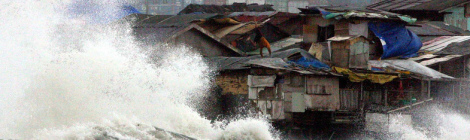
    Image: Globalsecurity.org

    Read more »

  • Sustainable Security

    Losing control over the use of force: fully autonomous weapons systems and the international movement to ban them

    Later this month, governments will meet in Geneva to discuss lethal autonomous weapons systems. Previous talks – and growing pressure from civil society – have not yet galvanised governments into action. Meanwhile the development of these so-called “killer robots” is already being considered in military roadmaps. Their prohibition is therefore an increasingly urgent task.

    Read Article →

  • Sustainable Security

    Mexico’s Conflicting Migration Policy Goals: National Security and Human Rights

    Mexico has rapidly become a major site of transmigration from Central America to the United States, as people move in search of employment opportunities or escape from social violence. This rise in migrant flows from Mexico’s southern border overlaps with problems of control of contraband, organised crime, and the trafficking of drugs and arms. However, the government’s militarised approach to the phenomenon means that the use of force and human rights violations go unresolved and military approaches to preserving public order go unchecked. As long as migration remains a security issue, instead of a developmental and human rights matter, it will not be tackled appropriately. Instead, the government must start to view the matter through a citizen, not national, security lens.

    Read Article →

  • Sustainable Security

    Mexico’s Conflicting Migration Policy Goals: National Security and Human Rights

    Mexico has rapidly become a major site of transmigration from Central America to the United States, as people move in search of employment opportunities or escape from social violence. This rise in migrant flows from Mexico’s southern border overlaps with problems of control of contraband, organised crime, and the trafficking of drugs and arms. However, the government’s militarised approach to the phenomenon means that the use of force and human rights violations go unresolved and military approaches to preserving public order go unchecked. As long as migration remains a security issue, instead of a developmental and human rights matter, it will not be tackled appropriately. Instead, the government must start to view the matter through a citizen, not national, security lens.

    Read Article →

  • Sustainable Security

    The Anthropocene denotes the current geological age, in which human activity has had a significant impact on climate and the environment. The pressing issue of this epoch is whether the global consequences of these interactions between humans and the environment can be governed on a global scale.

    The 1972 report to the Club of Rome on “The Limits to Growth” demonstrated the natural boundaries to human expansion which began in the Holocene era, following the end of the last glacial period around 12,000 years ago. The continued growth of human activities since the industrial revolution has become a driving force of reshaping the face of the planet into a new geological epoch, the “Anthropocene”, associated with multiple global consequences such as climate change, land degradation, resource scarcity and biodiversity loss. The Anthropocene is seen as a new geologic epoch in which humankind has emerged as a globally significant force capable of reshaping the face of the planet. The underlying human-environment interactions raise fundamental questions for global governance: Can nature be controlled and shaped on a global scale? Are human interventions a disturbing or regulating global force, avoiding or creating disasters? What are the limits of human expansion in the Anthropocene?

    Human growth and complex crises

    climate-ice

    Image by klem@s via Flickr.

    In the course of its history, the human population has been growing by increasing birth rates and lowering death rates, leading to the expansion of the human sphere in terms of capital, investments, income, technology, energy and resource flows, political power and violent forces of destruction. Despite Malthusian concerns about population growth causing scarcity of natural resources, intolerable pollution, mass starvation and other catastrophes, humans were able to overcome resource constraints and expand into new spaces through problem-solving capabilities, technical and social innovations that generated more wealth on a shrinking natural resource base. Continued pressure on natural resources and ecosystems challenge planetary boundaries in the Anthropocene, raising the question of whether a balance will be established by increased death rates or the reduction of birth rates. While the first pathway implies crisis, disaster and death, the second path may be associated with a sustainability transformation in demographic, economic and societal conditions within natural boundaries.

    These pathways are part of the “complexity turn” in the Anthropocene which is characterized by globalized networks among people, markets and institutions, accelerated processes and flows in transportation and communication, and manifold micro-macro interactions between natural and social systems. While complex systems are often robust against disturbances in the core region of stability, on the edge of critical thresholds between stability and instability, small variations and uncertainties can make a big difference and decide whether systems break down or create new ones, as symbolized by the famous “butterfly effect” in chaos theory.

    Beyond thresholds and tipping points chain reactions and risk cascades may be triggered which propagate in space and time and induce qualitative system changes. These include complex events such as natural disasters, stock market crashes, revolutions, mass exodus or violent conflicts. A world of ever growing complexity where responsibilities and solutions of crises are hidden behind smokescreens, may provoke over-simplifications, religious, populist and nationalist fundamentalisms, rhetoric against science and intellectuals, or resistance against globalized structures.

    With the chaotic breakdown of the East-West conflict in 1989, actions of individuals and groups triggered a chain reaction that within weeks led to the fall of the Berlin Wall and the breakup of the Eastern Block. A new world (dis-)order emerged in which multiple crises interacted in fractal and fragile international landscapes that continue to be unstable and full of surprises (see van Creveld 1991, Kaldor 1998, Münkler 2005, Scheffran 2008). Numerous factors and actors are interrelated, involving national, subnational and transnational actors in complex networks, crises and conflicts. Tight couplings lead to cascading crises that spiral out of control, including September 11, global economic crises, the Arab Spring, the wars in Iraq, Afghanistan, Libya and Syria, the civil war in Ukraine, the Greek debt crisis, the European refugee crisis and terror attacks in many countries. These events are interconnected through multiple channels that are often invisible.

    Climate change as a risk multiplier

    In this complex chain of crises, environmental change is connected with other problem areas through multiple linkages from local to global levels. More tipping points may emerge in the nexus of environmental degradation, climate change, poverty, and hunger which affect the living conditions in many parts of the world and could turn into severe security threats. Climate change is considered a risk multiplier, which disturbs the balance between natural and social systems and amplifies the consequences through complex impact chains. Among key pathways, climate change can affect the functioning of critical infrastructures and supply networks; intensify the nexus of water, energy and food; lead to production losses, price increases and financial crises in other regions through global markets; undermine human security, social living conditions and political stability; and induce or aggravate migration movements and conflict situations.

    In the most affected regions the erosion of social order and state failure may trigger a spiral of corruption, crime and violence. Particularly critical is the situation in fragile and failing states with social fragmentation, weak governance structures and inadequate management capacities. Human insecurity and personal instability interacts with social and political instability. The impact of environmental change could undermine the ability to solve problems and further dissolve state structures, possibly leading to their collapse.

    The Darfur conflict in Sudan has served as a prominent case where climate change is suggested as a threat multiplier in the complex nexus of population pressure, exploitation of land and forests, declining agricultural productivity, food insecurity, and the spread of diseases. While in some studies drought and desertification exacerbate the competition for resources between herders and sedentary farmers, others point to the long-term political roots of instability and violent conflicts, reinforced by national power games, regional struggles and global geopolitics that marginalized the Darfur region and fueled a spiral of violence.

    Similarly, several authors found devastating droughts in the years before the Syrian rebellion that hit the main growing areas of the country and forced many people to move to the cities. These changes combined with many other conflict drivers rooted in the country’s economic, social and demographic conditions, political failures of the Assad regime as well as the events following the US invasion of 2003, the Arab Spring of 2011 and the emergence of the Islamic State which question the role of climate change as a dominant factor.

    Limits to the Anthropocene

    In this complex nexus of overlapping crises and interconnected problem areas, the world may continue on a slippery slope of escalation, running full speed into natural boundaries and their forces. The challenge is to anticipate and avoid risky pathways by counteracting forces that slow down and change course towards a more sustainable, peaceful and viable world which avoids dangerous pathways and interventions (such as risky climate engineering),  allowing for a timely and self-organized system transformation that takes the limits of the Anthropocene into consideration. These include finite natural resources and limits to growth; ethical, social, political and legal constraints; limits of scientific knowledge and uncertainty. In an increasingly interconnected world, stabilization of human–environment interactions under conditions of climate change needs an integrative and interdisciplinary understanding of human–environment interaction to assess destabilizing developments that threaten survival and adapt to changing circumstances to ensure their viability.

    Social systems are not determined to aggravate crises situations but also have the ability to cope with problems like climate change and develop alternative pathways. To succeed, human responses and actions need to be timely and adequate compared to the speed, intensity and complexity of change. Concepts of anticipative and adaptive governance are needed to influence critical decision points and adjust actions along multiple causal chains to protect human security, strengthen societal resilience and sustainable livelihoods, and to develop collective adaptive strategies driving the planet through the complex and foggy landscapes of the future where information is limited and uncertain, but continuously updated. A lack of agreement on the underlying causes, on the risks to be expected and on the actions required is impeding progress.

    Governing transformations to sustainable peace

    Concepts of resilience, security, viability and sustainable peace can strengthen people’s social and economic capabilities in their effective, creative and collective efforts to handle the challenges of the Anthropocene. In a resilient social environment, actors are able to cope with and withstand the disturbances caused by climate change in a dynamic way that will enable them to preserve, rebuild, or transform their livelihood.

    Sustainable development seeks to balance economic, social and ecological issues for present and future generations and integrate the human sphere (socio-sphere) into the boundaries of the natural environment (eco-sphere), making conflicting objectives compatible:

    1. Sustain refers to preservation and upholding of natural resources as the life-enabling base of society and precondition for human existence.
    2. Development means the unfolding of opportunities and abilities to improve human well-being and promote societal progress.

    Peace rests on similar principles regarding the existence and development of human rights:

    1. Preservation and protection of the existence, integrity and identity of each individual by excluding violence.
    2. Self-fulfillment and unfolding of the individual through equal distribution of development opportunities.

    Thus, upholding and unfolding of humans and nature are common principles of sustainable peace, which addresses both the negative interactions between armed conflict, environmental destruction and low levels of development (vicious cycle) as well as positive linkages between human development, environmental protection and peace-building (virtuous cycle).

    In addition to preservation and development (upholding and unfolding), a third task includes the shaping of a viable world, aiming for its “conformation” to fit the current state into  a  proper  shape,  form  or  design,  creating a balanced relationship between the real and the desired world, between human society and nature. In the triangular relationship between sustainability, development and peace, upholding current abilities serves as a basis for unfolding enabling opportunities to facilitate the conformation of human–environment interaction pathways towards a viable world. This approach is compatible with the multi-level-perspective of socio-technical transformations that describe micro-macro transitions between regimes, niches and landscapes.

    Key viability strategies, supporting a “new climate for peace”, include climate mitigation and adaptation; the building of networks, the cultivation of diversity, flexibility and justice; migrant networks that facilitate the exchange of knowledge, income and other resources; new capabilities to manage disasters; arms control, non-proliferation and disarmament; regional security concepts, crisis prevention, conflict resolution and confidence-building; as well as innovative institutional frameworks and legal mechanisms.

    The 2015 Paris Agreement offers a first framework of opportunities through setting boundaries of global warming and national commitments of emission reductions as well as instruments for financial and technology transfer between industrial and developing countries. While the scope and effectiveness of these measures may not yet be sufficient to prevent dangerous climate change, they could lay the foundations and attract political support from local to global levels for a sustainable and peaceful transformation towards governing the Anthropocene.

    Further readings by the author

    Brauch, H.G., Scheffran, J. (2012) Climate Change, Human Security, and Violent Conflict in the Anthropocene. In: J. Scheffran, M. Brzoska, H.G. Brauch, P. M. Link, J. Schilling (Eds.) Climate Change, Human Security and Violent Conflict, Springer, 3-40.

    Lüthje, C., Schäfer, M., Scheffran, J. (2011) Limits to the Anthropocene. What are the challenges and boundaries of science for the post-normal age? Geophysical Research Abstracts, 13, EGU2011-11795.

    Maas, A., Scheffran, J. (2012) Climate Conflicts 2.0? Climate Engineering as Challenge for International Peace and Security, Special Issue, Security and Peace, 30(4): 193-200.

    Scheffran, J. (2008) The complexity of security. Complexity 14(1): 13-21.

    Scheffran, J., Brzoska, M., Kominek, J., Link, P.M., Schilling, J. (2012) Disentangling the Climate-conflict Nexus: Empirical and Theoretical Assessment of Vulnerabilities and Pathways, Review of European Studies, 4(5): 1-13.

    Scheffran, J., Ide, T., Schilling, J. (2014) Violent climate or climate of violence? Concepts and relations with focus on Kenya and Sudan, The International Journal of Human Rights, 18 (3): 369-390.

    Scheffran, J. (2015) Complexity and Stability in Human-Environment Interaction: The Transformation from Climate Risk Cascades to Viable Adaptive Networks. In: Kavalski (ed.), World Politics at the Edge of Chaos, 229-252.

    Scheffran, J. (2016a): Der Vertrag von Paris: Klima am Wendepunkt?, WeltTrends, Nr. 112, 24(2): 4-9.

    Scheffran J. (2016b) From a Climate of Complexity to Sustainable Peace: Viability Transformations and Adaptive Governance in the Anthropocene, in: Brauch et al. (ed.) Handbook on Sustainability Transition and Sustainable Peace, Springer, 305-346.

    Jürgen Scheffran is professor in the Institute of Geography at the University of Hamburg and head of the Research Group Climate Change and Security (CLISEC) which is part of the Excellence Cluster Integrated Climate System Analysis and Prediction (CliSAP) and the Center for Earth System Research and Sustainability (CEN). After his PhD at Marburg University he worked in interdisciplinary research and teaching at Technical University Darmstadt, Potsdam Institute for Climate Impact Research, and the University of Illinois. His fields of interest include: climate change, resource conflicts and human migration; energy security and water-energy-food nexus; land use, rural-urban interactions and river-coastal regions under sea-level change; governance in the Anthropocene (mitigation, adaptation, climate engineering, sustainability transition); technology assessment, arms control and international security; mixed methods in complex systems research (agent-based modelling, social network analysis, field research). He was a Visiting Professor at the University of Paris (Sorbonne), consultant to the United Nations, the Technology Assessment Office of the German Parliament, the Federal Environmental Agency, and the German delegation to the climate negotiations.

  • Sustainable Security

    Drugs and Drones: The Crime Empire Strikes Back

    Ever advancing remote warfare technology is being increasingly used by law enforcement agencies to counter drug trafficking. In response, drug cartels are also adopting new technology to smuggle and distribute drugs. However, the technological superiority of law enforcement-military actors is also causing criminal and militant groups to adapt by employing the very opposite tactic, by resorting to highly primitive technology and methods. In turn, society is doing the same thing, adopting its own back-to-the-past response to drug trafficking and crime.

    Read Article →

    From Surveillance to Smuggling: Drones in the War on Drugs

    In Latin America drones are being used as part of the War on Drugs as both regional governments and the US are using surveillance drones to monitor drug trafficking and find smuggling routes.. However, as drones are increasingly being used by drug cartels themselves to transport drugs between countries, could Latin America find itself at the forefront of emerging drone countermeasures?

    Read Article →

    Losing control over the use of force: fully autonomous weapons systems and the international movement to ban them

    Later this month, governments will meet in Geneva to discuss lethal autonomous weapons systems. Previous talks – and growing pressure from civil society – have not yet galvanised governments into action. Meanwhile the development of these so-called “killer robots” is already being considered in military roadmaps. Their prohibition is therefore an increasingly urgent task.

    Read Article →

    Too Quiet on the Western Front? The Sahel-Sahara between Arab Spring and Black Spring

    While the world’s attention has been focused on the US-led military interventions in Iraq and Syria a quieter build-up of military assets has been ongoing along the newer, western front of the War on Terror as the security crises in Libya and northeast Nigeria escalate and the conflict in northern Mali proves to be far from over. In the face of revolutionary change in Burkina Faso, the efforts of outsiders to enforce an authoritarian and exclusionary status quo across the Sahel-Sahara look increasingly fragile and misdirected.

    Read Article →

    Drone-tocracy? Mapping the proliferation of unmanned systems

    While the US and its allies have had a monopoly on drone technology until recently, the uptake of military and civilian drones by a much wider range of state and non-state actors shows that this playing field is quickly levelling. Current international agreements on arms control and use lack efficacy in responding to the legal, ethical, strategic and political problems with military drone proliferation. The huge expansion of this technology must push the international community to adopt strong norms on the use of drones on the battlefield.

    Read Article →

  • Sustainable Security

  • Sustainable Security

    One year on from the French intervention in Mali, Saharan jihadist groups continue to threaten not only Mali but Algeria, Libya, Niger, Nigeria and Tunisia. Will French and US plans to expand their military presence in the Sahel combat, contain or exacerbate the threat from militants displaced from Mali?

    Fragmentation, Displacement and Reconsolidation:  The AQIM Threat in 2014

    French General Pillet, Chief of Staff of the MINUSMA Kidal, during the visit of the Joint Security Committee in charge of the observance of the cease-fire between the Malian army and armed groups from the north. Source: MINUSMA (Flickr)

    French General Pillet, Chief of Staff of MINUSMA, Kidal, during the visit of the Joint Security Committee in charge of the observance of the cease-fire between the Malian army and armed groups from the north. Source: MINUSMA (Flickr)

    Last January, the French military, supported by African troops and 10 non-African air forces, intervened militarily in Mali at the request of its transitional government. Over the following four weeks they recaptured all of the towns in the northern half of Mali. This vast desert region had been seized by Islamist and separatist militia in March-April 2012 and declared independent as the ‘State of Azawad’, the Tuareg name for their homeland in northeast Mali. Since then, French troops have continued to conduct security operations across northern Mali to locate and ‘neutralise’ militants associated with Al-Qaida in the Islamic Maghreb (AQIM), a jihadist group of Algerian origin, and its West African splinter groups. Reduced numbers of French forces now support Malian and African forces within the United Nations Multidimensional Integrated Stabilization Mission in Mali (MINUSMA).                                                                                                                                                                                                                                                                                                                                                                                                                                                                                                                                                                                                                                                                                             However, the final quarter of 2013 saw an increase in violence in northern Mali, including terrorist attacks, violent protests and inter-communal violence. Moreover, the French advance into northern Mali displaced rather than destroyed AQIM and its two local allies, the Movement for Unity and Jihad in West Africa (MUJAO) and Ansar Dine, a Tuareg Islamist group. Their impact has been particularly felt in Niger and Libya and may also have bolstered jihadist groups operating in northern Nigeria, Tunisia and Egypt’s Sinai. The lawless desert of southwest Libya is believed to be the new stronghold of AQIM.

    A new group, al-Murabitun, combining MUJAO and the most active elements of AQIM’s Saharan front, now appears to pose more of a threat to western and West African interests than AQIM. This is because its strategic direction is towards the weak states of West Africa, including Niger, Mali and Mauritania, where critical infrastructure and individuals are more difficult to protect. It is also better connected to the kidnapping and trafficking enterprises that fund Saharan militancy, and more deadly. During 2013, its militants were behind frequent raids on Gao (northern Mali’s main town), on a prison, garrison and French-owned mine in Niger, and on the Algerian gas plant at In-Amenas. These audacious operations attest to its range, training, discipline and cosmopolitan membership. If it finds common purpose with the larger jihadist groups in northern Niger, as some analysts suggest, it could represent a severe threat to stability in the already shaky regional power.

    French Repositioning in the Sahel

    In recognition of the expansion of jihadist groups, France announced a major repositioning of its forces in Africa in January. The new French military posture will refocus from large coastal bases, designed to train, transport and supply African Union and regional rapid reaction forces, to smaller forward deployments in the Sahel and Sahara. 3,000 French troops will now be based indefinitely in Mali, Niger and Chad.

    U.S. soldiers and French commandos marine conduct a reconnaissance patrol during a joint-combined exercise in Djibouti. Source: Wikipedia

    U.S. soldiers and French commandos marine conduct a reconnaissance patrol during a joint-combined exercise in Djibouti. Source: Wikipedia

    The new posture is heavily influenced by US ‘War on Terror’ strategy in Africa, Yemen and south-west Asia, relying heavily on Special Forces, air strike capacities and unmanned aerial vehicles (UAVs). French and US forces (including contractors) already share facilities in Djibouti, Niger, Burkina Faso and Mauritania, and there is a small US liaison detachment with the French Combined Air Operations Centre in Chad. The French repositioning is explicit about confronting Islamist terrorist groups and the threat to regional security posed by the security vacuum in southern Libya. While the repositioning focuses on Mali, Niger and Chad, supplied via a coastal base in Côte d’Ivoire, it will actually include deployments to over a dozen small bases and elite detachments in the Sahel and Sahara, covering at least seven countries. In some cases it will mean French Special Forces reoccupying desert forts long abandoned by the Foreign Legion.

    There will also be greater use of aerial reconnaissance and targeting. French Navy patrol aircraft already criss-cross the Sahara and two MQ-9 Reaper UAVs arrived with French forces at Niamey airport in December after the US fast-tracked French acquisition of and training on these ‘hunter-killer’ drones. These double the effective range of the Harfang target-acquisition UAVs formerly used by the French in the Sahel, bringing all of Mali, Niger, almost all of the rest of West Africa and much of Algeria, Chad and southwest Libya into range.

    France also makes greater use of combat aircraft in the Sahel-Sahara, deploying fighter aircraft from its long-term base in N’Djamena, Chad to Bamako and Niamey airports. This brings northern Mali into range. Since October, French fighter-reconnaissance aircraft have deployed to Faya-Largeau in northern Chad, which brings southern Libya well within range. French Special Forces and armed helicopters have also operated from Burkina Faso, Niger and Mauritania in pursuit of AQIM.

    US and China Extend Their Presence

    French and US Reapers now operate from the same facility at Niamey airport, set up by the US in February 2013. While US UAVs in Niger are unarmed, it is unclear if French Reapers will be used for strike missions. US armed UAV bases in Djibouti, Ethiopia and Seychelles currently bring all of the Horn of Africa, East Africa and most of Arabia within range. US private military contractors have also flown unarmed, unmarked light aircraft on surveillance flights all across the Sahel belt since at least 2007. Using covert hubs in Burkina Faso and Uganda and smaller airfields in Mauritania, Niger and South Sudan, they have sought AQIM and the Ugandan Lord’s Resistance Army (LRA).

    Since 2011, US Special Forces have established small bases in the Central African Republic (CAR), South Sudan and the Democratic Republic of Congo (DRC) to assist Ugandan forces seeking the LRA there. They also provide training to several African militaries countering the LRA. As with programmes in Mauritania, Mali, Niger and Chad, these programmes have focused on creating elite counter-terrorism units. Unfortunately, all of these countries plus the CAR and South Sudan have experienced coups d’état or major army mutinies since this assistance began.

    In order to combat Boko Haram, a Nigerian Special Operations Command was announced on 14 January with the US military providing advice, training and equipment. Massive attacks by Boko Haram since December suggest that the Nigerian army’s use of indiscriminate force in the northeast has not weakened the insurgency. Rather, the state of emergency is likely to have strengthened the recruitment base of Boko Haram since May.

    China and Japan are also increasingly active in the Sahel. Chinese parastatals are the dominant actors in the oil industries of Sudan/South Sudan, Chad/Cameroon and Niger. They also mine uranium in Niger, and China is the primary buyer of iron ore from Mauritania’s vast desert complexes. So far, China is the only non-African state to deploy more than a few dozen troops with MINUSMA.  Japan, which saw ten of its nationals killed in the January 2013 militant attack on Algeria’s In-Amenas gas plant, has pledged $1 billion to stabilise the Sahel, including training of counter-terrorism units.

    Compromised Alliances

    This expansion of deployments and offensive operations relies on the status of forces agreements between western powers and’ friendly’ states such as Algeria. France, for example, depends on an air corridor across the Algerian Sahara. Securing such access puts host governments in a position of greater power. The highly authoritarian regime in Algiers – the world’s fifth or sixth largest arms importer – no longer faces western pressure to improve its dismal human rights record. Indeed, it has received friendly visits from the leaders of France and the UK and the US Secretary of State since late 2012. Mauritania’s military-based government faced little criticism over its unfair elections in November.

    Chad, Uganda and Ethiopia may be the biggest regional beneficiaries of the militarisation of the Sahel. Each has been governed for a quarter-century by a former armed movement. They face little censure of their authoritarian and undemocratic internal policies and have become more assertive as regional military powers. Ethiopia has forces in Somalia while Uganda now has combat troops in operation (by agreement) in Somalia (under AU command), South Sudan, the DRC and the CAR.

    Boosted by expanding oil revenues, French alliance and the demise of Libya’s Gaddafi regime, Chad has greatly expanded its military reach into Mali, Niger and the CAR, where its troops and citizens now face a violent backlash. It is also a Security Council member for the next two years and will be expected to help guide decisions on UN peacekeeping operations in Mali, South Sudan and potentially the CAR and Libya.

    Burkina Faso, long relied on by Paris to negotiate with armed groups in francophone West Africa, is also facing unaccustomed turbulence in 2014 as its president seeks to permit himself an additional term of office. Algeria, which is wary of France’s military deployments on its southern border, is set to take over from Burkina the mediation of talks between Mali’s government and secular Tuareg and Arab rebels.

    Foundations in Sand

    In some respects, the eviction of AQIM and its allies from northern Mali has made the wider Sahara a less safe place, without obviously impeding the capacity of jihadist groups to threaten Europe. In 2014, southwest Libya and parts of Niger are not necessarily less safe havens than northern Mali was in 2012. The insurgency has moved closer to the Mediterranean and closer to critical European energy infrastructure in Algeria, Libya, Tunisia and Niger (uranium). Unlike heterodox Mali, controlling Libya’s chaotic state is likely to be of interest to Arab Salafist groups, including AQIM.

    As elsewhere, the western military approach to countering Islamist insurgency in the Sahel rests on very unsteady foundations. This applies to the political legitimacy of allied regimes, the stability and security of locations hosting French and US bases, the traumatic historical legacy of France as the former colonial power, and the potential for counter-insurgency tactics to provoke wider alienation and radicalisation. However asymmetric its military technology, reinforcing a new line of castles in the Saharan sand may be as futile a gesture in France’s long retreat from empire as the UK’s last stand in Afghanistan.

    Richard Reeve is the Director of the Sustainable Security Programme at Oxford Research Group. He has researched African peace and security issues since 2000, including work with ECOWAS and the AU. Richard’s most recent security briefing ‘Security in the Sahel (Part II): Militarisation of the Sahel is available here.

  • Sustainable Security

    US Drone Strikes in Pakistan: ineffective and illegitimate

    Strikes by unmanned combat air vehicles, or armed drones, have become the tactic of choice in US counterterrorism efforts in Yemen, Somalia and, the topic of current controversy, Pakistan. The lack of transparency, dubious effectiveness, civilian casualties and negative consequences for US national security being highlighted by current debate means that Washington needs to re-evaluate its approach.

    Read Article →

  • Climate Funding: Creating a Climate for Conflict? Insights from Nepal

    Exclusively written for sustainablesecurity.org

    During a recent field trip to mid-monsoon Nepal, stories of floods affecting vulnerable communities across the country dominated the daily headlines. At the same time, international donors are pouring in funds in an attempt to help the vulnerable cope with the impacts of climate change we are already feeling. Last week, the Adaptation Fund, a fund set up by the UN to help poor countries cope with the impact of climate change, became operational. But are these funds helping – or are they contributing to the problem?

    With less than two months to go until the next global summit on climate change in Mexico, the issues for agreement are about reducing carbon emissions and – more importantly for poor countries – how much money the developed countries, who have the main responsibility for global warming, will put on the negotiating table to help people in poorer countries cope with the consequences. But these are not the only important issues.

    One issue that is barely acknowledged is the heightened risk of political instability and conflict related to climate change. Factors linking climate change to an increased potential for instability and conflict include water scarcity, accelerated land degradation, decreased food production, and indeed the management of the climate funds themselves.

    The risk will be greatest where governance is weak. Nobody will dispute that this is the case in Nepal. 

     ‘A Climate of Conflict’, a report by International Alert, estimates that just under three billion people live in 56 conflict-affected countries, where climate change could increase the risk of political instability. Nepal is one of the 56 at risk.

    Climate policy makers, however, are largely silent on the matter. International Alert’s latest research finds that new funds, already coming into the country’s coffers with more still in the pipeline, could make the situation worse if they don’t take account of the complex linkages between environmental change, security and governance.

    What should inform climate responses?
    Responses to climate change have to respond to the political and social realities of fragile contexts such as Nepal or they will not work.

    Climate change is not only a climate issue. Climate change will affect political stability, development, government, equity, trade and the national economy. And these issues all affect the ability of people and the governments to respond constructively to the challenges climate change generates. The problems are interlinked, so the responses must be too.

    At a meeting of the South Asia Network on Security and Climate Change (SANSaC) co-hosted by International Alert and the EU on 3rd September, SANSaC recommended that in post-conflict situations like Nepal, adaptation strategies should address the broader dimensions of community resilience.


    Resilience is multi-dimensional.

    Adaptation strategies should be defined not only by the nature of the natural hazard that is faced, but also on the basis of understanding the systems of governance and power. This must involve a deep understanding of the local context, and avoid pitting groups against each other. They must also address broader risks to resilience such as security. For example, a new Government of Nepal pilot project to address energy security and reduce deforestation through promotion of biogas plants is being rolled out in nine districts. The switch to biogas aims to curb deforestation for fuel wood thereby decreasing risks of soil erosion and landslides. But the pilot implementation was halted in three districts – Saptari, Udayapur and Siraha – due to the security situation in those places. Such decisions leave these communities doubly vulnerable: to the lack of sustainable energy sources, and to pre-existing insecurity.


    Who are the ‘most vulnerable’?

    Donors often speak about targeting the ‘poorest and most marginalised’ but base their programming on a generalised conception of who these people are. Speak to people in the villages and they’ll tell you. ‘A poor person is a poor person, regardless of whether he is Brahmin or Janjati. Ethnicity is a political construct. The local context is socially and culturally complex. It is social and cultural factors that determine economic activity – not ethnicity’ a local from Sunsari explained. ‘It’s not so simple that because you are a Brahmin you have all the resources and rights, and because you are a janjati you don’t’. Local organisations must understand the local reality and they must make central governments and international actors aware of this complex reality.


    A further problem already giving rise to local community level grievances is a culture of dependence on funds. ‘Everyone’s happy to get funds from donors but when they run out of donor funding, they come back to local government’ stated a local municipality employee in Dhankuta. This dependence on donor assistance usurps local authorities’ roles and responsibilities and undermines the social contract between communities and local government. This relationship between government and the governed is already fraught and may not be able to take the strain of well intended but ill-advised interventions.


    Likewise, peace and reconstruction efforts need to be climate-proofed by paying attention to the availability of resources for livelihoods such as agriculture or returning ex-combatants or people displaced by conflict. These could be under pressure because of climate change. For example, possible future plans to reintegrate ex-combatants from cantonments into villages where they may hope to make a living from agriculture could cause and face future problems. Farmers struggling with changing rainfall patterns and only getting one harvest per year rather than two are seeing their rice yields falling. The prospect arises of returned fighters becoming resentful unemployed farmers, and thus potential recruits, with their combat experience, in instability.


    More broadly, direct access to large-scale adaptation funding combined with low capacity and high corruption within government will limit the ability to effective use it. It is highly likely that funds will be diverted into the hands and pockets of one faction or another in the political elite. With public awareness of these funds coming in, people’s expectations for support – for example compensation for flood victims – are rising, and where they are not met, we are likely to see an increase in protests and political instability. In Nepal’s Koshi basin, recent experience shows that community protests are easily hijacked by political and criminal gangs who promote violence for their own ends. Misuse of funds may thus be the primary factor exacerbating instability.

    If responses to climate change take account of the broad dimensions of what makes people resilient – not just drought-resistant crops and embankments to protect them from floods – but also the interlinked factors of livelihoods options, good infrastructure, social inclusion and effective governance, there’s a good chance that responses to climate change could yield a double dividend: increasing resilience to both climate change and conflict.


    Failure to take account of the linkages however could result in the billions of dollars of funding for adaptation actually becoming part of the problem.


    Janani Vivekananda is a senior advisor on climate change and security at international peacebuilding organisation International Alert

    Image Source: TheDreamSky

  • New Report: Britain Needs Full International Security Review

    The new British Defence Secretary, Dr Liam Fox, has now announced the beginning of the long-awaited Strategic Defence Review and the indications are that the process will be completed before the end of 2010. Given Britain’s role in the European Union and NATO, and its close links with the United States, the outcome of the review will be watched with interest in many countries.

    The incoming Conservative-Liberal-Democrat coalition government believes that a Strategic Defence Review is urgently required for a number of reasons, including

    • the inability of the UK Ministry of Defence to maintain current commitments and programmes on present-day funding levels;
    • the high cost of existing and future programmes;
    • the recent experience of wars in Iraq and Afghanistan and how far the methods that have been employed, have achieved their goals; and
    • serious constraints on UK public spending that are likely to persist for up to a decade.

    The new government has also set up a cross-departmental National Security Council that will further develop the trend to a national security strategy established by the Labour government. While this is a welcome move, it comes in the context of recent programme decisions made ahead of the review that, if not reversed, will direct the defence posture in such a narrow manner that a wider and much-needed reappraisal of Britain’s security will prove impossible. Instead, questions need to be asked about what is needed to limit conflict and create a more peaceful environment in an era of new global security challenges.

    The two most significant programmes are:

    • The aircraft carrier/F-35 strike aircraft programme
    • Like-for-like replacement of the Trident nuclear system

    These are very substantial in terms of costs, but their greater importance is in the manner in which they will dictate a particular role for the UK defence posture – what is in effect a scaled down version of the much larger US global power projection capability. Essentially, they will determine a role for Britain in international security which is out of date and more related to the Cold War, bearing little relation to the issues of global insecurity and conflict, which will be dominant in the next two to three decades. 

    Britain’s National Security Strategy

    In the last two years of the Labour government, some interesting attempts were made to inject some new thinking into UK defence policy. The first was the National Security Strategy of March 2008, and more recently, there was a Defence Green Paper published earlier this year. Following the Green Paper, the Conservative Party, then in opposition, published its own national security Green Paper, A Resilient Nation.

    While the National Security Strategy of 2008 was published in an environment in which the war on terror, Iraq and Afghanistan were hugely prominent, it did seek to look well beyond the immediate circumstances:

    “The Cold War threat has been replaced by a diverse but interconnected set of threats and risks, which affect the United Kingdom directly and also have the potential to undermine wider international stability. They include international terrorism, weapons of mass destruction, conflicts and failed states, pandemics and transnational crime. These and other threats and risks are driven by a diverse and interconnected set of underlying factors, including climate change, competition for energy, poverty and poor governance, demographic change and globalisation.” (NSS para 1.3)

    This wider approach with its recognition of the underlying trends of climate change, marginalisation and energy insecurity, also comes through to a more limited extent in the recent Green Papers, albeit with more of an emphasis on national security in the Conservative contribution. It goes some way towards the analysis of global challenges, developed in recent years by Oxford Research Group and other organisations that see the need for a radical re-thinking of the approaches of countries such as Britain to international security (see Global Security After the War on Terror).

    While ORG is not arguing against the maintenance of defence forces per se, it places much more emphasis on long-term conflict-prevention. It argues that the more substantive problems that will be faced in the coming decades, stem from a dangerous combination of severe environmental constraints, especially climate change and energy shortages, and an increasingly divided world community in which the benefits of globalised economic growth have been excessively concentrated in about one-fifth of the global population. In such circumstances there is the very strong risk of societal breakdown as well as desperate responses from within the majority of the world’s people who are marginalised and will be under increasing environmental constraints.

    There is the further risk that the main emphasis for security policies will be on suppressing such actions and maintaining the status quo, rather than responding to the underlying drivers of insecurity. ORG has long argued that the much more appropriate response is to embark on a transition to low carbon economies to combat the fundamental problem of climate change, while developing a socio-economic system that acts to reverse the dangerous trend towards the marginalisation of the majority of the world’s people. It also argues the need to shift resources to the development of conflict resolution techniques to deal with radical disagreement.

    What is significant about some of the thinking in the National Security Strategy and the two Green Papers is that the analysis of future dangers, implicit in an environmentally constrained and economically divided world, is present and the risks are acknowledged. What is not done, however, is to follow this through in terms of what it means for an integrated strategy, involving major aspects of economic and environmental policy. Moreover, the timing of two major military projects that are in the early yet crucial stages of their development means that unless decisions are reversed, the possibility of entering into a genuinely far-sighted strategic security review is greatly diminished, if not rendered impossible.

    The first project is the planned replacement of the Trident nuclear force with a broadly similar system and the second is the building of two very large new aircraft carriers deployed with a maritime variant of the US-produced F-35 strike aircraft. The carriers will be the largest warships ever to see service with the Royal Navy and will give the UK a global strike capability that it has not had for close to forty years, harking back almost to the days of Empire.

    The sheer scale of the two projects – the planned nuclear force replacement and the carrier procurement – will inevitably determine the UK defence posture. In essence, the UK’s ability to intervene in conflicts in the Persian Gulf and elsewhere will be much increased, and it will have a nuclear strike capability that could, in extreme circumstances, be available in support of operations in overseas theatres.

    However, the cost of constructing and deploying such systems will be so high, especially at a time of financial stringency, that there will be relatively little left for other programmes. What is more, the whole tenor of the defence posture will be one of maintaining control in a fragile and uncertain world, rather than addressing the underlying trends likely to result in that fragility and uncertainty – a matter of keeping the lid on problems or “liddism” as it has been termed.

    Trident

    Britain’s current nuclear force comprises four Vanguard-class ballistic missile submarines, each capable of deploying with 16 missiles. While these are usually fitted with three independently-targetable warheads of about 100 kilotons of explosive power (8x the Hiroshima bomb), some are deployed with a much smaller single warhead for what has variably been called tactical or sub-strategic use. Neither term is now used, not least as they give the impression of a willingness to use nuclear weapons in less than extreme circumstances of national survival. – UK governments prefer to avoid acknowledging this aspect of the UK nuclear posture.

    Britain maintains its nuclear force with at least one missile submarine at sea at any one time – what is termed “continuous at-sea deterrence” or CASD.

    The Trident system is due for renewal by the 2020s and current plans involve a broadly like-for-like replacement. Given that the Aldermaston/Burghfield nuclear weapons development and production complex in Berkshire costs around £1 billion a year, and given the cost of the new submarines and the high cost of deploying them with numerous support facilities, the likely life-time cost of replacing Trident will approach £100 billion, much of it front-loaded to the next 10-15 years. The intention of the previous Labour government was to exclude the Trident replacement programme from a post-election Strategic Defence Review. That was also the intention of the Conservatives when in opposition and is likely to remain the case, in spite of some Liberal-Democrat concerns over the Trident replacement issue.

    Given the commitment of significant world political figures, including President Obama, to the idea of moving towards a nuclear-free world, there are major steps that the British government could take to further progress in that direction. They include:

    • Cutting the UK nuclear stockpile from the present size, estimated at 160 warheads, to under one hundred;
    • Ending continuous at-sea deterrence and mothballing one of the four submarines; and
    • Ruling out the hugely expensive like-for-like replacement of Trident and including the options of going for a much more limited nuclear system, or even considering phasing out nuclear weapons altogether.

    Such moves do not in themselves involve the UK giving up its nuclear forces in the short term but they would signal a strong commitment to substantially lower nuclear forces while also leaving open the possibility of going further, should the international and domestic political environments allow. They would also make it easier to have a comprehensive security review which would not be possible if the nuclear question is excluded.

    The Aircraft Carriers

    The second major issue is the carrier programme. The two new carriers, the 65,000-tonne Queen Elizabeth-class ships, each nearly three times the size of the current Invincible-class ships, are large vessels capable of a range of uses, but the reality is that they are intended as force-projection warships equipped with an extremely expensive new strike aircraft. The combined total order for the carriers and the RAF is expected to be 130 planes at a cost per plane of £94 million, although this cost continues to rise. Along with escorts and support ships, maintaining and deploying the carriers will dominate naval capabilities for the lifetime of the ships.

    The Lockheed F-35, in particular, is already a greatly troubled project with substantial cost overruns and long delays. In some ways, the problems facing this project are reminiscent of the Eurofighter project, a Cold War-era plane that should have been cancelled in the early 1990s but had built up too much momentum for politicians to take such a decision. Famously described in 1997 by a former defence minister, Alan Clark, as “essentially flawed and out of date”, he commented on its role in job creation thus: “we must find a less extravagant way of paying people to make buckets with holes in them”. Eurofighter survived – as the Typhoon – in smaller numbers than planned, and was eventually adapted at great cost, to fulfil some new roles. at great cost, to fulfil some new roles. It was, though, very much an example of a project overtaken by events. The US F-35 programme is also essentially a project of the 1990s.

    The planned British purchase of F35 strike aircraft in combination with the carrier programme will be more of an imperial throwback than a real contribution to Britain’s security.

    The entire UK carrier/F-35 programme should be cancelled. Replacements might include two much smaller sea control ships utilising the rapidly developing UCAV (drone) technologies, with a much scaled-down purchase of one of the F-35 alternatives currently available.

    The real problem here is that a serious review of Britain’s security cannot be done if the future defence posture is already dictated by Trident replacement and the carrier/F-35 programme. The right option therefore is to scale down the existing Trident force, review its replacement and cancel the carrier/F-35 programme before much more money is wasted.

    The Issue of Procurement

    Perhaps the most serious financial issue facing the Ministry of Defence is the persistent failure to control the cost of individual programmes. Among current programmes that have hugely overrun their original estimates, the most extreme is the replacement of the Nimrod MR2 maritime patrol and surveillance aircraft with the Nimrod MRA4. This was due to be deployed in 2003, was subject to innumerable delays and cost increases and will not now enter service until 2012. Only 9 aircraft will be procured instead of the original 21, largely because of the huge cost increases currently estimated at around £400 million per aircraft.

    Because of many problems with the current MR2, including concerns over airworthiness, these planes were withdrawn from service two months ago, leaving the RAF to try to fill the gap with a mix of other aircraft and helicopters, none of them remotely comparable in the maritime role to the MR2. The MR2/MRA4 saga is one of many examples of delayed programmes and cost overruns that have plagued defence procurement for many years.

    Successive governments have sought to bring costs and programmes under control but with very little success, mainly because of the nature of what was described by President Eisenhower, more than fifty years ago, as the military industrial complex. For Britain, one of the key issues is that the complex is essentially self-organising but not self-regulating. Very few companies operate in the advanced defence sector, and there is little competition as well as a pervasive climate of mutual interest. Thus, senior civil servants and senior military, especially those concerned with procurement, are frequently able to acquire lucrative consultancies not long after they retire, and independent oversight of large programmes is effectively absent. Successive defence select committees have had little impact and the National Audit Office concentrates on individual programmes and is liable to be constrained by issues of secrecy and restricted terms of reference.

    Any serious defence/security review has to address the procurement issue, even though it will be singularly difficult to come up with any effective measure of oversight. At the same time, there are lessons to be learnt from the evolution of the Police Complaints Authority and, perhaps more significantly, the Financial Services Authority, especially as the latter has recently shown itself willing to take on major financial institutions.

    A viable option would be to establish a Defence Procurement Authority, outside of the control of the Ministry of Defence, which would provide the continuing scrutiny of defence procurement as a whole which has been so singularly lacking in the past.

    Conclusion

    Britain is beginning to embrace the idea of looking at international security in a manner that goes beyond a traditional defence review, with the National Security Strategy, the Green Papers and the new National Security Council being evidence of this. In the face of current financial constraints and the carrier/Trident issue, though, there is every sign that the forthcoming defence review will be very limited in its remit, and therefore fundamentally inadequate.

    Instead:

    • The review should be inter-departmental and overseen at Cabinet Office level.
    • It should address the issue of defence procurement.
    • It should be wide-ranging and able to develop integrated policy on broadly-based global security issues, such as climate change, economic marginalisation and conflict-prevention.
    • It will not be able to do this effectively, unless the carrier/F-35 programme is cancelled and replaced with a smaller and much more versatile option, and the Trident force and its replacement are substantially scaled down.
    • Each constrains an effective and far-sighted review – together they make a genuine review well-nigh impossible.

     www.oxfordresearchgroup.org.uk

  • Sustainable Security

    The European Union (EU) has recently emerged as an international peace meditator, but emerging challenges, including the potential exit of the UK from the EU, may prevent it from strengthening its ability to mediate conflicts.  

    Mediation is an instrument of international conflict management through which third parties seek to contribute to a peaceful resolution of (violent) conflicts. While states are the dominant and most frequent providers of mediation, international organizations are not far behind. Recently, the European Union (EU) has emerged as a relatively new player in the field, acting both as a mediator itself and as a member of collective coordination mechanisms to support peace processes such as UN Contact Groups and Groups of Friends. Current initiatives such as the EU-facilitated dialogue between Belgrade and Pristina have demonstrated the EU’s potential as peace mediator.

    However, external and internal crises may prevent the EU from further strengthening its institutional capacities and resources for mediation. Externally, challenges to European security such as the civil war in Syria, the threat posed by the so-called Islamic State and the armed conflict in Eastern Ukraine in the context of rising tensions between NATO and Russia could lead to a shift in the EU’s foreign and security policy back towards a more traditional, “hard security” approach that focuses on the development of military instruments and defence cooperation. Internally, the results of the UK referendum on 23 June 2016 and a potential exit of the UK would certainly open up a debate on the future of EU foreign and security policy without one of its most influential member states. The fact that the EU’s long-awaited Global Strategy on Foreign and Security Policy will be published a week or two after the UK referendum suggests that the EU is well prepared to take the potential effects of a ‘Leave’ vote on this policy field swiftly into account. However, it is nevertheless plausible to assume that a ‘Brexit’ would push the EU towards a decisive crossroads as regards to the future development of its foreign and security policy, also potentially affecting its engagement in the field of peace mediation.

     The EU’s track record in peace mediation

    rock-cohen

    Image by Rock Cohen via Flickr.

    Although the number of EU mediation efforts is still relatively marginal compared to UN mediation involvement, the EU has nevertheless established a considerable track record as mediator in the past ten to fifteen years. During High Representative (HR) Javier Solana’s terms of office, mediation became an increasingly important element of the EU’s foreign and security policy toolbox. For example, in August 2001 the EU together with the US managed to broker the Ohrid Framework Agreement settling the conflict between the Macedonian government and the Albanian minority in 2001. A few months later, the High Representative and his team became involved in a mediation process between Serbia and Montenegro, which led to the Belgrade Agreement on the formation of a state union in March 2002. While the Western Balkans certainly remained one of HR Solana’s key priorities, the EU also played an important role in the multilateral effort to mediate the political crisis in Ukraine in the context of the country’s ‘Orange Revolution’ in 2003 and was a key supporter of the efforts by the Finnish NGO Crisis Management Initiative (CMI) to broker a peace agreement to the conflict in Aceh, Indonesia in 2004-5.

    While the EU had already been very active in the field of mediation when Javier Solana served as High Representative (1999-2009), it sustained its mediation activities during HR Catherine Ashton’s term of office (2009-2014) and continues to be involved in mediation processes since HR Federica Mogherini has taken over. In particular, the EU-facilitated dialogue between Belgrade and Pristina stands out as the most prominent example of EU mediation. Less publicly recognized are the EU’s efforts as co-mediator in the Geneva International Discussions (GID) on Georgia’s Territorial Conflicts that were initiated in October 2008 following the EU Special Representative for the South Caucasus and Crisis in Georgia together with OSCE and UN Special Representatives/Envoys  serving as co-chair in the talks between representatives of Georgia, South Ossetia, Abkhazia, Russia and the US. Apart from its direct involvement as mediator, EU actors have been engaged in a number of mediation support initiatives, often been less visible to a wider public. Examples include the EEAS Mediation Support Team’s efforts to assist Myanmar democratic transition and the EU Delegation’s organizational and financial support to the National Dialogue Conference in Yemen.

    The EU’s institutional framework for mediation

    The increase in EU mediation activities has been accompanied by the evolution of a more strategic and systematic EU approach to mediation, particularly in terms of policy development and capacity-building. A key development in this regard has been the adoption of the Concept on Strengthening EU Mediation and Dialogue Capacities. In this document, the EU formulated the plan to systematically enhance its existing mediation capacities and to strengthen its overall ability to engage in non-military conflict prevention and crisis management missions. It also spells out different roles and guiding principles of EU mediation, thereby addressing the need for greater internal coherence and closer cooperation with its international partners. A major role in mediation is ascribed to the EU Special Representatives, whose mandates often include mediation-related activities and which are often the key EU actors on the ground in the conflict region.

    To implement the Concept and to promote a more systematic approach to mediation, the Mediation Support Team (MST) within the EEAS was established in 2011 and has become a key hub of mediation knowledge and expertise. However, the MST is not the only institutional innovation that followed-up on the 2009 Concept. The establishment of the European Parliament Mediation Support Service to assist mediation initiatives undertaken by Members of the European Parliament and the creation of the European Institute of Peace illustrate that mediation remains a vibrant field of EU foreign policy.

    Is the EU an effective mediator?

    To what extent the EU is effective in its mediation efforts is an issue which still has to be comprehensively addressed in peace and conflict studies research. The answer to the question of EU effectiveness also depends on how one conceptualizes effectiveness and success in international mediation. A brief comparison of the EU-facilitated dialogue between Kosovo and Serbia with the EU’s role as co-chair in the Geneva International Discussions on the conflicts over South Ossetia and Abkhazia may illustrate this. In terms of conflict settlement, the EU-facilitated dialogue between Kosovo and Serbia has been relatively effective, given that it has led to several agreements between the parties, including compromises on previously heavily contested issues such as Kosovo’s participation in regional fora, freedom of movement and trade, and the governance of Northern Kosovo. Most importantly, the EU brokered the First Agreement of Principles Governing the Normalization of Relations in April 2013 that has been widely applauded as ground-breaking and historic. Although the parties are lagging behind when it comes to the implementation of some agreements, the Belgrade-Pristina dialogue still is a success story which can, at least partly, be attributed to the EU’s leverage vis-à-vis with the conflict parties due to their aspirations for EU accession and its mediation strategy that draws on this leverage to move parties toward agreement through the use of positive incentives.

    In case of the Geneva International Discussions, the EUSR and his team have been considerably less effective in brokering agreements between the parties compared to the Kosovo-Serbia case. Apart from the establishment of Incident Prevention and Response Mechanisms to facilitate exchange of information on security incidents at the administrative boundary line (ABL) between South Ossetia/Abkhazia and Georgia proper, the discussions have not resulted in any tangible results yet. However, a focus on conflict settlement alone would not be sufficient to make a comprehensive judgement on the EU’s effectiveness as a co-mediator in this case. The fact that the EU has managed to keep the parties at the negotiation table and stay committed to the mediation process is in itself an achievement, given the fact that the space for compromise between the parties seems to be very limited. In addition to the EU’s effort to stabilize the security situation on the ground through the EU Monitoring Mission (EUMM), the EU’s leading role in the GID has contributed to a stabilization of a conflict which was prone to escalation not that many years ago.

    What can we learn from this comparison about EU effectiveness in mediation? There are at least two lessons that could be drawn here. First, the Kosovo-Serbia case illustrates the great potential of the EU as a mediator in contexts where EU memberships serves as a huge incentive for compromise solutions. Second, the EU’s involvement in the Geneva International Discussions demonstrates that in less favourable contexts – due to a lack of EU leverage or a limited willingness to compromise from the conflict parties – the EU may not be able to achieve more than preserving the status quo and committing the parties to confront one another peacefully in negotiations rather than through violent means. Thus, there may be certain limits to what the EU is able to achieve, but this does not mean automatically that the EU is ineffective. Rather, the main task for the EU will be to fully exploit the potential it has, given the specific circumstances and context of the conflict in which it decides to engage.

    If the EU is able to further strengthen its profile as an international mediator, it will depend on the political will of the Member States. Although EU mediators such as EU Special Representatives enjoy a certain degree of leeway, it is the EU member states who decide on their mandates and the EU’s approach towards a particular conflict more generally. Moreover, individual Member States may provide EU mediation efforts with additional weight. In the Kosovo-Serbia case, for example, the UK and Germany have played a key role in moving Belgrade to compromise in the dialogue with Pristina by making it a condition for further progress on its path towards EU accession. While Germany has been the key driver behind the efforts of putting more pressure on Serbia to move forward in the implementation of agreements reached in the context of the EU-facilitated dialogue at different levels, the UK has played a key role in backing this policy publicly and through diplomatic channels. Given that the UK has been a firm supporter of the EU’s further enlargement, one potential effect of a ‘Brexit’ could be that in cases where enlargement is the key ‘carrot’ the EU can offer to conflict parties, there might be more reluctance to draw on this leverage due to a change to the EU’s internal balance between enlargement supporters and skeptics among the Member States. Thus, although a potential ‘Brexit’ may not inevitably affect and change the EU’s approach to mediation, it may have a long-term negative impact on the EU’s ability to use both pressure and political/economic incentives to spur agreement between conflict parties.

    Julian Bergmann is a research fellow with the Chair of International Politics at the Johannes Gutenberg University Mainz, working on a PhD thesis on the EU’s effectiveness as a peace mediator in secessionist conflicts. Together with Arne Niemann, he is also conducting a research project entitled “A Peacemaker in the Making? The European Union as an Actor in International Mediation”, funded by the German Foundation for Peace Research. Recent publications include Mediating International Conflicts: the European Union as an Effective Peacemaker? (Journal of Common Market Studies 2015, with Arne Niemann) and Reputation, Credibility and Manipulative Negotiation Style – Attributes of Successful Peacemakers? (Zeitschrift für Friedens- und Konfliktforschung 2014; in German).

  • Climate-related Displacement and Human Security in South Asia

    Climate-related displacement is one of the key challenges facing South Asia in the coming decades. Although there is considerable debate about the salience of the term ‘climate refugees’ and extent to which climate change is a primary cause of forced displacement, there is no doubt that large numbers of people are already having to cope with the impact of environmental changes on their livelihoods and everyday life.

    Image source: planet a

    Working paper source: La Trobe University

  • Sustainable Security


    Demonstration condemning the ongoing use of weapons by rebel militias inside Tripoli.“As the price of oil goes down, the pace of freedom goes up… As the price of oil goes up, the pace of freedom goes down…” So says New York Times columnist Thomas Friedman, who argues that the first law of ‘petropolitics’ is that the price of oil and the pace of freedom are inversely correlated in countries “totally dependent on oil” for economic growth. Friedman’s attempt to link economic oil dependency and political freedom is an interesting one, which could go some way towards explaining why many of the world’s top oil-exporting countries are governed by heavy-handed authoritarian regimes. However, the correlation between recent oil price spikes and anti-authoritarian action – particularly in the Arab Spring – challenges Friedman’s assessment.

    Rather than being driven by drops in oil revenues for authoritarian regimes, popular unrest and armed resistance  in countries such as Libya may in fact be correlated with the price of oil remaining high. Inward pressure caused by oil price spikes on petroleum-fuelled supply chains for basic commodities can exacerbate already harsh living conditions, galvanising rebel factions to form a unified anti-authoritarian front against a regime that can no longer ensure price stability for essential goods. This seems true of the 2011 uprising in Egypt (the world’s largest wheat importer), as bread prices rose drastically following the doubling of global wheat prices between June 2010 and February 2011. The impact of high oil prices on the production, shipping and distribution of staple commodities such as corn and wheat – both of which saw severe price escalations of near 40% in 2008 – can lead to social unrest and, in the case of Egypt, the toppling of an authoritarian regime.

    High oil prices mean freedom on the rise?

    Since December 2010, when mass protests began gathering steam in Tunisia, oil prices have remained consistently high, hovering at $82 per barrel. Is it a coincidence that in September 2011, when rebels overtook the coastal town of Bani Walid, one of Colonel Gaddafi’s last strongholds, oil was just above $82 per barrel and the FAO food price index had reached a ten-year high? While oil revenues may be a temporary source of political stability for some authoritarian regimes, the pressure of increasing price volatility on supply chains, due to scarcity in supply, can convert to instability downstream as oil prices have a compounding impact on food prices. Indeed, in December 2010 just a week before the self-immolation of Tunisian food vendor Mohamed Bouazizi, New England Complex Systems Institute a Cambridge-based organisation comprised of faculty from Harvard, MIT and Brandeis, warned the US government that global food prices were about to cross a socially dangerous threshold. If anti-authoritarian action is any indication of freedom ‘on the rise’ then high oil prices in oil-dependent states are at least one major factor.

    Of those countries mentioned in the International Energy Agency’s 2011 list of top oil exporters, ten out of fifteen are classed by Freedom House as ‘Not Free’. Freedom House, ‘an independent watchdog organisation dedicated to the expansion of freedom around the world’, base their rankings on two broad categories: political rights and civil liberties. The former they define by a country’s electoral process, degree of political pluralism and level of participation/ functioning of government; the latter by degree of freedom of expression and belief, associational and organisational rights, rule of law, and personal autonomy and individual rights. The irony, according to Friedman, is that Western dependence on oil imports from countries which are ‘Not Free’ has channelled revenues to authoritarian regimes that oppose freedom. This paradox undermines Western credibility as champions of democracy. In a post-9/11 world, where militant extremists reportedly seek safe harbour in oil-exporting states like Saudi Arabia, the consequences of Western oil dependency undermine the West’s long-term security goals. But, when it comes to Friedman’s equation for ‘petropolitics’, the reverse may actually be true. Recent events such as the Arab Spring demonstrate that as the price of oil rises, impacting staple commodity prices, so too does the need for change – change that is blocked by Western dependence on remaining regimes.

    Bottom-of-the-barrel security

    Western countries reliant on fossil fuel imports from nations ruled by authoritarian regimes are suffering from a crisis of legitimacy – a crisis which could render us more insecure in the long term. In Algeria, where the Arab Spring has not resulted in full on revolution, violent extremists recently made their presence felt at the ‘In Amenas’ gas plant, brutally murdering 37 expatriate workers. The plant, which is jointly operated by BP, Norway’s Statoil and Algerian state oil and gas company Sonatrach, is a major supply source for Western markets. Algeria is responsible for roughly 12.2 billion barrels of crude oil reserves. 85% of Algeria’s oil exports are destined for European and North American markets. Under the leadership of Abdelaziz Bouteflika, whose five year executive terms are renewable indefinitely, Algeria certainly does not rate highly on the list of Freedom House ‘Freedom Ratings’. Military and intelligence services strictly monitor and interfere with open elections. But the Arab Spring may not ever reach Algeria precisely because of the stability brought to the country by a Western-funded heavy-handed regime, which goes to great lengths to protect the general population from militant Islamist extremists and pro-democracy activists alike. Saudi Arabia and UAE are governed by similarly oppressive regimes; regimes which subvert democracy in favour of ‘stability’. Both supply oil and gas to the West. Both benefit from revenues gained through Western dependence in spite of their heavy-handedness.

    Interests versus values

    The Arab Spring has been full of unfortunate surprises linking former and current administrations to corrupt leaders. Photos of a smiling Tony Blair, getting up close and personal with much maligned Colonel Gaddafi, were a hit in the mainstream press as well as online following the collapse of his regime. Not long before that, the Bush Family’s close ties to the Saudi royal family did little to lend credence to their Middle East pro-democracy campaigns in the early 90s and 2000s.

    Germany is in a similarly awkward position as the the largest energy consumer in Europe, with oil making up 38% of Europe’s overall consumption in 2011. Germany is Russian state-controlled energy giant Gazprom’s biggest European customer with 34% of total sales volume of Russian ‘blue fuel’ destined for German markets last year. There was therefore more than a hint of hypocrisy in Angela Merkel’s recent remarks during a visit by Vladimir Putin to a trade fair in Hanover that Russia ‘needs more NGOs’. The statement was made in regards to a Russian law passed last year requiring all NGOs that receive overseas funding to register as  ‘foreign agents’. Topless Ukrainian activists from the pro women’s rights group ‘Femen’ made their presence felt at the trade fair, drawing attention to  Russia’s crackdown on civil society groups and independent media organisations. Russia’s authoritarianism is a key element of the Putin government, but the issue arguably receives little mainstream coverage in the West compared to the Middle East.

    Germany and, by extension, Europe’s de facto dependence on Gazprom to meet their energy needs provides yet another example of why Western countries need to seek develop a more sustainable energy security strategy. It is difficult to legitimately champion broad concerns about upholding civil protections, when some of your largest business partners engage in the shadowy practice of denying basic freedoms to their own citizens.

    Renewable energy… and freedom?

    In light of the above we can welcome new approaches to energy security, which are aimed at reducing dependence on fossil fuel imports from authoritarian states. The Obama Administration’s ‘All of the Above’ energy strategy, as well as the pragmatism which the European Union, led by Germany, has shown in pushing forward a low carbon agenda are both steps in the right direction. Obama has pledged to double American energy efficiency by 2030, setting aside $2 billion over 10 years to support research into ‘a range of cost-effective technologies’, including electric vehicles, domestically-sourced biofuels, fuel cells, and domestically-produced natural gas. The plan also includes scope for reducing oil imports, while boosting renewable electricity generation from wind, solar and geothermal sources. Although Obama’s plan is far from low carbon, it shows promise. By comparison the UK Government, which at one time pledged to be the ‘greenest government ever’, has attempted to push forward its nationwide low carbon transition through the establishment of a Green Investment Bank. However, fairly recent public squabbles in the UK between Ed Davey, Secretary of State for Energy and Climate Change and Chancellor George Osborne the UK’s finance minister, have called that agenda into question.

    Friedman’s claim of an inverse correlation between high oil prices and authoritarianism is flawed. But his point about ‘petropolitics’ is still crucial to security, not only because he tries to link oil price fluctuations to authoritarian politics, but also because he highlights how Western dependence on foreign oil provides significant revenue streams on which remaining authoritarian governments can rely. It is also important to point out that as the global price of oil becomes more volatile due to price instability (see: ‘peaky behaviour’) the economic stability of authoritarian regimes that have consolidated their power bases around fossil fuels will almost certainly erode. Moreover, as the impact of oil prices continue to destabilise staple commodity prices, authoritarian regimes will almost certainly come under increasing pressure from their own populations to step down. Western countries that have formed dubious partnerships with these regimes in order to meet their energy security needs will risk further embarrassment when these regimes are toppled by the inevitable anti-authoritarian movements. Western leaders might then stand by and wait to pick a winner – a dubious strategy at best – in order to ensure that supply shipments are not further destabilised. But is this sustainable?

    Renewable energy is not the most obvious factor for bolstering the strength of nations. But it is fast becoming clear that Western dependency on fossil fuel imports from countries governed by heavy-handed regimes cannot go on. The International Energy Agency has recently announced that power generation from renewable sources worldwide will exceed that from gas and be twice that from nuclear by 2016. That’s a positive sign. As for oil, we will have to wait and see. But if the restoration of Western legitimacy as champions of the “free world” is a top priority for Western leaders, then more support for domestic renewable energy growth is essential.

    Phillip Bruner is Founder of the Green Investment Forum and a guest lecturer in global political economy at the University of Edinburgh

    Image source: United Nations Photo

  • Sustainable Security

    Despite being strictly prohibited in international humanitarian law, child soldiering remains a serious global problem. How effective has the international community’s response to this phenomenon been?

    Constituting one of the most egregious child rights violations, many children are currently actively involved in violent conflict as members of armed organizations, states and non-state actors. They can be found on every continent, but sub-Saharan Africa is the epicenter of the phenomenon. These recruited children perform a range of different tasks; they participate in combat, lay mines and explosives, are scouting, spying, and acting as decoys, couriers or guards. Others are used for logistics and supporting functions such as cooking and cleaning.

    The 1977 Additional Protocols to the Geneva Conventions were the first international treaties to try and tackle the problem of child soldiering. They prohibit the recruitment and participation in hostilities of children under the age of 15. The 1989 Convention on the Rights of the Child, which has achieved almost universal ratification, also included the 15 age limit. An optional protocol to this Convention, in May 2000, lifted the age to 18. It insisted that armed groups should not use children under 18 in any circumstances and called on states to criminalize such practices. However, although the use of children by armed groups is prohibited and defined as a war crime, child soldiering remains a pressing global issue.

    A “time bomb”?

    omo_river_valley_img_0463

    Child soldiers in Ethiopia. Image by Vittorio Bianchi via Flickr.

    The most commonly cited figure for the number of children involved in conflicts is 300,000. This estimate is, however, not necessarily the most accurate one as information on child soldier usage is difficult to obtain. Children are often employed in remote conflict zones away from public view and the media, no record is kept of their number and ages, and those who employ them often deny their existence or claim that these were isolated cases. Besides, they often ‘vanish’ after the conflict ends; they are rarely as visible among the demobilised troops as they were among the combatants at the height of hostilities.

    The number of children active in armed groups is clearly nominal when compared to the millions of children who do not participate directly as soldiers but are profoundly affected by war. Nonetheless, this group is a tangible, visible, and dramatic example of the deprivation of the human rights of children. It has been empirical proven that using children as active participants in armed conflict has severe consequences not only for the child and their family, but also for society in general. For instance, at a recent Paris conference on child soldiering, the keynote speaker, the former French foreign minister Philippe Douste-Blazy, warned that the use of child soldiers is “a time bomb that threatens stability and growth in Africa and beyond.” They are “lost children,” he argued, “lost for peace and lost for the development of their countries”. Also, a New York Times editorial stated: “They are walking ghosts, damaged, uneducated pariahs.” Ultimately, if subscribing to these statements, child soldiering may be thought to contribute to the well-known ‘conflict trap’, i.e. they might increase the likelihood that conflict recurs.

    There are at least two avenues that link former child soldiers to conflict recurrence. First, it is argued that former child soldiers have often limited skills besides killing and being able to fieldstrip weapons after the conflict has ceased. This is primarily due to the fact that they experience little to no education while being in the bush. This lack of education impedes their labour market success: they earn less and are less likely to be engaged in skilled work in comparison to those that were not recruited by armed groups. This may significantly raise the willingness to rejoin armed groups again, which might assure them of at least the basic necessities, such as food and perhaps even a bit of money.

    Second, although child soldiers are far from the only ones who are affected as a result of their experiences in war, they suffer the most and have the least capacity to recover. Typically former child soldiers have witnessed, experienced and/or perpetrated shocking and disturbing violent actions during their time with the armed group. This can create great difficulties both for the children and their interface with society. It can lead to both physical symptoms, such as headaches, stomach pains, sleep disorders, and mental symptoms, like depression, anxiety, and extreme levels of pessimism.

    One of the most worrying symptoms connected to children’s war participation is a supposed increase in the child’s level of aggression. Due to the fact that they often do not have the capacities and experiences to disengage themselves from these violent and aggressive behavioral norms established during their time in the armed groups, difficulties arise when peace is restored. For instance, they often display on-going aggressiveness within their families and communities: they also often use physical violence to resolve conflicts, reflecting an absence of adequate social skills.

    These skills are not easily acquired by former child soldiers since they often encounter broken families once they are back that could have provided a better regulation of the use of violence. Hence, some scholars have argued that the phenomenon of child soldiers feeds upon itself: each round of fighting creates a new cohort, traumatized by the war and bereft of economical skills, who then become a potential pool and catalyst for the next spate of violence. Or as Wessells describes it: “A society that mobilizes and trains its young for war weaves violence into the fabric of life, increasing the likelihood that violence and war will be its future. Children who have been robbed of education and taught to kill often contribute to further militarization, lawlessness, and violence”.

    International response

    The response of the international community to counter child recruitment falls usually in two categories: (1) punishing perpetrators by ‘naming and shaming’ practices and by prosecution; and (2) mitigating some of the damage done to children once they leave the armed group by implementing child-centred Disarmament Demobilization and Reintegration (DDR) programs.

    Concerning the ‘naming and shaming’ policies, the United Nations often publishes reports mentioning particular governments and non-state actors that use children. Some have argued that this has an effect, especially on governments, although there is little empirical evidence to back this up. The largest degree of child recruitment is, however, carried out by non-state actors and it seems that media exposure, public pressure, and pressure of international organizations and governments have little to no effect, with perhaps the exception of rebel groups who strive for secession.

    Besides ‘naming and shaming’ campaigns, the international community has also started to shift its focus to the criminalization of child soldier recruitment. Thomas Lubanga Dyilo, a warlord from the Democratic Republic of the Congo who led the Union of Congolese Patriots, was the first rebel leader convicted by the International Criminal Court for the use of children in military operations. More recently, Charles Taylor, the former president of Liberia, was found guilty of conscripting and enlisting children. It is, however, unclear whether this criminalization has a deterrent effect on child soldier recruitment.

    Once children are out of the armed groups, the international community attempts to mitigate the damage done to them and the potential consequences for society by implementing DDR programs. Initially children were often excluded from these programs, as it was argued that they did not pose a post-conflict threat. Moreover, since children cannot be legally recruited, child-centered DDR program elements were not viewed as a routine component of peacemaking. Fortunately, this has changed in recent times, and most DDR programs now have their own imperatives focused on rehabilitating former child soldiers. Usually these programs consist of three components.

    First, former child soldiers are gathered at pick-up points, moved to disarmaments sites, and, whenever necessary, disarmed. During the demobilization part of the program, eligibility for the DDR program is determined through a screening process in which they receive identity and discharge documents. Reintegration is the third component of the DDR program, which starts at care centers – transit facilities which help prepare former child soldiers for going home and give non-governmental organizations time for the preparation of families and communities to receive the children. During their time at the center, emphasis is placed on educational activities, recreational activities, psychological support and counselling, and several different life skills trainings. Once the parents or extended family members are traced, the children will be taken home to their family and will join an appropriate educational program.

    The effectiveness of these programs in reducing recidivism and establishing post-conflict stability is, however, not always affirmed. Some scholars conclude that these programs are generally inefficient at disarming ex-combatants, reducing the likelihood of recidivism, and addressing their economic and security concerns. This lack of supporting evidence might be due to conceptual and operational problems with defining the outcome of these programs (and how to measure this), and a lack of information on the existing DDR programs (money, personnel, mission statements, etc.). But it might also be due to the content of these programs and how they approach child soldiering. Many of these child-centered DDR programs, for instance, are put in place under enormous time pressure, are often disconnected from the perception of local communities, and are based on a one approach fits all children principle. Consequently, some scholars have called for more flexibility within these programs to enhance is effectiveness. Only then can efforts to promote social reconstruction bear its fruits.

    Roos Haer (PhD, University of Konstanz, Germany) is a postdoctoral researcher at the University of Konstanz at the chair of International Relations and Conflict Management. Her current research interests include the role of children in conflict, child soldier recruitment by state and non-state actors, Disarmament Demobilisation and Reintegration programs, and survey methodology in less developed (conflict) countries. Her research is often based on quantitative field research conducted in Africa. She has published in (a.o) the European Journal of International Relations, Conflict Management and Peace Science, Third World Quarterly, and has published a book with Routledge publisher.

  • Holding Libya Together: Security Challenges after Qadhafi

    The structure of Libyan society under the Qadhafi regime, as well as during its demise and aftermath, was and remains peculiarly fragmented. The former dictator deliberately kept state institutions weak (in particular the army) in order to prevent the formation of an organised opposition and to create a cult of leadership centred on himself and his family. The consequence for the nature of the uprising was that rebel forces were fragmented, their control over the country was acquired piecemeal, and the internationally recognised National Transitional Council has had tenuous legitimacy outside its base in Benghazi and the east.


    Now that the regime has fallen, the process of rebuilding should be underway; but Libya has many autonomous, disconnected and heavily armed militias, all of whom have independent claims on their country’s liberation as well as the fire power to back those claims. The following Crisis Group Report examines the tricky path that the authorities must navigate in order to successfully disarm, demobilise and reintegrate into society Libya’s rebel fighters, without plunging the country back into violence. Many of the young men who took up arms and joined the rebellion found in it a dignity long denied them by lack of economic and employment opportunities. So while the number of weapons in circulation must be dramatically reduced, the status that they bestow needs to be met by other means.


    Executive Summary and Recommendations

    As the recent upsurge of violence dramatically illustrates, the militias that were decisive in ousting Qadhafi’s regime are becoming a significant problem now that it is gone. Their number is a mystery: 100 according to some; three times that others say. Over 125,000 Libyans are said to be armed. The groups do not see themselves as serving a central authority; they have separate procedures to register members and weapons, arrest and detain suspects; they repeatedly have clashed. Rebuilding Libya requires addressing their fate, yet haste would be as perilous as apathy. The uprising was highly decentralised; although they recognise it, the local military and civilian councils are sceptical of the National Transitional Council (NTC), the largely self-appointed body leading the transition. They feel they need weapons to defend their interests and address their security fears.

    A top-down disarmament and demobilisation effort by an executive lacking legitimacy would backfire. For now the NTC should work with local authorities and militias – and encourage them to work with each other – to agree on operational standards and pave the way for restructured police, military and civilian institutions. Qadhafi centralised power without building a central state. His successors must do the reverse.

    A dual legacy burdens Libya’s new authorities. The first was bequeathed by Qadhafi in the form of a regime centred on himself and his family; that played neighbourhoods and groups against one another; failed to develop genuine national institutions; and deliberately kept the national army weak to prevent the emergence of would-be challengers. The second legacy stems from the way in which he was toppled: through the piecemeal and variegated liberation of different parts of the country. A large number of local forces and militias volunteered to take part in this fight. After Qadhafi’s fall, all could legitimately claim to have sacrificed blood and treasure for the cause, and all could consider themselves national liberators.

    To much of the world, the NTC was the face of the uprising. It was formed early, spoke with authority and swiftly achieved broad international recognition. On the ground, the picture was different. The NTC was headquartered in the eastern city of Benghazi, a traditional base of anti-regime activity that provided army defectors a relatively secure area of operations, particularly after NATO’s involvement. The eastern rebellion was built around a strong kernel of experienced opposition and commanders who found friendly territory in which to defect at relatively low cost and personal risk. But it could only encourage western cities and towns to rise up, not adequately support them. At key times, army components that defected, stuck on the eastern frontlines, by and large became passive observers of what occurred in the rest of the country. In the eyes of many, the rebel army looked increasingly like an eastern, not a truly national force. As for the NTC, focused on obtaining vital international support, it never fully led the uprising, nor could it establish a substantial physical presence in much of the rest of the country.

    In the west, rebels formed militias and military brigades that were essentially autonomous, self-armed and self-trained, benefiting in most instances from limited NTC and foreign government support. Some had a military background, but most were civilians – accountants, lawyers, students or labourers. When and where they prevailed, they assumed security and civilian responsibility under the authority of local military councils. As a result, most of the militias are geographically rooted, identified with specific neighbourhoods, towns and cities – such as Zintan and Misrata – rather than joined by ideology, tribal membership or ethnicity; they seldom possess a clear political agenda beyond securing their area.

    The situation in Tripoli was different and uniquely dangerous. There, victory over Qadhafi forces reflected the combined efforts of local residents and various militias from across the country. The outcome was a series of parallel, at times uncoordinated chains of command. The presence of multiple militias has led to armed clashes as they overlap and compete for power.

    The NTC’s desire to bring the militias under central control is wholly understandable; to build a stable Libya, it also is necessary. But obstacles are great. By now, they have developed vested interests they will be loath to relinquish. They also have become increasingly entrenched. Militias mimic the organisation of a regular military and enjoy parallel chains of command; they have separate weapons and vehicle registration procedures; supply identification cards; conduct investigations; issue warrants; arrest and detain suspects; and conduct security operations, sometimes at substantial cost to communities subject to discrimination and collective punishment.

    They also have advantages that the NTC and the National Army lack, notably superior local knowledge and connections, relatively strong leaderships and revolutionary legitimacy. In contrast, the NTC has had to struggle with internal divisions, a credibility deficit and questions surrounding its effectiveness. It has had to deal with ministries still in the process of reorganisation and whose employees – most of them former regime holdovers – have yet to cast off the ingrained habit of referring any decision to the ministerial level.

    But the heart of the matter is political. The security landscape’s fragmentation – and militias’ unwillingness to give up arms – reflects distrust and uncertainty regarding who has the legitimacy to lead during the transition. While the NTC and reconstituted National Army can point out they were among the first to rebel or defect and were crucial in obtaining international support, others see things differently. Some considered them too eastern-dominated and blamed them for playing a marginal role in liberating the west. Civilians who took up arms and who had been powerless or persecuted under Qadhafi resent ex-senior officials who defected from the army and members of the regime’s elite who shifted allegiances and now purport to rule. Although they are represented on the council, many Islamists consider the NTC overly secular and out of touch with ordinary Libyans. Above all else, militias – notably those in Tripoli, Zintan and Misrata – have their own narrative to justify their legitimacy: that they spearheaded the revolution in the west, did the most to free the capital or suffered most from Qadhafi’s repression.

    Formation of a new cabinet was supposed to curb militia-on-militia violence as well as defiance of the National Army; it has done nothing of the kind. Instead, violence in the capital if anything has escalated, with armed clashes occurring almost nightly. Regional suspicion of the central authority remains high as does disagreement over which of the many new revolutionary groups and personalities ought to be entrusted with power.

    The problem posed by militias is intimately related to deeper, longer-term structural issues: Qadhafi’s neglect of the army along with other institutions; regional friction and societal divisions (between regions, between Islamist-leaning and secularist-leaning camps, as well as between representatives of the old and new orders); the uprising’s geographically uneven and uncoordinated development; the surplus of weapons and deficit in trust; the absence of a strong, fully representative and effective executive authority; and widespread feeling among many armed fighters that the existing national army lacks both relevance and legitimacy.

    Until a more legitimate governing body is formed – which likely means until elections are held – and until more credible national institutions are developed, notably in the areas of defence, policing and vital service delivery, Libyans are likely to be suspicious of the political process, while insisting on both retaining their weapons and preserving the current structure of irregular armed brigades. To try to force a different outcome would be to play with fire, and with poor odds.

    But that does not mean nothing can be done. Some of the most worrying features of the security patchwork should be addressed cooperatively between the NTC and local military as well as civilian councils. At the top of the list should be developing and enforcing clear standards to prevent abuses of detainees or discrimination against entire communities, the uncontrolled possession, display or use especially of heavy weapons and inter-militia clashes. The NTC also should begin working on longer-term steps to demobilise the militias and reintegrate their fighters in coordination with local actors. This will require restructuring the police and military, but also providing economic opportunities for former fighters – vocational training, jobs as well as basic social services – which in turn will require meeting minimum expectations of good government. Even as it takes a relatively hands-off approach, the international community has much to offer in this respect – and Libyans appear eager for such help.

    Ultimately, successfully dealing with the proliferation of militias will entail a delicate balancing act: central authorities must take action, but not at the expense of local counterparts; disarmament and demobilisation should proceed deliberately, but neither too quickly nor too abruptly; and international players should weigh the need not to overly interfere in Libya’s affairs against the obligation not to become overly complacent about its promising but still fragile future.

    RECOMMENDATIONS

    To the Transitional National Council (NTC):

    1.  Strengthen the legitimacy of central authorities by ensuring greater transparency in decision-making and in identifying and selecting Council representatives and members of the executive.

    2.  Ensure all decisions relating to disarmament, demobilisation and reintegration (DDR) are taken in close consultation with local military councils and militias, by appointing a credible personality to liaise and coordinate with such local bodies.

    3.  Enhance opportunity for involvement by community and religious leaders in sponsoring and supporting DDR initiatives.

    4.  Back local DDR initiatives financially in cooperation with local councils, including weapons registration, improvement of detention facilities and support for young fighters.

    To the Revolutionary Brigades, Local Military Councils and Local Civilian Councils: 


    5.  Seek to reintegrate armed rebels, notably the youngest among them, inter alia by identifying and registering those who wish to pursue careers in the police and military; offering alternative civilian employment; and sponsoring civic improvement initiatives with city funds.

    6.  Disclose all sources of funding.

    7.  Agree on and enforce codes of conduct and mechanisms for dispute resolution, especially where several militias operate in the same area.

    To the NTC, Revolutionary Brigades, Local Military Councils and Local Civilian Councils:

    8.  Agree on and enforce a common set of rules and behaviour for all armed fighters; implement a single procedure for weapons registrations; and ban the display of heavy weapons in town centres and the bearing of arms at checkpoints and key installations.

    9.  Transfer as quickly as possible responsibility for detainees to central authority and, in the meantime, ensure respect for rule of law and international standards in arrest and detention procedures; release persons whose detention is not consistent with such practices; and bring to justice, speedily and in accordance with international law, those accused of criminal acts.

    10.  Agree on a process for NTC inspection of arms depots, detention centres, border posts, checkpoints and other militia-controlled facilities.

    11.  Implement initial steps toward DDR by:

        a) focusing at first on heavy weapons;

        b) through a joint effort by the government and local councils, providing support for young fighters in particular;

        c) establishing an NTC-funded mandatory training program covering rules of engagement and discipline for militia members who wish to pursue careers in the military or policing; and

        d) providing vocational training for militia fighters as well as necessary financial incentives.

    12.  Establish and implement criteria for appointment to senior posts within the defence ministry and army on an inclusive basis.

    13.  Create at both the central and local levels a non-par­ti­san, inclusive committee to review and refer candidates for recruitment into the police and national army.

    14.  Institute an appeals procedure for rejected candidates.

    To the UN Support Mission in Libya and other International Stakeholders, including Arab countries, the European Union and the U.S.:

    15.  Offer the NTC assistance in, inter alia:

        a) undertaking quick assessments of security, DDR, and related needs;

        b) police training, including possibly establishment of a gendarmerie function;

        c) security force professionalisation, including specifically on human rights and civilian oversight; and

        d) border control.

    Tripoli/Brussels


    Article Source: Crisis Group. To read the full Report, click here

    Image Source: United Nations

  • Marginalisation of the majority world

    A gap continues to exist between the international community’s rhetoric about conflict prevention and its responsibility to protect people from severe human rights violations. The record of human misery caused by violent conflict is testimony to the chronic  lack of political will to respond collectively to newand emerging threats to peace. The ineffectiveness of many global efforts at preventive diplomacy is evidence that traditional diplomatic approaches,  including the use of force, simply may not work.

    Article source: East West Institute

    Image source: AfghanistanMatters

    Read more »

  • Climate Change and Security

    The consequences of climate change for human security are profound, but much of the last decade has been lost in avoiding those consequences. The implications for human security are serious. Today, with the consequences of climate change being increasingly recognised by military analysts, there is a risk of the “securitising” of the climate change agenda leading simply to military responses rather than a more preventative course of a rapid shift to a low-carbon society.

    A World Blowing Cold and Hot

    In 2009-10, the United Kingdom and much of the rest of north-west Europe experienced one of the coldest and most prolonged winters for several decades. In the minds of many people this seemed to confirm the view that the evidence for global warming was limited at best, and that the views of climate change sceptics were to be taken seriously. Furthermore, the winter’s experience came after the Copenhagen climate negotiations made little progress, and was also in the aftermath of a major controversy concerning climate change research at the University of East Anglia in the UK.

    In this context- of suspicion over the reality of climate change – many people in Western Europe found it difficult to believe that the month of January 2010 was actually one of the warmest on record. This was the case when expressed in global rather than European terms – while the north-east Atlantic had been experiencing severe cold, parts of North America had warmer than average winters, and temperatures were high in many other parts of the world.

    As 2010 progressed, two other weather events and one oceanic development added further to a sense of uncertainty. For much of the mid-summer period, Russia experienced exceptionally high temperatures which, in the case of the greater Moscow region, resulted in numerous forest fires leading to smog over the city. At the same time, further south in Central Europe, there was widespread flooding across 8 countries. In addition to this, there were appalling floods in Pakistan as the monsoon season was marked by some of the heaviest rainfall in decades. The full scale of the losses in Pakistan is still not clear.

    Few climate scientists sought to claim that these weather events were direct indicators of climate change, but an indirect connection was certainly suggested. While it may be a common mistake to confuse “short-term weather” with “long-term climate”, it has been widely predicted that as the atmosphere of the entire planet slowly heats up, then weather systems should be expected to become more energetic, leading to extremes of weather events such as intense tropical storms, exceptional monsoons or continental heat waves. The experiences in Russia and Pakistan could be no more than equivalent to some of the extreme events that have been witnessed in the past, but their conjuncture at least reminded many people of other aspects of climate change.

    The final element for 2010 was not a weather event as such, but a report that the Artic Ocean was experiencing one of the most substantial losses of mid-year sea ice on record. What seemed particularly surprising was that this should be happening within a matter of months of such a severe winter in the north-east Atlantic. In fact, the loss of sea ice was within the predictions that climate change models have produced in recent years. The overall impact of the loss of sea ice and the extreme weather experienced in Russia and Pakistan meant that by early September there was a widespread sense, once again, that climate change should be taken seriously.

    Climate Change in Context

    The possible impact of increased carbon dioxide levels in the atmosphere was well recognised over 40 years ago, and by the end of the 1980s there was serious concern that there would be substantial changes in the planet’s climate if carbon emissions were not curbed. Although not directly related to climate change, the potential destruction of the ozone layer through the release of CFC pollutants was recognised in the mid-1980s as being the first clear example of human activity having an impact on the entire global ecosystem. The ozone problem was relatively easy to counter, since CFCs could be replaced, and phasing them out through the Montreal Convention was agreed in 1987. Partly because of the sudden and serious nature of the CFC issue, climate change research was attracting far more attention by 1990.

    At the same time, there was one aspect that limited the extent of the concern. This was that studies of natural climate change in prehistoric times have indicated that most of the impact was in the north and south temperate latitudes. If this was repeated with human-induced climate change then at least the countries most likely to be affected would be wealthy enough to be able to adapt. With the tropics and sub-tropics buffered against excessive impacts, poorer people across the world might have less to contend with.

    By the early 1990s, advances in climate change science showed that the pattern of natural climate change would not be repeated by human-induced change, and that those parts of the world least able to cope would be seriously affected. By the early part of the 2000s, further work was actually showing that there would be an asymmetric impact. In broad terms, large parts of Antarctica, the southern oceans and the southernmost parts of the continental land masses would experience the smallest increases in temperature, whereas the Arctic region and most northern, sub-tropical and tropical land masses would experience above-average increases. There were also indications that rainfall would tend to increase over the oceans and Polar Regions but decrease over the tropical and sub-tropical land masses.

    The implications of this more recent understanding are profound, since those populations and societies least able to cope with the impact of climate change will have to contend with substantial changes. Decreases in crop yields and consequent food availability will be among the factors likely to make societies much more fragile and unstable, one effect being very substantial increases in migratory pressures, with these being strongly resisted by wealthier countries. When seen in combination with the persistent socio-economic divisions that already exist across the world, the potential for serious social unrest and political instability is considerable.

    The Recent Politics of Climate Change

    Among those resisting the implications of climate change have been large trans-national oil companies and oil-exporting countries. The former have funded policy institutes and others to promote critiques of climate change research and the latter have been deeply reluctant to support international protocols limiting carbon emissions. Beyond these forces, which may be powerful and well-funded, a much more serious issue in the first decade of the 21st century was that the world’s largest emitter of carbon, the United States, had an administration in power that was deeply suspicious of climate change. The United States withdrew from the Kyoto Climate Change Protocol within months of George W Bush assuming office in 2001, and throughout the next eight years, the United States played little part in climate change negotiations.

    While this altered with the election of Barack Obama in 2008, by the middle of this year, part of the opposition to his administration was coming from the Tea Party Movement and other right-wing elements in the Republican Party, one feature of their outlook being a deep suspicion of climate change combined with strong opposition to any limits on carbon emissions. November’s mid-term elections to Congress may determine whether these views solidify in Congress, – a major risk, if the Democrats lose control of either house.

    Climate Change and the Military

    We are at a point where a combination of factors, including the attitude of the Obama administration, means that the risks emanating from climate change are being more generally recognised. This coincides with a significant change in attitude among military planners. In military planning units and security think tanks across the western world climate change is now seen as one of the key future drivers of insecurity. It is an outlook that stems partly from a tendency for military analysts to look long-term. Unlike most political and commercial institutions that tend to focus on 4-10 year time spans, military planning is frequently much longer term, to a certain extent because military forces depend partly on the development of systems involving development and procurement processes that stretch over decades.

    Much of the analysis on climate change coming from military sources produces results that coincide with the ideas of radical environmental analysts, pointing to the social and political consequences, the risks of state failure and the rise of radical oppositional movements. However, when it comes to responses, the primary military focus is on maintaining the security of the state, either on its own or in alliance with others. This is to be expected and is legitimate from the perspective of a military organisation – its reason for being is to keep the state secure. Thus, the emphasis may be on increased border security and the patrolling of potential migratory routes, and the intervention capabilities necessary to stabilise failing states and ungoverned space that may be a consequence of the impact of climate change. What this almost never involves, is advocating the primary preventative measure that is required for responding to climate change – a rapid move towards an ultra-low carbon economy.

    The Military Complication

    Discussions with military analysts, including those who are engaging with Oxford Research Group’s Sustainable Security Programme, frequently focus on issues concerning climate change and security. There is sometimes recognition by some in the military that there should be a role for senior military officers in advocating a low carbon transition as part of a process of conflict prevention. The complication is that the loss of a decade at the start of the current century means that there will inevitably be numerous impacts of climate change, even if a low carbon transition can be achieved in the next two decades. From a military perspective it can therefore seem reasonable and legitimate to plan for security consequences. The problem is that this can have the negative effect of providing a political excuse to slow down the rate of transition. If “we”, in a rich country, can maintain our well-being by protecting ourselves from the security impacts of climate change, then engaging in the huge changes involved in a low carbon transition can assume a lesser political priority. This is an attractive proposition for most politicians given the likely electoral unpopularity of the transition.

    The response to this “securitising” of climate change is that some adaptation is undoubtedly going to be required, but that little of this has to do with the military. There will need to be a far greater focus on issues such as improving water management across the tropics and sub-tropics, breeding more drought-tolerant crops, preparing for more severe storms and protecting low-lying regions, but these are not the ultimate answer to climate change. That involves addressing the problem at root – controlling and minimising carbon emissions.

    A substantial element of Oxford Research Group’s Sustainable Security approach is the recognition that conflict prevention is at the root of society’s response to climate change, and that the next five years are crucial in moving towards a more emancipated and environmentally sustainable world. Where there is much work to do is in convincing those in the international security community that it is essential to prevent climate change and that responding to it by protecting elite societies is fundamentally inadequate. It is a huge task but it is at least aided by the manner in which military analysts do have the ability and willingness to think long-term. That is a welcome asset in difficult circumstances.

    Author: Oxford Research Group’s Security Consultant Paul Rogers

    Image Source: DVIDSHUB