Blog

  • Sustainable Security

    The Ukraine conflict’s legacy of environmental damage and pollutants

    One year after violent conflict began, information is now emerging on the specific environmental impact of war in Ukraine’s highly industrialised Donbas region. Although obtaining accurate data is difficult, indications are that the conflict has resulted in a number of civilian health risks, and potentially long-term damage to its environment. In order to mitigate these long-term risks, international and domestic agencies will have to find ways to coordinate their efforts on documenting, assessing and addressing the damage.

    Read Article →

  • Sustainable Security

  • In Colombia, Rural Communities Face Uphill Battle for Land Rights

    “The only risk is wanting to stay,” beams a Colombian tourism ad, eager to forget decades of brutal internal conflict; however, the risk of violence remains for many rural communities, particularly as the traditional fight over drugs turns to other high-value goods: natural resource rights.

    La Toma: Small Town, Big Threats

    In the vacuum left by Colombia’s war on drugs, re-armed paramilitary groups remain a threat to many rural civilians. Organized groups hold footholds, particularly in the northeast and west, where they’ve traditionally hidden and exploited weak governance. Over the past five years, their presence has increased while their aims have changed.

    A recent PBS documentary, The War We Are Living, profiles the struggles of two Afro-Colombian women, Francia Marquez and Clemencia Carabali, in the tiny town of La Toma confronting the paramilitary group Las Aguilas Negras, La Nueva Generacion. The Afro-Colombian communities the women represent – long persecuted for their mixed heritage – are traditional artisanal miners, but the Aguilas Negras claim that these communities impede economic growth by refusing to deal with multinationals interested in mining gold on a more industrial scale in their town.

    For over seven years, the Aguilas Negras have sent frequent death threats and have indiscriminately killed residents, throwing their bodies over the main bridge in town. At the height of tensions in 2010, they murdered eight gold miners to incite fear. Community leaders know that violence and intimidation by the paramilitary group is part of their plan to scare and displace residents, but they refuse to give in: “The community of La Toma will have to be dragged out dead. Otherwise we’re not going to leave,” admits community leader Francia Marquez to PBS.
    La Toma’s predicament is further complicated by corruption and general disinterest from Bogota. Laws that explicitly require the consent of Afro-Colombian communities to mine their land have not always been followed. In 2010, the Department of the Interior and the Institute of Geology and Minerals awarded a contract, without consultation, to Hector Sarria to extract gold around La Toma and ordered 1,300 families to leave their ancestral lands. Tension exploded between the local government and residents.

    The community – spurred in part by Marquez and Carabali – geared into action; residents called community meetings, marched on the town, and set up road blocks. As a result, the eviction order was suspended multiple times, and in December 2010, La Toma officially won their case with Colombia’s Constitutional Court. Hector Sarria’s mining license as well as up to 30 other illegal mining permits were suspended permanently. But, as disillusioned residents are quick to point out, the decision could change at any time.

    “Wayuu Gold”

    Much like the people of La Toma, the indigenous Wayuu people who make their home in northeast Colombia have also found themselves the target of paramilitary wrath. Wayuu ancestral land is rich in coal and salt, and their main port, Bahia Portete, is ideally situated for drug trafficking, making them an enticing target. In 2004, armed men ravaged the village for nearly 12 hours, killing 12, accounting for 30 disappearances, and displacing thousands. Even now, seven years later, those brave enough to lobby for peace face threats.

    Now, other natural resource pressures have emerged. In 2011, growing towns nearby started siphoning water from Wayuu lands, and climate change is expected to exacerbate the situation. A 2007 IPCC report wrote that “under severe dry conditions, inappropriate agricultural practices (deforestation, soil erosion, and excessive use of agrochemicals) will deteriorate surface and groundwater quantity and quality,” particularly in the Magdalena river basin where the Wayuu live. Glacial melt will also stress water supplies in other parts of Colombia. The threat is very real for indigenous peoples like the Wayuu, who call water “Wayuu gold.”

    “Without water, we have no future,” says Griselda Polanco, a Wayuu woman, in a video produced by UN Women.

    The basic right to water has always been a contentious issue for indigenous peoples in Latin America – perhaps most famously in Cochabomba, Bolivia – and Colombia is no different: most recently 10,000 protestors took to the streets in Bogota to lobby for the right to water.

    Post-Conflict Land Tenure Tensions

    Perhaps the Wayuu and people of La Toma’s best hope is in a new Victims’ Law, ratified in June 2011, but in the short term, tensions look set to increase as Colombia works to implement it. The law will offer financial compensation to victims or surviving close relatives. It also aims to restore the rights of millions of people forced off their land, including many Afro-Colombian and indigenous peoples.

    But “some armed groups – which still occupy much of the stolen land – have already tried to undermine the process,” reports the BBC. “There are fears that they will respond violently to attempts by the rightful owners or the state to repossess the land.”

    Rhodri Williams of TerraNullius, a blog that focuses on housing, land, and property rights in conflict, disaster, and displacement contexts, wrote in an email to New Security Beat that there are many hurdles in the way of the law being successful, including ecological changes that have already occurred:

        “Perhaps the biggest obstacle is the fact that many usurped indigenous and Afro-Colombian territories have been fundamentally transformed through mono-culture cultivation. Previously mixed ecosystems are now palm oil deserts and no one seems to have a sense of how restitution could meaningfully proceed under these circumstances. Compensation or alternative land are the most readily feasible options, but this flies in the face of the particular bond that indigenous peoples typically have with their own homeland. Such bonds are not only economic, in the sense that indigenous livelihoods may be adapted to the particular ecosystem they inhabit, but also spiritual, with land forming a significant element of collective identity. Colombia has recognized these links in their constitution, which sets out special protections for indigenous and Afro-Colombian groups, but has failed to apply these rules in practice. For many groups, it may now be too late.”

    As National Geographic explorer Wade Davis said at the Wilson Center in April, climate change can represent as much a psychological and spiritual problem for indigenous people as a technical problem. Unfortunately, as land-use issues such as those faced by Afro-Columbian communities, the Wayuu, and many other indigenous groups around the world demonstrate, there is a legal dimension to be overcome as well.

    Article Source: New Security Beat

    Image Source: Philip Bouchard

  • Sustainable Security

    by Rebecca Sharkey and Laura Boillot

    International momentum towards a treaty to ban nuclear weapons reached a milestone in the December 2014 Vienna conference. Even assuming that the UK does not initially sign up to such a treaty, it is subject to the pressures of a changing legal and political environment and could find its present position increasingly untenable – not least on the issue of Trident renewal.

    The Vienna Conference on the Humanitarian Impact of Nuclear Weapons, held in December 2014, was the latest conference of the ‘humanitarian initiative’, following previous meetings in Norway and Mexico . Having fully explored the impact of a nuclear weapon detonation as well as the consequences of testing and production, the conference concluded with a pledge from the Austrian government to “fill the legal gap for the prohibition and elimination of nuclear weapons”. Since then, more than 50 countries have associated themselves with the Austrian Pledge and yet more are expected to join over the coming months, signalling readiness to begin negotiations for a treaty that outlaws nuclear weapons.

    A ban treaty could be a straightforward legal instrument with prohibitions on the use, development and production, transfer, stockpiling, deployment of nuclear weapons and on assistance with these prohibited acts. It could require the elimination of nuclear weapons for states that possess them, with the specific processes for elimination being left for these states to agree when they are ready to do so. Treaty negotiations are a logical and compelling next step for states no longer willing to accept the status quo, and no longer prepared to wait for nuclear-armed states to lead on nuclear disarmament. In addition, civil society organisations across the world, under the banner of the International Campaign to Abolish Nuclear Weapons (ICAN) are putting increasing pressure on states to begin treaty negotiations immediately – even if nuclear-armed states may initially not wish to join.

    Legal obligations

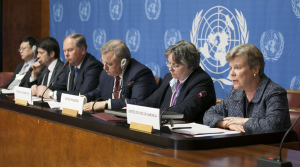
    Press conference by the five Nuclear Non-Proliferation Treaty (NPT) nuclear weapon states at the UN Office, Geneva in 2013. Source: United States Mission Geneva

    The UK and other nuclear-armed states have long expressed their desire for a nuclear weapon-free world. Alongside other nuclear-armed states, the UK has a legal obligation under article VI of the Nuclear Non-Proliferation Treaty (NPT) to pursue ‘effective measures’ towards nuclear disarmament and ‘a treaty on general and complete disarmament’.

    Despite this, there has been very slow progress so far towards nuclear disarmament, and nuclear-armed states continue to say that nuclear weapons are essential to their security doctrines. The UK advocates a ‘step-by-step’ approach towards nuclear disarmament, which has been marked by a lack of substantial progress. Most crucially, the UK government has seen this approach as compatible with getting new nuclear weapons. In 2007 UK Prime Minister Tony Blair claimed that “the Non-Proliferation Treaty… makes it absolutely clear that Britain has the right to possess nuclear weapons”. This bad faith reading of the treaty and continued investment in maintaining its arsenal of nuclear weapons raises concerns over the UK’s commitment towards fulfilling these legal obligations under the NPT. A significant recent development and challenge to this position is a Marshall Islands legal case, currently being taken against the UK and other states for failing to act on multilateral nuclear disarmament obligations.

    In the run up to the NPT Review Conference, the UK government has argued vigorously that the proponents of a ban treaty are misguided, and that such a treaty would undermine the NPT. However, the absence of any evidence to substantiate this claim suggests that such an argument will ring hollow against the persistent pursuit of Trident renewal. If the UK government is sincerely committed to pursuing nuclear disarmament then there is no need for it to oppose the development of a treaty with that aim. A ban treaty would actually constitute a long-overdue implementation of the NPT: the momentum towards a ban treaty could be seen as a positive opportunity for the UK to take concrete steps towards nuclear disarmament by creating the right conditions and helping to fulfil its own NPT obligations, even if the UK chose not to sign up immediately.

    Political pressure

    The international humanitarian initiative has sparked interest and debate inside Westminster, even if the government initially claimed the initiative would ‘divert discussion and focus away from… practical steps’ towards nuclear weapons reduction. At a debate on Trident renewal in the House of Commons on 20 January 2015, eleven MPs raised the spectre of the humanitarian consequences of nuclear weapons, with some specifically calling for a ban treaty.

    With the final decision over the renewal of Trident due to be taken in 2016, the incoming 2015 government will be faced with taking a decision over the renewal of the UK’s nuclear weapons – at the same time that other states are most likely to be engaged in treaty negotiations that will rule those weapons illegal. This development will significantly increase the political costs of holding onto nuclear weapons and sinking even more money in their maintenance and modernisation. As Dame Joan Ruddock MP has stated, “a global ban on nuclear weapons would present the greatest challenge to UK renewal of Trident”.

    Military cooperation

    Continued possession of nuclear weapons when other militaries are rejecting them could also put strain on the UK’s relationships with some of its military allies. Whilst a ban treaty would not prevent a state that joins the treaty from being in a military alliance with a nuclear-armed state like the UK, it should require states not to assist in acts that are prohibited under the treaty. As such, it would require states parties to renounce any joint policy that envisions the development, stockpiling, or use of nuclear weapons.

    There is however, no barrier to NATO member states’ adherence to a treaty banning nuclear weapons. The North Atlantic Treaty, which is a legally-binding instrument, makes no reference to nuclear weapons. And although NATO’s Strategic Concept does refer to nuclear weapons capabilities as part of its strategy, this is not a legally-binding document and would not prevent any NATO state from joining the ban treaty. Besides, the document gets revised and could be updated so as not to rely on nuclear weapons. The International Law and Policy Institute (ILPI) points out, “concerns about the political implications of such a treaty for NATO ignore historical variations in member state military policy and underestimate the value of a ban on nuclear weapons for promoting NATO’s ultimate aim: the security of its member states.”

    There has not been a coherent and uniform NATO position towards the humanitarian initiative. All NATO states are members of the NPT and as such are committed to pursue ‘effective measures’ towards disarmament. So far, virtually all NATO states have taken part in one or more of the conferences on the humanitarian impact of nuclear weapons. After all, the humanitarian initiative was spearheaded by a NATO state – Norway. A ban treaty should in fact be seen as a positive step towards NATO’s long-term security goals.

    Finance and investment

    A nuclear weapons ban treaty could also help to increase the stigma and practical difficulties attached to nuclear weapons by prohibiting investment in their development. According to a 2014 report by PAX, 35 financial institutions in the UK invested over US$27bn in 28 nuclear weapons producing companies over the past 3 years. A number of UK companies are involved in the ongoing production and maintenance of the UK’s nuclear arsenal.

    Prohibitions on assistance, such as financing the production of nuclear weapons, would mean that companies that produce nuclear weapons would find difficulty in securing financing to produce these weapons. As financial institutions move towards corporate socially responsible investments, many are anyhow adopting policies prohibiting investments in certain weapons, and this too will impact the producing companies and the states buying their products.

    Even without an international ban treaty there have been successful efforts to promote disinvestment. A well-known example of a nuclear weapons boycott is the campaign initiated in the 1980s by Infact (now Corporate Accountability International) against General Electric (GE). GE had played a major role in nuclear weapons production since the Manhattan Project. The boycott resulted in significant financial losses for the company and damage to its brand. Ultimately, it was compelled to end its involvement in nuclear weapons work. More recently, Allied Irish Bank, named as an investor in the 2013 Don’t Bank on the Bomb report, had fully divested by the time the 2014 report was published.

    A treaty signed by a majority of countries in the world that prohibits investment in the development, production, or testing of nuclear weapons would significantly increase pressure for many UK financial institutions to pull out their investments from companies that develop them. Past experience with the treaty that bans cluster munitions shows that the stigmatizing effect of outlawing weapons significantly reduces available financing for their production.

    Conclusion

    The conferences held as part of the humanitarian initiative have left no doubt over the severe and long-lasting effects that would result from a nuclear weapon detonation, as well as the devastation of lives and environment caused by testing and production. The resulting momentum created among the non nuclear-armed states to achieve a ban treaty is coupled with a conviction held by civil society and many states that a treaty can – and should – be achieved even if the nuclear-armed states do not join immediately. The UK should see the start of a treaty process as a positive development that is helping to foster the right conditions for its own nuclear disarmament, and that of other states too. But official responses notwithstanding, the climate surrounding the perceived status and security of nuclear weapons is changing – whether the UK government likes it or not.

    Rebecca Sharkey is UK Co-ordinator at the International Campaign to Abolish Nuclear Weapons (ICAN). Rebecca has worked on campaigns, communications, research and outreach at NGOs such as Freedom From Torture, the National Secular Society and the National Assembly Against Racism.

    Laura Boillot is a Project Manager for Article 36. Laura previously worked as Campaign Manager and subsequently as Director of the Cluster Munition Coalition (CMC). Prior to that she was a Program Officer for the International Action Network on Small Arms (IANSA).

    Featured Image: Trident Nuclear Submarine HMS Victorious near Faslane, Scotland. Source: Flickr | UK Ministry of Defence

  • Sustainable Security

    It has been over a year since the Saudi bombardment of Yemen began. In that time a humanitarian catastrophe has been unfolding, killing over 6000 people and leaving millions without access to vital infrastructure, clean water or electricity, leaving the country on “the precipice of disaster.” The destruction on the ground has exacerbated the ongoing civil war between Yemeni forces and Houthi rebels, helping to create a power vacuum that has allowed the expansion of Al-Qaeda and ISIS with reports describing the latter making serious territorial gains, such as around the port city of Mukalla.

    The price has also been felt in Saudi Arabia, where mortars and rockets being fired by Houthi groups in Yemen are also killing civilians. Saudi sources claim 375 civilians have been killed since hostilities began. The Saudi regime has said that the conflict is being downscaled, but the death toll is increasing. It claims that it is only striking legitimate military targets, and that much of its work is to spread humanitarian aid, but many of the sites being hit are civilian. A recent air strike on a busy market place killed over 100 people, with witnesses reporting two missiles being fired from the air. According to UN officials 22 children were killed in the strike. The violence has been rightfully condemned by a range of campaign groups and NGOs, with a growing number of voices suggesting the intervention has not just been immoral, it has also been illegal.

    In July 2015 the European Parliament passed a motion to “Condemn the air strikes by the Saudi-led coalition and the naval blockade it has imposed on Yemen.” The motion went on to state that “air strikes by the Saudi-led military coalition in Yemen have killed civilians, in violation of international humanitarian law, which requires all possible steps to be taken to prevent or minimise civilian casualties.” One month later, Stephen O’Brien, Under-Secretary-General for Humanitarian Affairs and Emergency Relief at the United Nations, reported to the UN Security Council, that the “scale of human suffering [in Yemen] is almost incomprehensible.” Condemning “attacks on residential areas and civilian infrastructure” he asserted that the Saudi attacks are “in clear contravention of international humanitarian law.”

    These condemnations have been supported by a growing number of NGOs. Human Rights Watch, Oxfam and Médecins Sans Frontières (MSF) have all accused Saudi Arabia of breaking international humanitarian law. Amnesty International and Saferworld also recently commissioned a legal opinion from Philip Sands QC, which accused Saudi forces of breaking international humanitarian law. Since then, both the European Parliament and the UN have taken their concerns further. This January, a UN panel accused Saudi Arabia of “widespread and systematic” attacks on civilian targets. Its 51 page report “documented 119 sorties relating to violations of international humanitarian law” and reported starvation being used as a war tactic. The report concluded by stating that “not a single humanitarian pause to alleviate the suffering of the Yemeni people has been fully observed by any Yemeni party or by the coalition.”

    Last month, despite a concentrated lobbying operation from Saudi Arabia, parliamentarians in Brussels went further, voting overwhelmingly to support an arms embargo against Saudi Arabia. The vote was not legally binding, but it sent a strong political statement and set an important precedent. Commenting on the destruction of the first of three hospital facilities it has lost in the last year, Hassan Boucenine, Country Director of MSF, said “the fact of the matter is it’s a war crime. There’s no reason to target a hospital. We provided [the Coalition] with all of our GPS coordinates.” Since then MSF has announced the closure of its fourth and final hospital in the country, following air strikes in the area. Despite all of these widespread and credible criticisms and allegations, there is no solid evidence of Saudi forces taking any meaningful action to minimize harm to civilians, or making any serious attempts to investigate the deadly consequences of the bombing.

    To this backdrop you would hope that the international community would be applying pressure to the Saudi government and calling for meaningful peace negotiations. Unfortunately the exact opposite has happened, with governments like the UK fuelling the devastation by providing political support and selling large quantities of arms to Saudi Arabia. The Foreign Secretary, Philip Hammond, made the UK’s position very clear from the outset, when he pledged to “support the Saudis in every practical way short of engaging in combat.” Unfortunately he has stayed true to his word.

    The UK government has licensed over £2.8 billion of arms to Saudi since air strikes began last March. UK fighter jets and bombs have been central to the bombing campaign, with Eurofighter aircraft taking part in air strikes and UK-supplied Paveway IV bombs being dropped from the skies. Last year the UK sent bombs that were originally earmarked for the RAF to Saudi forces to be used against Yemen. UK arms export law is very clear. It says that licences for military equipment should not be granted if there is a “clear risk” that it “might” be used in violation of international humanitarian law. By any reasonable interpretation these criteria should surely prohibit all arms sales to Saudi Arabia that could be used in Yemen. The support has gone beyond arming Saudi forces. Earlier this year, the Saudi Foreign Minister confirmed that UK military personnel have been in Saudi control rooms assisting with the bombing and helping to train Saudi forces.

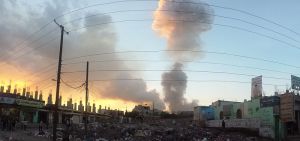
    Air_strike_in_Sana'a_11-5-2015

    Air strike in Sana’a. Image via Wikimedia Commons.

    In response to growing concerns, the House of Commons Committee on Arms Export Controls has called an investigation into the use of UK arms in the conflict. The first sessions have taken place and the Committee is expected to report later this year. The government’s response has been to discard the growing body of evidence and argue that is has not seen any sufficient evidence to conclude that Saudi is breaching international law. It argues that the UK is in constant dialogue with the Saudis while parroting the tired old line that it has some of the most ‘rigorous’ and ‘robust’ arms export controls in the world. One of the arguments for this approach is that the UK can use a positive influence over Saudi forces and ensure that they are following international law. This is an implicit theme when government spokespeople use lines such as “We regularly raise with Saudi Arabian-led coalition and the Houthi the need to comply with International Humanitarian Law in Yemen.” However there is no evidence that the UK has ever reined in Saudi aggression. When it comes to arms sales the power in the relationship lies almost entirely with the buyer.

    Of course the relationship is nothing new. For decades now successive UK governments, of all political colours, have given an uncritical level of support to the Saudi regime. One outcome of this partnership has been the high level of integration between UK and Saudi military programmes. Around 240 UK Ministry of Defence civil servants and military personnel work to support the contracts through the Ministry of Defence Saudi Armed Forces Programme (MODSAP) and the Saudi Arabia National Guard Communications Project (SANGCOM).

    The last time the UK relationship with Saudi was put under the microscope as much as it is today was in 2006, when the Serious Fraud office began looking into corruption relating to arms sales to Riyadh. The investigation threatened to unearth a litany of embarrassing details, but, after a concerted lobbying effort, including interventions by Tony Blair and the Attorney General, it was dropped. Shortly after the investigation was stopped a major deal on fighter jets was agreed, one that would be worth over £4.4 billion. This pattern of trading arms deals and political favours has only continued. In the last few months serious allegations have emerged that the UK helped to lobby behind the scenes to secure Saudi Arabia’s election to the UN Human Rights Council; a membership which would be laughable if the on-going consequences weren’t so serious. Furthermore, it is perhaps no surprise that Saudi was the only major state with the death penalty to be omitted from the UK’s anti-death penalty strategy.

    Earlier this month, CAAT and our lawyers at Leigh Day submitted a claim for a Judicial Review into the arms sales. We are calling on the Department of Business, Innovation & Skills to suspend all extant licences and stop issuing further licences for arms exports to Saudi Arabia while it holds a full review into whether the exports are compatible with UK and EU legislation. It is likely to be a long process, but it is also a very important one. The action is specific to Yemen, but it will expose the hypocrisies at the heart of UK foreign policy, particularly concerning human rights. The longer that this hypocrisy goes on the more victims there will be. If UK arms export law is worth anything then the government must finally stop arming Saudi Arabia.

    Andrew Smith is a spokesperson for Campaign Against Arms Trade (CAAT). You can follow CAAT on Twitter at @CAATuk.

  • Sustainable Security

  • Climate change

    From the Center for American Progress:

    “If we are to meet the myriad challenges around the world in the coming decades,” argues Secretary of Defense Robert Gates, then our “country must strengthen other important elements of national power both institutionally and financially, and create the capability to integrate and apply all of the elements of national power to problems and challenges abroad.” Gates’s experience leading our armed forces under two presidents underscores the importance of not relying solely on our unquestioned military might to protect our shores and national security interests around the globe. Instead, Gates maintains, we need to adopt the concept of sustainable security—a strategy that embraces the need to slim defense spending, bringing our own fiscal house in order while investing in nonmilitary economic and social development programs abroad to combat the conditions that breed poverty and political instability.

    Article and image source: Center for American Progress

    Read more »

  • Sustainable Security

    Since the attacks of 9/11, the banner of national security has led to intense monitoring of the politics of Muslim and Arab Americans. Young people from these communities have come of age in a time when the question of political engagement is both urgent and fraught.

    Since the events of September 11, 2001, Muslim and Middle Eastern communities have increasingly been viewed through the prism of national security, and young Muslim, South Asian, and Arab Americans in particular have become objects of heightened scrutiny and surveillance. The U.S.-led global War on Terror has defined Muslim youth as objects of the counterterrorism regime, based on the presumption that young people are a cohort that is vulnerable to “radicalization” by Islamist movements and so they are increasingly in the crosshairs of intelligence agencies. The racialization of Muslims and Middle Easterners as terrorists is not new, however; there is a long history of constructing the Muslim and Arab as the “enemy” of the U.S. state, given its strategic interests in the Middle East during the Cold War and its enduring alliance with Israel. Post-9/11 repression also extends the imperial state’s policies of surveilling and containing radicals or leftist “subversives,” especially during wartime and the Cold War.

    The 9/11 generation
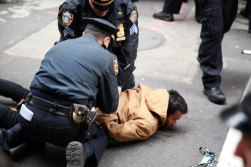
    occupr-arrest

    Image via Coco Curranski/Flickr.

    My new book, The 9/11 Generation: Youth,  Rights, and Solidarity in the War on Terror, is an ethnographic study of the forms that politics takes for South Asian, Arab, and Afghan American college-age youth in Silicon Valley who have come of age in the post-9/11 era. It examines the range of political critiques and identifications among South Asian, Arab, and Afghan American youth and explores the new, cross-racial alliances forged through civil rights and antiwar activism in northern California. The identities of these youth have been shaped by the racial and religious profiling of Muslim and Arab Americans under the PATRIOT Act, which has continued under the Obama administration, with Islamophobic and anti-Arab discourse persisting in the U.S. mainstream media. The politics of Muslim Americans, more than that of any other religious group, are viewed as necessary to surveil and contain. This constitutes the “new order of War on Terror” under the Obama regime, which relies on mass surveillance, clandestine cooperation between law enforcement and intelligence agencies, and programs that police political and social lives ( see Deepa Kumar 2012). Repression in the domestic War on Terror often remains invisible, however, for it is conducted through covert means, such as the use of undercover FBI informants, infiltration, and entrapment.

    Youth politics is a central target of the counterterrorism regime as the religious and political “radicalization” of youth variously defined as Muslim, Middle Eastern, Arab, Afghan, or South Asian has come to represent a threat to Western, secular, liberal democracy and to U.S. military and economic interventions. The framework of securitization defines Muslims as always a potential threat to U.S. homeland security and views this generational cohort as bedeviled by disaffection, cultural and political alienation, and psychological and social maladjustment. Muslim and Arab American youth, in particular, are viewed as susceptible to indoctrination and recruitment by Islamist movements, that is, as ripe for becoming enemies of the state. Muslim youth are also perceived as being vulnerable to “self-radicalization,” as in the case of the Chechen youth charged with the Boston marathon bombings in 2013. This is also a gendered form of surveillance as young Muslim males have been the major focus of counterterrorism programs, but young Muslim women are also, increasingly, objects of surveillance, especially in the wake of incidents such as the San Bernardino shootings.

    The focus on “homegrown terrorism” was ratcheted up after the July 7, 2005 bombings by British Muslims in London and occurred in tandem with shifts in U.S. wars and counterterrorism operations in Afghanistan, Pakistan, and Yemen. In 2007, Senator Joe Lieberman, Chairman of the Senate Committee on Homeland Security, held a series of hearings on the “homegrown threat of violent Islamic extremist terrorism,” focusing almost exclusively on Arab and Muslim Americans and dwelling on the role of the Internet in fostering Islamic “extremism”; in 2011, hearings on radicalization were also held by Congressman Peter King ( see American-Arab Anti-Discrimination Committee 2008, 39). Yet strikingly, the very real threat posed by white supremacist organizations and right-wing paramilitary movements is not at the center of debates about “homegrown” extremist violence, despite events such as the Oklahoma City bombings of 1995.

    Racial, religious and political profiling

    The homeland war on terror has increasingly focused on monitoring and prosecuting ideological and religious beliefs of Muslim and Arab Americans, not just terrorist activities, so this is a form of political, not just racial and religious, profiling. This strategy of pre-emptive prosecution and preemptive surveillance mirrors the doctrine of “pre-emptive war.” One problem with ideological profiling and the criminalization of beliefs is that political dissent is increasingly fragile and risky, especially for Muslim and Arab American youth. Despite this repression, youth in the 9/11 generation have mobilized in response to the War on Terror and the experience of collective profiling has, inevitably, politicized Muslim, South Asian, and Arab Americans. It has propelled new, cross-racial coalitions based on shared experiences of Islamophobia and racism. New cross-ethnic categories have emerged, such as AMSA (Arab, Muslim, and South Asian) and MESA (Middle Eastern and South Asian), as Muslim and Arab Americans became engaged in or led civil rights campaigns and antiwar organizing. For example, the Council on American-Islamic Relations (CAIR), the Islamic Network Group, the Muslim Public Affairs Council, and the American Arab Anti-Discrimination Committee have all led national civil rights efforts, in addition to numerous grassroots groups and coalitions, for example, the Arab Resource and Organizing Committee  (AROC) and the Asian Law Caucus in the San Francisco area, in which youth have been involved. Progressive-left campaigns against the wars in Iraq and Afghanistan and drone wars in Pakistan have also involved Muslim and Arab American activists and connected Muslim and Middle Eastern communities to overseas homelands, U.S. war zones in Iraq and Afghanistan, and the U.S-backed occupation in Palestine.

    There has also been a major push to engage in interfaith coalitions, focused on Muslim-Jewish-Christian dialogue and outreach, on the one hand, and in transnational solidarity activism, on the other. Campaigns have linked communities with shared experiences of police violence and surveillance, for example, during the Black Lives Matter movement and the Ferguson 2 Gaza campaign. So the racial profiling by the state has provoked new forms of racialization and affiliation on the ground, even if some of these are not entirely new but recreate earlier forms of cross-racial and international solidarity.

    The surveillance state

    The surveillance and counter-radicalization regime that has emerged in the U.S., as well as in the UK and Europe, is increasingly preoccupied with Muslim youth cultures and with cultural codes that presumably signify “radical dissent” and “youth alienation” (see Kundnani 2014). Obama’s domestic War on Terror drew on counter-radicalization practices in Britain in a transnational circuit of ideas and policies that focused on surveilling and entrapping Muslim American youth, through programs such as Countering Violent Extremism. While the emergence of ISIS/ISIL may have somewhat reconfigured this, it has long been the case that vocal critics of Israel were associated with “terrorist” movements and subject to surveillance. It is important to note, as Arun Kundnani has observed, that the template for the War on Terror was manufactured in the 1980s to demonize those resisting U.S. hegemony and U.S. allies in the Middle East, particularly Israel.

    In the current moment, as my research demonstrates, Palestine solidarity activism is a fraught terrain where youth have to contend with surveillance, censorship, including on college campuses, as well as harassment, allegations of anti-Semitism, smear campaigns, and blacklisting by right-wing organizations such as David Horowitz’ Freedom Center and Canary Mission. At the same time, this encounter with the exceptional lockdown on open discussion of Palestine-Israel leads to a process of what I call “Palestinianization,” that is, a process of politicization and racialization that is endemic to U.S. national culture given unconditional U.S. support for Israel and the power of the Israel lobby. Palestine solidarity is also a unifying hub for Muslim, South Asian, and Arab American youth and activism.

    I consider surveillance a technology of disciplining and managing racialized populations within neoliberal capitalism. The culture of surveillance highlights the tension that emerges between the police state’s repression and exceptionalist notions of U.S. democracy and “freedom” in the War on Terror. This tension is deeply felt by those who experience the brunt of policing and the curtailment of freedom in their daily lives. Nearly all the young people I spoke to as part of my research talked about the climate of permanent surveillance and the chilling effect it had on understandings of what it meant to be “political” and also “social.” Arab, South Asian, and Afghan American youth have to self-consciously regulate, or re-narrate, their social and political lives, including on social media. Given the state engages in warrantless wiretapping, monitors private emails and Facebook, and infiltrates mosques and activist groups with undercover informants, it is not just not those who are involved with formal political organizations who have reason to be anxious and self-conscious about their identities and sociality.

    In 2012, the stunning investigation by Associated Press of the NYPD’s surveillance program revealed that “mosque crawlers” and undercover informants, called “rakers,” (generally Muslim or Arab themselves), had been deployed to ferret out suspicious Muslim and Arab Americans, including students and youth, “monitoring daily life in bookstores, bars, cafes, and nightclubs” in “suspect neighborhoods”; this was part of a “human mapping program” in cooperation with the CIA and drawing on Israeli surveillance techniques, with a reach extending beyond New York state (Associated Press 2012, 5). The NYPD also infiltrated the Occupy Wall Street movement and Palestine solidarity rallies. The revelation of this infamous “demographics unit” sparked the first mainstream discussion of surveillance since 9/11, which increased with the revelations by WikiLeaks and Edward Snowden’s expose in 2013 of mass surveillance by the NSA and CIA. Some youth at campuses that had been surveilled by the NYPD used social media, including Twitter, and subversive humor to challenge this secret program; the Yale MSA created a Facebook page, “Call the NYPD,” with photos of Muslim college students holding signs declaring, “I am a . . . Blonde, Call the NYPD” (cited in Khabeer and Alhassen 2013, 308).

    Surveillance effects

    The social and cultural registers through which surveillance becomes a part of daily life are what I describe as surveillance effects, through which surveillance becomes normalized, even as it is resisted. Surveillance effects shape political culture and also ideas of selfhood. Many youth are aware that they are the exemplary objects of surveillance, because they fit a racial, religious, political or national profile. Law enforcement agencies, such as the New York City Police Department, have used behavioral models of “radicalization” based on profiles of youth subcultures, including markers such as clothing, religiosity, and activism (see American-Arab Anti-Discrimination Committee 2008, 39). This surveillance of everyday life has inevitably alienated many Muslim Americans even further while creating more distrust and divisions within targeted communities.

    In a surveillance state, many engage in self-regulation and self-censorship because they believe that they must sacrifice their freedoms for the sake of defending the nation, and that “national security” is, indeed, their own security. Some Muslim Americans engage in self-surveillance or the surveillance of others, hoping to avoid profiling or prove they are patriotic, “good” Muslim citizens. Yet my research also uncovered “surveillance stories” about life in the everyday of surveillance that demonstrate that the surveillance regime also provokes the opposite effect, producing challenges to intelligence-gathering and tactics of counter-surveillance that enable survival. Youth who negotiate these tensions expose the contradictions that animate life in the post-9/11 security state, and the fragility as well as the radical possibility of living life as the “enemy within.”

    The culture wars

    Surveillance is key to the post-9/11 culture wars, focused on Islam, gender, race, and nationalism. In my book, I argue these culture wars are also racial wars and class wars as they rest on racial and class struggles and fissures in U.S. society. These culture wars have evolved since the Cold War and in the  “new Cold War,” as well as the many hot wars waged by the U.S. from Iraq and Afghanistan to Pakistan and Yemen. Trump’s presidential campaign and election has inflamed the culture wars, and brought renewed attention to the already existing fault lines of race, class, and religion with the nation. As Americans debate the horrifying possibilities of a “Muslim registration,” some may not be aware that this actually already occurred in the U.S. with the Special Registration targeting Muslim immigrant men after 9/11 and that mass surveillance was intensified under the Obama administration. The generation that came of age since 9/11, especially those from communities targeted in the War on Terror and from immigrant communities, were already aware of the “white rage” and extremism that existed within the U.S. and that has now provoked shock and horror among those critical of Trump’s racism, Islamophobia, xenophobia, and misogyny. There is much to be learned from the stories of the 9/11 generation.

    Sunaina Maira is Professor of Asian American Studies, and is affiliated with the Middle East/South Asia Studies program and with the Cultural Studies Graduate Group. Her research and teaching focus on Asian American youth culture and the politics of cultural production as well as political mobilization and transnational movements challenging militarization, imperialism, and settler colonialism. She is the author of Desis in the House: Indian American Youth Culture in New York City and Missing: Youth, Citizenship, and Empire After 9/11. She co-edited Contours of the Heart: South Asians Map North America, which won the American Book Award in 1997, and Youthscapes: The Popular, the National, and the Global. Maira’s recent publications include a book based on ethnographic research, Jil [Generation] Oslo: Palestinian Hip Hop, Youth Culture, and the Youth Movement (Tadween), and a volume co-edited with Piya Chatterjee, The Imperial University: Academic Repression and Scholarly Dissent (University of Minnesota Press). Her new book project is a study of South Asian, Arab, and Afghan American youth and political movements focused on civil and human rights and issues of sovereignty and surveillance in the War on Terror. Maira launched a new section on West Asian American Studies in the Association for Asian American Studies and coedited a special issue of the Journal of Asian American Studies on Asian/Arab American studies intersections. She has been involved with various civil and human rights campaigns and antiwar groups in the Bay Area and nationally.
  • Sustainable Security

    In piaffe: multilateral nuclear disarmament dialogue in the year of the horse

    Shortly after the lunar New Year, UN Secretary-General Ban Ki-moon challenged the Conference on Disarmament to run with the ‘spirit of the blue horse’ towards substantive engagement on multilateral nuclear disarmament in 2014. While the regime may not achieve this speed, there are initiatives underway this year that may well help nuclear disarmament dialogues pick up speed ahead of the 2015 NPT review conference.

    Read Article →

    Beaux Gestes and Castles in the Sand: The Militarisation of the Sahara

    Whatever the benefits for Mali, the French-led eviction of jihadist groups from northern Mali may have made the wider Sahara a less safe place, and has done little to lower the capacity of such groups to threaten European interests.. In 2014, France is implementing a major redeployment of its forces in Africa into the Sahel and Sahara. Meanwhile, the US has been quietly extending its military reach from Djibouti to Mauritania. However, as elsewhere, the western military approach to countering Islamist insurgency in the Sahel rests on very unsteady foundations and the potential to provoke wider alienation and radicalisation is strong.

    Read Article →

    Chemical Weapons Use in Syria: a Test of the Norm

    Recent events in the Syrian civil war have proved an unparalleled test of the norm against the use of chemical weapons. At its core this was a test of the willingness of countries to uphold the norm, in this case in the face of a flagrant violation, and a response that in the end stumbled upon a satisfactory conclusion—reaffirming the special category of chemical arms—but which in the process said a great deal about current attitudes to the use of military force as a means of humanitarian intervention.

    Read Article →

  • Sustainable Security

    Hybrid warfare has become a popular term in academic, military and policy circles. But what does the term actually mean and how is this approach to warfare harnessed by state and non-state actors in practice?

    The term hybrid warfare (HW) came into prominence in 2014, when Russia annexed the Crimea, part of the Ukraine, proceeded to support autonomist Russian-speakers in the Ukraine, and crushed some Ukrainian regular battalions in border clashes. Barely six months later, hundreds of miles to the southeast, a revitalized non-state actor, the Islamic State of Iraq and Syria (ISIS) trounced the Iraqi Army in a ‘blitzkrieg’ that unraveled four Iraqi army divisions in the most humiliating defeat of an army since the Six Day War of June 1967. ISIS forces seized Iraq’s second largest city, Mosul located in the north, and proclaimed their caliphate there on June 29, 2014. These events were seen by many to be hybrid warfare in practice.

    Since 2014 there has been an explosion of op-eds, policy statements, policy papers and academic papers on the concept of hybrid war. Despite this plethora of literature, there is still a serious need to establish a better definition of HW, to describe its characteristics, assess the term’s relevance, and address the distinction between hybrid warfare as it is practiced by states and by non-state actors. This article addresses such issues.

    What is hybrid warfare?

    Image credit: Vitaly V. Kuzmin/Wikimedia.

    Despite gaining prominence since 2014, HW has been used to describe changes in the character of warfare since around 2005. The term was used to describe Hezbollah’s strategy in the 2006 Lebanon War. But some observers and strategic analysts have even argued that its contemporary origins lie in the Balkan War and the unraveling of Yugoslavia. Others have argued that elements of hybridity have occurred in many wars since the rise of ‘civilized’ warfare. In other words, there is nothing ‘new under the sun,’ except yet another term to describe the familiar.

    Defining HW has also been a matter of debate. While there are not as many definitions of HW as there are gainfully employed strategic thinkers (although at times it feels like it), it would be safe to say that there are as many definitions of the term and concept as there are countries worried by it or seeking to practice it. But even this is contestable too because a number of countries deny that what they actually practice hybrid warfare. Indeed, for Moscow ‘gibridnaya voina’ is what others (Western powers) have done to Russia. The definition I offer here derives largely from the various iterations of it by Frank Hoffman and others and from a variety of doctrinal manuals from the United States of America and those of other countries.  The term hybrid means something heterogeneous, multi-shaped or multi-varied. With respect to warfare, what does this mean? HW occurs when an actor practicing it against an opponent brings into play a ‘cocktail’ of conventional military capabilities, political warfare, terrorism, subversion, guerrilla warfare, organized crime, and, in contemporary times, cyber warfare. It may also include violations of international laws of war by the practitioner of hybrid warfare.

    However, haven’t nations in the past used a ‘cocktail’ of measures against their opponents? Is it not true that Russia, which stands accused of using HW, is successor to a nation, the Union of Soviet Socialist Republics, which used all kinds of measures and ‘skullduggery’ to advance its interests even times of peace? Hoffman argued that even though wars in the past, even the recent past, could also include both regular and irregular elements, these occurred in different places, were not coordinated, and often occurred in sequence or one after the other. In contemporary HW, all the above-listed elements are orchestrated to act in coordinated, coherent and often simultaneous ways. Hence, for the person or persons watching from outside as well as for the enemy, this ‘cocktail’ of measures – some designed to kill and others not to do so but just as deadly to morale and cohesion of the target — may become blurred into a unified force acting in a single and comprehensive battle-space. Thus, the practitioner of hybrid warfare achieves a synergistic effect against which the target is rendered hors de combat in lieu of a shooting war, before a shooting war starts, and during an actual war.

    When the term first appeared to describe what a certain number analysts like Hoffman saw as emerging trends some of their colleagues literally sighed because they wondered – politely and often not so politely — whether the term added anything new to describe wars other than the purely conventional or symmetric force on force clashes between like armies. Others wondered whether the term added much to the existing plethora of terms that describe wars other than purely conventional: irregular, guerrilla, low-intensity, fourth generation, asymmetric, new wars, forever war, etc. I argue that each term has a purpose and most should have a specified life-span before gracefully disappearing into the shadows instead of lingering on like an unwanted guest. Each term brings out certain aspects of indirect war associated with particular technologies, operational art, tactics, environment and cultural context. The same holds true for HW; if it still in existence a decade from now, then strategists are a dull lot indeed. Indeed, HW is not a prediction of what future warfare is going to be like. In this context, we need to avoid the ‘reification’ of HW.

    HW is also ‘transcultural.’ There are ways of warfare to be sure, but HW is not just Eurasian – Russian – or Oriental. This would be strategic ethnocentrism to borrow a recognized term from international relations scholar, Ken Booth. Russia is, indeed, right in arguing that the West, which sees itself as the target of HW, as being as much perpetrators of the genre as they are the victims. Russia perceives the West, rightly or wrongly, as making a ‘big issue’ of it in the last half decade because of the events in Ukraine where Moscow believes it has successfully blocked Western-inspired or even led HW against Russia’s resurgence. Ultimately, HW is a useful term because it draws out/highlights certain characteristics of contemporary warfare by states and non-state actors.

    HW is not replacing inter-state conventional warfare. The dominance of inter-state conventional warfare between roughly 1645 and 1945 has always been buffeted by forms of warfare that have been given various names throughout this three hundred year history. Many of these forms have actually been nothing more than appendages to conventional warfare; and HW is but one of the latest terms to describe certain characteristics of the contemporary conflict environment.

    Ultimately, though, HW is a useful term because it draws out/highlights certain characteristics of contemporary warfare by states and non-state actors.

    State and non-state hybrid war

    There are clear-cut differences between state and non-state hybrid warfare characteristics. Indeed, even the definition for state hybrid warfare might not fit what non-state actors do in terms of hybrid warfare. Russia is not the only state that has developed hybrid warfare capabilities; Iran, North Korea and China come to mind. Even here, we can see wide disparities in military power between these states that are alleged to be at the forefront of hybrid warfare developments. Similarly, IS was not the first to develop non-state hybrid warfare capabilities (nor will it be the last). In fact, when several American theorists, of whom the indefatigable former United States Marine Corps officer, Frank Hoffman, was in the lead in developing the concept, the focus was on groups like Hamas and Hezbollah.

    The output on hybrid warfare in 2014 and thereafter was almost overwhelmingly focused on the alleged hybrid warfare capabilities of these two distinctly different entities. This was, in fact, a huge problem: Russia on the one hand, and Islamic State are certainly not similar entities. Without meaning to state the obvious, one is a large and powerful legitimate state with a military establishment that has come out of the doldrums of the 1990s. Historically, the Russian military has engaged in some very innovative thinking, about which only a few Western experts are cognizant. For example, in the 18th century the great soldier, Frederick the Great of Prussia, was derisive of Russian military prowess. The Russians quickly disabused him of this derision when the Russian army trounced him in a major battle. In the 1920s and 1930s, Soviet officers formulated some very innovative military ideas, which those interested in current Russian military theorizing are revisiting. A considerable amount of literature has appeared in the West to address the matter of Russian hybrid warfare over the course of the past three years. This has elicited some humor and denials on the part of the Russians. Russian commentators argue that Russia, does not wage hybrid warfare, and that it is actually the West that is waging war against Russia. Russia is responding and developing its own approach to contemporary warfare, which Russians refer to as ‘New Generation.’

    For a state like Russia, hybrid warfare entails the composition of different elements of ways to wage war used simultaneously and in a coordinated manner to achieve one’s goals. If the measures work without leading to an extended or large-scale war or indeed lead to the achievement of the goals at stake below the threshold of the legal definition of war with the victim or the victim’s allies all the better as far as the state practitioner of hybrid war is concerned. Though the debate about evidence for Russia seeing contemporary warfare as being hybrid is still ongoing, for the sake of argument Russia’s hybrid capabilities as exhibited in the Ukraine and Crimea can be described as a ‘cocktail’ of measures that were used to achieve one’s goals in lieu of going to full-scale war, in shaping the theater of operations to one’s advantage, and as a force multiplier if need be in an actual exchange of violence with an enemy.

    HW is different for IS and entities like it. The literature on IS is now huge and almost unmanageable. Most of it, however, concentrates on its personalities, ideology and organizational structure. Very little deals with the military ideas or strategy of this entity, which is surprising because there remains the puzzle of explaining its military rise during the first Iraqi insurgency (2003-2011), its demise, which proved to be temporary, and then its rapid re-emergence from 2012 to 2015. Between 2016 and early 2017, it suffered enormous losses and has lost Mosul. However, the consensus is that the collapse of the caliphate in Iraq (and soon in Syria) will not be the end of that entity. How do we explain its military trajectory? Some analysts have argued that this is hybrid threat or hybrid entity. Unfortunately, the analysis of IS as a hybrid warfare has mainly been descriptive rather than analytical in that most of the literature narrates the trajectory of IS’ war fighting over the years without conceptualization or context. The underdevelopment of the literature on the hybrid threat posed by most dangerous current non-state actor then raises the question of how can we distinguish between the hybrid warfare capabilities of a state actor and that of a non-state actor.

    HW for a non-state actor also involves building a ‘cocktail’ of hybrid capabilities. Among these capabilities are political warfare techniques for propaganda against enemies, recruitment of supporters and shaping the ‘human terrain’ on the ground in the conflict zone in their favor. However, while states have the resources to develop robust hybrid capabilities only a few non-state actors in the contemporary conflict environment have been able to develop and maintain effective revolutionary political warfare infrastructures. These include the FARC in Colombia, the LTTE in Sri Lanka, Hezbollah in Lebanon, and of, course, Islamic State in Iraq and Syria. These groups have also incorporated terrorism to target civilians and to intimidate and terrify opponents or even force them to overreact. The practice of terrorism has, of course, been a subject of controversy even among its practitioners, some of whom have even distinguished between discriminate, which targets specific individuals or categories of people, and indiscriminate terrorism, which targets people collectively or whole communities. Indeed, indiscriminate terrorism became a source of contention even within the global constellation of violent jihadist groups such as al-Qaeda and Islamic State during the course of the war in Iraq between 2003 and 2011. These entities also develop robust guerrilla hit and run tactics for attacking small-scale enemy units. Finally, this limited set of non-state actors have moved up the spectrum of warfare to develop impressive semi-conventional forces, which have been able to conduct both offensive and defensive operations against seemingly more formidable conventional forces.

    Conclusion

    For an advanced and well-developed non-state actor hybrid warfare is part and parcel of their arsenal of war whereas for states it can be used in lieu of outright war. For a super-empowered non-state actor, hybrid warfare is scalar manner, defined as having ways of war – terrorism, guerrilla tactics, and semi-conventional war coupled with the requisite capabilities for each – necessary to go up and down the spectrum of conflict in accordance with environmental factors, enemy faced, operational art and tactics needed at a particular time.  When a non-state actor like IS first emerges, it is invariably weak, lacking in resources, personnel, and territory to control. This leads them down the path of using the most primitive and illegitimate form of political violence, namely terrorism. As such an entity develops it moves ‘up the chain’ of violence, as it were, to guerrilla warfare, which is more ‘advanced.’ As it acquires territory, which is both a sanctuary and a base, this enables it to develop semi-conventional ways of war. This has almost Hegelian march up the ladder of progress was, indeed, the trajectory of people’s revolutionary war as espoused by Mao Zedong and Vo Nguyen Giap in China and Vietnam respectively. So what is the difference?

    The key difference with hybrid warfare by contemporary non-state actors, like IS or the Liberation Tigers of Tamil Eelam, and state actors is that the progression towards a higher form of warfare is not one way; the lesser forms are not discarded. Indeed, they remain integral to the entity so that they can slide up and down the spectrum of violence when needed or when necessary. IS has its territory and Mosul, it will now revert to guerrilla warfare and terrorism. The ‘happy days’ of having a quasi-conventional military and a ‘state,’ are over, at least for now.

    The future is likely to witness the further evolution of HW; it will be developed both by states, including powerful and weak ones, as well as non-state actors. If HW is really nothing more than the effective, efficient, and often simultaneous use of a set of measures, military and non-military to achieve one’s goals before or during a war and if the use of these measures ultimately ensures that the lines between peace and war are blurred to the point of irrelevance, then we will see states scrambling to deal with this situation by devised offensive and defensive measures.

    Ahmed S. Hashim is Associate Professor in the Military Studies Programme at the Institute of Defence and Strategic Studies, RSIS, and specialises in Strategic Studies. He received his B.A. in Politics and International Studies from the University of Warwick, Great Britain and his M.Sc and Ph.D from the Massachusetts Institute of Technology (MIT). He has worked extensively in the fields of Strategy and Policy dealing in particular with irregular war and counter-terrorism for the past 20 years prior to taking up his current position at RSIS in 2011 where he teaches courses on insurgency and counterinsurgency, terrorism, and defense policies at RSIS and SAFTI Military Institute (SAFTI MI).